 ↑×
📐 Positional language (foreground, top left corner, in the distance…) is the same on every image lesson — see Where things are at the end.
A Building That Breathes
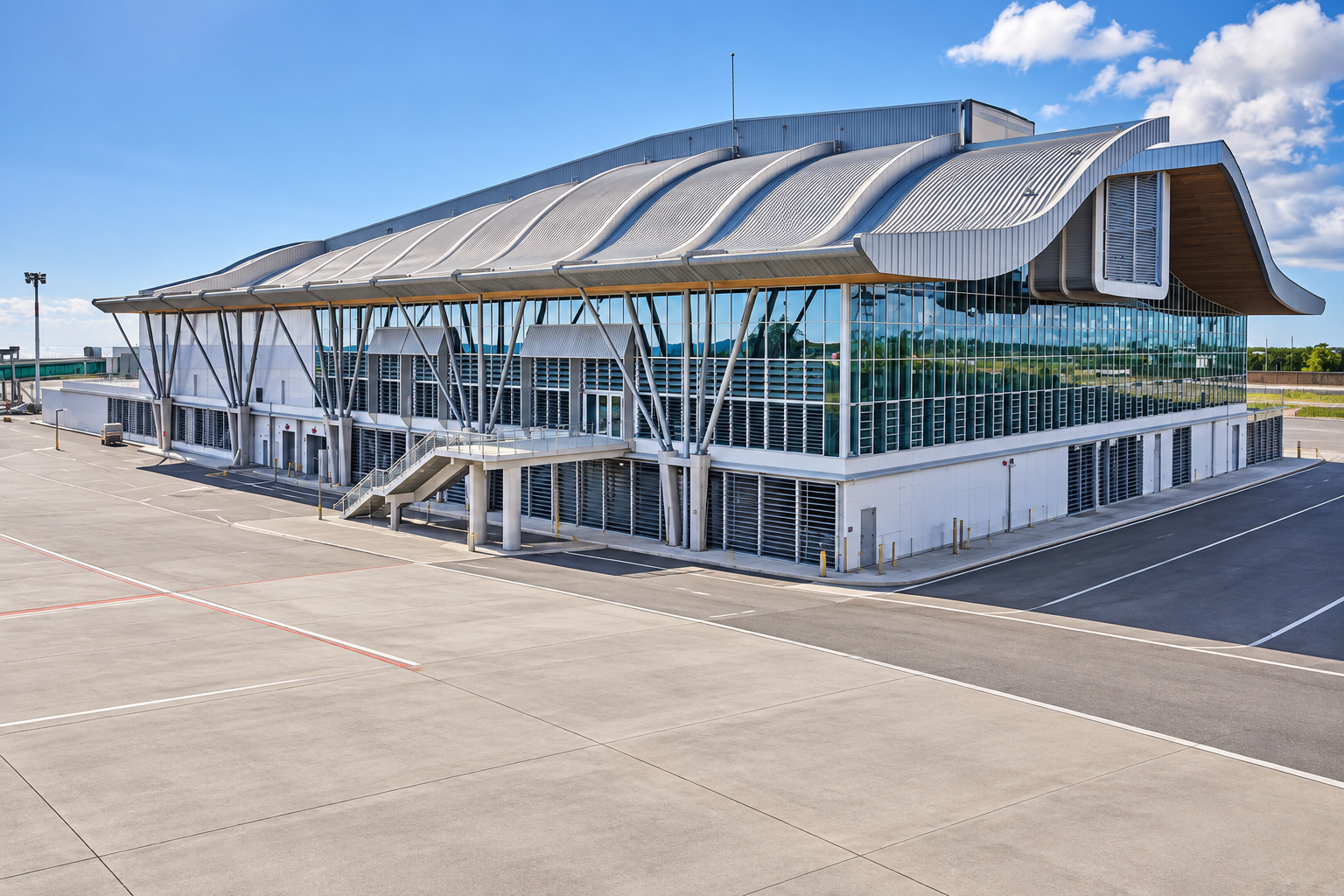
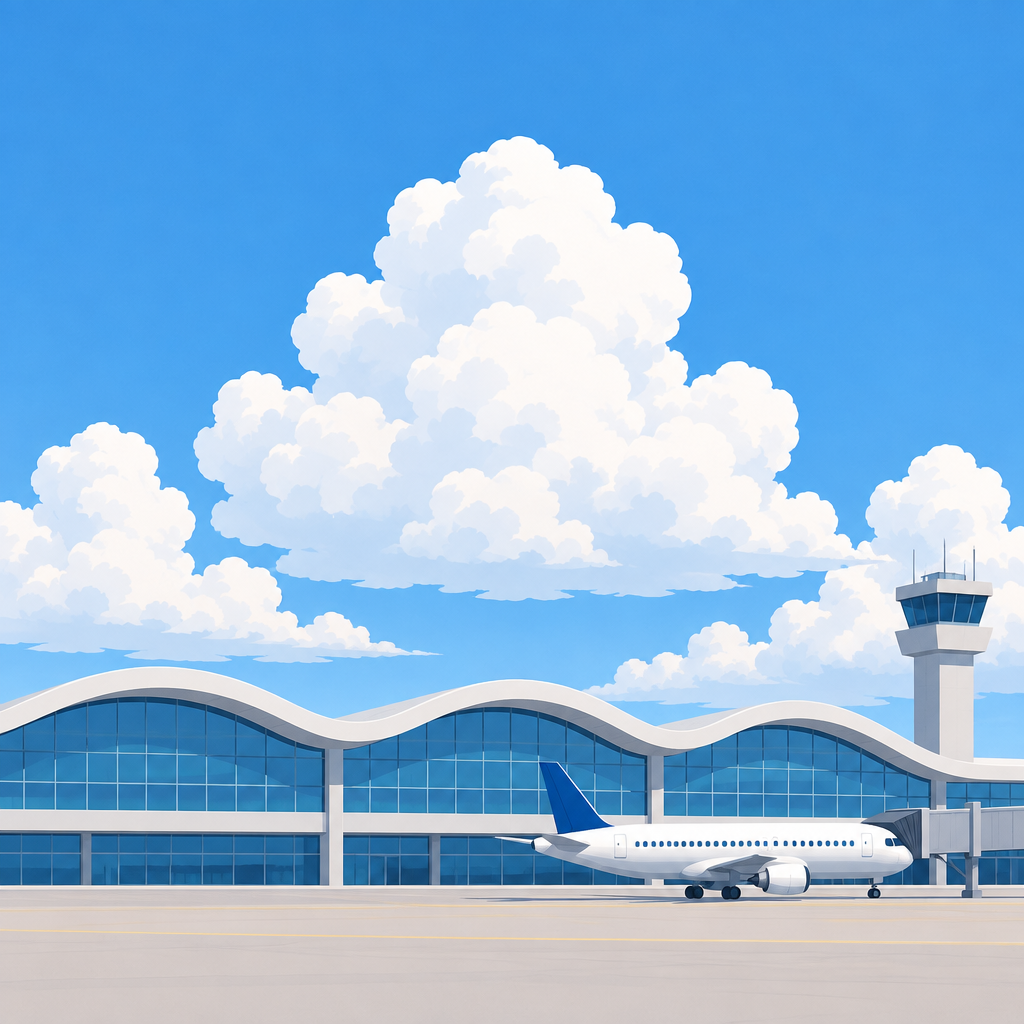
This lesson uses a photograph of a contemporary airport terminal to develop precise architectural vocabulary and accurate descriptive writing. As you work through the tasks, you will learn the names of key building features, how to locate them clearly, and how to describe materials and finishes using the passive voice — skills you will bring together in a final extended description.
📚 Key Vocabulary
These terms all appear in the descriptions you are about to hear — study them before you listen.
🎧 Listen and read
Before: Before you listen, read through the vocabulary list above and try to picture what each feature might look like on a large modern building.
While listening: As you listen, notice how the speaker moves through the building — from the roof downward — and pay attention to the words used to say where each feature is located.
After: After listening, check whether any of the features you identified match the vocabulary terms above, and note any words you did not expect.
💡 Press play, then scroll back up to the photo. If the photo is off-screen, a copy floats at the bottom — tap it to enlarge.
 ×
📖 1 · Short description — read along
📖 2 · Full description — read along
📖 3 · The story behind the picture — read along
🧰 Your word bank
All the target words for this picture.
📚 Word bank
All the target words for this picture. Tap a word to hear it.

✍️ First look
Before any teaching, write what you can see in the photograph in your own words — do not worry about technical terms at this point. You will return to this description at the end and see how much more precisely you can write.
Step 1 · Saying Where Things Are
🔧 Grammar — prepositional phrases of position
To do this task, you need two things: the precise name of each feature, and a prepositional phrase that tells the reader exactly where it sits. A prepositional phrase of position answers the question ‘where?’ — it uses words such as above, below, along, in front of, or between. Use a different preposition in each sentence so your writing stays varied. Notice how the preposition changes the relationship: ‘above the curtain wall’ tells us the roof is higher; ‘along the facade’ tells us something runs the full length. Avoid repeating ‘at the top of’ for every sentence — the fuel lines give you a wide range of options. Open the ‘Where things are’ and ‘Objects’ toggles for the full list of place phrases and feature names before you write.
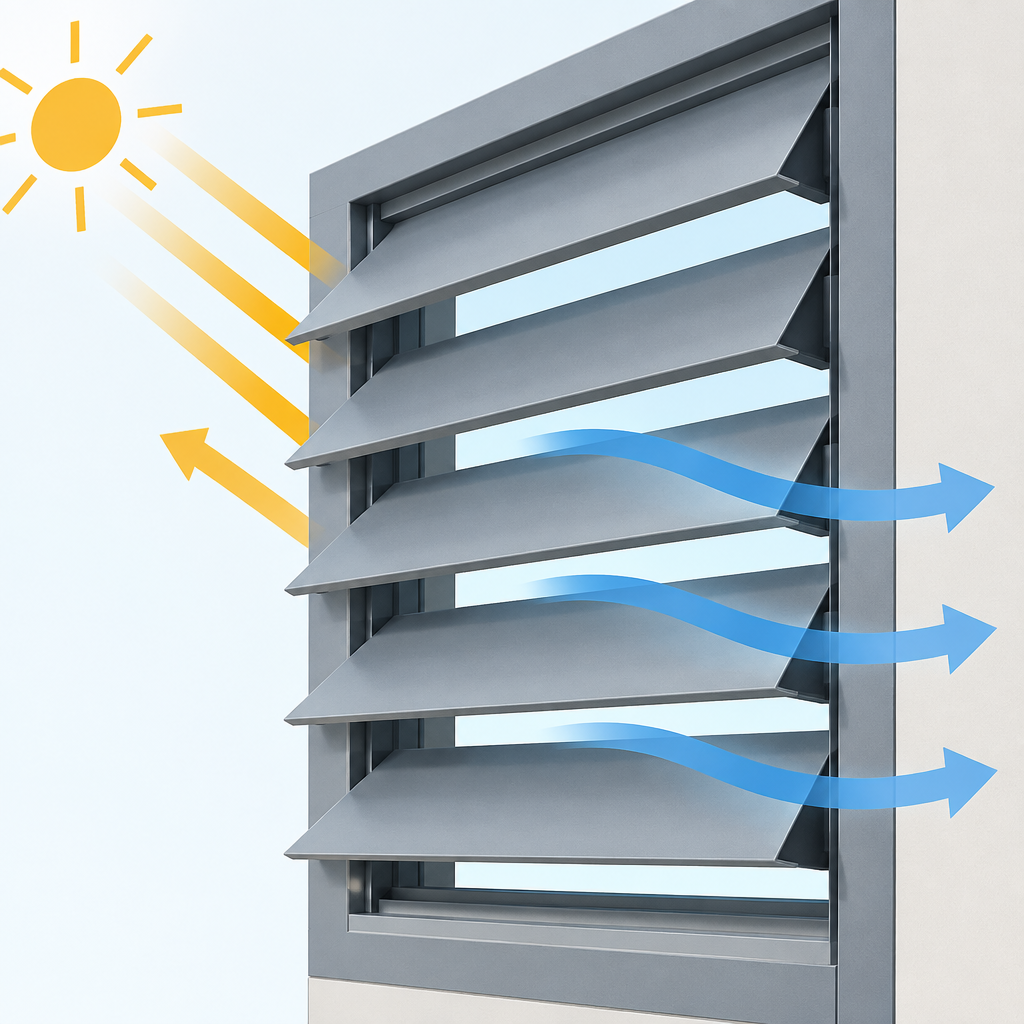
- The louvred ventilation panels run in a continuous band below the glass curtain wall along the lower storey.
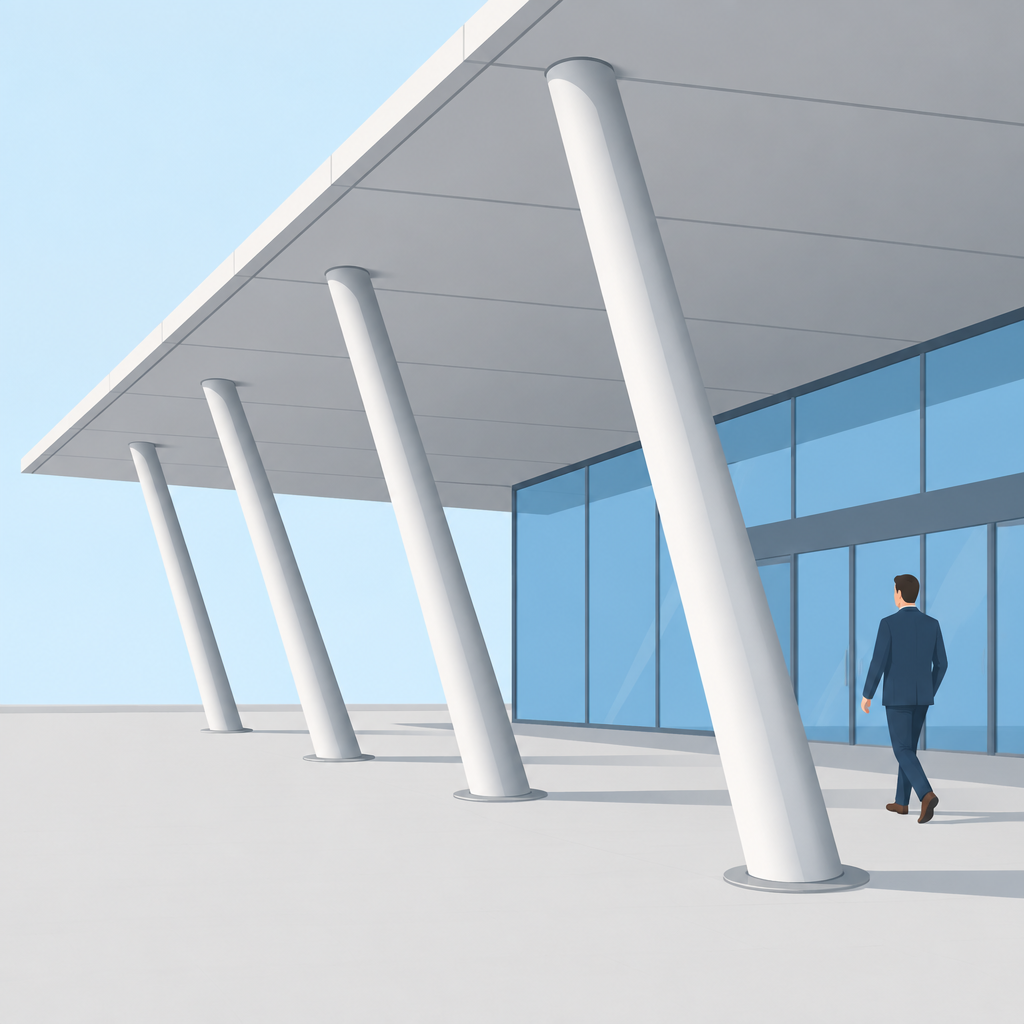
- Angled structural columns are spaced at intervals along the length of the facade, raking outward to support the roof.
- The expansive aircraft apron stretches in front of the terminal building, filling the foreground.
🧰 Open the ‘Where things are’ toggle for a full list of place phrases, and the ‘Objects’ toggle for precise feature names and collocations.
→ Now write your six sentences, using a different preposition or prepositional phrase in each one.
📍 Where things are
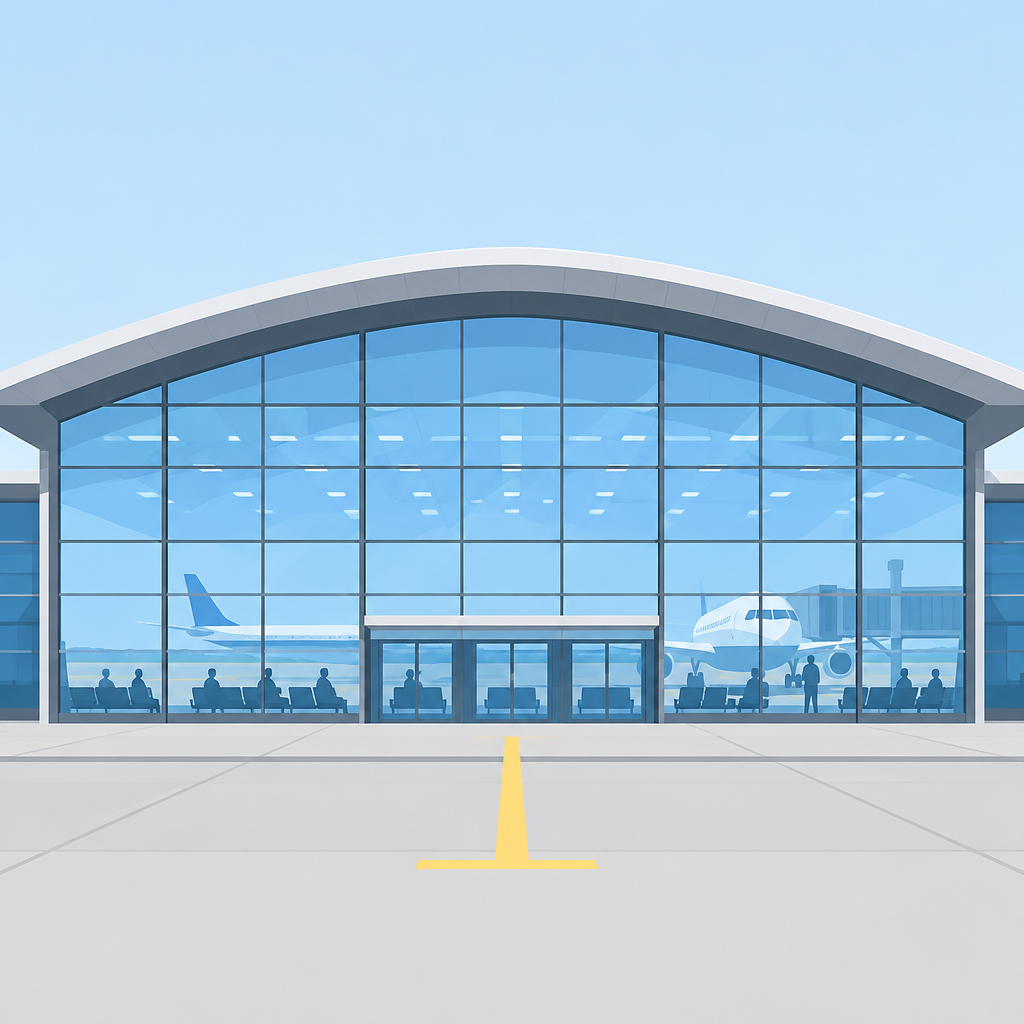
- The terminal building extends across the full width of the image in the middle ground.
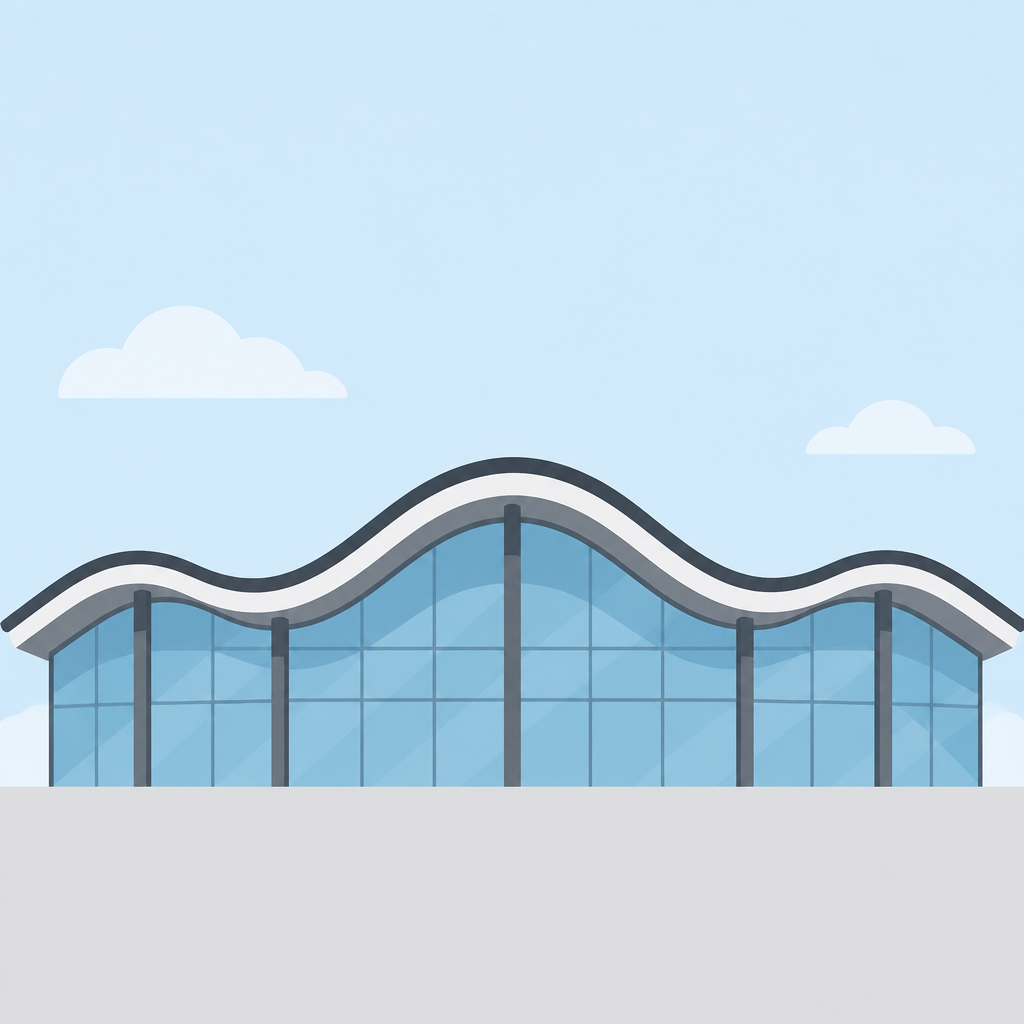
- The undulating metal roof sits above the glass curtain wall, projecting outward beyond the facade.
- The glass curtain wall is set behind the angled structural columns that line the facade.
- The louvred ventilation panels run in a continuous band below the glass curtain wall along the lower storey.
- The external staircase projects in front of the terminal facade, connecting the apron to the upper level.
- The elevated walkway spans between the top of the staircase and the upper-level entrance of the terminal.
- The expansive aircraft apron stretches in front of the terminal building, filling the foreground.
- Red and white painted markings are visible on the concrete apron surface in the foreground.
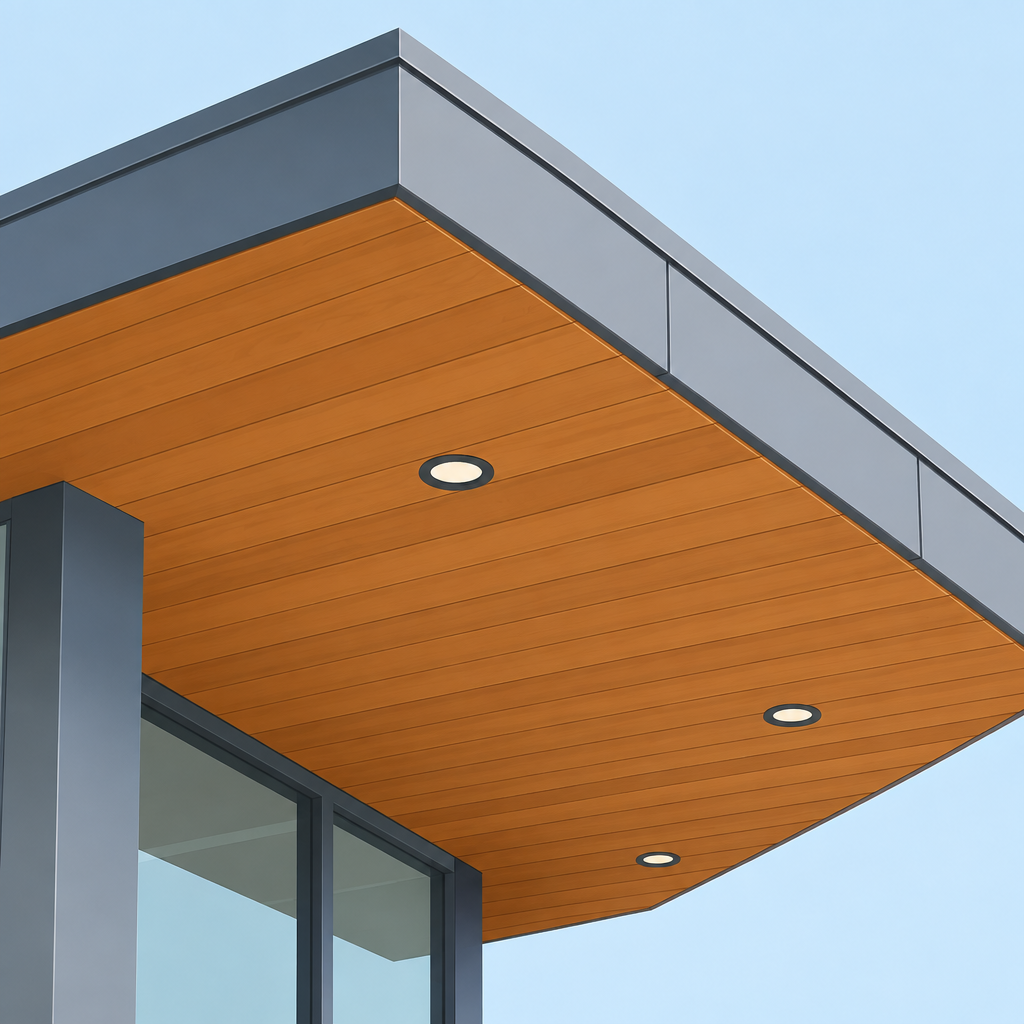
- The warm timber soffit is visible within the underside of the overhanging roof structure.
- Angled structural columns are spaced at intervals along the length of the facade, raking outward to support the roof.
- A low green tree line is visible behind the terminal building in the far distance.
- A tall floodlight mast stands to the left of the terminal building, visible above the roofline.
- Scattered cumulus clouds float above the roofline against a bright blue sky.
- Yellow bollards are positioned along the base of the terminal facade on the right side.
- The white rendered masonry wall is visible beneath the louvred panels at the base of the lower storey.
- A small ground service vehicle is parked at the far left of the apron near the terminal.
- Multiple wave-like roof peaks rise and fall across the full span of the roofline.
🔎 What you can see
| Object | Where | Describing words |
|---|---|---|
| terminal building | centre and full width of the image, middle ground | two-storey, modern, large-scale |
| undulating metal roof | top of the terminal building, spanning the full width | wave-like, ribbed, silver-grey |
| glass curtain wall | upper storey of the terminal, running the full width | floor-to-ceiling, reflective, blue-green tinted |
| louvred ventilation panels | lower storey of the terminal, running the full length of the facade | horizontal, grey, repeated |
| angled structural columns | spaced at intervals along the facade, supporting the roof overhang | dark grey, steel, angled |
| external staircase | left-centre of the building facade, projecting outward onto the apron | glazed, metal-framed, double-flight |
| metal balustrade | along the staircase and elevated walkway | steel, silver, open-railing |
| elevated walkway | connecting the staircase to the upper-level entrance of the terminal | cantilevered, enclosed, glazed sides |
| aircraft apron | foreground and extending to the base of the building | flat, light grey, concrete |
| painted apron markings | foreground apron surface, visible as red and white lines | red, white, linear |
| white rendered masonry wall | lower storey of the terminal, between and below the louvre panels | white, smooth, rendered |
| wooden ceiling soffit | visible beneath the roof overhang, behind the upper glazing | warm-toned, timber, linear-boarded |
| ground service vehicle | far left of the apron, near the terminal | small, dark, ground-level |
| floodlight mast | upper left of the image, beyond the terminal | tall, dark steel, twin-arm |
| sky | upper portion of the image, above the roofline | bright blue, clear with scattered cloud |
| cumulus clouds | upper right and upper centre of the image | white, billowing, scattered |
| tree line | far background, behind the terminal building | green, low, distant |
| bollards | along the base of the terminal facade on the right side | yellow, short, upright |
Step 2 · Describing Materials with the Passive
🔧 Grammar — present simple passive
To do this task, you need the present simple passive. Use it when you want to focus on the material or finish rather than on who applied it. The form is: is/are + past participle + in/with/by. For materials, the most common patterns are ‘is clad in’ (for an outer covering), ‘is enclosed in’ (for a surrounding material), ‘is finished in’ (for a surface treatment), and ‘is supported by’ (for a structural element). After the passive, add a precise colour and material description — this is where the fuel data is most useful. Avoid writing ‘is made with’ when ‘is clad in’ or ‘is finished in’ is more accurate for a surface or facing. Open the ‘Materials’ toggle for the full list of colours, textures, and collocations before you write.
- The upper storey is enclosed almost entirely in reflective blue-green glass curtain walling.
- The lower storey wall is finished in smooth white rendered masonry.
- The undulating roof is clad in ribbed silver-grey metal panels that rise and fall across multiple peaks.
🧰 Open the ‘Materials’ toggle for colour terms, texture words, and passive collocations for each visible surface.
→ Now write your paragraph, using the passive at least four times and including a precise colour and material detail in each sentence.
🧱 Colours and materials
Ready-made phrases
| Object | Colour | Material | Texture |
|---|---|---|---|
| undulating roof | silver-grey | ribbed or corrugated metal (steel or aluminium) | ridged, corrugated |
| glass curtain wall | blue-green (reflective) | glass | smooth, reflective |
| louvred ventilation panels | mid-grey | metal (aluminium likely) | slatted, angled blades |
| structural columns | dark grey | steel | smooth, painted |
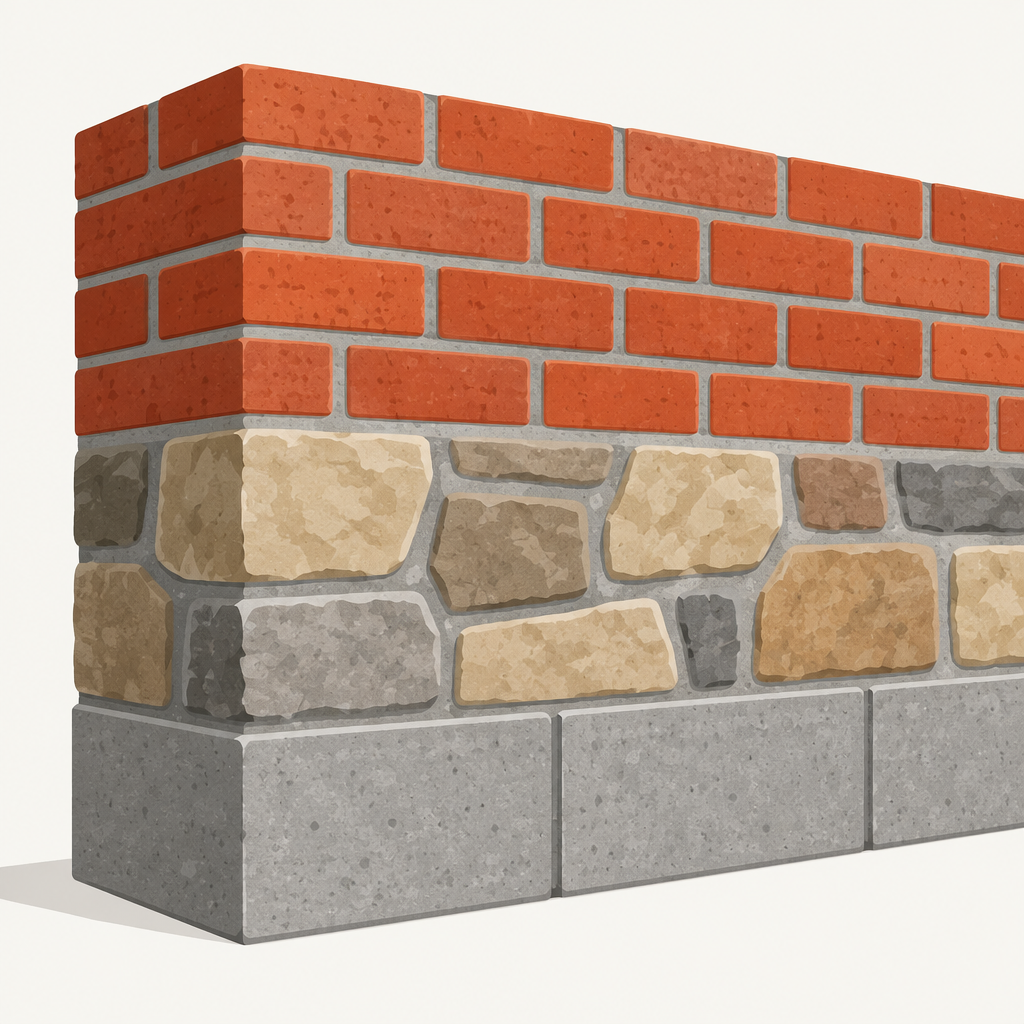
| lower storey wall | white | rendered masonry or concrete | smooth, flat |
| timber soffit | warm honey-brown | timber (wood boarding) | linear-boarded, smooth |
| aircraft apron | light grey | concrete | flat, jointed slabs |
| bollards | yellow | metal or plastic | smooth |
| apron markings | red and white | painted surface marking | flat |
🏁 Put It All Together
You have now practised naming and locating architectural features precisely, and describing materials and finishes using the present simple passive. Your final description should bring both skills together in a single fluent paragraph that moves through the image in a logical order.
- ☐ Use precise architectural terms: facade, roofline, curtain wall, louvre, apron, elevated walkway, structural column, balustrade, cladding, rendered, glazing, masonry, canopy, soffit
- ☐ Place each feature clearly using a varied range of prepositional phrases
- ☐ Describe materials and finishes using the present simple passive at least four times
- ☐ Write in a connected paragraph — avoid listing items one by one
💬 Discussion
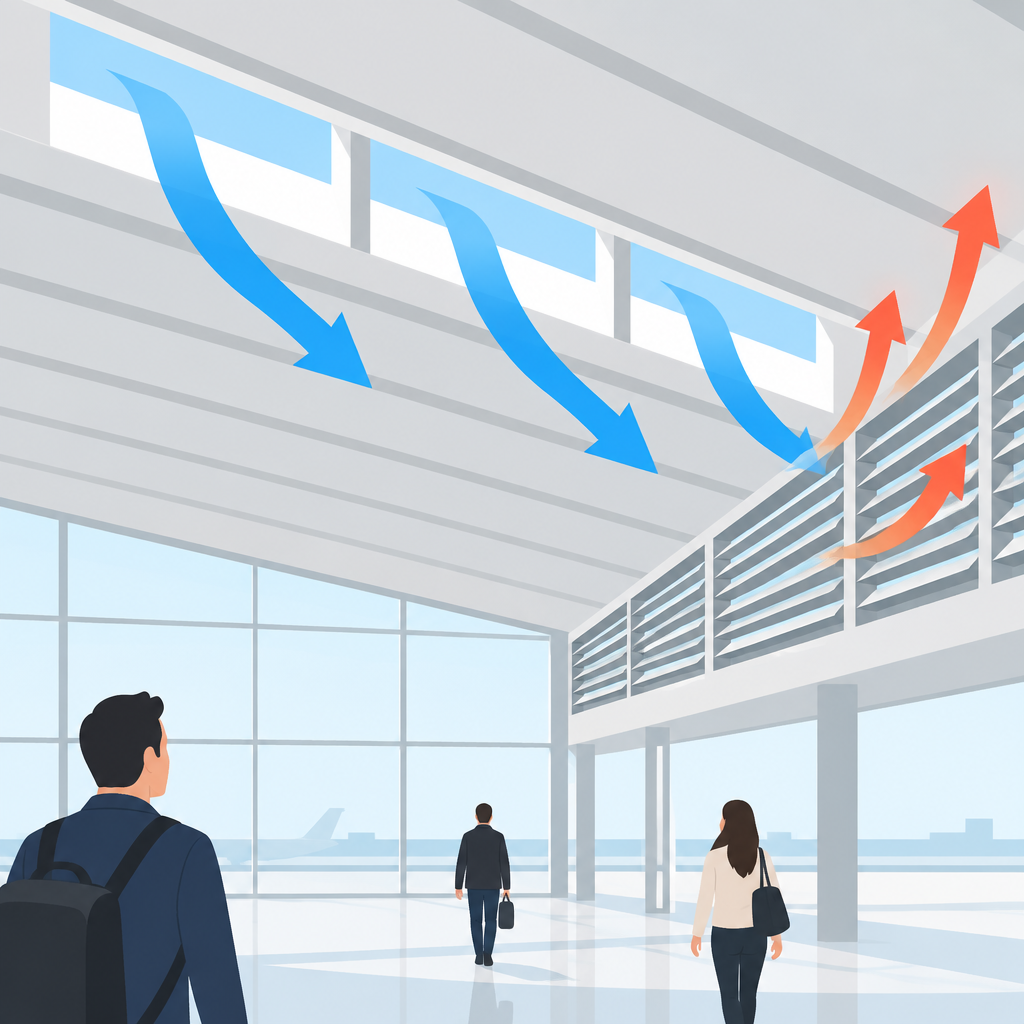
• The terminal uses louvres and a deep canopy overhang instead of mechanical air conditioning — do you think this approach is practical in the climate where you live, and why?
• The facade combines reflective glazing, rendered masonry, and ribbed metal cladding — which of these materials do you find most visually striking, and what effect does it create?
• Airports are often designed to impress arriving passengers — does the roofline and overall facade of this terminal achieve that effect in your opinion?
Member-Exclusive Practice Bar
Access a wide range of integrated practice for this unit — from Vocabulary and Grammar activities to AI-curated Writing tasks and Thematic Chat practice.
This feature is available to YSP members.
Explore Membership BenefitsMember-Exclusive Vocabulary Review & Acquisition System
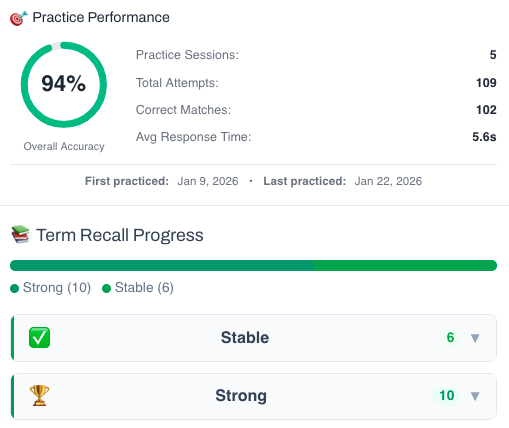
This isn’t a simple quiz — it’s a fully tracked learning system. You build knowledge through recognition, then recall, and your progress feeds directly into the Integrated Practice Bar (Writing tasks, AI Chat, and more).
- Practice sessions, accuracy, and response-time tracking
- Term strength levels (Learning → Stable → Strong)
- Personal progress history for each unit
This feature is available to YSP members.
Explore Membership Benefits📐 Where things are — positional language for images