 ↑×
📐 Positional language (foreground, top left corner, in the distance…) is the same on every image lesson — see Where things are at the end.
Two Sites, Many Differences
You are going to look at two construction sites and compare them. Study the key words first, then listen to the descriptions. Each task teaches you something new — a word, a grammar pattern, or a way to describe what you see — and you use it in the next task.
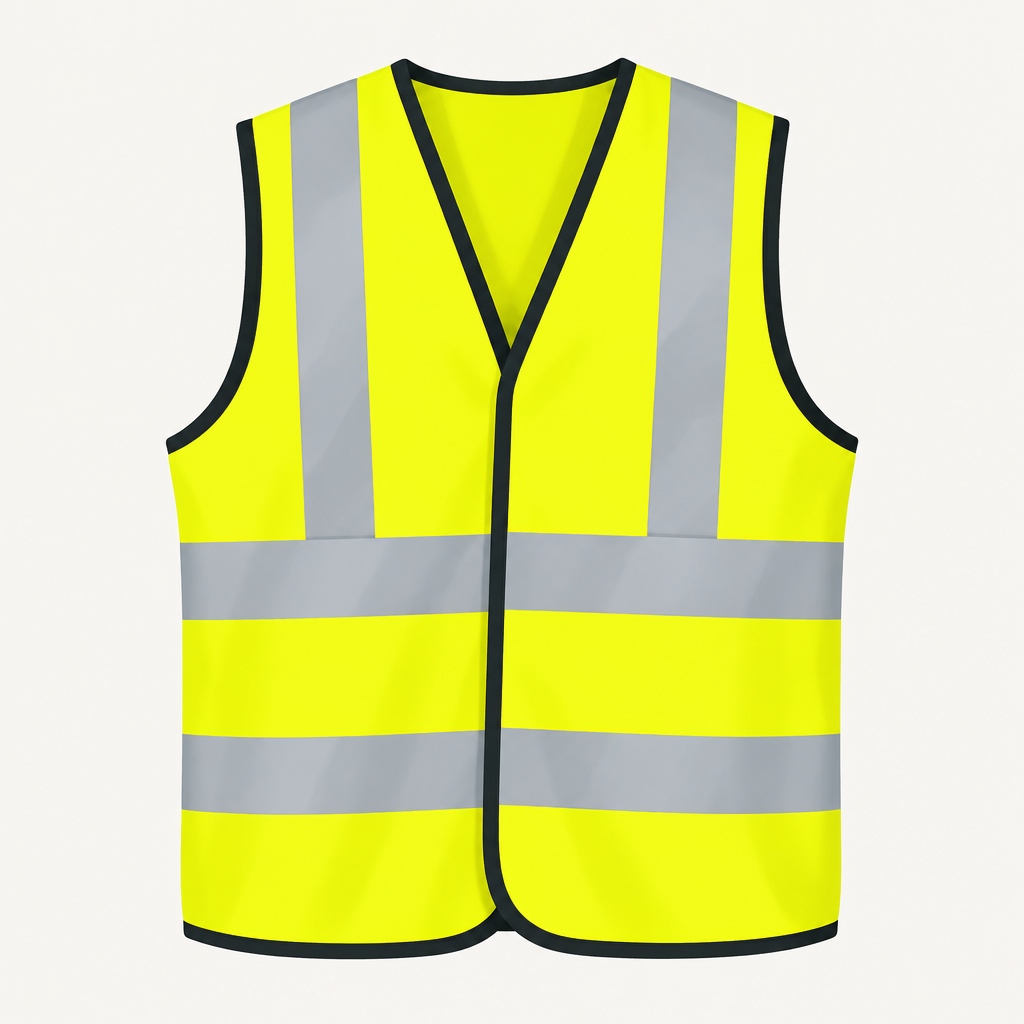
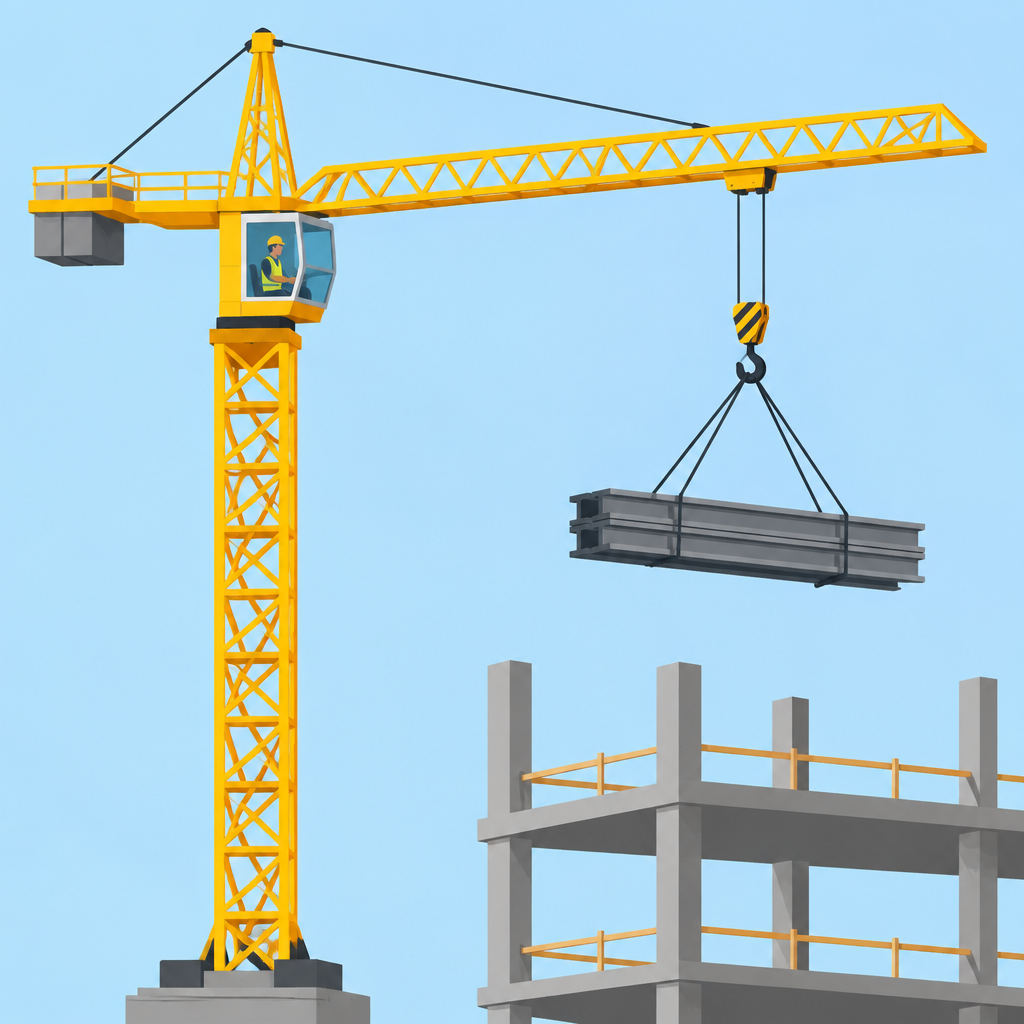
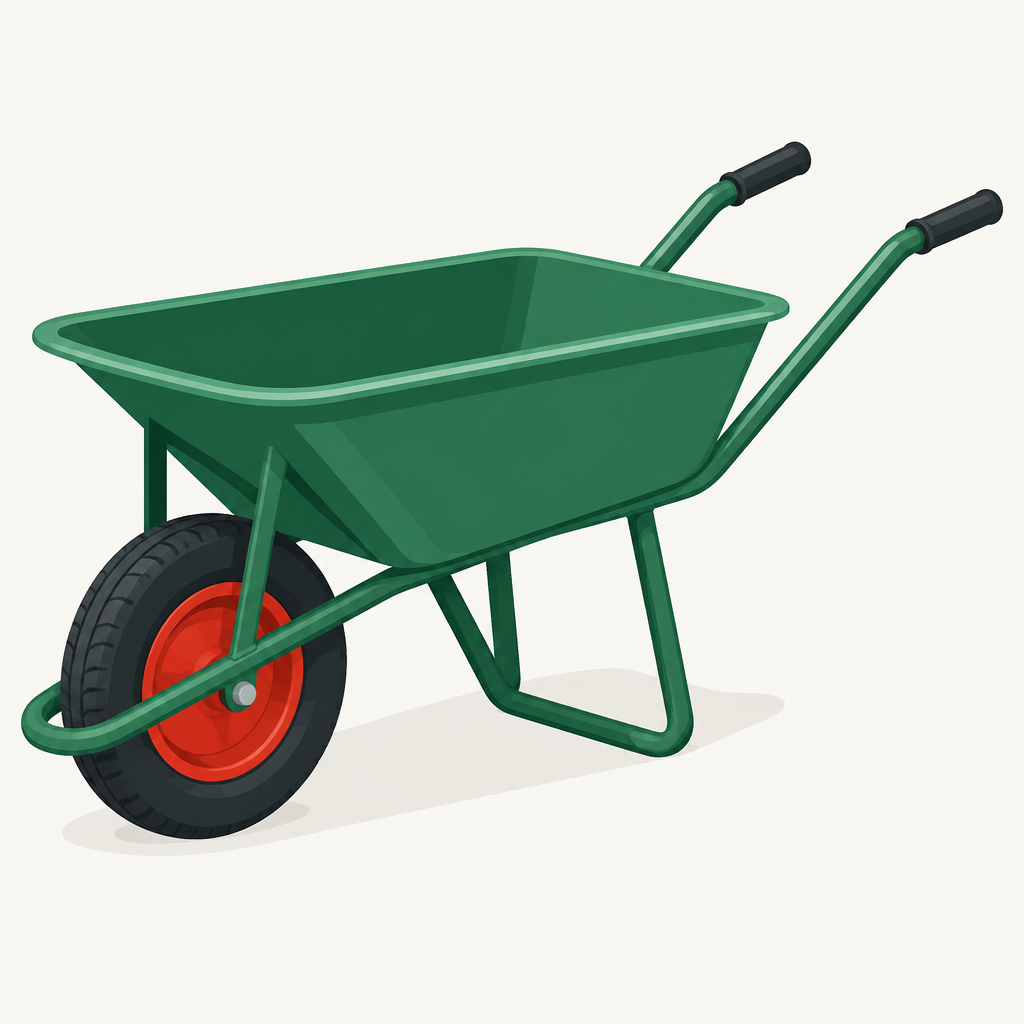
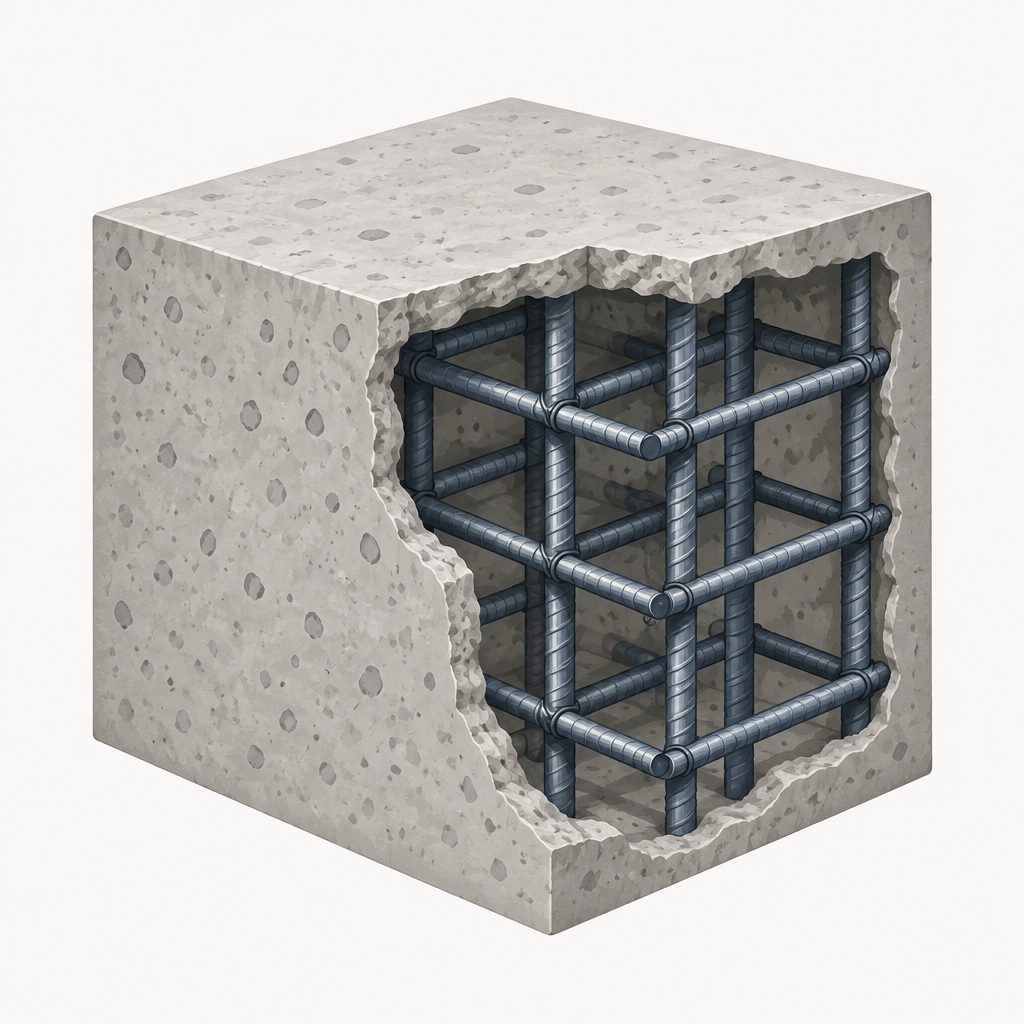
📚 Key Vocabulary
Learn these words before you listen — they appear in both descriptions.
🎧 Listen and read
Before: Look at the key words above and try to guess which ones belong to Image A and which to Image B.
While listening: Listen for words that describe size, height, and equipment — notice how the two sites are compared.
After: Think about the biggest difference between the two sites and try to say it in one sentence.
💡 Press play, then scroll back up to the photo. If the photo is off-screen, a copy floats at the bottom — tap it to enlarge.
 ×
📖 1 · Short description — read along
📖 2 · Full description — read along
📖 3 · The story behind the picture — read along
🧰 Your word bank
All the target words for this picture.
📚 Word bank
All the target words for this picture. Tap a word to hear it.

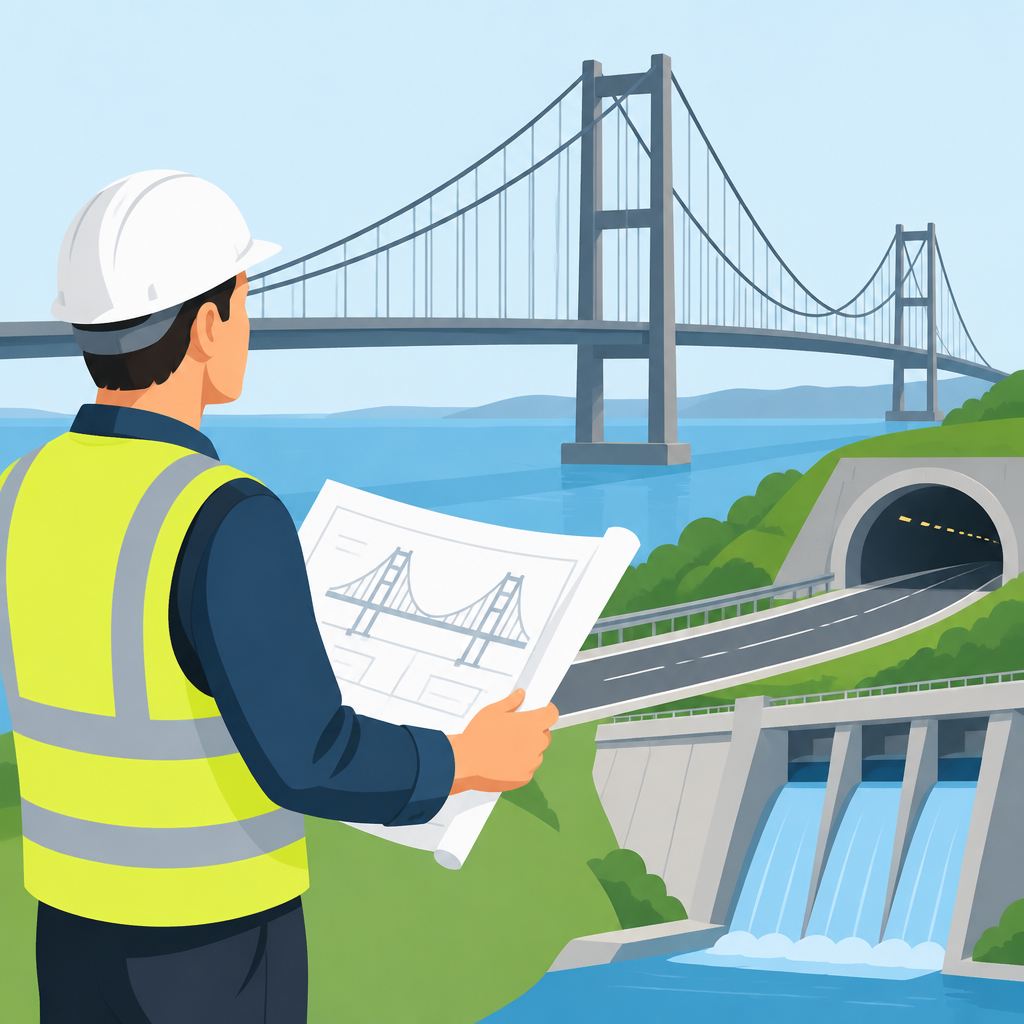
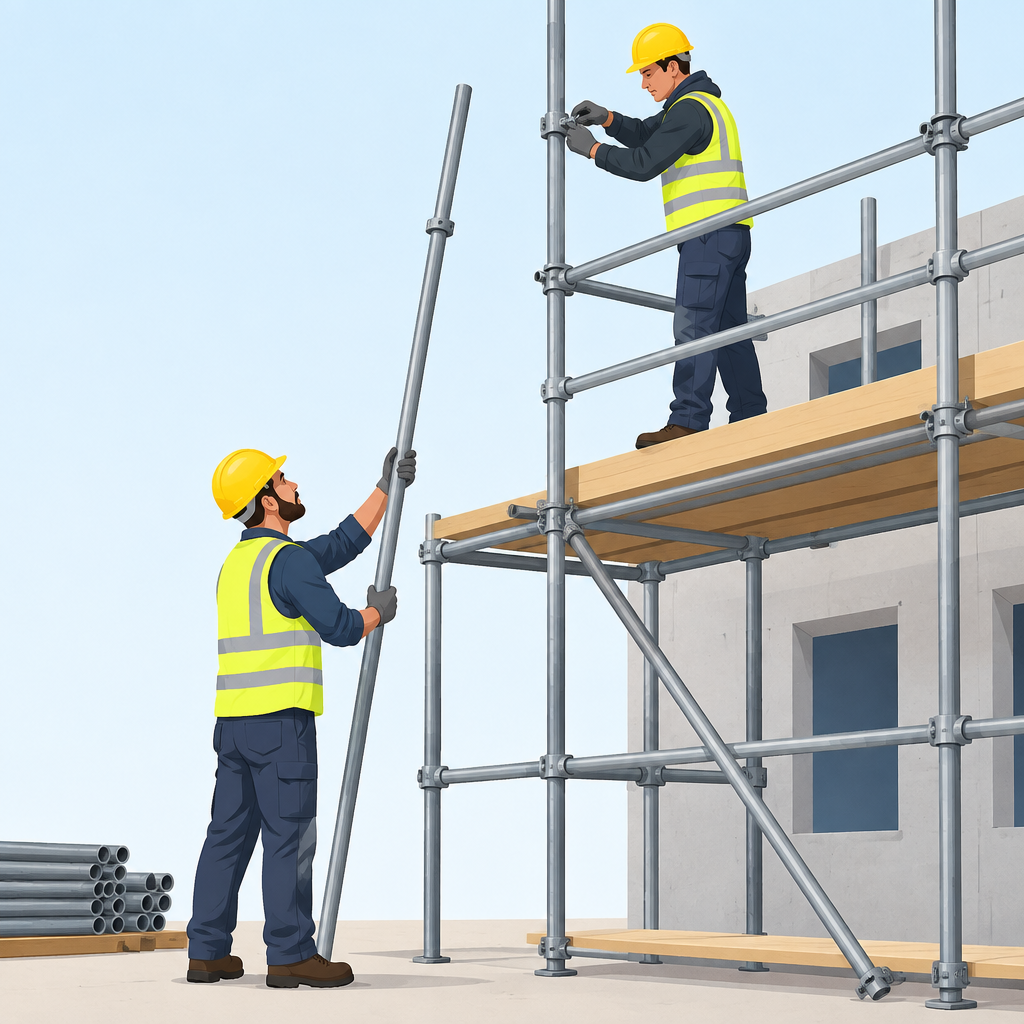
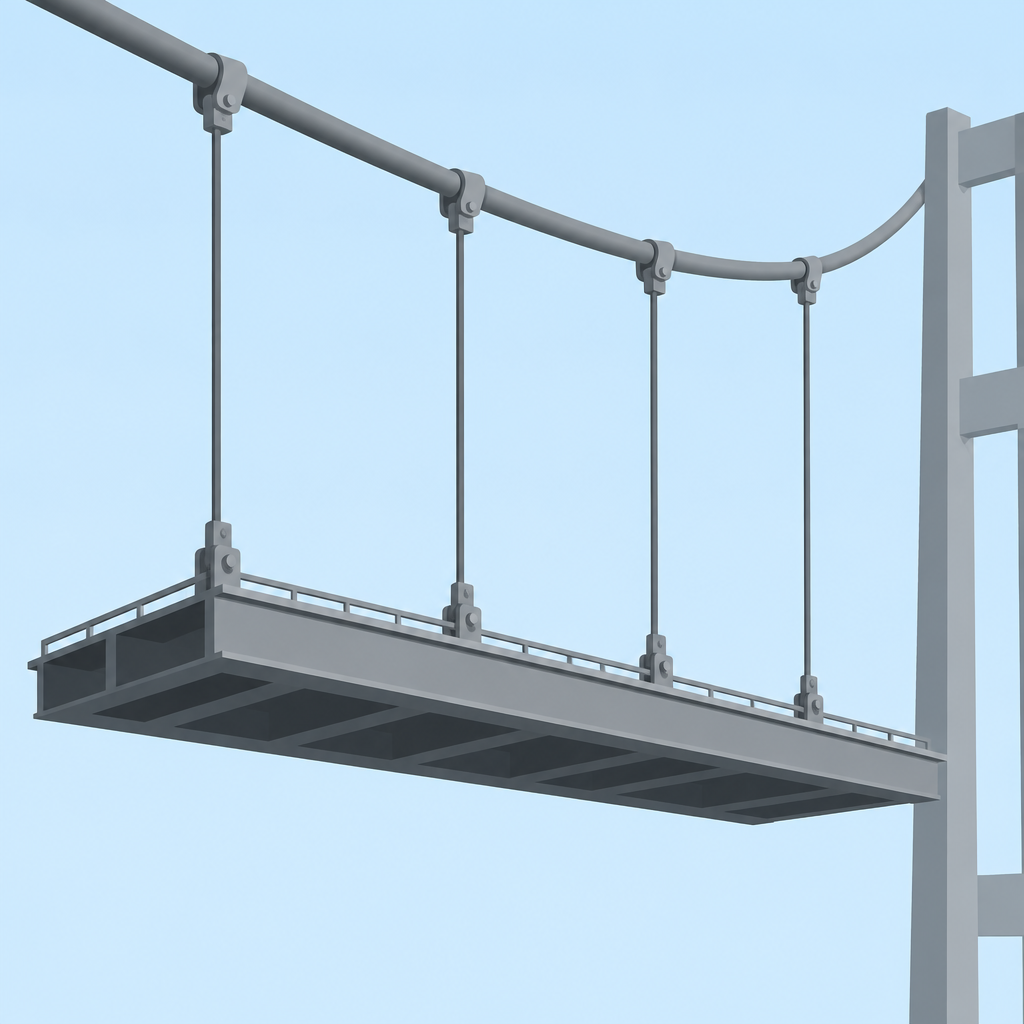
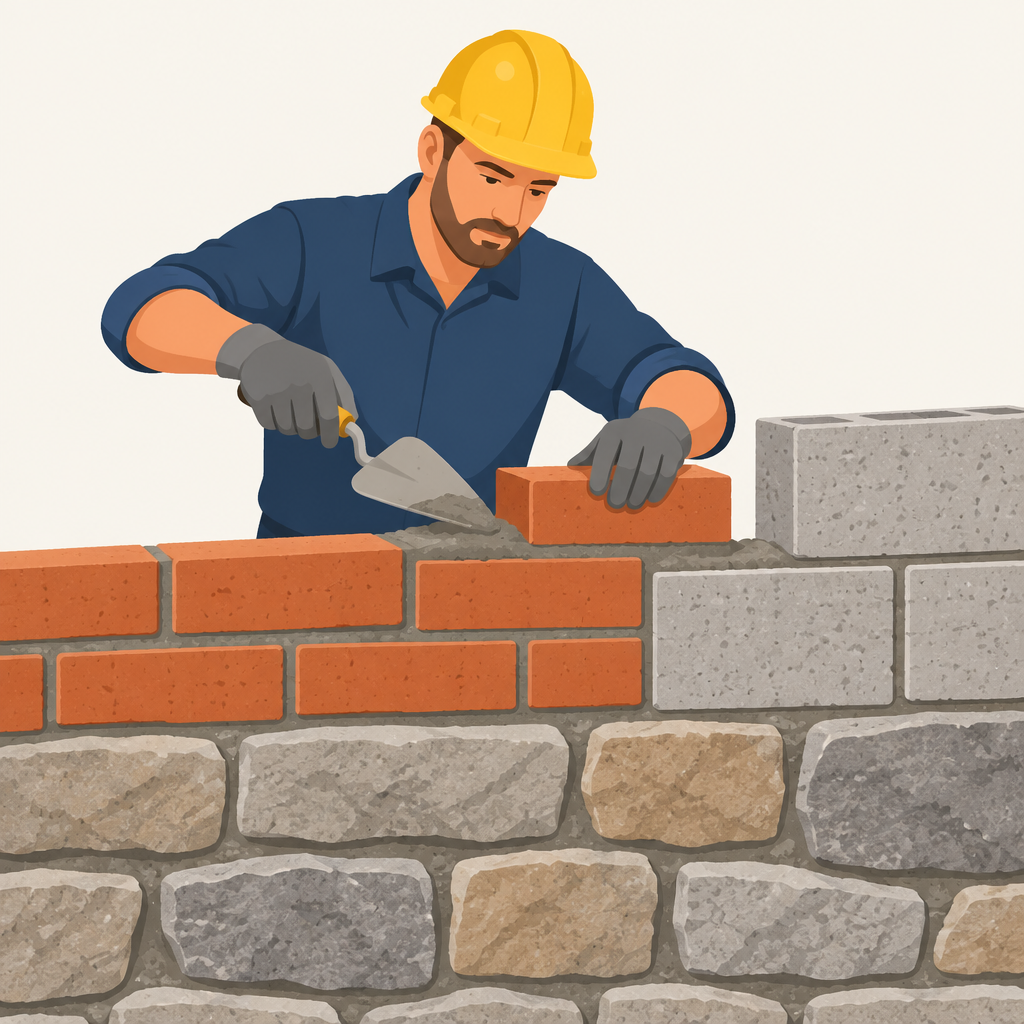
✍️ First look
Before you start the tasks, write what you can see in your own words — no help, no notes. You will come back to this later and see how much your writing has improved.
Step 1 · Showing Big and Small Differences: Comparative Adjectives with Modifiers
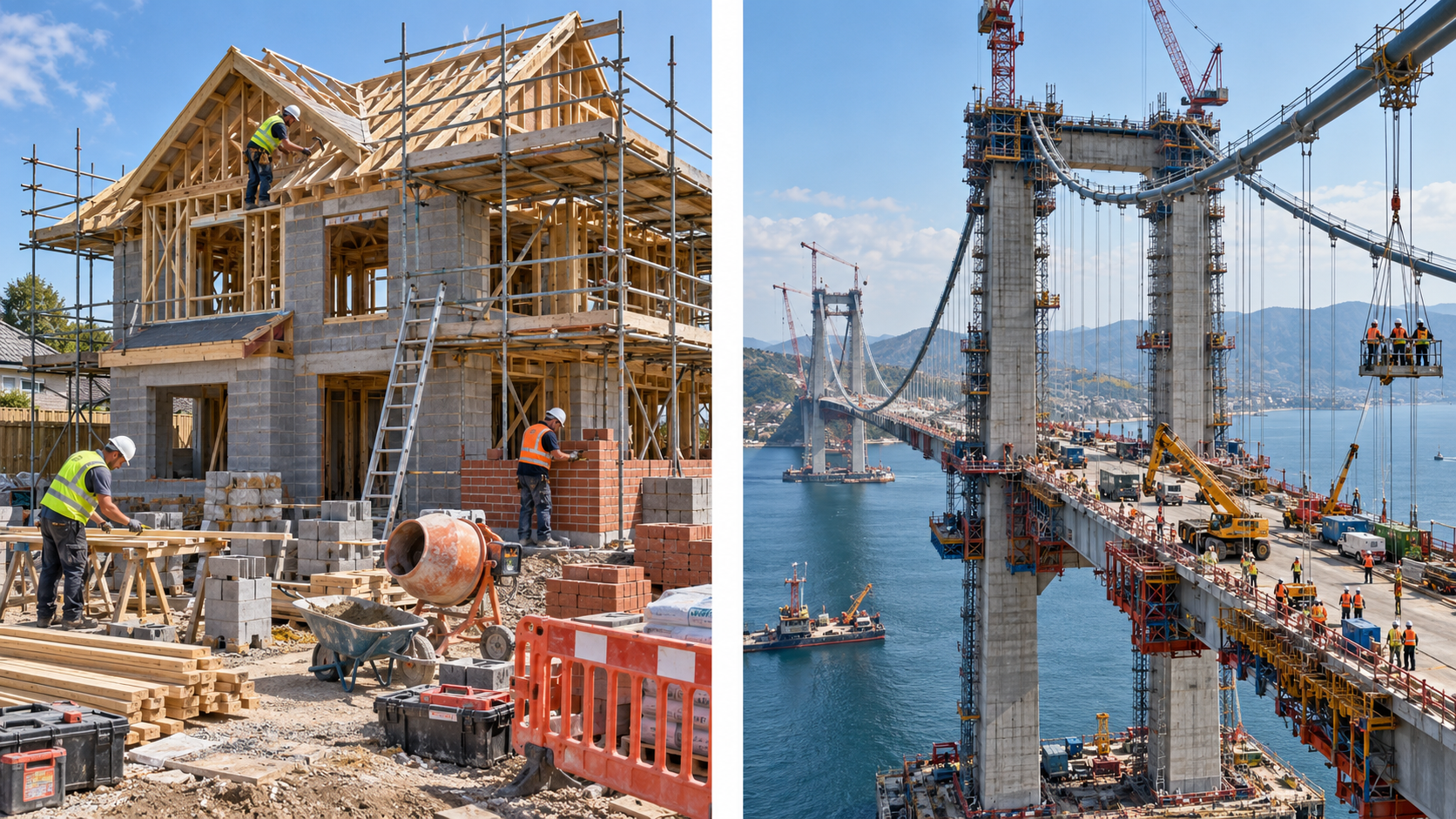
🔧 Grammar — comparative adjectives, modifiers for comparative adjectivesTo do this task, you need comparative adjectives and modifiers. A modifier tells the reader how big the difference is. Use much, far, or a lot for a big difference. Use slightly or a little for a small difference. Always use than after the comparative adjective. Look at these examples from the two images. Image B is far more complex than Image A — this is a very big difference. The workforce in Image B is a lot larger than in Image A — fifteen workers compared to three. The suspended platforms are slightly higher than the roof level in Image A — a small difference. Be careful: do not use very with a comparative. Say much larger, not very larger. Also, do not double-mark: say much better, not much more better. Open the Compare toggle for more patterns, then write your 5–7 sentences.
- Image B is far more complex than Image A.
- The workforce in Image B is a lot larger than the three workers in Image A.
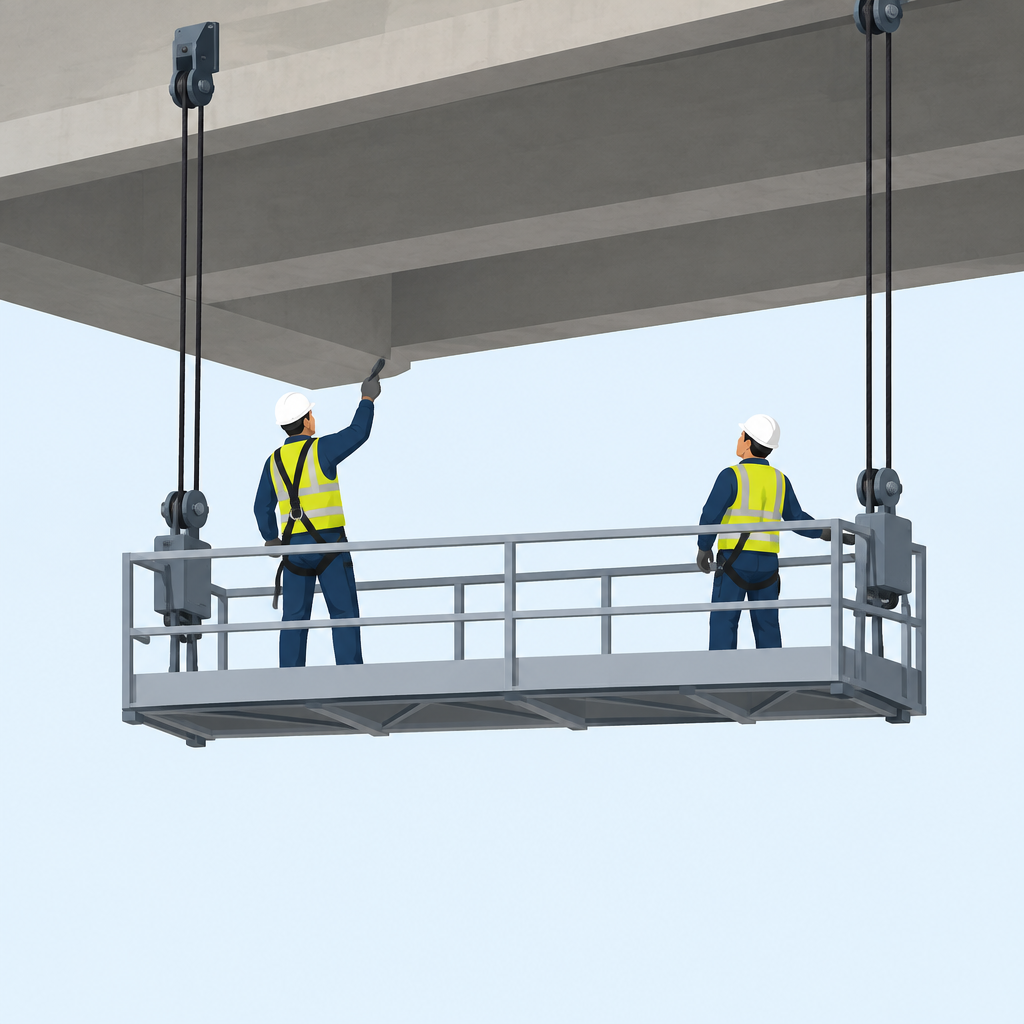
- The suspended platforms are slightly higher than the roof level in Image A.
💬 Dialogue 1: Help with Task two — Bigger, Taller, More Complex: Comparing the Two Sites
Sofia wants to write her comparison paragraph but is not sure how to use the modifiers correctly with comparative adjectives.
Sofia: “Hi Jenny, can you help me with Task two? I need to compare the two images, but I am not sure how to show that some differences are big and some are small.”
Jenny: “Of course. The task wants you to use a modifier before your comparative adjective. A modifier is a word that tells the reader how big or small the difference is. So you do not just say something is bigger — you say how much bigger it is.”
Sofia: “OK, so the modifier goes before the comparative adjective? Like before words ending in -er, or before more?”
Jenny: “Exactly right. Open the compare toggle on the page and you will find the modifiers listed there. For a big difference, use much or far. For a small difference, use slightly or a little. Now look at the two sites — the number of workers is a very big difference between the images, and the platform height is a smaller one. Which modifier would you use for the workers?”
Sofia: “I think I would use much or far, because the difference in the number of workers is very big. So — the workforce in Image B is far larger than in Image A?”
Jenny: “That is a good sentence. You can make it even stronger by adding detail. Here is one example that is true of the picture: the workforce in Image B is a lot larger than the three workers in Image A. The phrase a lot works the same way as much and far — it shows a big difference. Now try writing a sentence about the whole site. What is your impression of Image B compared to Image A?”
Sofia: “OK, I will try. Image B is very more industrial than Image A because it has cranes and a large workforce on the bridge deck.”
Jenny: “Good idea, but watch out — we cannot put very before a comparative adjective. Very works before a base adjective, like very industrial, but not before more industrial. Use much or far instead. So the corrected sentence is: Image B is far more industrial than Image A because it has cranes and a large workforce on the bridge deck.”
Sofia: “I see — very industrial is fine, but very more industrial is wrong. I need much or far before more. Can I try a sentence with a small difference now? The suspended platforms in Image B are slightly higher than the roof level in Image A.”
Jenny: “That is exactly right. Slightly shows the reader that the difference is there, but it is not dramatic. You could also say a little higher and the meaning would be the same. So you now have four modifiers to work with: much, far, and a lot for big differences, and slightly and a little for small ones. The one rule to keep in mind is this — never use very before a comparative. Use it only before a base adjective.”
Sofia: “Thank you. So I check two things: first, is the difference big or small, and then I choose the right modifier. I will go through the rest of my sentences now.”
Jenny: “That is a good way to approach it. Check the difference first, then choose the modifier. Keep going with that confidence.”
🧰 Open the 'Compare' toggle for a full list of comparative adjectives and modifiers you can use.
→ Now write 5–7 sentences comparing the scale, height, equipment, and number of workers in the two images.
⇄ Comparing Image A and Image B
In both images
Only in Image A
Only in Image B
Differences
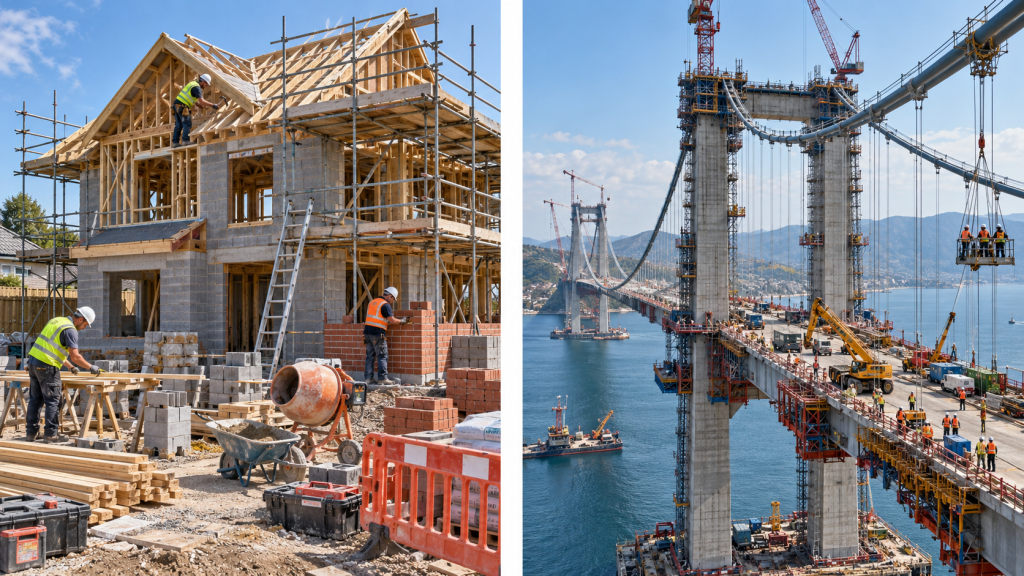
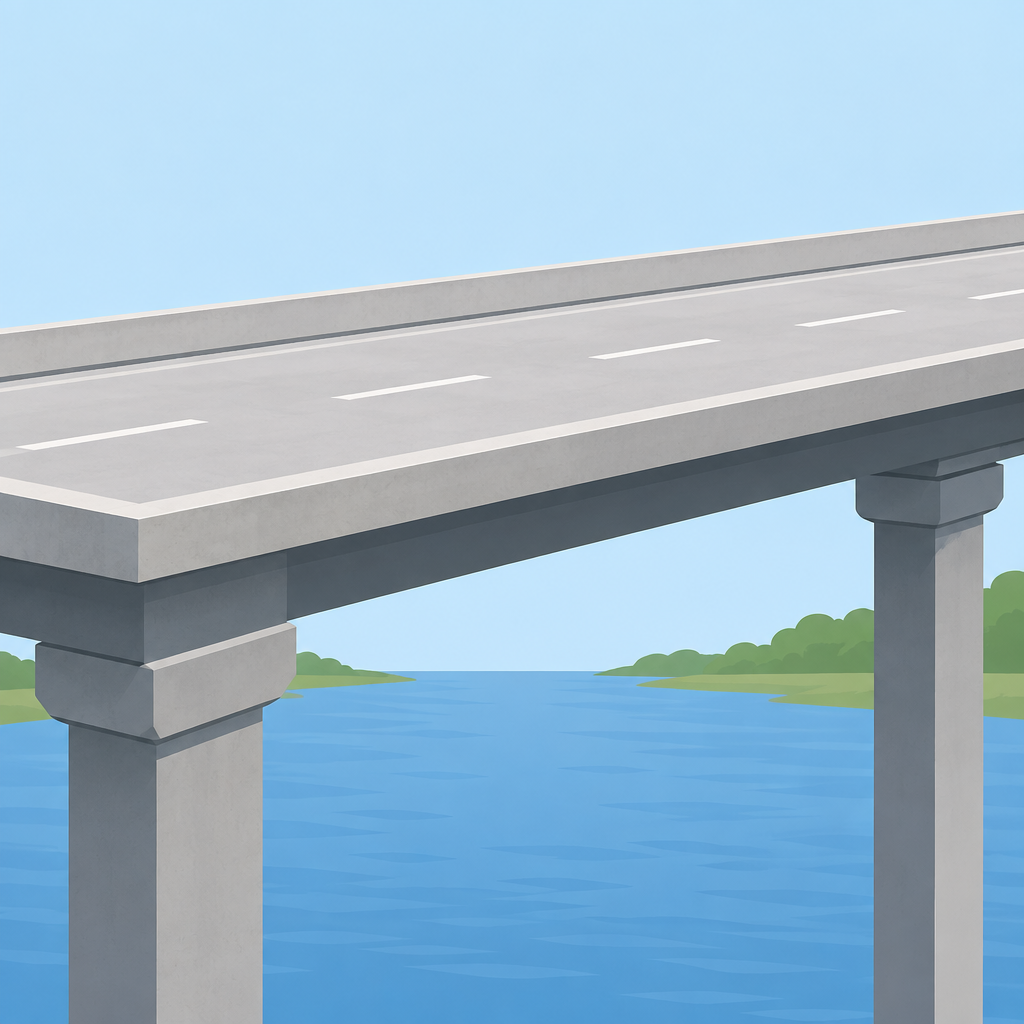
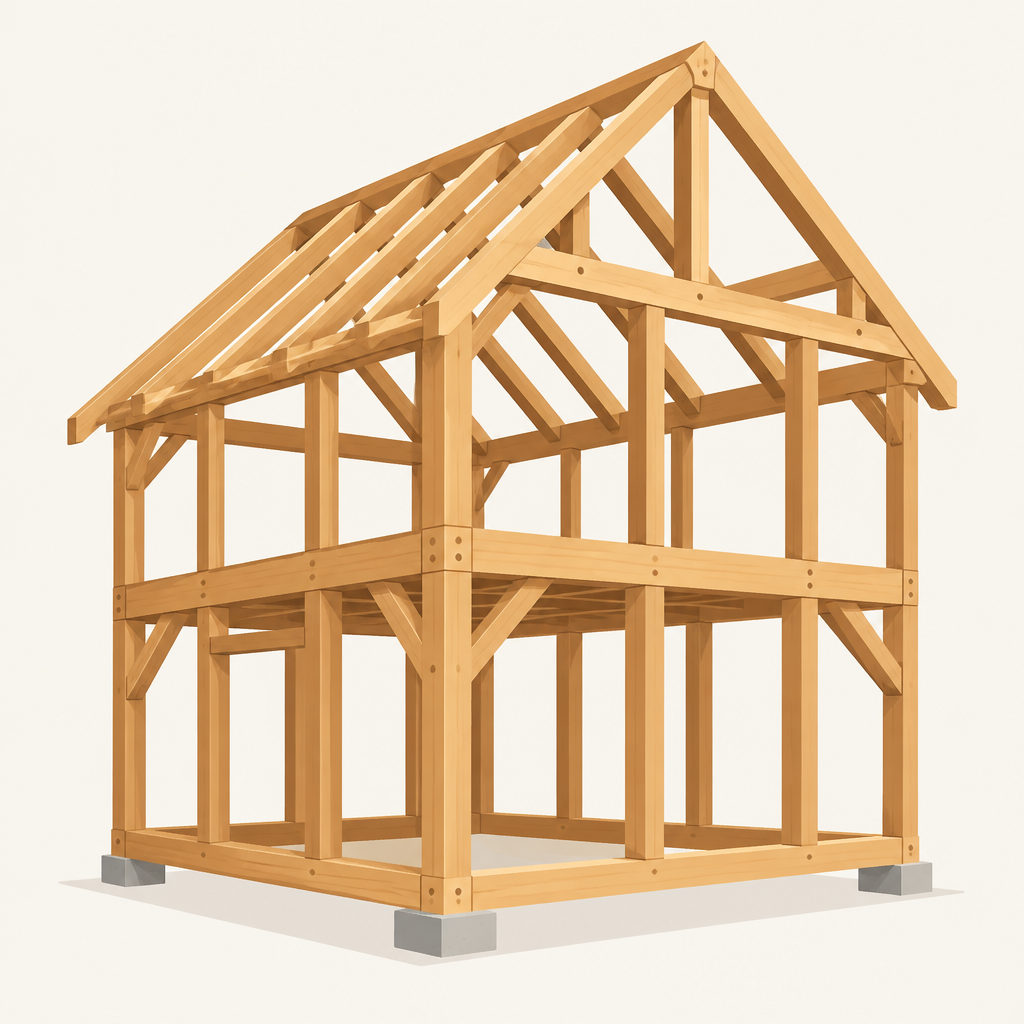
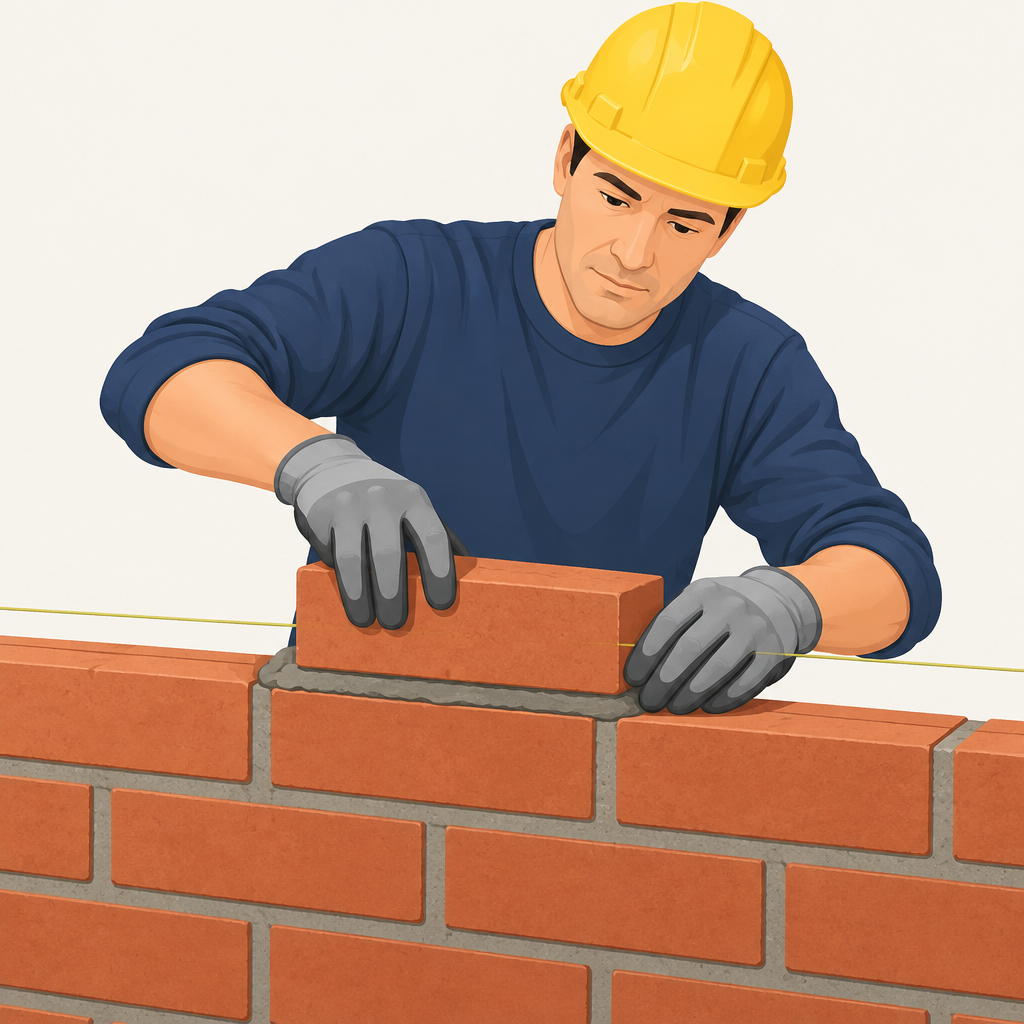
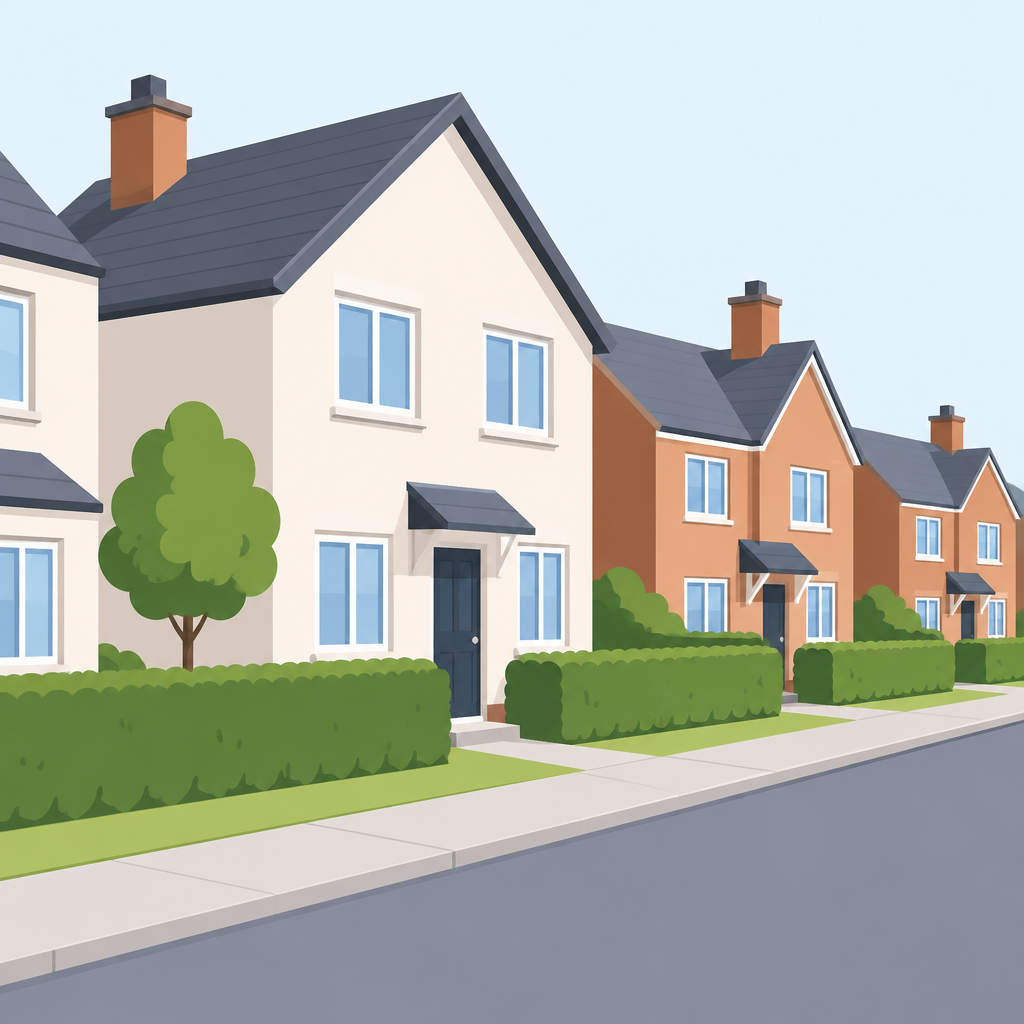
- Image A shows a small domestic structure, whereas Image B shows a massive civil engineering project spanning open water.
- Image A is set in a suburban neighbourhood on land, while Image B is located over a wide body of water.
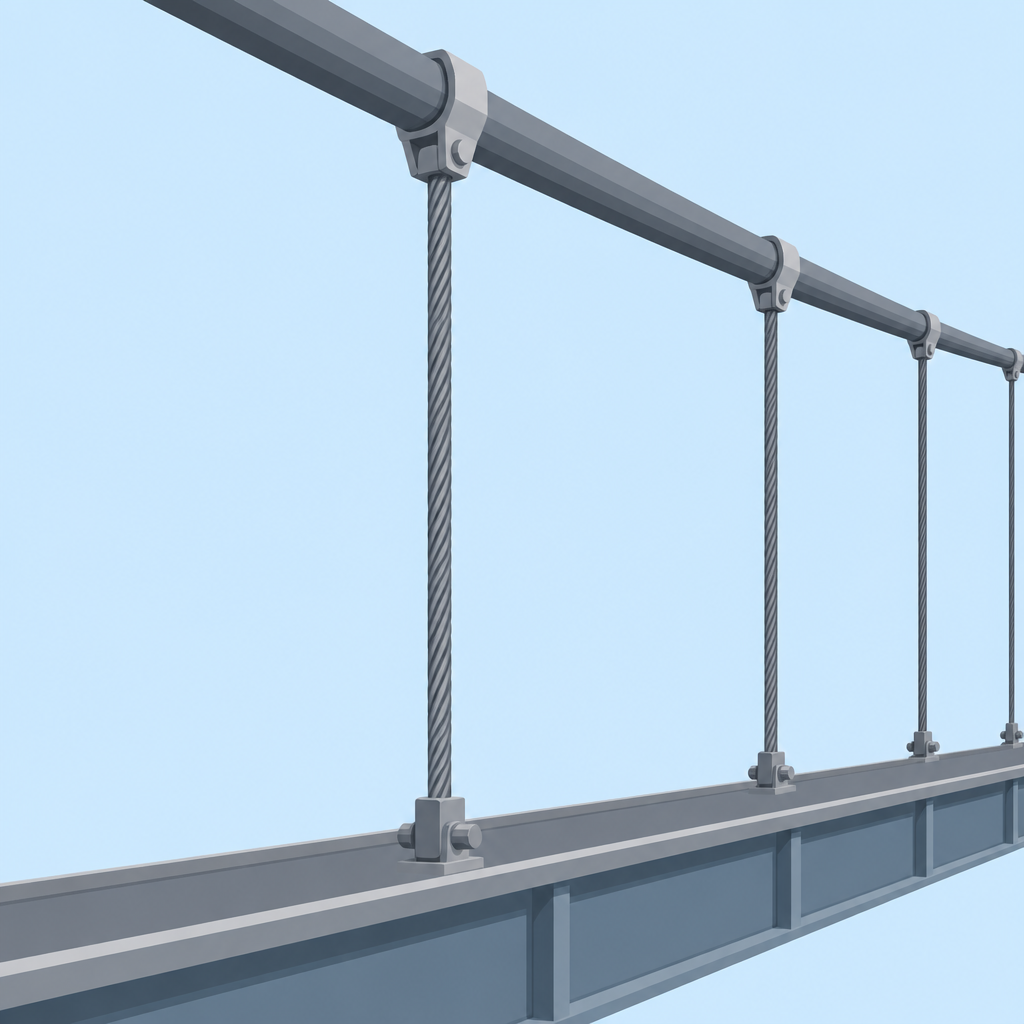
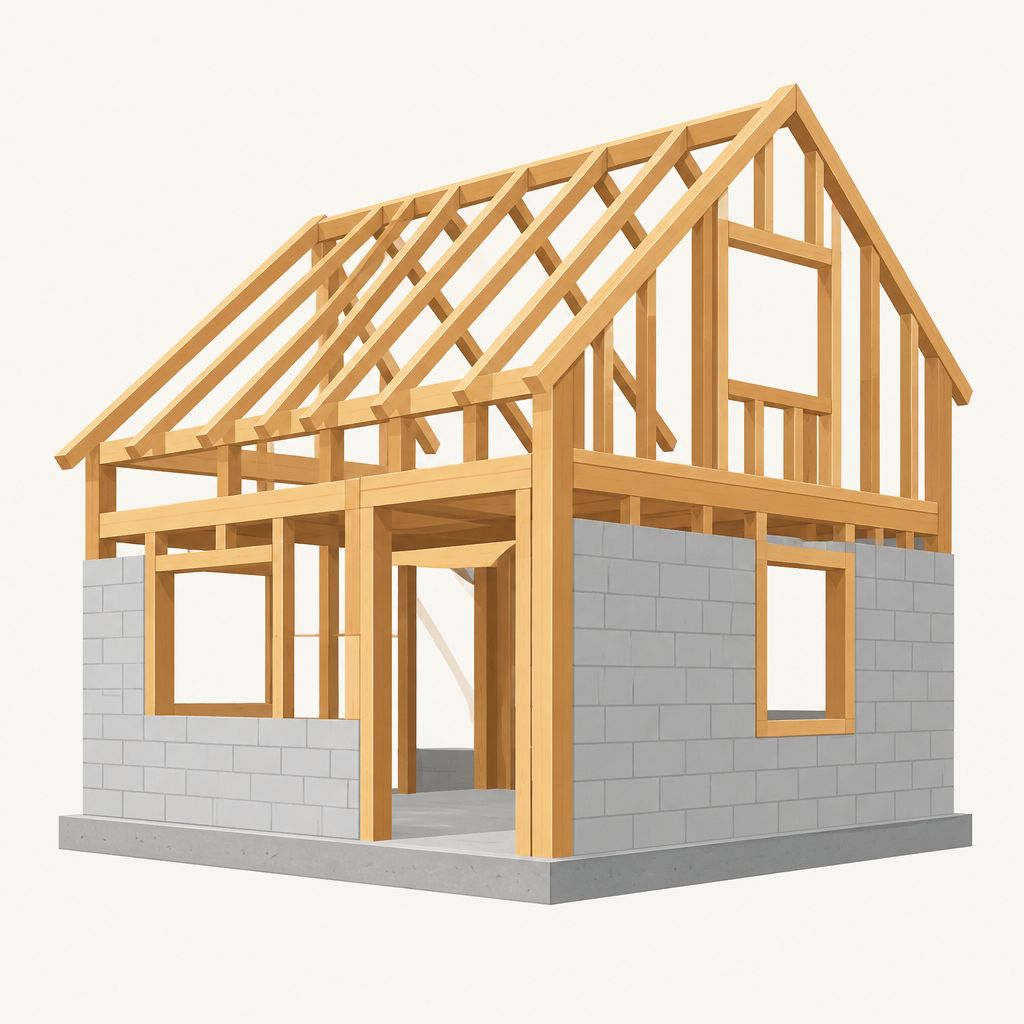
- Image A features timber framing and brick, whereas Image B is dominated by reinforced concrete and steel cable.
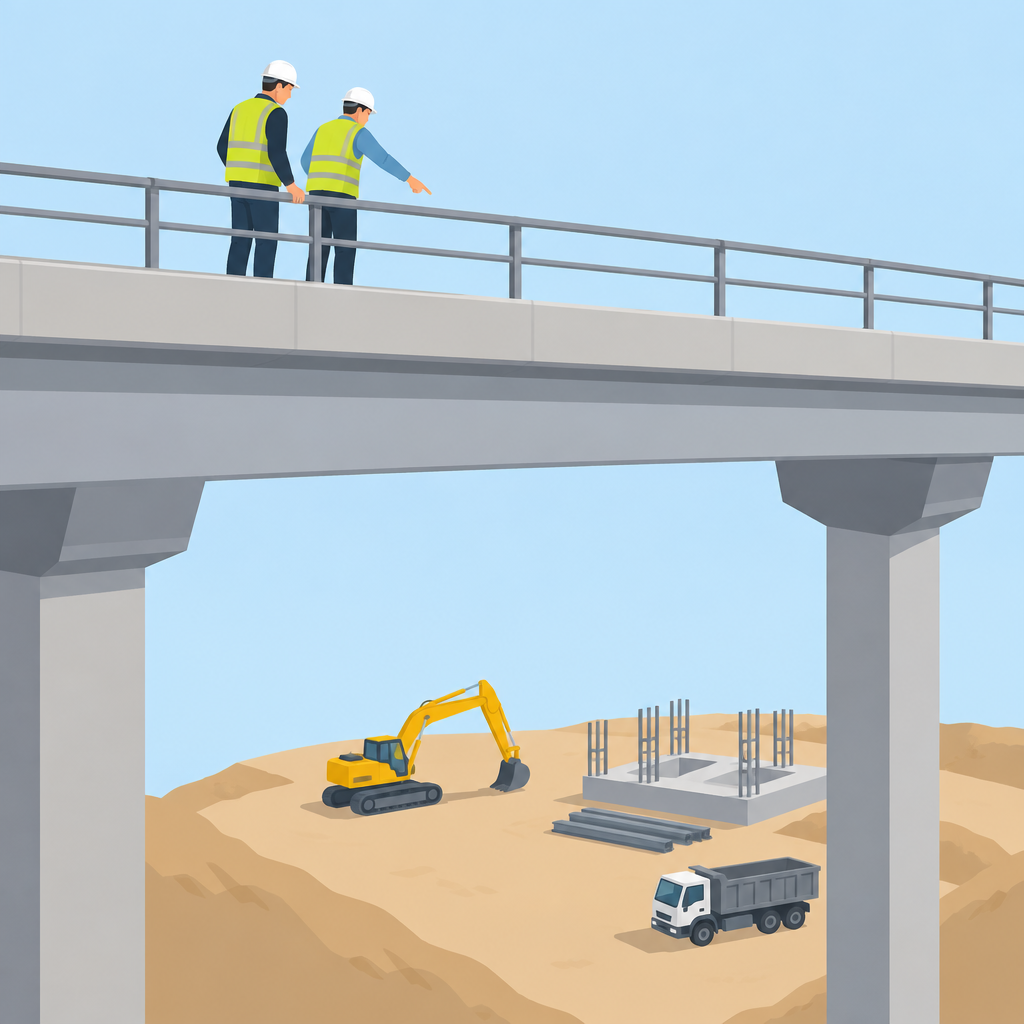
- Workers in Image A are at most two storeys high, whereas in Image B they operate at great heights above the water on pylons and suspended platforms.
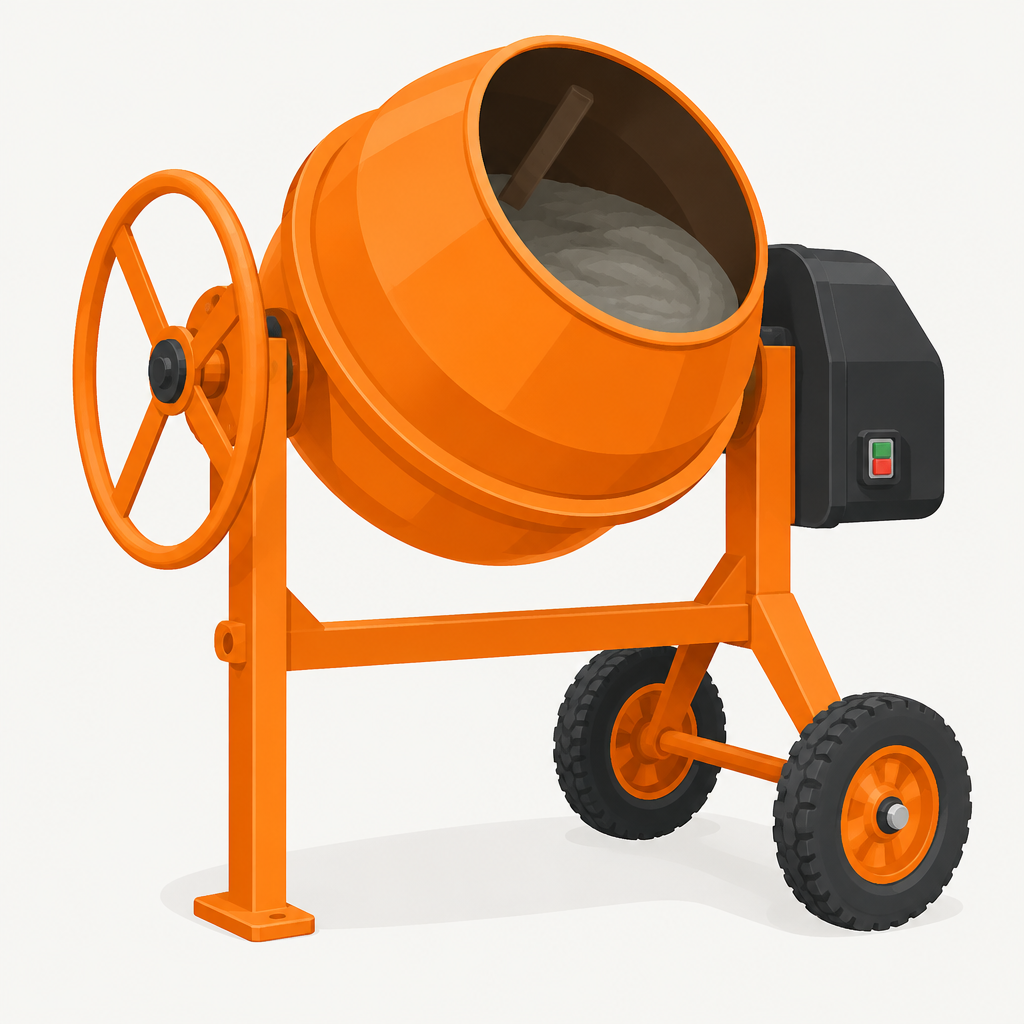
- Image A relies on small-scale equipment such as a concrete mixer, whereas Image B employs large cranes and heavy machinery.
- Image A shows three workers, whereas Image B shows a much larger workforce spread across the deck and pylons.
- Image A uses conventional load-bearing wall construction, whereas Image B uses a suspension cable system.
- Image A shows bricklaying and carpentry, whereas Image B shows large-scale deck assembly and cable rigging.
Useful comparing language
Step 2 · Similarities and Differences: Both, Neither, Whereas, and While
🔧 Grammar — both and neither with noun phrases; contrast conjunctions whereas and whileTo do this task, you need four useful words: both, neither, whereas, and while. Use both when something is true in Image A and Image B. Use neither when something is true in neither image. Use whereas or while to contrast two different things in one sentence. Both sites have scaffolding — this is a similarity. Image A has a concrete mixer, whereas Image B does not — this is a difference. Image A is set on land, while Image B is located over open water — another contrast. Both and neither come before a noun phrase. Whereas and while connect two contrasting clauses. Be careful: do not use whereas at the start of a sentence without a second clause to contrast it with. Open the ‘Compare’ toggle for more examples, then write your 4–6 sentences.
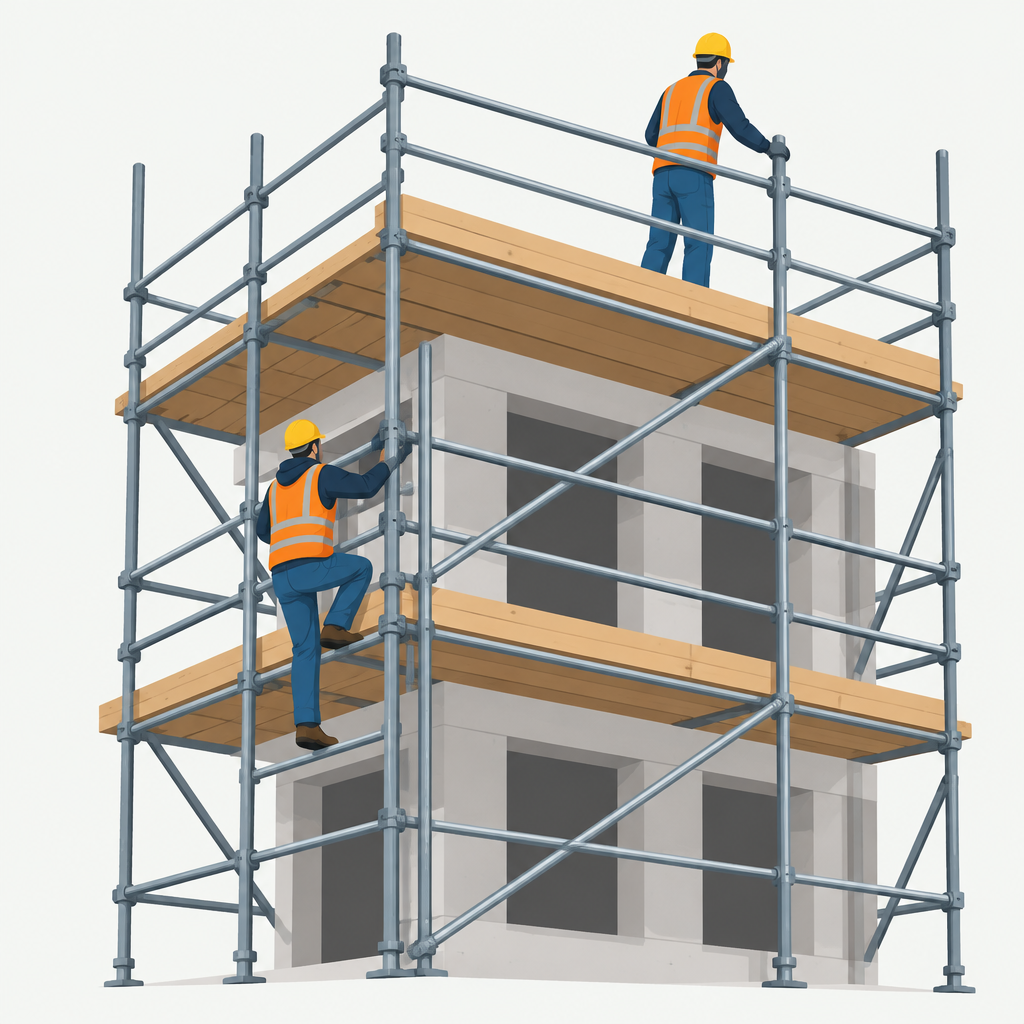
- Both sites have scaffolding erected around the structure.
- Image A relies on a concrete mixer and a wheelbarrow, whereas Image B uses large cranes and heavy machinery.
- Image A is set in a suburban neighbourhood, while Image B is located over a wide body of water.
🧰 Open the 'Compare' toggle for more sentence frames using both, neither, whereas, and while.
→ Now write 4–6 sentences about what the two sites share and what is different — use all four of the words above.
⇄ Comparing Image A and Image B
In both images
Only in Image A
Only in Image B
Differences
- Image A shows a small domestic structure, whereas Image B shows a massive civil engineering project spanning open water.
- Image A is set in a suburban neighbourhood on land, while Image B is located over a wide body of water.
- Image A features timber framing and brick, whereas Image B is dominated by reinforced concrete and steel cable.
- Workers in Image A are at most two storeys high, whereas in Image B they operate at great heights above the water on pylons and suspended platforms.
- Image A relies on small-scale equipment such as a concrete mixer, whereas Image B employs large cranes and heavy machinery.
- Image A shows three workers, whereas Image B shows a much larger workforce spread across the deck and pylons.
- Image A uses conventional load-bearing wall construction, whereas Image B uses a suspension cable system.
- Image A shows bricklaying and carpentry, whereas Image B shows large-scale deck assembly and cable rigging.
Useful comparing language
Step 3 · Describing Materials and Colours: Is Made Of and Is Built From
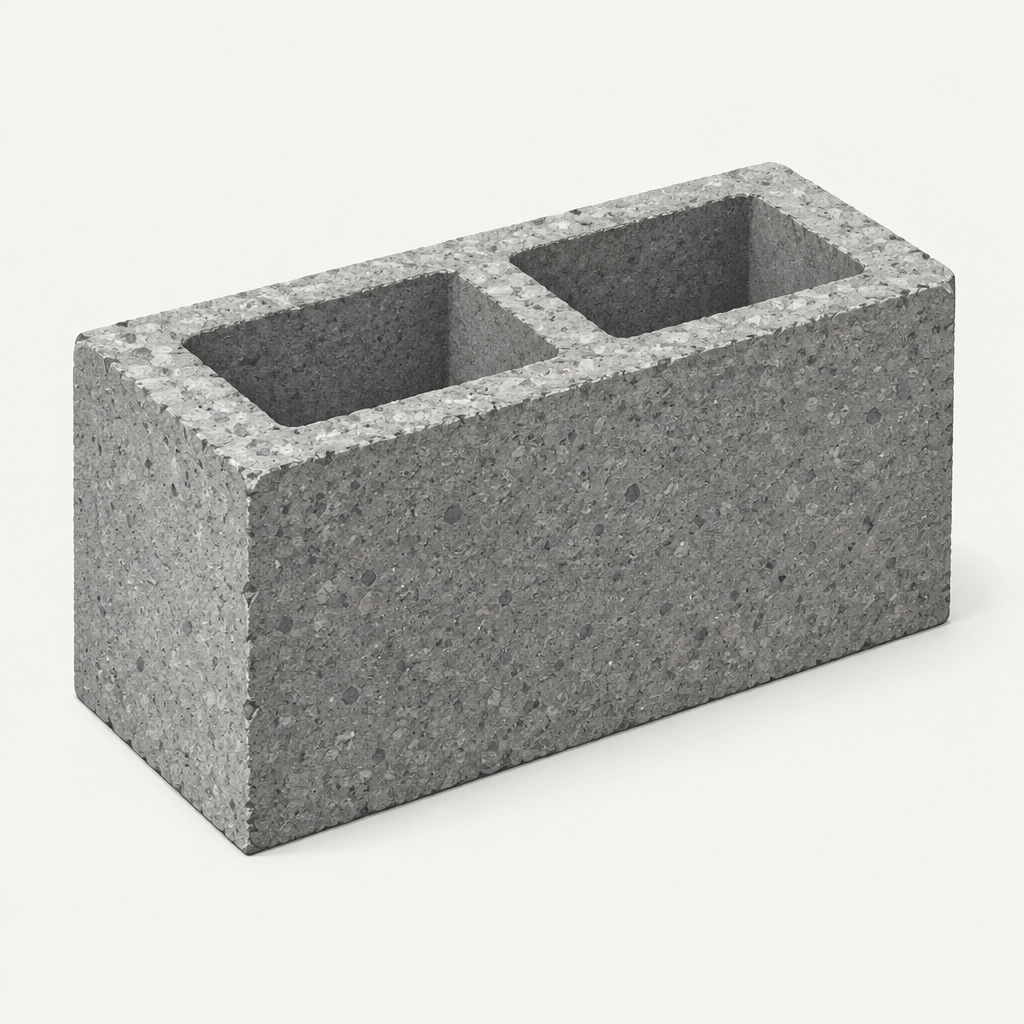
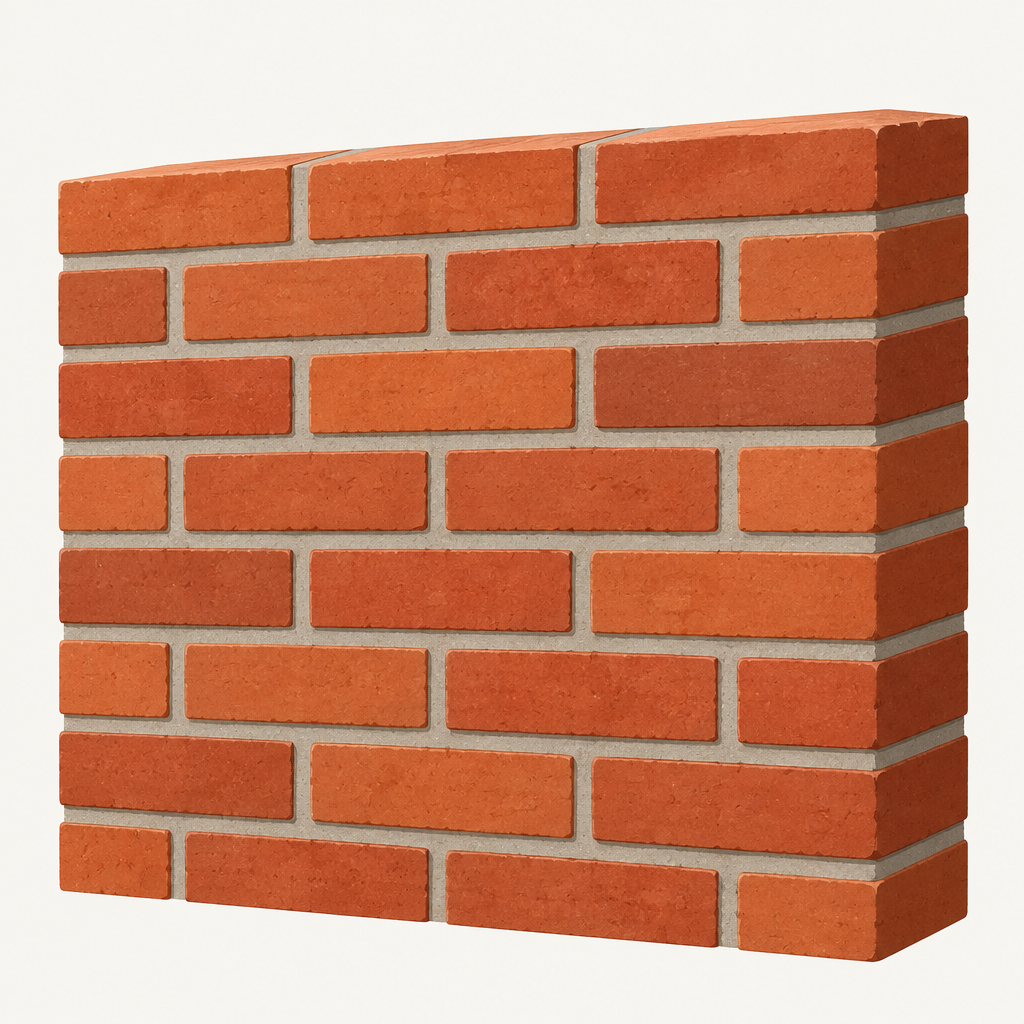
🔧 Grammar — describe_with_passives: is made of, is built from, is covered inTo do this task, you need to describe what things are made of and what colour they are. Use is made of or is built from before the material. Put the colour adjective before the noun. Look at these examples from the images. The pylon is made of reinforced concrete and is grey. The roof frame is built from timber and is pale tan in colour. The suspension cables are made of steel and hang in diagonal lines between the pylons. Colour adjectives come first: grey concrete block wall, yellow hydraulic crane, red brick coursework. Be careful: do not confuse made of and made from — both are correct, but is made of is more common for describing materials you can still see. Open the ‘Palette’ toggle for colour and material words, then write your five sentences.
- The pylon is made of reinforced concrete and is grey.
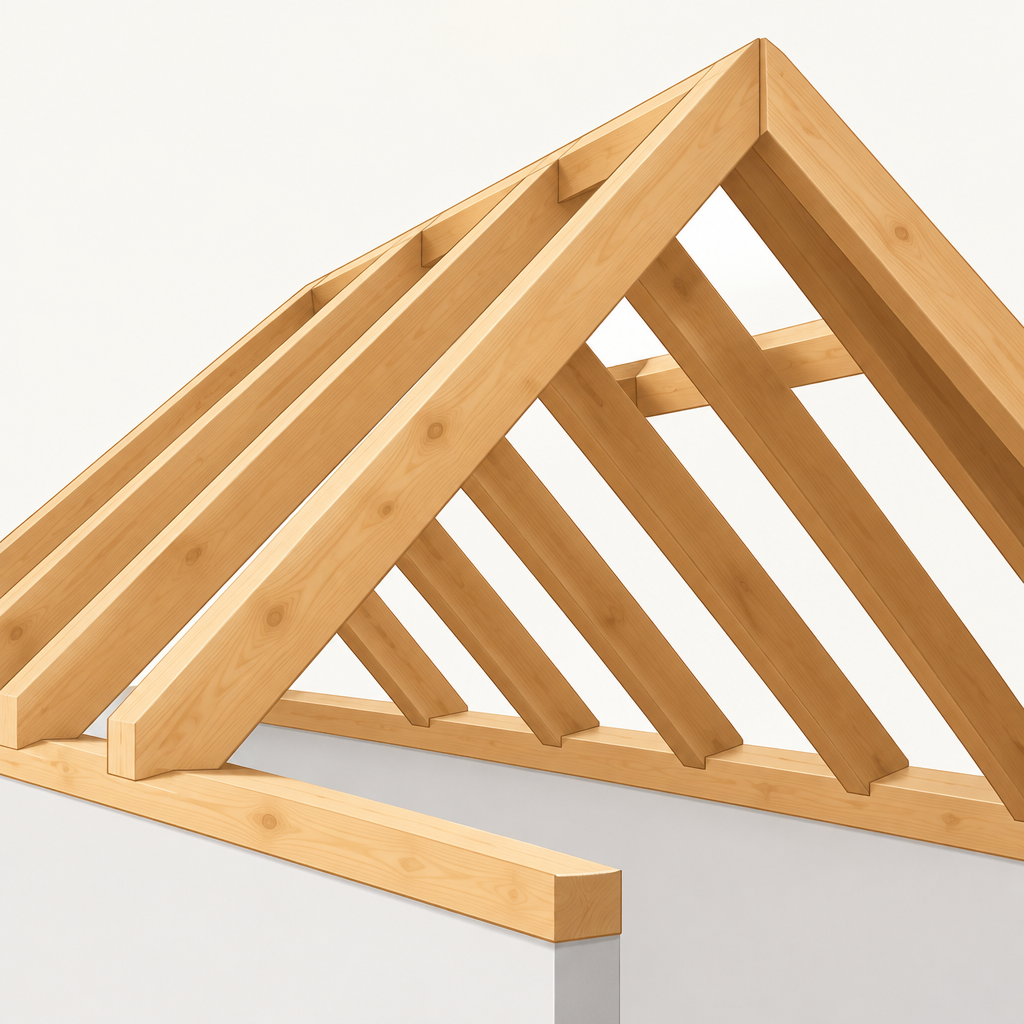
- The roof frame is built from timber.
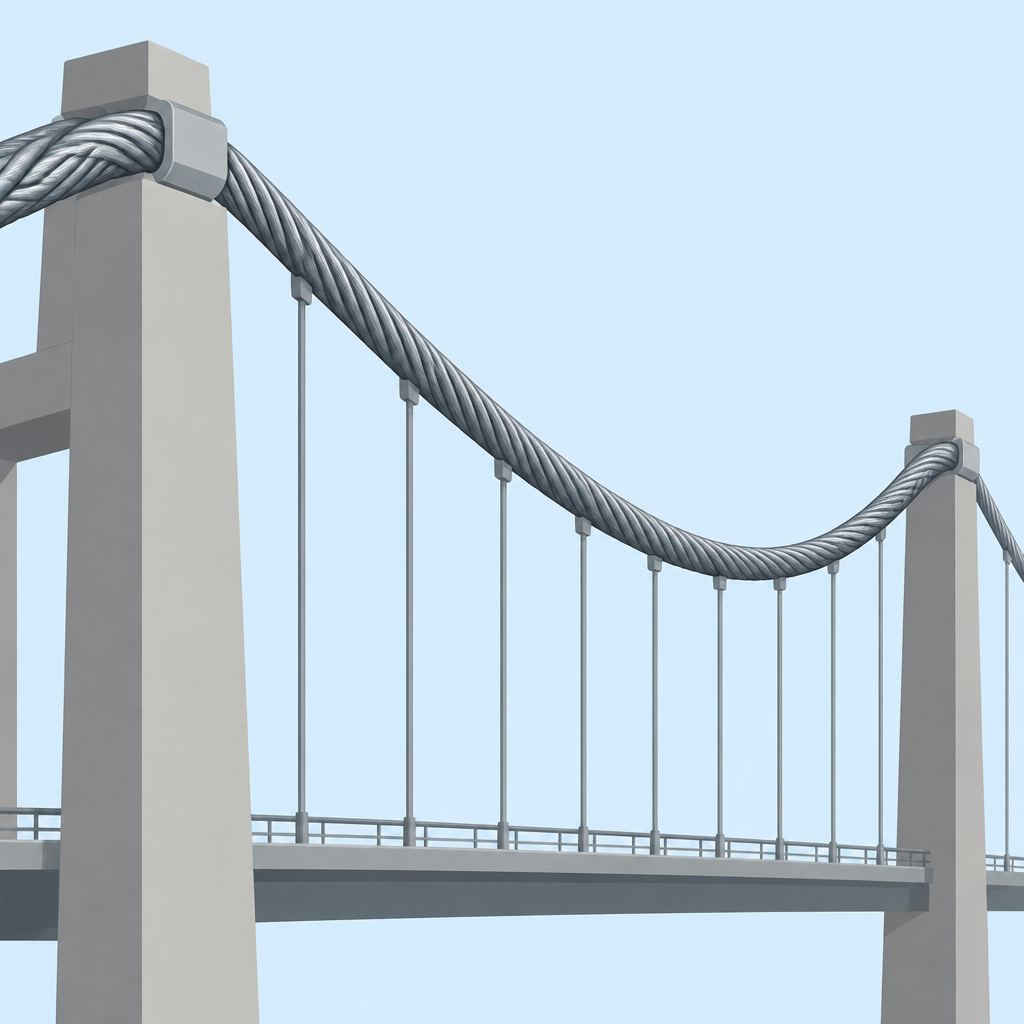
- The suspension cables are made of steel and hang diagonally between the pylons.
🧰 Open the 'Palette' toggle for a full list of colour and material adjectives from both images.
→ Now choose five objects — at least two from each image — and write one sentence about the colour and material of each one.
🎨 Language palette
Two active construction sites at vastly different scales — a modest residential house and a large suspension bridge — both captured during daylight with workers, scaffolding, and structural materials prominently visible.
The things you must name
Useful supporting words
In the background
Describing words — Colour
Describing words — Size and shape
Describing words — Texture and material
Describing words — Condition
Describing words — Overall feel
Saying where things are
More position phrases
What things are doing
Words that go together
Compound nouns
- Choose an object from Image A and describe its colour and material.
- Choose a second object from Image A and describe its colour and material.
- Choose an object from Image B and describe its colour and material.
- Choose a second object from Image B and describe its colour and material.
- Choose any object from either image and describe its colour and material.
Step 4 · Describing Actions Right Now: The Present Continuous
🔧 Grammar — present continuous for ongoing actionsTo do this task, you need the present continuous tense. Use it to describe what workers are doing at this moment in the image. The form is: subject + is/are + verb-ing. Always say where the worker is as well as what they are doing. One worker is laying bricks at mid-level on the wall. Another worker is working on the timber roof frame at the top of the building. In Image B, workers are standing on suspended platforms attached to the pylons. Use is for one person and are for more than one. Be careful: do not use the present simple for actions you can see happening right now. Say a worker is handling materials, not a worker handles materials. Open the ‘Palette’ toggle for action verbs and location phrases, then write your 5–6 sentences.
- One worker is laying bricks at mid-level on the wall.
- A worker is working on the timber roof frame at the top of the building.
- Workers are standing on suspended platforms attached to the pylons high above the water.
🧰 Open the 'Palette' toggle for action verbs and place phrases to help you say exactly where each worker is.
→ Now write 5–6 sentences about what the workers in both images are doing — describe the action and the location for each one.
🎨 Language palette
Two active construction sites at vastly different scales — a modest residential house and a large suspension bridge — both captured during daylight with workers, scaffolding, and structural materials prominently visible.
The things you must name
Useful supporting words
In the background
Describing words — Colour
Describing words — Size and shape
Describing words — Texture and material
Describing words — Condition
Describing words — Overall feel
Saying where things are
More position phrases
What things are doing
Words that go together
Compound nouns
🏁 Put It All Together
You have practised four things: comparing with adjectives and modifiers, using both and whereas to show similarities and differences, describing materials and colours, and using the present continuous for actions. Now use all of these in one longer description of both images.
- ☐ Use much, far, a lot, slightly, or a little with every comparative adjective.
- ☐ Use both or whereas at least once to connect a similarity or difference.
- ☐ Describe the colour and material of at least two objects.
- ☐ Use the present continuous for every worker action you describe.
💬 Discussion
• Would you prefer to work on a small residential site like Image A or a large civil engineering project like Image B — and why?
• What do you think is the most important piece of equipment on a construction site — a crane, a concrete mixer, or something else?
• Have you ever seen scaffolding or a suspension cable system near where you live — what was being built?
Member-Exclusive Practice Bar
Access a wide range of integrated practice for this unit — from Vocabulary and Grammar activities to AI-curated Writing tasks and Thematic Chat practice.
This feature is available to YSP members.
Explore Membership BenefitsMember-Exclusive Vocabulary Review & Acquisition System
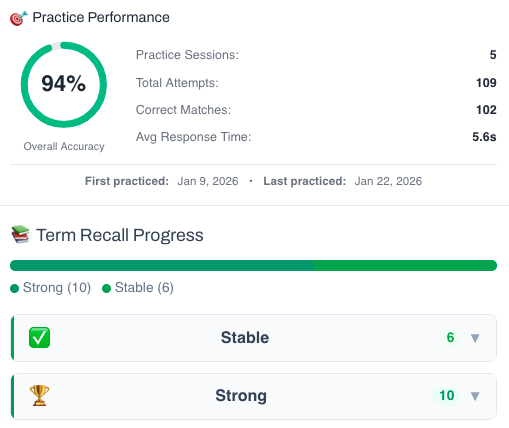
This isn’t a simple quiz — it’s a fully tracked learning system. You build knowledge through recognition, then recall, and your progress feeds directly into the Integrated Practice Bar (Writing tasks, AI Chat, and more).
- Practice sessions, accuracy, and response-time tracking
- Term strength levels (Learning → Stable → Strong)
- Personal progress history for each unit
This feature is available to YSP members.
Explore Membership Benefits📐 Where things are — positional language for images