How to Learn English: A Guide for A1 Adult Learners
Core PathWay
1 Who Are You? The A1 Adult Learner
You are an adult. You are not a beginner. You know some English words. You can read some English. You can understand some English. But you cannot make sentences easily. You studied English at school. Maybe 10 years ago. Maybe 20 years ago. Now you want to speak English. You want to write English. You are intelligent. You are brave. You are starting a new journey. You know many words. But grammar is difficult. You think in your language. Your language has long sentences. English needs short sentences now. You need to simplify. Think simple. Say simple. Subject + verb + object. This is your start. This is A1. You can do this.
2 How to Learn Grammar at A1
Grammar is the rules. At A1, learn the rules. Say the rules. Write the rules. Repeat the rules. This helps you remember. Look at this: I work. You work. He works. She works. Say it 10 times. Write it 10 times. Use your eyes. Use your ears. Use your hand. This is multi-modal learning. Your brain learns better. Do not translate from your language. Think in English. Make short sentences. One idea. One sentence. Practice every day. Five minutes is good. Ten minutes is better. Use the VAS games on YouSpeakPlus. Play the games. The games help you remember. Grammar is not magic. Grammar is practice.
3 How to Learn Vocabulary at A1
You need words. Words are important. But you forget words. This is normal. A man called Ebbinghaus studied this. He made the forgetting curve. You learn a new word today. Tomorrow you forget 50%. One week later you forget 90%. This is the problem. The answer is spaced repetition. You see the word today. You see the word tomorrow. You see the word next week. You see the word next month. Now you remember. This is how your brain works. Use the VAS on YouSpeakPlus. The VAS uses spaced repetition. You play games. You see words again. You remember words. Also, use multi-modal learning. Read the word. Hear the word. Write the word. Say the word. Use the word in a sentence. Your brain makes strong connections. You remember better. Some words have many meanings. This is normal in English. Learn one meaning first. Learn other meanings later. Be patient. You are building your English. One word at a time.
4 Why Writing Helps You Learn
Writing is very important. Writing helps your memory. Why? Your hand moves. Your brain works. Your eyes see. This is multi-modal learning. When you write a word, you remember it better. This is true. Write new words in a notebook. Write sentences. Write every day. Write short sentences. Three words. Five words. Eight words. This is good. Do not write long sentences. Long sentences have mistakes. Short sentences are strong. Use the writing tasks on YouSpeakPlus. The computer checks your writing. You see your mistakes. You learn from mistakes. Write about your day. Write about your work. Write about your family. Use new words. Use new grammar. Writing makes your English stronger. Your hand remembers. Your brain remembers. You remember.
5 A Story: Learning to Communicate
Alex is 35 years old. Alex wants to learn English. Alex knows some words. But Alex cannot make sentences. Alex meets a teacher called Sam. Sam says: ‘Hello Alex. We start today. Tell me. What do you see?’ Alex looks around. Alex says: ‘Table. Chair. Window. Door.’ Sam smiles. ‘Good! Now make a sentence. I see a table.’ Alex says: ‘I see a table.’ Sam says: ‘Perfect! Now tell me. What do you do every day?’ Alex thinks. Alex says: ‘I work. I eat. I sleep.’ Sam says: ‘Excellent! You are communicating. Now tell me. What did you do yesterday?’ Alex says: ‘I… work… yesterday.’ Sam says: ‘Good try! We say: I worked yesterday. You use the past. We learn this today.’ Alex writes: I worked yesterday. Alex repeats: ‘I worked yesterday.’ Sam says: ‘You are doing well. We talk about now. We talk about yesterday. Later we talk about tomorrow. We build your English. One sentence at a time. You are on a journey. Every day you learn. Every day you practice. You can do this.’ Alex feels happy. Alex can communicate.
6 Your Learning Journey: Remember This
You are an A1 adult learner. You know words. You need grammar. You need practice. Learn grammar rules. Say them. Write them. Repeat them. Learn vocabulary with spaced repetition. Use the VAS on YouSpeakPlus. See words many times. Remember words. Write every day. Writing helps memory. Your hand works. Your brain works. You remember. Think simple. Make short sentences. Subject + verb + object. Do not translate. Think in English. Be patient. You are building English. One word. One sentence. One day. You can do this. You are brave. You are on a journey. Practice every day. Use YouSpeakPlus tools. Play games. Write tasks. You are learning. You are communicating. This is your start. Welcome to English.
Member-Exclusive Practice Bar
Access a wide range of integrated practice for this unit — from Vocabulary and Grammar activities to AI-curated Writing tasks and Thematic Chat practice.
This feature is available to YSP members.
Explore Membership BenefitsMember-Exclusive Vocabulary Review & Acquisition System
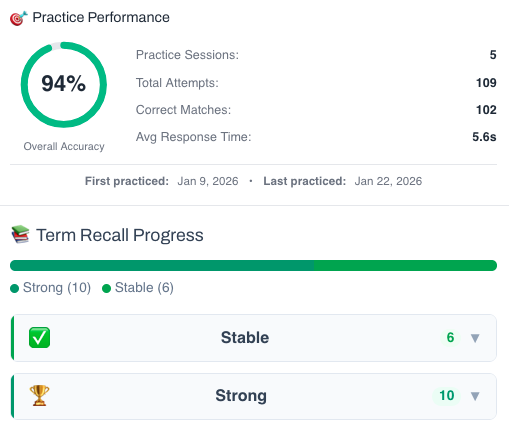
This isn’t a simple quiz — it’s a fully tracked learning system. You build knowledge through recognition, then recall, and your progress feeds directly into the Integrated Practice Bar (Writing tasks, AI Chat, and more).
- Practice sessions, accuracy, and response-time tracking
- Term strength levels (Learning → Stable → Strong)
- Personal progress history for each unit
This feature is available to YSP members.
Explore Membership Benefits🎮 Practice Games
Sentence Scrambler
How to learn as an Adult A1 learner – Sentence Scramble
Member-Exclusive Sentence Builder
Reconstruct scrambled sentences to practice word order and develop your grammar intuition.
This feature is available to YSP members.
Explore Membership Benefits