Describing Character with Compound Adjectives
Core PathWay1 Section 1. Character Opposites
Want to talk confidently about people’s character? It starts with these words. We use pairs of opposites to describe people. A hard-working person puts a lot of effort into work or studies. The opposite is bone-idle – someone who really does not want to work. In other words, they are very lazy. A kind-hearted person is warm and caring. A cold-hearted person shows no kindness. A good-natured person is cheerful and easy to get along with. A bad-tempered person gets angry easily. An open-minded person accepts new ideas. A narrow-minded person does not. These opposites help you describe people clearly.
2 Section 2. Self and Others
Some adjectives describe how people feel about themselves or others. A self-confident person believes in their own abilities. A self-conscious person feels nervous about what others think. Self-centred people think mostly about themselves. The opposite is other-directed – they focus on others’ needs. A big-headed person thinks they are more important than they really are. A down-to-earth person is sensible and does not pretend. These words help you talk about someone’s attitude toward themselves and others.
3 Section 3. Temper and Will
How does a person react to problems? An even-tempered person stays calm. A hot-headed person gets angry quickly and acts without thinking. A strong-willed person is determined and does not give up easily. A weak-willed person gives up easily. Thick-skinned people are not hurt by criticism. Thin-skinned people get upset very easily. These adjectives are useful for describing someone’s emotional strength.
4 Section 4. Manners and Mind
How does a person behave socially? A well-mannered person is polite. Ill-mannered means rude. A quick-witted person thinks fast and gives clever answers. An absent-minded person often forgets things because their mind is elsewhere. These words are great for describing someone’s social behaviour and thinking style.
5 Section 5. Putting It All Together
Now you have a set of useful words to describe people. For example, you can say ‘She is very hard-working and down-to-earth.’ Or ‘He is bone-idle and ill-mannered.’ These compound adjectives are common in everyday English. Practice using them when you talk about friends, colleagues, or characters in a story.
Member-Exclusive Practice Bar
Access a wide range of integrated practice for this unit — from Vocabulary and Grammar activities to AI-curated Writing tasks and Thematic Chat practice.
This feature is available to YSP members.
Explore Membership BenefitsMember-Exclusive Vocabulary Review & Acquisition System
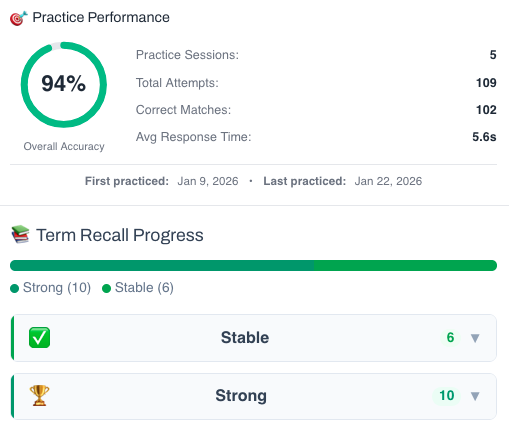
This isn’t a simple quiz — it’s a fully tracked learning system. You build knowledge through recognition, then recall, and your progress feeds directly into the Integrated Practice Bar (Writing tasks, AI Chat, and more).
- Practice sessions, accuracy, and response-time tracking
- Term strength levels (Learning → Stable → Strong)
- Personal progress history for each unit
This feature is available to YSP members.
Explore Membership Benefits