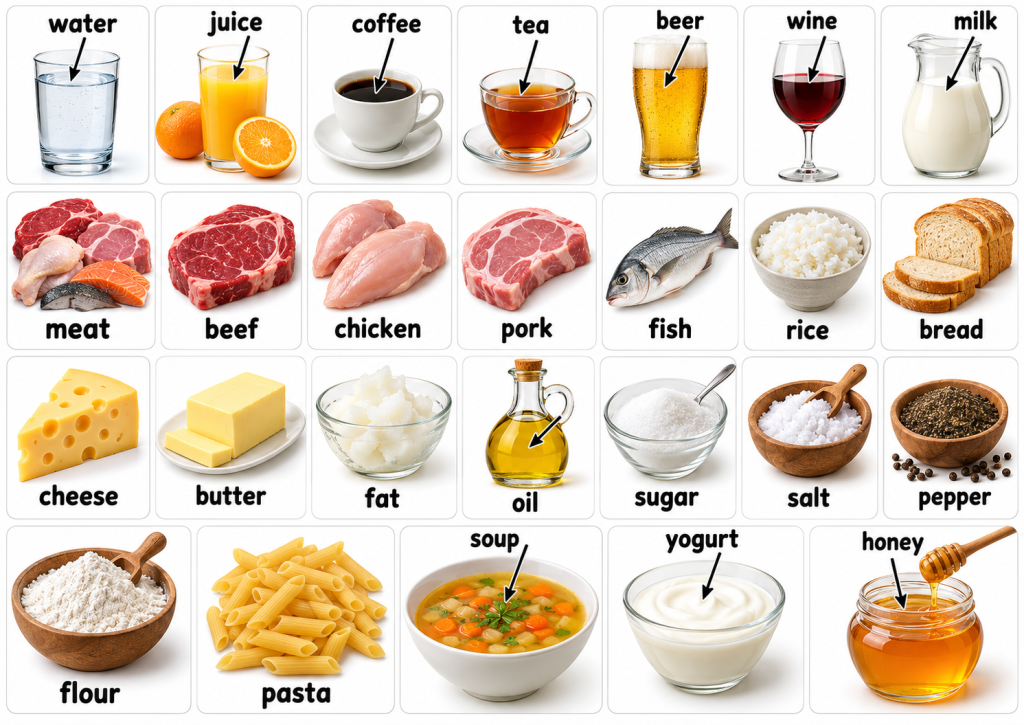
Common Uncountable Food & Drink: The Words You Need at the Table
Core PathWay
1 Drinks: The Basics
Ready to build your vocabulary for food and drink? Here’s where we start — with what’s in your glass.
Some drink words in English are uncountable. This means we do not say ‘a water’ or ‘two milks’. We say ‘some water’ or ‘a glass of milk’.
Water is the most basic drink. We drink it every day. You can ask for ‘a glass of water’ or ‘some water’.
Juice is a drink made from fruit. Orange juice is very common at breakfast. We say ‘a glass of juice’, not ‘a juice’.
Coffee is a hot drink made from coffee beans. Many people drink it in the morning. You can order ‘a cup of coffee’.
Tea is another hot drink. It is very popular in the UK. People often add milk to their tea.
Beer is an alcoholic drink made from grain. Wine is an alcoholic drink made from grapes. We say ‘a glass of wine’ or ‘a bottle of beer’.
Milk is a white drink that comes from cows. It is also used in cooking and in coffee or tea.
Notice the pattern: for all these drinks, we use ‘a glass of’, ‘a cup of’, or ‘a bottle of’ to talk about amounts.
2 Meat and Fish
Now let’s look at words for animal food. These are also uncountable in English.
Meat is the general word for animal flesh that we eat. Beef, chicken, and pork are all types of meat.
Beef is meat from a cow. Burgers and steak are made from beef.
Chicken is meat from a chicken. It is one of the most popular meats in the world. We say ‘some chicken’ or ‘a piece of chicken’.
Pork is meat from a pig. Bacon and ham are types of pork.
Fish is also uncountable when we talk about it as food. We say ‘I had fish for dinner’, not ‘I had a fish for dinner’. (We say ‘a fish’ only when we talk about the animal.)
Here is a useful pattern to notice: we often use ‘some’ with these words when we talk about food. ‘I’d like some beef, please.’ ‘Can I have some chicken?’
These words describe food as a substance — not individual pieces. That is why they are uncountable.
3 Grains, Dairy, and Baked Foods
This group covers some of the most common ingredients in kitchens around the world.
Rice is a grain that is eaten as a staple food in many countries. We cook it in water. We say ‘a bowl of rice’ or ‘some rice’.
Bread is a baked food made from flour and water. We say ‘a slice of bread’ or ‘some bread’. We do not say ‘a bread’.
Pasta is made from flour and water, and it is a staple food in Italian cooking. Spaghetti and penne are types of pasta.
Flour is a fine powder made from grain. We use it to make bread, pasta, and cakes. You can buy it in a bag.
Cheese is a solid dairy food made from milk. We say ‘a piece of cheese’ or ‘some cheese’.
Butter is a soft, yellow food made from milk. We spread it on bread. We say ‘some butter’ or ‘a little butter’.
Yogurt is a thick, creamy food made from milk. It is often eaten at breakfast. We say ‘a pot of yogurt’ or ‘some yogurt’.
Notice that ‘a little’ is very useful with these words. ‘Can I have a little butter?’ sounds natural and polite.
4 Fats, Oils, and Sweeteners
Now let’s look at words for things we add to food — to cook it, sweeten it, or flavour it.
Fat is a substance found in meat, dairy, and some oils. It gives food flavour and energy. We say ‘too much fat’ or ‘a little fat’.
Oil is a liquid fat used in cooking. Olive oil and sunflower oil are common types. We say ‘some oil’ or ‘a little oil’.
Sugar is a sweet substance we add to food and drink. We put it in coffee, tea, and cakes. We say ‘a spoonful of sugar’ or ‘some sugar’.
Honey is a sweet, sticky liquid made by bees. It is a natural alternative to sugar. We say ‘a jar of honey’ or ‘some honey’.
These four words are all uncountable. We use ‘a little’, ‘some’, ‘too much’, or ‘a spoonful of’ to talk about amounts.
Here is a tip: when you want to say there is a large amount, use ‘a lot of’. ‘There’s a lot of sugar in this drink.’ When you want to say a small amount, use ‘a little’. ‘I just need a little oil.’
5 Seasoning and Flavour
This section is about words for things we add to food to give it taste.
Salt is a white mineral that we add to food to make it taste better. We say ‘a pinch of salt’ or ‘some salt’. Too much salt is not good for your health.
Pepper is a spice that gives food a hot, sharp taste. We use black pepper most often. We say ‘some pepper’ or ‘a little pepper’.
Salt and pepper are almost always used together. You will often see them on restaurant tables. The phrase ‘salt and pepper’ is very common in cooking instructions.
Notice that both words are uncountable. We never say ‘a salt’ or ‘a pepper’ when we talk about the seasoning. (We can say ‘a pepper’ only when we mean the vegetable — a red or green pepper.)
Here is a useful sentence pattern: ‘Add some salt and pepper to taste.’ This means: add as much as you like, depending on what tastes good to you.
6 Ready-to-Eat Foods
Our final group covers foods that are ready to eat or easy to prepare.
Soup is a liquid food made by cooking vegetables, meat, or fish in water or stock. We say ‘a bowl of soup’ or ‘some soup’. It is often eaten as a starter.
Salad is a dish made from raw vegetables, and sometimes also cheese, meat, or fish. We say ‘a bowl of salad’ or ‘some salad’. In a restaurant, you might order ‘a side salad’.
Notice that both ‘soup’ and ‘salad’ are uncountable when we talk about the food in general. However, we can say ‘a soup’ or ‘a salad’ on a restaurant menu, where it means ‘one serving’. This is a common exception in spoken and written menu language.
Think of it this way: at home, you make ‘some soup’. In a restaurant, you order ‘a soup’. Both are correct — the context is different.
You have now seen all 27 food and drink words in this pack. They are all uncountable in everyday use. Remember: use ‘some’, ‘a little’, ‘a lot of’, or a container word like ‘a glass of’ or ‘a bowl of’ to talk about amounts.
7 Now Hear It in Use
You have met all the words. Now hear them working in a real conversation. Listen to how two people use these food and drink terms naturally — notice which words they choose and how they talk about amounts and preferences.
💬 Dialogue 1: What’s for Dinner? Planning a Meal Together
Two flatmates, Priya and Dan, are in their kitchen on a weekday evening. They want to cook dinner together but need to agree on what to make and check what ingredients they have.
📝 Comprehension Check: Cooking Dinner Together
Answer the questions based on what you heard in the audio.
Which speaker wanted to make the noodles from the beginning?
Which speaker said they bought something from the shop that morning?
Which speaker filled the pot with water?
Which speaker said they would pour two drinks while they waited?
Which speaker had the idea to begin the meal with a hot dish of vegetables?
Which speaker told the other person to put fat in the pan before cooking the meat?
Priya: “Dan, I was thinking we could make pasta tonight. We’ve got flour, so I could even make it fresh. What do you think?”
Dan: “Fresh pasta sounds great. Do we have enough oil? I want to make a sauce with chicken and some vegetables.”
Priya: “Yes, there’s plenty of oil. And I think there’s some cheese in the fridge — we could grate it on top. I’ll check if we need salt or pepper.”
Dan: “Good idea. Should we add a little butter to the sauce as well? It makes it much richer. Oh, and do we have enough water to boil the pasta?”
Priya: “Yes, plenty of water — I just filled the pot. And there’s definitely some butter in the fridge. Actually, while we cook, do you want a glass of milk or something cold?”
Dan: “A glass of milk sounds good, thanks. Actually, shall we also make some soup to start? We have a few vegetables that need using up.”
Priya: “Oh yes, good thinking. We could make a quick vegetable soup. I’ll need a little salt and some pepper for it. Do we have any bread to go with it?”
Dan: “There’s some bread in the cupboard — I bought it this morning. Should I cut a few slices? And do we need more sugar for anything, or just the savoury stuff tonight?”
Priya: “No sugar tonight, I think — it’s all savoury. But yes, cut some bread for the soup. Oh, I nearly forgot — the chicken. How much do we have? Is there enough for two?”
Dan: “Yes, there’s plenty of chicken — I think we have about four hundred grams. That’s definitely enough. Should I start cutting it while you make the pasta dough?”
Priya: “Perfect. You do the chicken and I’ll start on the pasta. Don’t forget to add a little oil to the pan first. And maybe a pinch of salt and some pepper when you fry it.”
Dan: “Got it — a little oil, salt, and pepper. This is going to be a great dinner. I’ll pour us both a glass of water while I wait for the pan to heat up.”
Member-Exclusive Practice Bar
Access a wide range of integrated practice for this unit — from Vocabulary and Grammar activities to AI-curated Writing tasks and Thematic Chat practice.
This feature is available to YSP members.
Explore Membership BenefitsMember-Exclusive Vocabulary Review & Acquisition System
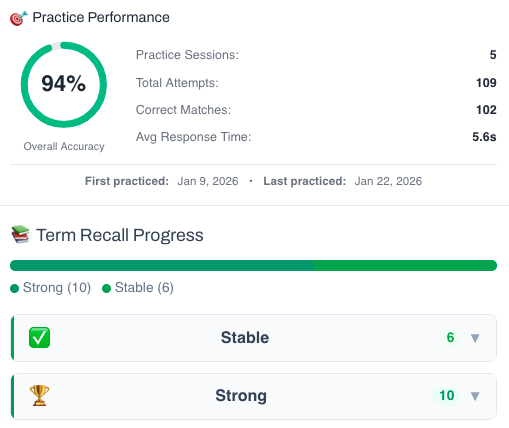
This isn’t a simple quiz — it’s a fully tracked learning system. You build knowledge through recognition, then recall, and your progress feeds directly into the Integrated Practice Bar (Writing tasks, AI Chat, and more).
- Practice sessions, accuracy, and response-time tracking
- Term strength levels (Learning → Stable → Strong)
- Personal progress history for each unit
This feature is available to YSP members.
Explore Membership Benefits