The Language of Workplace Grievances: From Complaint to Resolution
Core PathWay
1 Section 1. What Is a Grievance — and How Does It Start?
Workplace HR has its own language. Let’s make sure you can use it. A grievance is a formal complaint that an employee raises about their treatment, working conditions, or a colleague’s conduct. The word ‘grievance’ is important here — it is not just any complaint. It is a complaint that goes through an official workplace process. When an employee decides to start this process, we say they to raise a grievance — in other words, they formally submit a complaint through the proper workplace channel. The person who does this has a specific name: they are called the complainant. Not every problem needs to become a formal grievance straight away. Many workplaces prefer informal resolution first — this means sorting out a problem through a direct conversation or a manager stepping in, without starting a formal process. Think of it as ‘let’s talk before we make this official.’ If informal resolution does not work, the employee can move to a formal grievance. This is a written complaint that sets out what happened, when it happened, who was involved, and what outcome the employee is looking for. Notice the key word: written. A formal grievance is always a document. Every organisation should have a grievance procedure — sometimes called a grievance policy. This is the organisation’s documented process for how complaints are raised and handled. It is the rulebook that both employees and managers must follow.
2 Section 2. The Investigation — Finding Out What Really Happened
Once a formal grievance is submitted, the employer must carry out an investigation. This is the employer’s process of reviewing the complaint, interviewing the people involved, and gathering evidence. Think of it as a careful fact-finding exercise. The person who runs this process is called the investigating officer. This person is appointed to carry out the investigation impartially — which means they must be fair and not take sides. One of the most important jobs in any investigation is to gather evidence — in other words, to collect the facts, documents, or accounts needed to establish what really happened. Evidence can come in many forms. One common form is a witness statement. This is a written account given by someone who saw or has knowledge of the events in question. Witness statements are important because they give the investigating officer a clear record of what different people saw or experienced. Notice how these terms build on each other: the investigating officer gathers evidence, and witness statements are one key type of evidence. The investigation must be thorough and fair. If the investigating officer misses important evidence or treats people unfairly, the whole process can be challenged later. A good investigation protects both the complainant and the person the complaint is about.
3 Section 3. The Hearing — Presenting Your Case Formally
After the investigation, the next step is usually a grievance hearing. This is a formal meeting at which the employee presents their complaint and questions are put to them. It is not a casual conversation — it is a structured, official meeting. Employees have an important legal right at this stage. It is called the right to be accompanied. This means an employee is entitled to bring a colleague or a trade union representative to a formal hearing for support. The person they bring is called their companion (at a hearing) — in other words, the colleague or representative who accompanies them to the formal meeting. Having a companion does not mean that person speaks for the employee. The companion is there for support. At the hearing, the employee will need to present your case — this means setting out their version of events and their supporting evidence clearly. It is their opportunity to explain exactly what happened and why they believe their grievance is justified. Preparation matters a lot here. An employee who has organised their facts, their witness statements, and their key points will find it much easier to present their case effectively. The hearing is also a chance for the employer to ask questions and clarify anything that was not clear from the written complaint or the investigation.
4 Section 4. Outcomes, Appeals, and the Bigger Picture
After the grievance hearing, the employer sends the employee an outcome letter. This is the written decision sent to an employee after a formal process has concluded. The outcome letter will say one of two things. Either the employer will to uphold (a grievance) — meaning they formally agree that the complaint was justified — or the grievance will be not upheld, which means the employer has decided the complaint was not justified. You might also hear the phrase to dismiss (a grievance), which means the same thing as ‘not upheld.’ If the employee disagrees with the decision, they can make an appeal. This is a request for a more senior manager to review the outcome. To make a valid appeal, the employee must provide grounds for appeal — the specific reasons they are challenging the decision. Not every grievance needs to go through a full formal process. Sometimes both sides agree to try mediation instead. This is where a neutral third party helps both sides reach an agreement, without a formal hearing. Now, what kinds of issues actually lead to grievances? Three important ones are harassment, bullying, and discrimination. Harassment means unwanted behaviour that violates someone’s dignity or creates a hostile environment. Bullying is repeated, unreasonable behaviour that undermines an employee’s ability to do their job. Discrimination means treating someone unfairly because of a protected characteristic such as age, sex, or disability. Sometimes an employee witnesses something more serious — illegal activity or a risk to public safety. When they report this, it is called whistleblowing, and the report itself has a legal name: a protected disclosure. This protection is important because it means the employee cannot be treated unfairly for speaking up. Finally, if a problem cannot be resolved at a local level, someone may need to escalate (an issue) — in other words, move it up to a higher level of management or a more formal process.
Member-Exclusive Practice Bar
Access a wide range of integrated practice for this unit — from Vocabulary and Grammar activities to AI-curated Writing tasks and Thematic Chat practice.
This feature is available to YSP members.
Explore Membership BenefitsMember-Exclusive Vocabulary Review & Acquisition System
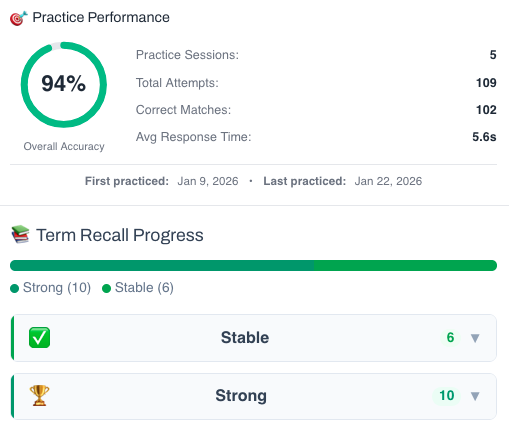
This isn’t a simple quiz — it’s a fully tracked learning system. You build knowledge through recognition, then recall, and your progress feeds directly into the Integrated Practice Bar (Writing tasks, AI Chat, and more).
- Practice sessions, accuracy, and response-time tracking
- Term strength levels (Learning → Stable → Strong)
- Personal progress history for each unit
This feature is available to YSP members.
Explore Membership Benefits