Ending Employment: The Language of Dismissal, Departure, and What Comes After
Core PathWay
1 Section 1. The End of Employment: Dismissal and Its Many Forms
Want to talk confidently about the end of an employment relationship? It starts with these words.
The most important word in this pack is dismissal. Dismissal is when an employer formally ends an employee’s contract. The verb form is to dismiss — so we say ‘The company dismissed him’ or ‘She received a letter of dismissal.’
Not all dismissals are the same. Summary dismissal is the most serious type. This means dismissal without any notice or notice pay. It is only used in cases of gross misconduct — for example, theft or violence at work.
Dismissal with cause (also called dismissal for cause) is also serious. This means the employer has a clear reason — usually the employee’s behaviour or poor performance. The words ‘with cause’ and ‘for cause’ mean the same thing.
Dismissal without cause is different. This is when the employer ends the contract, but it is not because of something the employee did wrong. The employee usually receives notice or payment instead of notice.
Finally, remember the verb to let someone go. This is a softer, less direct way of saying ‘to dismiss’. Managers often use it in conversation. And to part ways (or to part ways with someone) is a neutral, diplomatic phrase. Both sides use it when they want to sound calm and professional about the end of a working relationship.
2 Section 2. Notice, Payment, and Garden Leave
When employment ends, the question of time and money is always important. This section covers the key terms.
The notice period is the time between when notice is given and when employment actually ends. The length is set by the contract or by law. For example, a notice period might be one month or three months.
During a working notice period, the employee continues to come to work as normal until their last day. Everything carries on as usual — they do their job, they get paid.
Sometimes, the employer does not want the employee to work during the notice period. Instead, they make a payment called pay in lieu of notice, often shortened to PILON. This is a lump-sum payment — one single payment — made instead of asking the employee to work their notice.
Garden leave is a third option. During garden leave, the employee is still employed and still receives their salary. However, they do not come to work and they do not carry out any duties. The name is informal — the idea is that the employee has time to ‘tend their garden’ while they wait for the period to end.
Severance pay (also called termination pay) is a separate payment. It is money paid to an employee when their employment is ending, beyond their normal final salary. It is not the same as PILON — it is an extra payment on top.
3 Section 3. When Employees Push Back: Legal Claims and Tribunals
Sometimes an employee disagrees with how their dismissal was handled. There are specific legal terms for this.
First, it is important to know the difference between resignation and dismissal. Resignation (the verb is to resign) is the employee’s own decision to leave. The employer does not force them.
But sometimes an employee resigns because the employer’s behaviour has made it impossible to stay. This is called constructive dismissal. The key idea is that the employee did not really have a choice — the employer’s conduct forced them out.
Unfair dismissal is a legal claim. The employee says they were dismissed without a fair reason or without a fair process. Wrongful dismissal is also a legal claim, but it is different. It means the employer dismissed the employee without the correct notice or without following the right contractual process. These two terms are often confused — unfair dismissal is about fairness, wrongful dismissal is about procedure and contract.
When an employee makes a legal claim, they go to an employment tribunal. This is a court-like body that hears employment disputes. The person who brings the case is called the claimant. The employer (or other party) who the case is brought against is called the respondent.
4 Section 4. Resolving Disputes: Agreements and Protections
Not every dispute ends in a tribunal. Often, both sides reach an agreement before that happens. Here are the key terms.
A settlement agreement is a legal agreement. The employee agrees not to pursue any claims against the employer. In return, the employer usually makes a payment. Both sides sign the document and the matter is closed.
Before a settlement is reached, both sides may have private conversations. These conversations are often marked without prejudice. This label means that what is said in those discussions cannot be used as evidence later in a tribunal. It protects both sides and allows them to speak more openly.
A non-disclosure agreement — often called an NDA — is another type of legal agreement. It prevents one or both parties from sharing confidential information. NDAs are common in settlement agreements when the employer does not want the details to become public.
Think of it this way: the settlement agreement closes the legal door. The NDA locks it.
5 Section 5. The Practicalities of Leaving: Off-Boarding and Beyond
When someone leaves an organisation, there is a practical process to follow. This section covers the final steps.
Off-boarding is the overall process of formally and smoothly ending an employee’s time at the organisation. It includes admin tasks, returning equipment, and closing access to systems. Think of it as the opposite of onboarding.
Part of off-boarding is handling leaver documentation and final pay. This means the paperwork and the final salary calculation that are processed when someone leaves. Getting this right is important for both sides.
Many organisations also conduct an exit interview. This is a conversation with the departing employee. The aim is to understand why they are leaving and to gather useful feedback about the organisation.
After leaving, a former employee may need an employment reference. This is a statement from the former employer confirming details of the person’s employment — and sometimes their performance. References are important when the person applies for a new job.
Finally, some employment contracts include a restrictive covenant. This is a clause that limits what the former employee can do after leaving. For example, it might prevent them from working for a competitor or contacting former clients. Restrictive covenants must be reasonable in scope and time to be legally enforceable.
Member-Exclusive Practice Bar
Access a wide range of integrated practice for this unit — from Vocabulary and Grammar activities to AI-curated Writing tasks and Thematic Chat practice.
This feature is available to YSP members.
Explore Membership BenefitsMember-Exclusive Vocabulary Review & Acquisition System
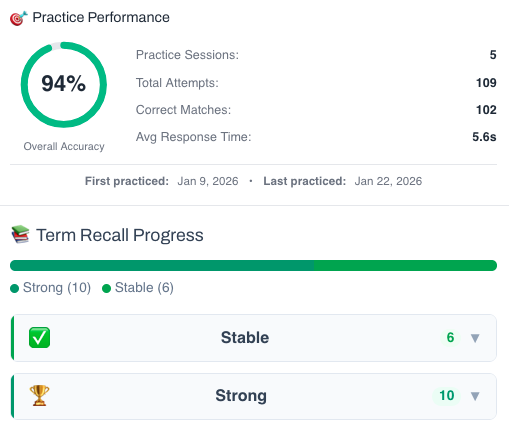
This isn’t a simple quiz — it’s a fully tracked learning system. You build knowledge through recognition, then recall, and your progress feeds directly into the Integrated Practice Bar (Writing tasks, AI Chat, and more).
- Practice sessions, accuracy, and response-time tracking
- Term strength levels (Learning → Stable → Strong)
- Personal progress history for each unit
This feature is available to YSP members.
Explore Membership Benefits