Jobs and Professions (1): The Words That Name What We Do
Core PathWay
A2 Lexis
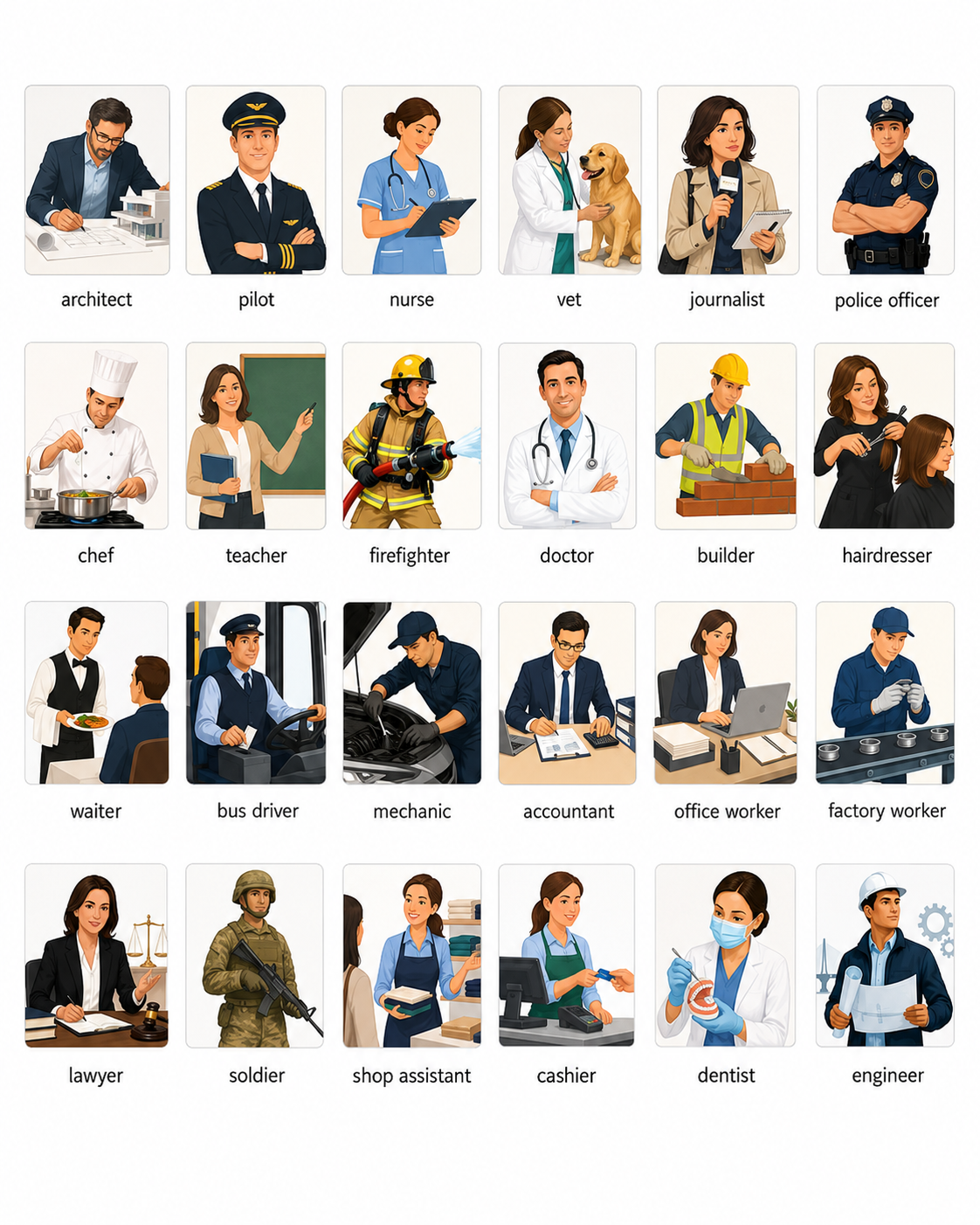
1. Let’s Talk About Jobs
Want to talk confidently about jobs and professions in English? It starts with these words. Every job has a name, and every job has tasks. In English, we often describe a job by saying what the person does. For example, a doctor prescribes medication and advises on health. A nurse monitors vital signs and assists doctors. These two people both work in healthcare, but they have different roles. A dentist also works in healthcare. A dentist performs cleanings, fillings, and extractions. Notice the pattern: we say the job title, then describe what the person does. This is a very useful structure for talking about work in English. You will see this pattern again and again on this page. Keep it in mind as you read.
2. Building, Designing, and Fixing Things
Some jobs are about making things, building things, or fixing things. An architect creates blueprints and ensures structural integrity. A blueprint is a detailed plan for a building. A builder reads blueprints and uses hand and power tools. So the architect designs the building, and the builder constructs it — they work closely together. An engineer solves technical problems and oversees projects. Engineers work in many areas: construction, electronics, transport, and more. A mechanic diagnoses faults and replaces worn parts. This means a mechanic finds problems with machines — usually vehicles — and repairs them. These four jobs all require technical knowledge and practical skills. People in these roles often work with tools, machines, or technical drawings.
3. Helping People and Keeping People Safe
Many jobs exist to help people or keep them safe. A firefighter operates firefighting equipment and rescues people. This is a physically demanding job that requires courage and quick thinking. A police officer responds to emergencies and investigates crimes. A soldier follows orders and operates military equipment. Both police officers and soldiers work in structured organisations where following rules is essential. A vet performs surgeries and advises on pet care. The word ‘vet’ is short for ‘veterinarian’. A vet is like a doctor, but for animals. A pilot navigates routes and ensures flight safety. Pilots are responsible for the safety of everyone on the plane. All of these jobs carry a great deal of responsibility.
4. Working with People and Information
Some jobs focus on communicating with people or working with information. A teacher plans lessons and assesses progress. This means a teacher decides what students will learn and then checks how well they are learning it. A journalist interviews sources and verifies facts. In other words, a journalist speaks to people to get information and then checks that the information is true before publishing it. A lawyer drafts legal documents and negotiates settlements. ‘Drafting’ means writing something carefully and formally. A chef creates menus and manages kitchen staff. A chef is the person in charge of a professional kitchen. An accountant analyses budgets and ensures compliance with regulations. This means an accountant checks that a company’s money is managed correctly and follows the law. These jobs all require strong communication and organisational skills.
5. Serving Customers and the Public
A large number of jobs involve serving customers or the general public. A waiter ensures guests have a pleasant dining experience. This means a waiter takes orders, brings food, and makes sure customers enjoy their meal. A hairdresser advises clients on hair care and treatments. A bus driver transports passengers safely and handles fares. A fare is the money a passenger pays to travel. A shop assistant stocks shelves and maintains store displays. In other words, a shop assistant puts products on shelves and makes sure the shop looks neat and organised. A cashier issues receipts and balances the till. A till is the machine used to take payments in a shop. These roles are common in retail, hospitality, and transport — industries where people interact with the public every day.
6. Working in Offices and Factories
Not all work happens in hospitals, schools, or on the street. Many people work in offices or factories. An office worker handles correspondence, data entry, and scheduling. ‘Correspondence’ means emails and letters. ‘Data entry’ means putting information into a computer. ‘Scheduling’ means organising meetings and appointments. A factory worker inspects goods and follows safety procedures. This means a factory worker checks that products are made correctly and works safely at all times. These two job titles are quite general. They describe the place of work rather than one specific task. Many different people can be called an office worker or a factory worker. It is also worth knowing that some jobs have very specific titles — like architect or dentist — while others are broader categories. Both types of vocabulary are useful when you talk about work in English.
Member-Exclusive Practice Bar
Access a wide range of integrated practice for this unit — from Vocabulary and Grammar activities to AI-curated Writing tasks and Thematic Chat practice.
This feature is available to YSP members.
Explore Membership BenefitsMember-Exclusive Vocabulary Review & Acquisition System
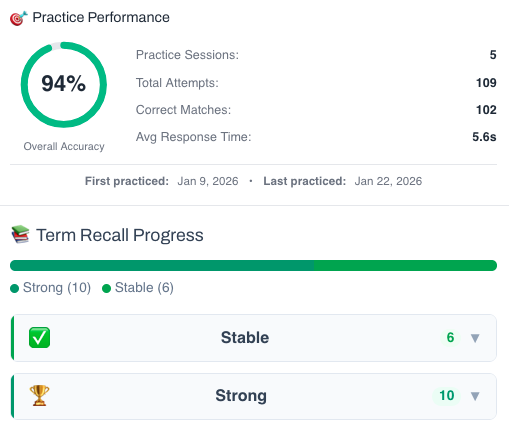
This isn’t a simple quiz — it’s a fully tracked learning system. You build knowledge through recognition, then recall, and your progress feeds directly into the Integrated Practice Bar (Writing tasks, AI Chat, and more).
- Practice sessions, accuracy, and response-time tracking
- Term strength levels (Learning → Stable → Strong)
- Personal progress history for each unit
This feature is available to YSP members.
Explore Membership Benefits🎮 Practice Games
Sentence Scrambler
Jobs and Professions (1) – Sentence Scramble
Member-Exclusive Sentence Builder
Reconstruct scrambled sentences to practice word order and develop your grammar intuition.
This feature is available to YSP members.
Explore Membership Benefits