Runway Inspections: The Language of What to Look For and Report
Specialist PathWay
B1 Lexis
Runway Inspections: The Language of What to Look For and Report
Core PathWay1 Section 1. The Language of Runway Inspections
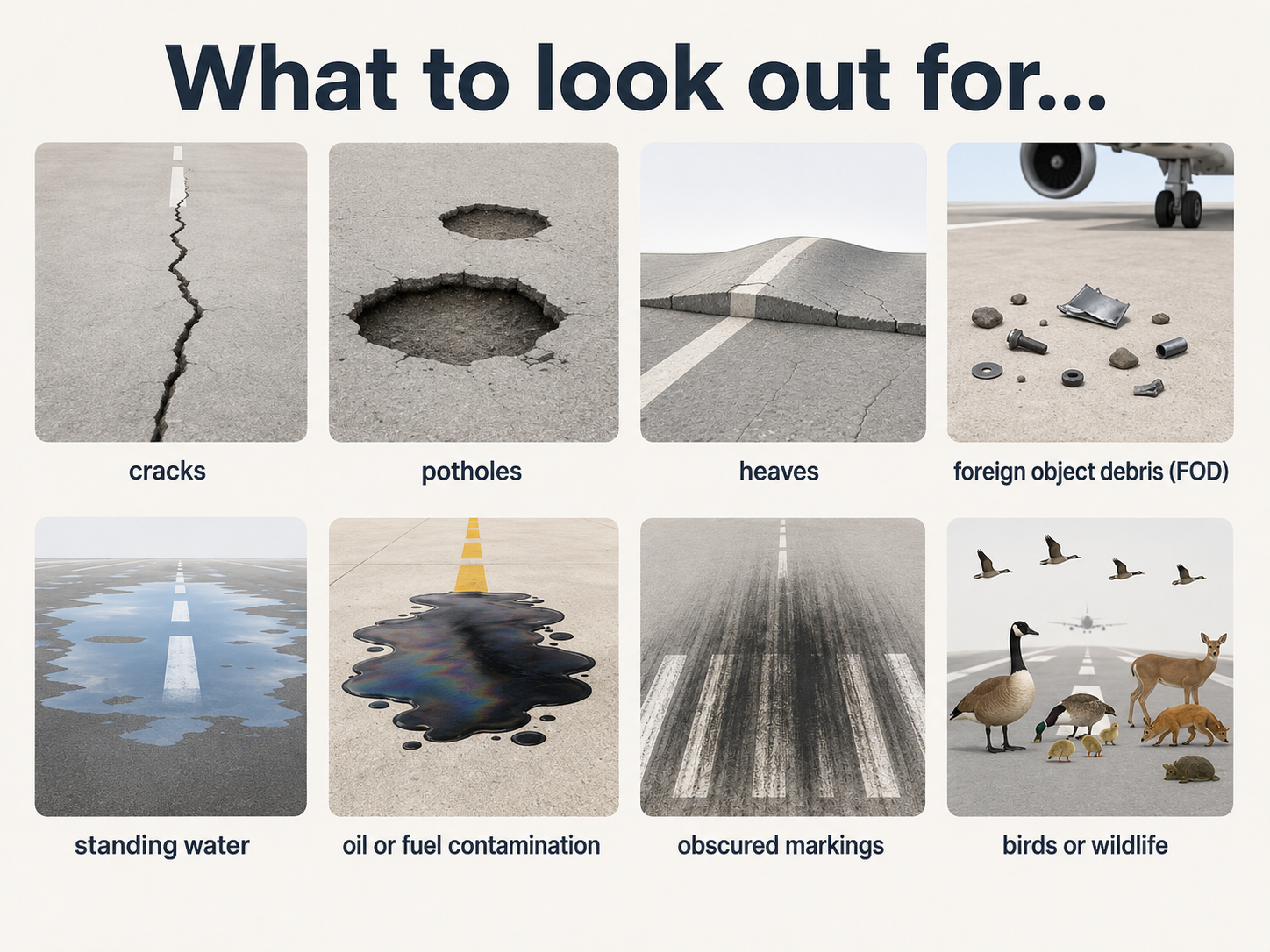
Runway inspections have their own language — and knowing it makes the difference between a clear report and a dangerous misunderstanding. Every term in this pack describes something an inspector can actually see on or near the runway. The terms are grouped into four main areas: pavement condition, surface contamination, markings and lighting, and airside hazards. We start at the pavement — the surface itself. Cracks are fractures in the pavement surface. They can be small or large, but they always need to be recorded. Spalling is when concrete breaks or flakes into loose pieces. This is different from a crack — the material is actually breaking away. Potholes are cavities in the runway pavement. Think of them as holes in the surface. Heaves are raised areas that create an uneven surface. They push upward, so they are the opposite of a pothole. Ruts are depressions caused by repeated wheel loading. Aircraft tyres pass over the same areas again and again, and over time this can press the pavement down. Finally, pavement lips are sudden differences in height at pavement edges. These are dangerous because they can catch aircraft wheels.
2 Section 2. Loose Material and Tyre Residue
Not all runway hazards are structural. Some are materials that should not be on the surface. Loose aggregate is loose stones or gravel from deteriorating pavement. When pavement breaks down, it can release small stones. These stones are a serious problem because they can be picked up by jet engines. This brings us to one of the most important terms in aviation safety: foreign object debris (FOD). FOD means any loose object that is capable of damaging an aircraft. Loose aggregate can become FOD, but FOD also includes things like tools, bolts, or pieces of equipment left on the runway. The rule is simple: if it is loose and it does not belong there, it is FOD. Rubber deposits are tyre rubber built up on the runway surface. Every time an aircraft lands, its tyres leave a thin layer of rubber on the pavement. Over time, this builds up and can reduce friction — meaning aircraft tyres cannot grip the surface as well. Inspectors need to check for rubber deposits regularly, especially in the touchdown zone.
3 Section 3. Water, Drainage, and Contamination
Water and other fluids on the runway surface create serious friction problems. Standing water is accumulated water on the pavement. It collects when rain cannot drain away quickly enough. Blocked drainage means obstructions are preventing water from draining away. If drains or channels are blocked by mud or debris, water stays on the surface. Inspectors must check that drainage channels are clear and working. Oil or fuel contamination refers to leaked fluids that can reduce runway friction. A small fuel or oil spill might look harmless, but it makes the surface extremely slippery. Mud, sand or grit are loose surface materials that can reduce friction or become FOD. These materials are often blown or carried onto the runway from surrounding areas. In winter, conditions change quickly. Snow is accumulated snow covering the runway. Even a thin layer of snow changes braking performance significantly. Slush is partly melted snow and water on the surface — it is wet, heavy, and can spray into engines. Ice or frost is frozen contamination that reduces runway grip. Frost is easy to miss because it can look like a dry surface, but it is extremely dangerous.
4 Section 4. Markings — Visible, Faded, or Hidden
Runway markings guide pilots during every phase of a flight. If markings are hard to see, pilots may not know exactly where they are on the runway. Faded or peeling markings are runway paint that is worn or deteriorating. Paint fades over time because of weather, traffic, and cleaning operations. When markings become faded, they need to be repainted as soon as possible. Obscured markings are markings that are hidden by rubber, dirt, snow, or other deposits. The marking is still there — but it cannot be seen. This is an important distinction. A faded marking has physically deteriorated. An obscured marking is hidden by something on top of it. Rubber deposits are a common cause of obscured markings, especially near the touchdown zone. Both types of marking problems must be reported, because pilots rely on these lines and symbols to land safely and to taxi correctly.
5 Section 5. Lights and Signs — Working, Damaged, or Obscured
Lights and signs are as important as markings, especially at night or in poor visibility. Failed runway lights are runway lights that are not operating. A single failed light might seem minor, but a pattern of failed lights can make a runway unsafe to use. Damaged or misaligned light fittings are broken lights or lights that are pointing incorrectly. A light fitting that is pointing the wrong way gives pilots incorrect visual information. This is just as dangerous as a light that is not working at all. Damaged or obscured signs are signs that are broken, faded, hidden, or illegible. Runway signs tell pilots which runway or taxiway they are on. If a sign is damaged or covered by vegetation or snow, a pilot might make a navigation error. Inspectors should check every sign carefully and report any that cannot be read clearly.
6 Section 6. Airside Hazards — Wildlife, Vegetation, and Equipment
The final category covers hazards that come from the environment around the runway. Birds or wildlife are animals on or near the runway that present a strike hazard. A bird strike can cause serious damage to an aircraft engine. Inspectors must report any wildlife activity near the runway so that bird control teams can respond. Excessive vegetation is growth that is obscuring lights or signs or attracting wildlife. Long grass and overgrown bushes can hide runway edge lights or make signs difficult to read. Vegetation also attracts birds and small animals, which increases the risk of wildlife strikes. Finally, construction equipment or materials means machinery, barriers, or other unauthorised objects near the runway. During maintenance or building work, equipment must be kept well away from active runways. Any item that is too close to the runway must be reported immediately. Together, these three hazard types remind us that a runway inspection is not just about the pavement — it is about everything in the runway environment.
Member-Exclusive Practice Bar
Access a wide range of integrated practice for this unit — from Vocabulary and Grammar activities to AI-curated Writing tasks and Thematic Chat practice.
This feature is available to YSP members.
Explore Membership BenefitsMember-Exclusive Vocabulary Review & Acquisition System
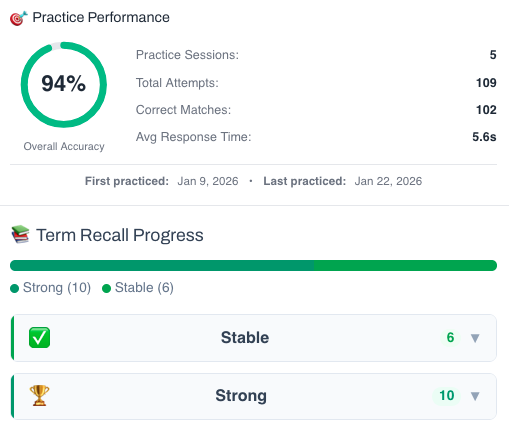
This isn’t a simple quiz — it’s a fully tracked learning system. You build knowledge through recognition, then recall, and your progress feeds directly into the Integrated Practice Bar (Writing tasks, AI Chat, and more).
- Practice sessions, accuracy, and response-time tracking
- Term strength levels (Learning → Stable → Strong)
- Personal progress history for each unit
This feature is available to YSP members.
Explore Membership Benefits