Verbs for Describing Trends [2]
Core PathWay1 When Things Stay the Same or Stop Growing
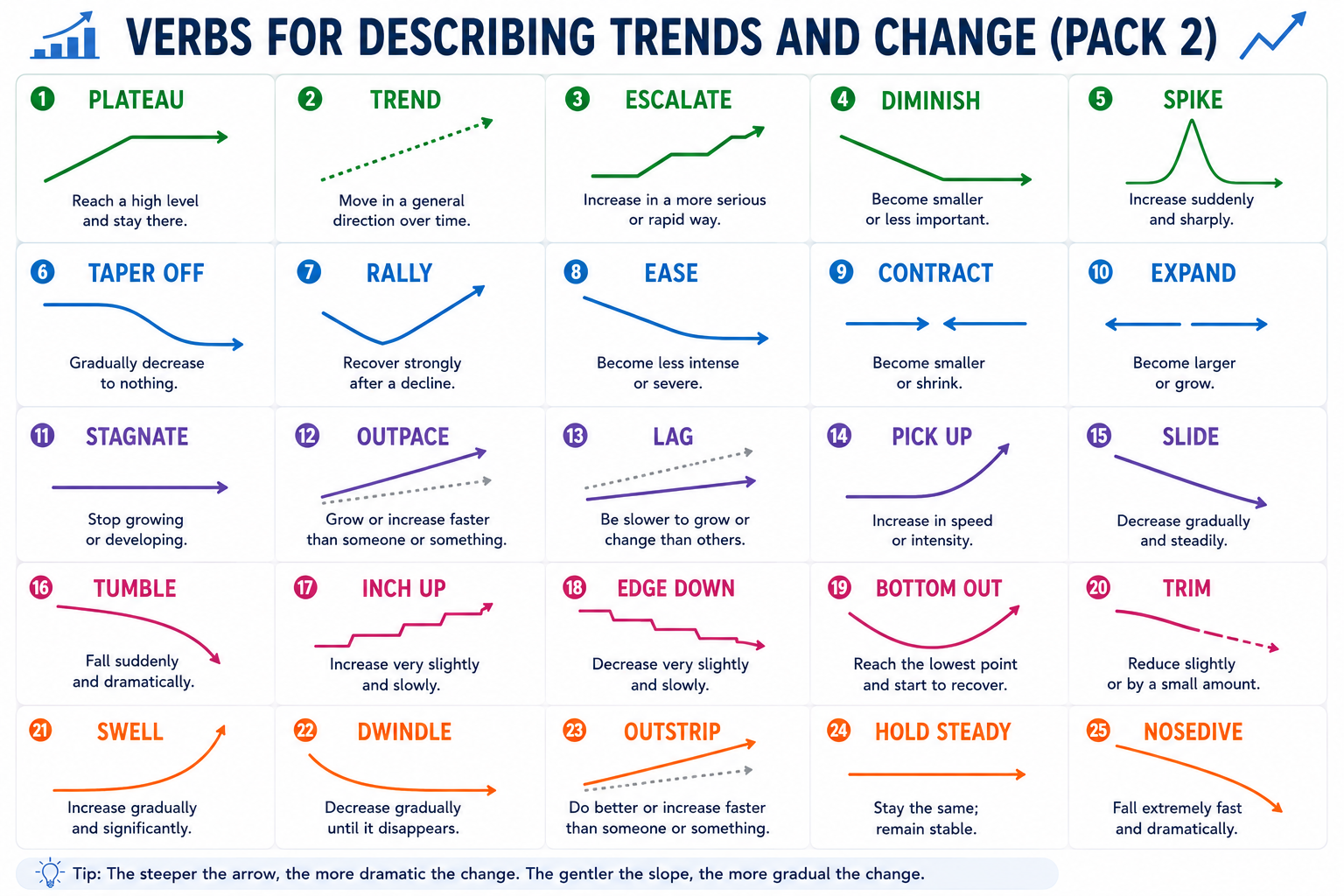
Let’s get you fluent in the language of trends and market movements. Sometimes things don’t go up or down—they just stop changing. When a value reaches a level and stays there for a while, we say it plateau. Sales might plateau after a strong year, or population growth might plateau in a developed country. This is different from stagnate, which has a more negative feeling. When something stagnates, it stops developing or making progress completely. An economy can stagnate if there’s no investment or innovation. Notice the difference: a plateau can be neutral or even positive (you’ve reached a stable level), but stagnation usually means something is stuck in a bad way. Another useful phrase is hold steady. This means something remains at the same level without changing. Prices might hold steady despite market uncertainty, or your performance might hold steady across several months. It’s a more active phrase than plateau—it suggests maintaining a position rather than just stopping growth.
2 Sudden and Dramatic Changes
Some changes happen fast and grab everyone’s attention. When a value increases suddenly and sharply for a short period, it spike. Covid cases spiked in winter, or website traffic might spike after a news story. The key word here is ‘sudden’—spikes are quick and often temporary. The opposite kind of sudden movement is when something falls dramatically. If prices tumble, they fall suddenly and significantly. Stock markets can tumble after bad news, or confidence levels might tumble during a crisis. Even more dramatic is nosedive. When something nosedives, it suddenly decreases very quickly and dramatically—like a plane diving nose-first toward the ground. Sales can nosedive, or approval ratings might nosedive after a scandal. Another word for rapid increase is escalate. This usually describes something negative getting worse quickly. Tensions can escalate between countries, or costs might escalate beyond the budget. It suggests the situation is becoming more serious or intense.
3 Slow and Gradual Movements
Not all changes are dramatic. Many trends move slowly over time. When something becomes gradually smaller, weaker, or less important, it diminish. Your enthusiasm might diminish over a long project, or resources could diminish as you use them. Similar but stronger is dwindle. When something dwindles, it becomes gradually less and less until very little remains. Savings can dwindle if you don’t earn income, or support might dwindle as people lose interest. The difference? Diminish means getting smaller; dwindle suggests nearly disappearing. For very small movements upward, we use inch up. This means to increase very slowly and by very small amounts. Temperatures might inch up over the morning, or scores could inch up with practice. The opposite is edge down—to decrease very slowly and by very small amounts. Prices might edge down in a competitive market. When something gradually becomes less in amount or strength until it stops, it taper off. Interest in a trend might taper off, or rainfall could taper off toward evening. There’s also ease, which means to become less severe, intense, or fast in a gradual and controlled way. Traffic might ease after rush hour, or pain could ease with medication.
4 Comparing Different Rates of Change
Sometimes we need to compare how fast different things are changing. When something increases or develops faster than something else, it outpace. Sales might outpace production capacity, or inflation could outpace wage growth. This creates a gap between the two things. Even stronger is outstrip, which means to become larger, better, or more successful than something else. Demand can outstrip supply, or one company might outstrip its competitors. The difference is subtle: outpace focuses on speed, while outstrip focuses on the result—being bigger or better. The opposite situation is lag. When something lags, it moves or develops more slowly than others or than expected. Economic recovery might lag behind predictions, or your performance could lag compared to your colleagues. It suggests falling behind or not keeping up.
5 Recovery, Growth, and Reduction
Markets and businesses often move in cycles. When something increases in value or strength after a period of weakness or decline, it rally. Stock markets rally after a crash, or a team might rally in the second half of a game. It suggests bouncing back with energy. Similarly, pick up means to improve or increase in speed, strength, or activity after a slow period. Business might pick up after the holidays, or the economy could pick up after a recession. When things are growing, we say they expand. This means to become larger in size, amount, range, or economic activity. A company might expand into new markets, or the economy could expand by 3% this year. You might also see swell, which means to gradually increase in size, amount, or intensity. Crowds can swell before an event, or rivers might swell after heavy rain. For reduction, we often use contract, which means to become smaller in size, amount, or economic activity. The economy might contract during a recession, or muscles contract when you exercise. There’s also trim, which means to reduce something slightly, especially costs, staff, or excess amounts. Companies trim budgets to save money. When a trend has been falling and finally stops, we say it bottom out. This means to reach the lowest point and stop decreasing. Unemployment might bottom out before recovery begins, or prices could bottom out after a long decline. There’s also slide, which means to decrease gradually and continuously, often in an uncontrolled way. Standards might slide over time, or performance could slide without proper attention.
Member-Exclusive Practice Bar
Access a wide range of integrated practice for this unit — from Vocabulary and Grammar activities to AI-curated Writing tasks and Thematic Chat practice.
This feature is available to YSP members.
Explore Membership BenefitsMember-Exclusive Vocabulary Review & Acquisition System
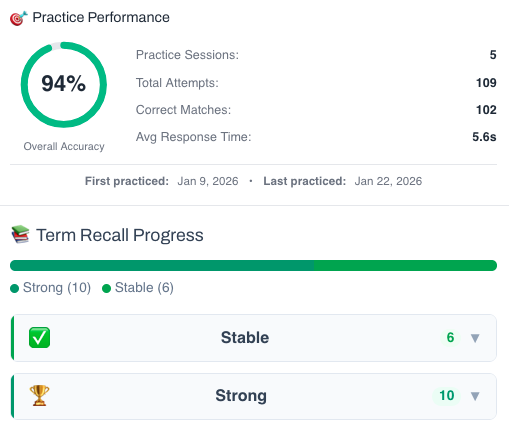
This isn’t a simple quiz — it’s a fully tracked learning system. You build knowledge through recognition, then recall, and your progress feeds directly into the Integrated Practice Bar (Writing tasks, AI Chat, and more).
- Practice sessions, accuracy, and response-time tracking
- Term strength levels (Learning → Stable → Strong)
- Personal progress history for each unit
This feature is available to YSP members.
Explore Membership Benefits🎮 Practice Games
Sentence Scrambler
Verbs for describing Trends [2] – Sentence Scramble
Member-Exclusive Sentence Builder
Reconstruct scrambled sentences to practice word order and develop your grammar intuition.
This feature is available to YSP members.
Explore Membership Benefits