Verbs for Describing Trends: Movement, Direction, and Stability
Core PathWay1 Upward and Downward Movement
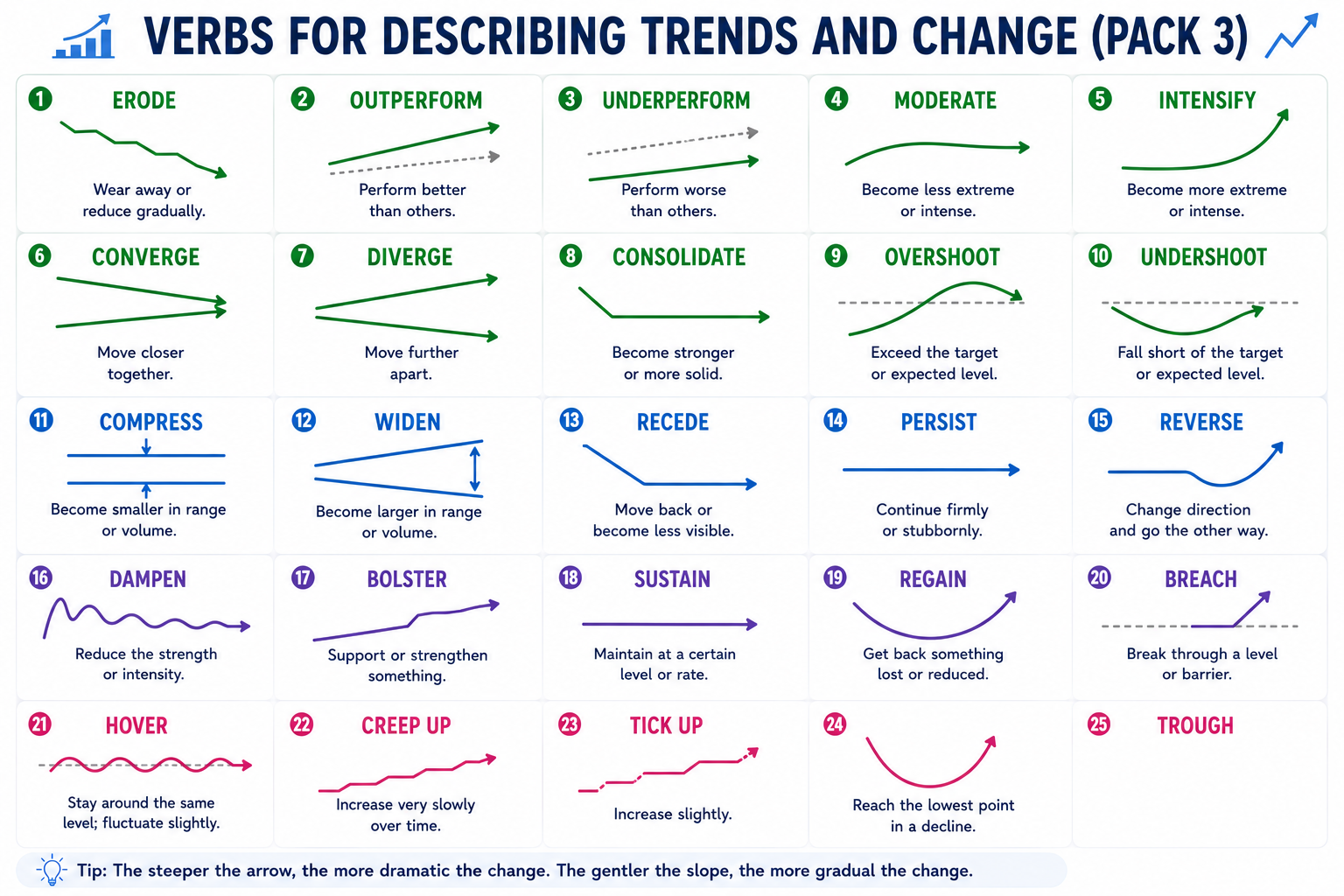
Let’s get you fluent in the language of trend analysis. When values move upward slowly, we say they creep up — this means the increase is so gradual you almost don’t notice it. Prices might creep up over months without anyone complaining. A faster but still small increase is when numbers tick up, moving by a small amount in a short time. Sales might tick up after a promotion ends. Sometimes growth goes too far and values overshoot the target level, exceeding what was planned or sustainable. A company might overshoot its sales forecast by 20%. The opposite happens when results undershoot expectations, failing to reach the desired level. If your team undershoot the quarterly target, you need to understand why. When values fall from a high point, they recede — this means they gradually move back or diminish. Demand might recede after the holiday season. To erode means something reduces slowly through persistent pressure — profits can erode when costs creep up year after year. Finally, when something moves to its lowest point before recovering, it reaches a trough — unemployment might trough in summer before rising again.
2 Stability and Persistence Patterns
Not all trends involve clear movement up or down. Sometimes values hover around the same level with only minor fluctuations, staying approximately stable without clear direction. Interest rates might hover near 3% for months. When a trend continues steadily despite expectations that it should change, we say it persists — inflation might persist even when economists predict it will fall. To sustain a level means to maintain it over an extended period without significant decline. Can the company sustain this growth rate for another year? When opposing forces reduce the strength of growth, they dampen it — new regulations might dampen enthusiasm for investment. The opposite is to bolster something, which means to strengthen or reinforce it. Good news can bolster confidence in the market. After gains, companies often consolidate their position, strengthening and stabilizing what they’ve achieved. This consolidation period lets them prepare for the next phase.
3 Performance Comparison
In competitive environments, we constantly compare performance. To outperform means to achieve better results than a competitor or benchmark. If your sales outperform the market average, you’re winning. The opposite is to underperform, achieving worse results than expected or required. A product might underperform because of poor marketing. When trends become less extreme, they moderate — moving toward a more balanced level. Growth might moderate from 8% to a more sustainable 4%. The opposite happens when trends intensify, becoming stronger or more severe. Competition can intensify when new players enter the market. Sometimes the gap between two values gets smaller and we say they compress — profit margins might compress when costs rise faster than prices. The opposite is when differences widen — the gap between rich and poor regions might widen over time.
4 Directional Change
Trends don’t always continue in the same direction. When two different trends move toward the same level, they converge — European and Asian prices might converge as trade increases. The opposite is when trends diverge, moving apart from each other. Economic performance might diverge between coastal and inland cities. The most dramatic change is when a trend completely changes direction and begins to reverse — a declining market might reverse and start growing again. After a decline, values might regain their previous level, recovering what was lost. The stock might regain the value it had before the crisis. These directional changes are critical moments that analysts watch carefully.
5 Thresholds and Limits
Some of the most important moments in trends happen at significant levels. To breach a threshold means to break through or surpass a significant barrier. Oil prices might breach the $100 mark for the first time in years. This verb captures the sense that something important has happened — a psychological or technical barrier has been crossed. Analysts watch for these breach moments because they often signal that market conditions have fundamentally changed. When a value breaches a resistance level, it might continue moving in that direction with new momentum. Understanding when trends approach, breach, or fall back from key thresholds helps you interpret what’s really happening in markets and business performance.
Member-Exclusive Practice Bar
Access a wide range of integrated practice for this unit — from Vocabulary and Grammar activities to AI-curated Writing tasks and Thematic Chat practice.
This feature is available to YSP members.
Explore Membership BenefitsMember-Exclusive Vocabulary Review & Acquisition System
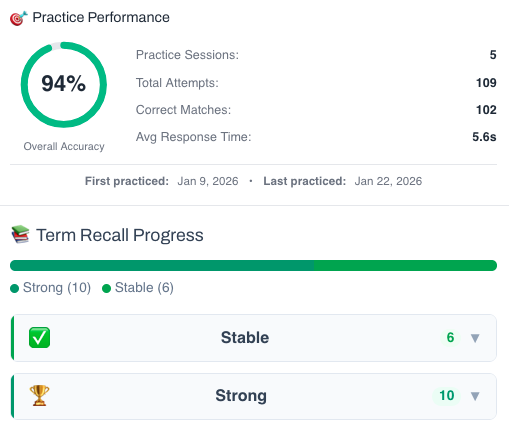
This isn’t a simple quiz — it’s a fully tracked learning system. You build knowledge through recognition, then recall, and your progress feeds directly into the Integrated Practice Bar (Writing tasks, AI Chat, and more).
- Practice sessions, accuracy, and response-time tracking
- Term strength levels (Learning → Stable → Strong)
- Personal progress history for each unit
This feature is available to YSP members.
Explore Membership Benefits🎮 Practice Games
Sentence Scrambler
Verbs for describing Trends [3] – Sentence Scramble
Member-Exclusive Sentence Builder
Reconstruct scrambled sentences to practice word order and develop your grammar intuition.
This feature is available to YSP members.
Explore Membership Benefits