Historical Present: Bringing Stories to Life
Core PathWay
1 Breaking the Rules: When Present Meets Past
Here’s something that confuses many learners: you’re listening to a colleague tell a story about something that happened last week, and suddenly they switch from past tense to present tense. ‘We had the client meeting on Tuesday. Everything was going smoothly. Then the projector fails. Just stops working. I look at Sarah, she looks at me, and the client just sits there waiting.’
Wait — didn’t this happen in the past? Why is your colleague suddenly using present tense?
This technique is called the historical present, and it’s one of those beautiful moments where English breaks its own rules for rhetorical effect. Advanced speakers use it deliberately to create immediacy — to pull the listener right into the moment of the story. Instead of hearing about something that happened, you experience it as if it’s happening now. The dramatic shift from past to present creates tension and engagement.
You’ll hear this technique constantly in presentations, anecdotes, and informal storytelling. A manager might start with background information in past tense, then switch to present tense at the climax of the story. It’s not a mistake — it’s a sophisticated choice that makes narratives more vivid and memorable.
2 The Grammar of Dramatic Storytelling
The historical present uses Present Simple verb forms to narrate past events. This creates a sense of immediacy — bringing the listener directly into the action. It’s particularly powerful in business presentations and professional anecdotes where you want maximum engagement.
The key is strategic tense-shifting: you establish context and background in past tenses, then shift to present at the turning point or climax of your story. This isn’t random switching — it’s a deliberate rhetorical effect that signals ‘pay attention, this is the important moment.’
Focus
- Form: Present Simple (I go, she says, it fails) used for past events in narrative contexts
- Meaning: Creates dramatic immediacy and engagement; brings the listener into the moment
- Use: Informal storytelling, business anecdotes, presentation hooks, client meeting recounts
- Tense-shifting: Past tenses for background/setup → Present Simple for climactic moments
Rules
- Start with Past Simple or Past Continuous to establish the background and context of your story
- Shift to Present Simple at the turning point, climax, or most dramatic moment to create immediacy
- Action verbs work best in historical present: ‘the projector fails,’ ‘the client walks out,’ ‘I realize the mistake’
- State verbs (know, understand, believe) sound awkward in historical present — keep them in past tense
- Once you shift to present, stay in present for the key action sequence, then return to past for resolution
- Use this technique sparingly — overuse destroys the dramatic effect
Examples
- We had prepared everything for the pitch. The stakeholder arrived early, which made us nervous. Then the presentation starts, and within two minutes, the projector fails. I look at my colleague, she looks at me, and the client just sits there waiting.
- The merger announcement was scheduled for 3 p.m. Everyone was anxious. The CEO walks into the room, completely silent. He puts his notes down, looks around, and says, ‘We have a problem.’
- I’d been working on the deadline for weeks. Everything was ready. Then, at 4:45 on Friday afternoon, my manager sends an email: ‘The client wants changes. Can you stay late?’ I just stare at the screen.
Common mistake
3 A Story from the Frontline
Let me tell you about the worst presentation I ever gave. It was three years ago, and I had been preparing for weeks. The client was a major stakeholder in a potential merger, and this pitch could make or break the deal. My colleague Jordan and I had rehearsed everything a dozen times. We knew our material inside out.
The morning of the presentation, we arrived early to set up. The projector was working fine. Our slides looked perfect. The client representatives walked in at exactly 9 a.m., and we began.
Then, ten minutes in, everything changes. The projector fails. Just goes black. I press the power button — nothing. Jordan tries her laptop — still nothing. The room falls completely silent. The lead stakeholder looks at his watch, then at us. I can feel my face going red. Jordan whispers, ‘What do we do?’
I take a breath and say, ‘Let me tell you this story without slides.’ And I do. For the next twenty minutes, I deliver the entire pitch from memory, using the whiteboard for key numbers. The client team leans forward. They start asking questions. The engagement is actually better than with slides.
At the end, the lead stakeholder stands up and says, ‘That was the most vivid presentation we’ve seen all year. When can you start?’
That was the turning point in my career. Sometimes technical failure creates the perfect dramatic moment.
Notice: How does the story start? What tense is used for the background and context? At what moment does the tense shift to present? What rhetorical effect does this create? Which moment feels like the climax of the story?
4 Your Turn: Craft a Dramatic Business Anecdote
Now apply what you’ve learned. Write a short business anecdote using historical present to create dramatic impact.
5 When to Use It (and When to Avoid It)
Historical present is a powerful tool, but like all advanced techniques, it works only in the right contexts.
Use historical present when:
– Telling anecdotes in informal business presentations or team meetings
– Creating engagement in a pitch or persuasive talk
– Recounting a dramatic work incident to colleagues
– Adding vivid detail to a spoken story about a client interaction or deadline crisis
– Building tension toward the climax of a narrative
Avoid historical present when:
– Writing formal reports, emails to senior stakeholders, or academic papers
– Documenting merger details, announcements, or official records
– The context requires objectivity and professional distance
– You’re speaking to someone who might find informal storytelling inappropriate
– You’re not confident in your tense control (random shifts damage credibility)
Think of historical present as the linguistic equivalent of a spotlight on stage. Used at the right moment, it illuminates the turning point of your story and creates immediacy that your audience remembers. Used constantly or inappropriately, it just confuses people.
Mastering this technique signals advanced proficiency. You’re not just following grammar rules — you’re making conscious rhetorical choices about how to shape your listener’s experience.
6 Recap: The Art of Dramatic Narrative
You’ve explored one of English’s most sophisticated storytelling techniques: the historical present. This isn’t about breaking grammar rules accidentally — it’s about breaking them strategically for rhetorical effect.
The pattern is simple: establish background and context in past tenses, then shift to Present Simple at the climax or turning point to create immediacy and dramatic impact. Your listener stops hearing about an event and starts experiencing it.
You’ve seen how this technique works in business presentations, client anecdotes, and professional storytelling. You’ve practiced crafting your own narrative with strategic tense-shifting. And you’ve learned the crucial distinction: this device belongs in informal, spoken contexts where engagement matters — not in formal written reports or academic work.
When you hear a colleague suddenly switch to present tense mid-story, you now understand exactly what they’re doing and why. Even better, you can do it yourself. That’s the mark of a truly advanced speaker: knowing not just the rules, but when and how to bend them for maximum effect.
Member-Exclusive Practice Bar
Access a wide range of integrated practice for this unit — from Vocabulary and Grammar activities to AI-curated Writing tasks and Thematic Chat practice.
This feature is available to YSP members.
Explore Membership BenefitsMember-Exclusive Vocabulary Review & Acquisition System
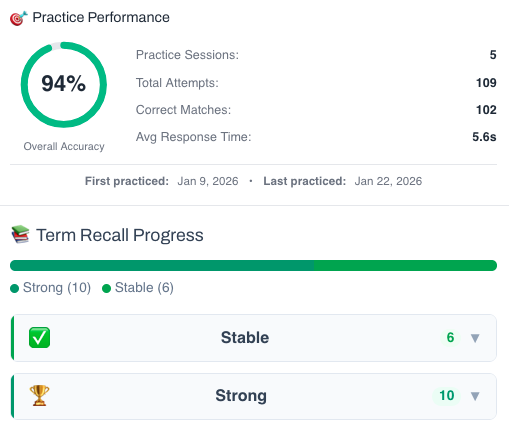
This isn’t a simple quiz — it’s a fully tracked learning system. You build knowledge through recognition, then recall, and your progress feeds directly into the Integrated Practice Bar (Writing tasks, AI Chat, and more).
- Practice sessions, accuracy, and response-time tracking
- Term strength levels (Learning → Stable → Strong)
- Personal progress history for each unit
This feature is available to YSP members.
Explore Membership Benefits🎮 Practice Games
Sentence Scrambler
Historical Present and Dramatic Narrative Uses – Sentence Scramble
Member-Exclusive Sentence Builder
Reconstruct scrambled sentences to practice word order and develop your grammar intuition.
This feature is available to YSP members.
Explore Membership Benefits