Module code: 1492

๐Ÿ“š pathway 6a1d86ca04637

Accounts & Administration Director: Role, Skills & Language

Core PathWay

1 ๐Ÿ‘ค The Role of an Accounts & Administration Director

An Accounts & Administration Director in an SME public company has a senior position with wide-ranging responsibilities. This person oversees three key departments: accounts, HR, and tenders. However, they don’t get involved in the day-to-day details of each area. Instead, they focus on strategic planning and making sure each department runs smoothly and efficiently.

The director reports to the board of directors and provides regular updates on financial performance, compliance issues, and organizational health. They review financial statements, monitor the company’s budget and expenditure, and ensure all revenue is properly recorded. They also check that procurement processes follow company procedures and that all contracts with suppliers meet legal regulations.

A typical week might include attending board meetings to present financial reports, meeting with department heads to discuss priorities and deadlines, reviewing audit findings, and approving major spending decisions. The director also manages risk by identifying potential problems before they become serious.

This role requires excellent delegation skills because the director must trust their team leaders to handle operational matters while they focus on the bigger picture. They act as a bridge between senior management and the operational teams, ensuring that stakeholders receive accurate information and that the company maintains high standards of efficiency and compliance.

Key Terms

responsibilities The duties and tasks that someone must do as part of their job. Example: Her main responsibilities include managing budgets and supervising staff.
oversees Watches and manages work to make sure it is done correctly. Example: She oversees three departments but doesn't do their daily tasks.
strategic planning Making plans for the future success of a business or organization. Example: Strategic planning helps companies prepare for challenges ahead.
reports to Gives information about your work to someone more senior. Example: The director reports to the board every month.
board of directors A group of senior people who make important decisions for a company. Example: The board of directors meets once a month to discuss company performance.
compliance Following rules, laws, and regulations correctly. Example: The company must maintain compliance with financial regulations.
financial statements Official documents that show a company's income, costs, and financial position. Example: We prepare financial statements every quarter.
budget A plan showing how much money is available and how it will be spent. Example: The department has a budget of ยฃ500,000 for this year.
expenditure The money that a business or person spends. Example: We need to reduce our expenditure on office supplies.
revenue The money that a company receives from its business activities. Example: The company's revenue increased by 15% last year.
procurement The process of buying goods or services for a business. Example: The procurement team finds the best suppliers for our needs.
procedures The official ways of doing something in an organization. Example: All staff must follow safety procedures.
contracts Legal agreements between two parties, often for work or services. Example: We signed a two-year contract with the supplier.
suppliers Companies or people who provide goods or services to a business. Example: We work with three main suppliers for office equipment.
regulations Official rules made by a government or authority. Example: Financial regulations protect customers and businesses.
audit An official check of a company's financial records. Example: External auditors review our accounts every year.
risk The possibility that something bad or dangerous might happen. Example: The director identified several financial risks that need attention.
delegation Giving tasks and responsibilities to other people to complete. Example: Good delegation allows managers to focus on strategic work.
stakeholders People or groups who have an interest in a company's success. Example: Stakeholders include employees, customers, and investors.
efficiency Doing work well without wasting time, money, or energy. Example: The new system improved efficiency in the accounts department.

๐Ÿ’ฌ Role Interview: Tell us about your role

A job interview or professional introduction where the director explains their position

Interviewer: “Can you tell us about your role as Accounts & Administration Director?”
Director: “Certainly. I oversee three departments – accounts, HR, and tenders. I report to the board of directors and focus on strategic planning rather than day-to-day operations.”
Interviewer: “What are your main responsibilities?”
Director: “I ensure compliance with financial regulations, monitor our budget and expenditure, and make sure all procurement procedures are followed correctly. I also manage risk and keep stakeholders informed.”
Interviewer: “How do you manage the workflow across three different departments?”
Director: “Good question. Delegation is really important in my role. Each department has a head who manages daily tasks, so I can concentrate on strategic planning and board-level decisions. We have regular meetings to review progress.”
Interviewer: “Can you give an example of strategic planning in your work?”
Director: “Of course. Last quarter, I worked with stakeholders to develop a five-year budget plan. This involved forecasting revenue and planning major expenditure. It's about thinking long-term, not just solving today's problems.”

2 ๐ŸŽฏ Typical Skills

An Accounts & Administration Director needs strong analytical thinking to understand complex financial data and identify trends. They must be excellent at decision-making, especially when choices affect multiple departments or involve significant spending. Communication skills are essential because they regularly present information to the board and explain financial matters to non-financial colleagues.

The role requires advanced problem-solving abilities to address issues that arise across different departments. Attention to detail is crucial when reviewing contracts, budgets, and compliance documents. They also need strong leadership qualities to motivate and guide their department heads effectively.

Finally, excellent time management and organizational skills help them balance multiple priorities, meet deadlines, and ensure nothing important gets overlooked. They must stay calm under pressure and make sound judgments quickly when urgent situations arise.

Key Terms

analytical thinking The ability to examine information carefully and understand what it means. Example: Analytical thinking helps you spot patterns in financial data.
decision-making The process of choosing what to do after considering different options. Example: Good decision-making requires clear information and careful thought.
communication skills The ability to share information clearly with others, both in speaking and writing. Example: Strong communication skills help managers explain complex ideas simply.
problem-solving Finding solutions to difficult situations or challenges. Example: Problem-solving is an important skill in any management role.
attention to detail The ability to notice small things and avoid mistakes. Example: Attention to detail is essential when checking financial reports.
leadership The ability to guide, motivate, and manage other people effectively. Example: Good leadership creates a positive working environment.
time management The skill of using your time efficiently and meeting deadlines. Example: Time management helps you complete important tasks on schedule.
organizational skills The ability to plan work, arrange tasks, and keep things in order. Example: Strong organizational skills help you manage multiple projects at once.
deadlines The times or dates by which work must be completed. Example: We have strict deadlines for submitting financial reports.

๐Ÿ’ฌ Skills Interview: What skills do you need in your role?

Discussion about the competencies required for the director position

Interviewer: “What skills are most important for an Accounts & Administration Director?”
Director: “Strong analytical thinking is essential because I need to understand complex financial data. Decision-making skills are crucial too, especially for approvals involving large expenditure.”
Interviewer: “What about working with other people?”
Director: “Excellent communication skills help me present to the board and explain financial matters clearly. Leadership and delegation are vital because I manage three department heads.”
Interviewer: “How important is time management in your position?”
Director: “It's absolutely critical. I balance board meetings, budget reviews, and compliance checks every week. Without good time management, I couldn't handle everything. I use planning tools and prioritize urgent tasks first.”
Interviewer: “What role does problem-solving play in your daily work?”
Director: “Problem-solving happens every day. For example, if a supplier contract needs renegotiating or we find an issue during a tender process, I need to find solutions quickly. Analytical thinking helps me see the problem clearly, then decision-making helps me choose the best solution.”

3 ๐Ÿ” Role Based Lexis

Accounts & Administration Directors frequently talk about the bottom line, which means the final profit or loss figure. They often discuss cost-effectiveness to show whether spending delivers good value. When evaluating projects, they might mention ROI (return on investment), which measures the profit gained compared to the cost.

In compliance discussions, they refer to due diligence, meaning careful checking before making decisions, and statutory requirements, which are duties required by law. When discussing HR matters, they use terms like payroll (the system for paying employees), recruitment (finding and hiring new staff), onboarding (introducing new employees to the company), and training programmes.

For performance management, they track KPIs (key performance indicators) and conduct variance analysis to compare actual results with planned budgets. They also discuss workflow optimization and approval processes to improve how work moves through the organization.

Key Terms

bottom line The final profit or loss amount, or the most important point. Example: The bottom line is that we need to reduce costs this quarter.
cost-effectiveness Getting good results without spending too much money. Example: We need to improve the cost-effectiveness of our marketing.
ROI Return on investment – the profit you make compared to what you spent. Example: The new software had an excellent ROI within six months.
due diligence Careful investigation and checking before making a business decision. Example: We conducted due diligence before signing the supplier contract.
statutory requirements Things that must be done because the law says so. Example: Paying minimum wage is a statutory requirement.
payroll The system for calculating and paying employee salaries. Example: Payroll is processed on the last Friday of each month.
recruitment The process of finding and hiring new employees. Example: The HR team handles all recruitment for the company.
onboarding The process of helping new employees learn about their job and the company. Example: Good onboarding helps new staff feel welcome and prepared.
training Teaching employees new skills or knowledge for their work. Example: All staff receive training in health and safety procedures.
KPIs Key performance indicators – measurements that show how well something is performing. Example: We review our KPIs every month to track progress.
variance analysis Comparing actual results with planned or expected results. Example: Variance analysis showed we spent 10% more than budgeted.
workflow The sequence of steps needed to complete a task or process. Example: We improved the workflow for processing customer orders.
approval Official permission to do something or spend money. Example: Large purchases need approval from the director.

๐Ÿ’ฌ Communication Challenge Interview: What language challenges do people face in this area?

Discussion about the specific communication demands of the role

Interviewer: “What kind of language challenges do people face in this role?”
Director: “You need to explain financial concepts to non-financial people, so clear communication is essential. I often have to present variance analysis or discuss ROI with board members who want simple answers.”
Interviewer: “Are there specific terms that cause confusion?”
Director: “Yes, terms like due diligence, statutory requirements, and compliance can be confusing. I also need to discuss KPIs and cost-effectiveness in ways that everyone understands, not just finance experts.”
Interviewer: “Can you explain what variance analysis means in simple terms?”
Director: “Good question! Variance analysis means comparing what we planned to spend with what we actually spent. If we budgeted ten thousand pounds but spent twelve thousand, I need to explain why there's a difference and what it means for the bottom line.”
Interviewer: “What about ROI? How do you explain that to non-financial people?”
Director: “ROI stands for return on investment. I usually say: 'If we spend money on something, how much benefit do we get back?' For example, if we invest in new software, will it save us time and money? That's much clearer than using technical jargon.”
Interviewer: “How do you handle discussions about compliance and due diligence with the board?”
Director: “I keep it practical. Compliance means following the rules and regulations. Due diligence means checking everything carefully before we make big decisions. I give real examples rather than abstract definitions. For instance, I might say 'We need to do our due diligence on this supplier' instead of using complicated legal language.”

๐Ÿ”’

Member-Exclusive Practice Bar

Access a wide range of integrated practice for this unit โ€” from Vocabulary and Grammar activities to AI-curated Writing tasks and Thematic Chat practice.

This feature is available to YSP members.

Explore Membership Benefits


๐Ÿ”’

Member-Exclusive Vocabulary Review & Acquisition System
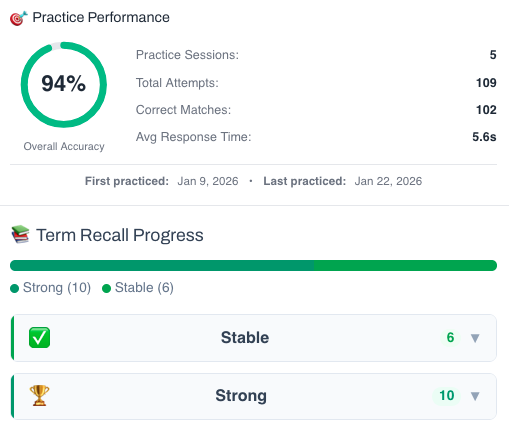
Vocabulary practice stats and progress dashboard preview

This isnโ€™t a simple quiz โ€” itโ€™s a fully tracked learning system. You build knowledge through recognition, then recall, and your progress feeds directly into the Integrated Practice Bar (Writing tasks, AI Chat, and more).

  • Practice sessions, accuracy, and response-time tracking
  • Term strength levels (Learning โ†’ Stable โ†’ Strong)
  • Personal progress history for each unit

This feature is available to YSP members.

Explore Membership Benefits

๐ŸŽฎ Practice Games

Sentence Scrambler

Accounts & Administration Director – Sentence Scramble

๐Ÿ”’

Member-Exclusive Sentence Builder

Reconstruct scrambled sentences to practice word order and develop your grammar intuition.

This feature is available to YSP members.

Explore Membership Benefits

โ† Previous Page 1 of 2