Bookkeeping: Recording Business Transactions
Core PathWay1 Zaheer’s Career in Bookkeeping
Zaheer Younis works in the accounting department of a trading company. He started his career five years ago as a junior bookkeeper.
“When I began, everything seemed complicated,” Zaheer explains to his colleague Maria. “But my manager taught me the basics of double-entry bookkeeping. Now I understand that every transaction has two sides – we record both a debit and a credit.”
Maria nods. “Can you give me an example?”
“Sure,” Zaheer says. “Last week, we bought raw materials from a supplier. We’ll pay them next month. So I debited our purchases account – that shows what we bought. Then I credited the supplier’s account – that shows we owe them money. They’re now one of our creditors.”
“What about when customers buy from us?” Maria asks.
“That’s the opposite,” Zaheer replies. “If a customer buys on credit, I credit the sales account and debit the customer’s account. They become our debtors – people who owe us money. We also call them accounts receivable.”
Zaheer opens his computer. “For busy accounts like sales and purchases, we use day books first. We record all the daily transactions there, then we put a summary into the main ledgers at the end of the week. In Britain, people still call the purchases ledger a bought ledger, even though everything is digital now.”
“And how do you know everything is correct?” Maria asks.
Zaheer smiles. “At the end of each accounting period – usually a month or a year – we prepare a trial balance. This transfers all the debit and credit balances onto one page. If we’ve done our work correctly, the total debits always equal the total credits. That’s the beauty of the system.”
2 Understanding Double-Entry Bookkeeping
Double-entry bookkeeping is a system that records two aspects of every transaction. This means that each time money moves in a business, we write it down in two different places.
When a company buys something, it debits one account and credits another account. A debit means we take money out or reduce something. A credit means we add money or increase something. For example, when a business buys stock (goods ready to sell), it debits the stock account because the stock increases. At the same time, it credits the supplier’s account because the company now owes money to that supplier.
The same principle works for sales. When a company sells an item on credit (the customer will pay later), it credits the sales account and debits the customer’s account. The customer becomes a debtor – someone who owes the company money.
Each account shows debits on the left side and credits on the right side. If bookkeepers do their work correctly, the total debits always equal the total credits. This is the basic rule of double-entry bookkeeping, and it helps companies find mistakes in their records.
3 Key Bookkeeping Terms
debit
- When we buy raw materials, we debit the purchases account.
- The bookkeeper debited the stock account to show the increase in inventory.
creditor
- Our main creditor is the supplier we buy raw materials from each month.
- The company has several creditors who need to be paid by the end of the month.
trial balance
- At the end of the year, bookkeepers prepare a trial balance to check their work.
- The trial balance revealed an error in the sales account that needed correction.
4 Recording Transactions in Practice
In real businesses, some accounts have many transactions every day. The sales account and purchases account are good examples. Companies don’t want to update their main ledgers after every single sale or purchase because this takes too much time.
Instead, bookkeepers use day books (also called journals). They record each transaction in the day book as it happens. Then, at the end of the day or week, they add up all the transactions and put one summary number into the main ledger. This saves time and keeps the main records clean and organized.
In Britain, the main ledgers have traditional names. The bought ledger records all the creditors – the suppliers the company owes money to. Even though most companies now use computers instead of paper books, they still use these old names.
At the end of an accounting period (for example, one year), bookkeepers need to check their work. They prepare a trial balance. This document shows the debit and credit balance of every account on one page. The total of all debits should equal the total of all credits. If these numbers match, the bookkeeping is probably correct. The accountants can then use these balances to prepare the company’s financial statements – the official reports that show how much profit the company made.
5 Writing Task: Explaining Bookkeeping to a New Employee
Your paragraph must include these terms: transaction, debit, credit, creditor, debtor, trial balance.
Follow this structure:
– Sentence 1: Start with ‘Double-entry bookkeeping means that…’
– Sentences 2-3: Explain what happens when a company buys something on credit (use debit, credit, and creditor)
– Sentences 4-5: Explain what happens when a company sells something on credit (use debit, credit, and debtor)
– Sentence 6: Explain how bookkeepers check their work is correct (use trial balance)
Write 80 – 100 words.
Member-Exclusive Practice Bar
Access a wide range of integrated practice for this unit — from Vocabulary and Grammar activities to AI-curated Writing tasks and Thematic Chat practice.
This feature is available to YSP members.
Explore Membership BenefitsMember-Exclusive Vocabulary Review & Acquisition System
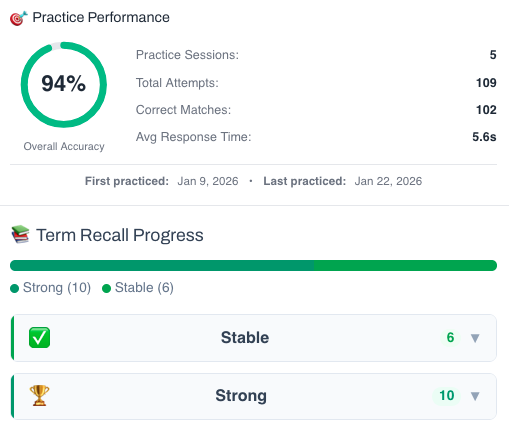
This isn’t a simple quiz — it’s a fully tracked learning system. You build knowledge through recognition, then recall, and your progress feeds directly into the Integrated Practice Bar (Writing tasks, AI Chat, and more).
- Practice sessions, accuracy, and response-time tracking
- Term strength levels (Learning → Stable → Strong)
- Personal progress history for each unit
This feature is available to YSP members.
Explore Membership Benefits🎮 Practice Games
Sentence Scrambler
Bookkeeping (B1) – Sentence Scramble
Member-Exclusive Sentence Builder
Reconstruct scrambled sentences to practice word order and develop your grammar intuition.
This feature is available to YSP members.
Explore Membership Benefits