CAE Proposal Writing: The Complete C1 Guide
Core PathWay
1 🔍 What's This Task Type?
A proposal is a formal, persuasive document written to suggest a plan of action to a specific reader, like a manager, committee, or club president. Its main goal isn’t just to inform, but to convince the reader to approve or fund your ideas. In the CAE exam, you’ll read a short prompt that sets the scene, outlining a situation that requires a solution or improvement. Your job is to write a compelling case for your suggestions, explaining what should be done and why it’s a good idea. This is different from a report, which analyses a past or present situation. A proposal is forward-looking; it’s about shaping the future. The examiner is looking for your ability to use language strategically to persuade, present a well-structured argument, and use a formal yet engaging register. The task requires you to be actionable and specific in your recommendations.
Key Terms
💬 Dialogue 1: Proposal vs. Report
A student is confused about the difference between a proposal and a report.
2 🗺️ Planning Tips
Effective planning is the bedrock of a high-scoring proposal. The ‘Write to the Rubric’ strategy is your best friend here. Step 1: Read the prompt and underline the key content points you must address. Step 2: On your note paper, list ONLY these rubric requirements. This list becomes your checklist. Step 3: For each point, brainstorm 2-3 concrete ideas. Ask yourself: ‘What is the problem?’, ‘What is a realistic solution?’, ‘What are the benefits?’. Finally, create a mini-outline with paragraph boxes. In each box, note the content point, the specific lexis you want to use (e.g., ‘streamline’, ‘allocate’), and the grammar structure you’ll target (e.g., ‘passive voice’). This pre-planning ensures you stay on topic and demonstrates a sophisticated command of language, as you’re not just thinking about what to say, but how to say it effectively.
Key Terms
💬 Dialogue 2: Formality and Tone
A student is worried their proposal sounds too informal.
3 🏗️ Structure & Format
A clear, professional structure is crucial. While there’s no single ‘correct’ format, a standard one is highly effective. Use clear headings to guide the reader. Aim for 220-260 words. A suggested structure is:
Title: A concise, engaging title.
Introduction (1 paragraph): State the purpose of the proposal and the issue you’re addressing. Use a formal tone.
Proposed Solutions/Measures (2-3 paragraphs): This is the core. For each idea, have a clear topic sentence, explain the proposal, and justify it. Use bullet points or separate paragraphs for clarity. Be specific and envisage the positive outcomes.
Recommendation/Conclusion (1 paragraph): Summarise your main points and make a final, persuasive call to action, reiterating the benefits and the feasibility of your plan.
Key Terms
💬 Dialogue 3: Sticking to the Rubric
A student is worried about writing too much and going off-topic.
4 💬 Useful Language
Your language must be persuasive and formal. Here are some key phrases and structures:
Stating Purpose: ‘The aim of this proposal is to…’, ‘This proposal sets out to…’
Making Recommendations: ‘I would recommend…’, ‘It would be advisable to…’, ‘A further suggestion would be to…’
Highlighting Benefits: ‘This would result in…’, ‘The primary advantage of this would be…’, ‘This initiative would lead to…’
Grammar at C1: Use the passive voice for a formal tone (‘It is proposed that…’), Type 1 conditionals for realistic suggestions (‘If we implement this, we will…’), and modal verbs like ‘would’ and ‘could’ for polite, non-assertive recommendations. Use cleft sentences for emphasis, such as ‘What we need is…’ or ‘It is this approach that will…’. This shows flexibility and control.
Key Terms
5 ✅ Do's and Don'ts
Do’s:
Don’ts:
✗ Don’t write a report of what has happened; focus on future suggestions.
✗ Don’t use informal language, contractions, or slang.
✗ Don’t be vague; be specific and actionable.
✗ Don’t forget to conclude with a clear recommendation.
✗ Don’t ignore the target reader; write as if to a specific person or group. Remember, your goal is to persuade a decision-maker, so your argument must be compelling and well-supported.
Key Terms
6 ⏱️ Timing Strategy
In the CAE exam, you have 1 hour 30 minutes for both writing tasks. For the proposal (Part 2), you should allocate about 45 minutes. Here’s a suggested breakdown:
1. Planning (10 minutes): Don’t skip this! Read the prompt, underline key points, brainstorm ideas, and create your paragraph outline. This is your roadmap.
2. Writing (30 minutes): Write your proposal, following your plan closely. Don’t stop to perfect every sentence; get your ideas down. Refer to your plan to ensure you’re covering all points.
3. Reviewing (5 minutes): This is critical. Check for errors in grammar, spelling, and punctuation. Also, verify that you have used a formal tone throughout and that your proposal is persuasive. Look for opportunities to replace simple vocabulary with more sophisticated lexis you planned.
Key Terms
Member-Exclusive Practice Bar
Access a wide range of integrated practice for this unit — from Vocabulary and Grammar activities to AI-curated Writing tasks and Thematic Chat practice.
This feature is available to YSP members.
Explore Membership BenefitsMember-Exclusive Vocabulary Review & Acquisition System
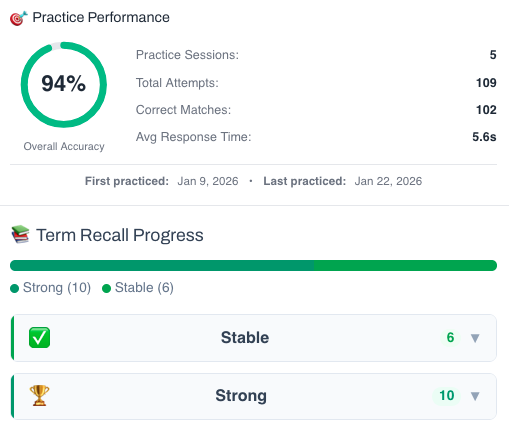
This isn’t a simple quiz — it’s a fully tracked learning system. You build knowledge through recognition, then recall, and your progress feeds directly into the Integrated Practice Bar (Writing tasks, AI Chat, and more).
- Practice sessions, accuracy, and response-time tracking
- Term strength levels (Learning → Stable → Strong)
- Personal progress history for each unit
This feature is available to YSP members.
Explore Membership Benefits🎮 Practice Games
Sentence Scrambler
CAE PROPOSALS – Sentence Scramble
Member-Exclusive Sentence Builder
Reconstruct scrambled sentences to practice word order and develop your grammar intuition.
This feature is available to YSP members.
Explore Membership Benefits