Past Perfect vs Past Simple: Telling Stories in the Right Order
Core PathWay
1 Section 1. Why Stories Don’t Always Go in Order
Here is a secret about good storytelling: the most interesting narratives rarely unfold in a straight line. Writers jump back in time, reveal hidden events, and drop surprises. The past perfect is the tense that makes all of this possible.
The past perfect tells us that one action was completed before another past action. It creates background events — things that happened earlier and explain the situation we are reading about now. It can also create dramatic tension by withholding information and then revealing it at exactly the right moment.
Look at the two versions of the same story below. Both contain the same events. But notice how the second version feels more alive.
—
Story A — Events in consecutive order (Past Simple only)
Alex left the office at six. He walked to the car park. He discovered that someone had left a note on his windscreen. He read it. He recognised the handwriting immediately. His hands began to shake.
—
Story B — The same events, told with Past Perfect
Alex’s hands were shaking as he stood in the car park. He had left the office only twenty minutes earlier, but everything had changed. Someone had placed a note on his windscreen. When he read it, he recognised the handwriting immediately — and suddenly understood why his colleague had been avoiding him all week.
—
Story A is accurate. Story B is compelling. The past perfect in Story B does two things: it anchors us in a dramatic moment first, and then fills in the background. That is the real power of this tense — not just grammar, but storytelling craft.
2 Section 2. The Past Perfect — A Clear Guide
The past perfect is not complicated once you see its job clearly. It simply marks the earlier of two past events. Think of it as a flag that says: ‘This happened first.’ The tense that describes the later event is usually the past simple.
The form is always the same: had + past participle. It does not change for person (I, you, he, she, we, they — all use had). The key is knowing when to use it — and the examples below will show you exactly that.
Focus
- Form: had + past participle (e.g. had finished, had left, had spoken)
- Use it for the earlier of two past events
- The later event usually uses the past simple
- Linking words such as before, after, when, by the time, as soon as, already, just, never, and once are common partners
Rules
- Use the past perfect for an action that was completed before another action in the past.
- Use the past simple for the action that happened second (or for the main narrative moment).
- When ‘before’ or ‘after’ makes the sequence completely clear, the past perfect is still preferred in formal and written English — it adds precision.
- With ‘by the time’, the past perfect is almost always required: ‘By the time she arrived, the meeting had already started.’
- Negative past perfect: had not (hadn’t) + past participle. Example: ‘He hadn’t eaten anything all day.’
Examples
- 1. She had already left before I arrived at the station.
- 2. By the time the ambulance reached the scene, the crowd had dispersed.
- 3. He felt exhausted because he hadn’t slept since the previous morning.
- 4. As soon as the results had been announced, the team celebrated.
- 5. Jordan handed in the report, but she realised she had forgotten to include the data.
- 6. Once they had signed the contract, the negotiations were finally over.
- 7. I had never visited that city before I moved there for work.
- 8. When Chris arrived at the airport, his flight had already departed.
- 9. The house looked different from how Sam had remembered it.
- 10. After they had spoken to the manager, the situation became much clearer.
Common mistake
3 Section 3. The Story — Reading Between the Tenses
Read the story carefully. As you read, pay attention to the tenses. Some events are happening ‘now’ in the story — these use the past simple. Others happened before the story’s main moment — these use the past perfect.
After the story, you will see the events listed in the general order they happened. Then read the story again and match each event to its number.
—
The Interview
Sam walked into the interview room and sat down. The panel looked up from their notes. She took a slow breath.
She had prepared for this moment for weeks. She had researched the company thoroughly, had practised her answers with a friend, and had even visited the building the day before so she would not get lost. And yet, as she sat down, she realised she had left her portfolio on the kitchen table.
The lead interviewer smiled and asked her to introduce herself. Sam answered clearly and confidently. She explained that she had worked in project management for four years and had recently completed a leadership course. The panel nodded.
By the time the interview ended, Sam felt cautiously optimistic. She had not expected it to go so smoothly — especially after the morning she had had.
—
Events in the order they actually happened:
[1] Sam worked in project management for four years.
[2] Sam prepared for the interview , she researched the company.
[3] Sam completed a leadership course.
[4] Sam practised her answers with a friend.
[5] Sam visited the building the day before the interview.
[6] Sam left her portfolio on the kitchen table.
[7] Sam walked into the interview room and sat down
[8] The panel looked up from their notes
[9] Sam took a slow breath.
[9] The lead interviewer smiled and asked her to introduce herslef.
[10] Sam introduced herself and answered questions.
[11] The interview ended.
—
Now read the story again. Find where each event [1]–[11] appears.
Notice that events [1]–[6] all use the past perfect — they happened before Sam walked into the room. Events [7]–[11] use the past simple — these are the main story moments, unfolding in real time.
4 Section 4. Your Turn — Write a Narrative
You have seen how past perfect and past simple work together in a real story. Now it is your turn to write one.
You MUST use:
– At least THREE examples of the past perfect (had + past participle) to describe events that happened before the main moment
– The past simple for the main events of your story
– At least ONE of these linking words or phrases: by the time / when / already / after / because
Write in a neutral or informal narrative register. Aim for 90–110 words.
5 Recap — What You Have Covered
Let’s pull it all together.
The past perfect (had + past participle) is used for actions that were completed before another point in the past. Its partner is usually the past simple, which describes the main events of a story or the later action in a sequence.
The real skill is knowing that narratives do not always move forward in time. Good writers use the past perfect to reveal background events, to explain why something happened, and to create dramatic tension by holding back information. When you read ‘She had already left’, you know two things: she left, and she left before something else happened.
Key linking words to remember: before, after, when, by the time, as soon as, once, already, just, never. These are the signposts that guide your reader through time.
Now take that knowledge into your own writing — and remember, the best stories are rarely told in a straight line.
Member-Exclusive Practice Bar
Access a wide range of integrated practice for this unit — from Vocabulary and Grammar activities to AI-curated Writing tasks and Thematic Chat practice.
This feature is available to YSP members.
Explore Membership BenefitsMember-Exclusive Vocabulary Review & Acquisition System
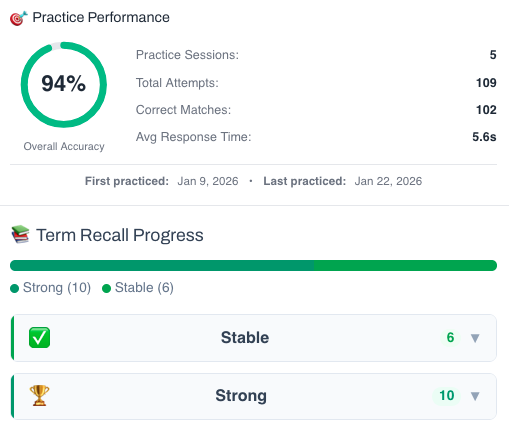
This isn’t a simple quiz — it’s a fully tracked learning system. You build knowledge through recognition, then recall, and your progress feeds directly into the Integrated Practice Bar (Writing tasks, AI Chat, and more).
- Practice sessions, accuracy, and response-time tracking
- Term strength levels (Learning → Stable → Strong)
- Personal progress history for each unit
This feature is available to YSP members.
Explore Membership Benefits🎮 Practice Games
Sentence Scrambler
Past Perfect vs Past Simple : The basic and nuanced rules – Sentence Scramble
Member-Exclusive Sentence Builder
Reconstruct scrambled sentences to practice word order and develop your grammar intuition.
This feature is available to YSP members.
Explore Membership BenefitsPlease log in to access Advanced Practice.
Please log in to access Advanced Practice.