This pathway explores how the versatile verb 'get' functions in business contexts. Learners discover when 'get' is appropriate for informal workplace communication and when to avoid it in formal business writing. The content covers essential phrasal verbs with 'get', common business idioms, and practical vocabulary for everyday office interactions. Students learn to distinguish between casual peer conversations and professional written correspondence.
This lesson teaches you how to use 'get' in business situations. You will learn when 'get' is good for talking with colleagues and when you should not use it in formal emails or reports. The lesson includes important phrasal verbs and idioms with 'get' that business people use every day.
▶3.Get - In Payroll SettingsSpecific PathwaysYou are here
This lesson teaches HR and payroll professionals how to use the verb 'get' and related phrases in workplace contexts. You'll learn expressions for discussing payment (get paid, get paid overtime), employee benefits (get holiday, get sick pay), and payroll administration (get the payslip). The content includes practical phrases for explaining compensation structures, handling employee queries, and managing payroll communications professionally.
Using ‘Get’ in Payroll Settings: Essential HR Language
Specialist PathWay
Lexis
1 🌐 Introduction to ‘Get’ in Payroll Settings
In HR and payroll management, the verb ‘get’ appears constantly in everyday communication. When employees get sick, they need to understand how they’ll get sick pay. New staff want to know when they’ll get paid and whether they get paid for the hours you work or receive a fixed salary. Many companies now arrange for employees to get the payslip by email rather than on paper, which makes administration easier.
Payroll professionals regularly explain how workers get paid overtime for extra hours, or how they get holiday entitlement based on their contract. Employees ask questions like ‘When do I get my salary?’ or ‘How do I get time off approved?’ Understanding these common get phrases helps HR teams communicate clearly about deductions, payment dates, annual leave, and other essential payroll matters. Whether someone wants to get a pay rise or simply needs to get better after illness, these expressions form the foundation of professional payroll conversations.
Key Terms
get sickto become ill or unwell
get sick payto receive money from your employer when you are too ill to work
get paidto receive money for work you have done
get paid for the hours you workto receive money based on the exact time you spend working
salarya fixed amount of money you receive regularly for your job, usually every month
get the payslip by emailto receive the document showing your pay and deductions through electronic mail
get paid overtimeto receive extra money for working more than your normal hours
get holiday entitlementto receive the number of days off work with pay that you have a right to take
get my salaryto receive the regular payment for your work
get time offto receive permission to be away from work
deductionsamounts of money taken away from your salary before you receive it, such as tax
annual leavethe paid holiday days you can take each year
get a pay riseto receive an increase in the amount of money you earn
get betterto recover from an illness and become healthy again
💬 Dialogue 1: Explaining Payment to a New Employee
HR Manager Sarah is explaining payroll procedures to Tom on his first day
Tom:“When will I get paid for my first month?”
Sarah:“You’ll get your salary at the end of next month. We pay monthly, on the last Friday. This means your first payment will be in about six weeks.”
Tom:“And how will I know what I’ve earned? Do I get the payslip by email?”
Sarah:“Yes, exactly. You’ll get the payslip by email a day before the payment goes into your bank account. The payslip shows your gross pay – that’s the total before deductions – and then you’ll see what deductions you get, like tax and national insurance.”
Tom:“That’s helpful. What happens if I get sick during my probation period? Do I still get sick pay?”
Sarah:“Good question. Yes, you get sick pay from day one, even during probation. However, you need to call your manager before 9am on the first day you’re ill. After three days, you’ll need a doctor’s note.”
Tom:“I see. And what about holidays? When do I get holiday entitlement?”
Sarah:“You get holiday entitlement from your start date, but it builds up gradually. In other words, you get paid for the hours you work each month, and your holiday allowance grows at the same rate. After three months, you can take your first week off.”
Tom:“So I get paid for the hours I work, and my holidays build up monthly. What deductions will I see on my first payslip?”
Sarah:“You’ll get deductions for income tax and national insurance – everyone gets those. You might also see a pension deduction, which is 5% of your salary. The good news is that the company adds another 5% on top, so it’s worth it. Any other questions about payroll?”
Tom:“No, that’s really clear. Thank you for explaining everything, Sarah.”
2 🔬 The Key Phrases You Need for ‘Get’ in Payroll Settings
get paid – to receive money for work you have done. Example: All employees get paid on the last Friday of each month.
get paid overtime – to receive extra money for working more than your normal hours. Example: If you work on Saturday, you’ll get paid overtime at 1.5 times your usual rate.
get paid for the hours you work – to receive money based on the exact time you spend working. Example: Part-time staff get paid for the hours you work, not a fixed salary.
get the payslip by email – to receive the document showing your pay and deductions through electronic mail. Example: You’ll get the payslip by email on the 25th of each month.
get sick – to become ill or unwell. Example: If you get sick during your holiday, you can claim those days back.
get sick pay – to receive money from your employer when you are too ill to work. Example: After three months of employment, you can get sick pay for up to four weeks.
get holiday entitlement – to receive the number of days off work with pay that you have a right to take. Example: Full-time employees get holiday entitlement of 28 days per year.
get time off – to receive permission to be away from work. Example: You need to request two weeks in advance if you want to get time off.
get deductions – to have amounts of money taken away from your salary before you receive it. Example: You’ll get deductions for tax, national insurance, and pension contributions.
get a pay rise – to receive an increase in the amount of money you earn. Example: Most staff get a pay rise after their annual review in April.
get your P45 – to receive the official tax document when you leave a job. Example: You’ll get your P45 within two weeks of your last working day.
get paid monthly – to receive your salary once every month. Example: Everyone in the company gets paid monthly, not weekly.
Key Terms
get paidto receive money for work you have done
get paid overtimeto receive extra money for working more than your normal hours
get paid for the hours you workto receive money based on the exact time you spend working
get the payslip by emailto receive the document showing your pay and deductions through electronic mail
get sickto become ill or unwell
get sick payto receive money from your employer when you are too ill to work
get holiday entitlementto receive the number of days off work with pay that you have a right to take
get time offto receive permission to be away from work
get deductionsto have amounts of money taken away from your salary before you receive it
get a pay riseto receive an increase in the amount of money you earn
get your P45to receive the official tax document when you leave a job
get paid monthlyto receive your salary once every month
💬 Dialogue 2: Discussing Overtime with Payroll
Employee Mark is asking Lisa in payroll about overtime payment
Mark:“Hi Lisa, I worked 10 extra hours last week. Will I get paid overtime for those?”
Lisa:“Yes, you’ll get paid overtime at time and a half. This means if your normal rate is £12 an hour, you’ll get £18 for each overtime hour. It’ll be on next month’s payslip.”
Mark:“Great! And just to check – do I get paid for the hours I work or is it a fixed amount each month?”
Lisa:“For overtime, you get paid for the hours you work – it’s not fixed. However, your manager needs to approve them first in the system. Did your manager approve your 10 hours already?”
Mark:“Yes, she approved them yesterday. Will I get extra pay on top of my normal salary then?”
Lisa:“Exactly. You’ll get extra pay added to your regular monthly salary. So you’ll see your normal gross pay, plus the overtime amount. Then you get deductions from the total – tax and national insurance apply to overtime too.”
Mark:“I see. So I get deductions on my overtime as well. Does that mean my take-home pay will be less than I expected?”
Lisa:“Well, you’ll definitely earn more overall, but yes, the deductions mean you won’t get the full £180. You’ll probably get around £130 after tax, depending on your tax code. But that’s still good extra money for 10 hours!”
3 🔍 Other Key Terms for ‘Get’ in Payroll Settings
payslip – a document that shows how much you earned and what deductions were taken from your pay. Example: Check your payslip carefully to make sure all your overtime hours are included.
overtime – extra hours worked beyond your normal working time. Example: We pay overtime at a higher rate for weekend work.
entitlement – something you have a right to receive, such as holiday days or sick pay. Example: Your holiday entitlement increases after five years of service.
deduction – an amount of money taken away from your salary before you receive it. Example: The biggest deduction on your payslip is usually income tax.
gross pay – the total amount of money you earn before any deductions are taken away. Example: Your gross pay is £2,500, but after deductions you’ll receive £1,950.
net pay – the amount of money you actually receive after all deductions have been taken away. Example: Your net pay appears at the bottom of your payslip.
annual leave – the paid holiday days you can take each year. Example: You have 15 days of annual leave remaining this year.
salary – a fixed amount of money you receive regularly for your job, usually every month. Example: The salary for this position is £32,000 per year.
Key Terms
payslipa document that shows how much you earned and what deductions were taken from your pay
overtimeextra hours worked beyond your normal working time
entitlementsomething you have a right to receive, such as holiday days or sick pay
deductionan amount of money taken away from your salary before you receive it
gross paythe total amount of money you earn before any deductions are taken away
net paythe amount of money you actually receive after all deductions have been taken away
annual leavethe paid holiday days you can take each year
salarya fixed amount of money you receive regularly for your job, usually every month
💬 Dialogue 3: Holiday Entitlement Query
An employee is asking HR about their annual leave rights
Employee:“How many days do I get holiday entitlement for this year?”
HR Manager:“You get holiday entitlement of 28 days, including bank holidays. This is the standard amount in the UK – it means you have 20 days to choose yourself, plus 8 bank holidays throughout the year.”
Employee:“That’s good. And if I get sick while I’m on holiday, what happens to those days?”
HR Manager:“If you get sick during annual leave, you can claim those days back with a doctor’s note. In other words, if you’re ill for three days of your holiday, you’ll get those three days added back to your holiday entitlement. However, you must get the doctor’s note while you’re still abroad or ill.”
Employee:“That’s good to know. How do I request to get time off for next month? Is there a form I need to fill in?”
HR Manager:“Yes, you need to submit a request through our online system. You should do this at least two weeks before you want to get time off. Your manager will then approve or decline it, depending on how busy the department is.”
Employee:“And if I get sick during the year, does that affect my holiday entitlement? Do I lose any days?”
HR Manager:“No, sick leave is completely separate from your annual leave. If you get sick, you get sick pay according to our policy – up to 10 days full pay per year. This doesn’t reduce your 28 days of holiday entitlement at all. They’re two different things.”
Employee:“Perfect. So I can get time off for holidays, and I get sick pay separately if I’m ill. One last question – can I carry unused days to next year?”
HR Manager:“You can carry over up to 5 days to the next year, but you must use them by March. Otherwise, you’ll lose them. My advice is to plan your annual leave throughout the year so you don’t waste any days. Would you like me to show you the online booking system now?”
4 🧠 Worth Thinking About
The phrase ‘get paid’ is interesting because it uses the passive voice naturally in everyday speech, while ‘receive payment’ sounds very formal. In British English, employees traditionally ‘get paid’ on the last working day of the month, but in the US, bi-weekly payment (every two weeks) is more common. The expression ‘get your P45’ has become almost slang in the UK – people joke about ‘getting their P45’ when they think they might lose their job! Interestingly, the verb ‘get’ appears in payroll contexts far more than formal alternatives like ‘receive’ or ‘obtain’, even in professional HR communications. This makes ‘get’ phrases essential vocabulary for anyone working in payroll management.
🔒
Member-Exclusive Vocabulary Review & Acquisition System
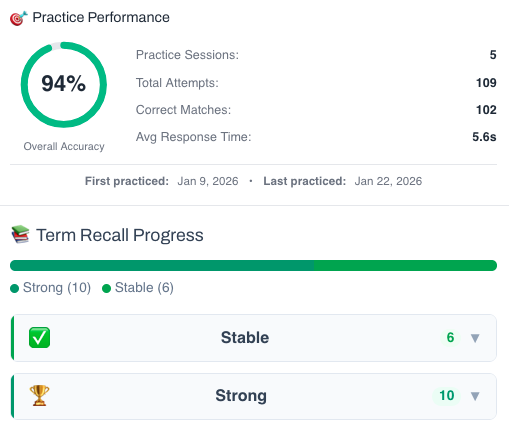
This isn’t a simple quiz — it’s a fully tracked learning system.
You build knowledge through recognition, then recall,
and your progress feeds directly into the
Integrated Practice Bar (Writing tasks, AI Chat, and more).
Practice sessions, accuracy, and response-time tracking
We use technologies like cookies to store and/or access device information. We do this to improve browsing experience and to show (non-) personalized ads. Consenting to these technologies will allow us to process data such as browsing behavior or unique IDs on this site. Not consenting or withdrawing consent, may adversely affect certain features and functions.
Functional
Always active
The technical storage or access is strictly necessary for the legitimate purpose of enabling the use of a specific service explicitly requested by the subscriber or user, or for the sole purpose of carrying out the transmission of a communication over an electronic communications network.
Preferences
The technical storage or access is necessary for the legitimate purpose of storing preferences that are not requested by the subscriber or user.
Statistics
The technical storage or access that is used exclusively for statistical purposes.The technical storage or access that is used exclusively for anonymous statistical purposes. Without a subpoena, voluntary compliance on the part of your Internet Service Provider, or additional records from a third party, information stored or retrieved for this purpose alone cannot usually be used to identify you.
Marketing
The technical storage or access is required to create user profiles to send advertising, or to track the user on a website or across several websites for similar marketing purposes.