This pathway helps B1 learners master talking about habits across time frames. Students learn to describe current routines with 'usually', past habits with 'used to' and 'would', and adaptation processes with 'be/get used to'. Through workplace scenarios, learners practice distinguishing between these structures and using them naturally in context.
This lesson explores how we talk about habits in English, both present and past. You'll learn the difference between describing what you do regularly and expressing how comfortable or familiar you are with something. We'll cover 'usually', 'used to', 'would', and the important distinction between habit forms and 'be/get used to' expressions.
Elaboration: First day orientation meeting in the main conference room, where the manager welcomes three new hires and explains the company's work culture, past changes, and current practices.
▶3.Talking About Habits: Present, Past, and Getting Used to ThingsAssignmentsYou are here
A manager welcomes new employees to ACME Corp and explains how the company operates now, how things were different in the past, and reassures them about adapting to new routines. The story naturally demonstrates present habits, past habits, and the process of getting used to changes.
A new hire approaches the manager after the welcome speech to ask about specific work arrangements
New Hire:“Thanks for the welcome, Sarah. I have a question about the remote work policy. How often do people usually work from home?”
Manager:“Good question! Most people usually choose Tuesdays and Thursdays to work remotely, but you can pick any two days that suit you. It’s very flexible here.”
New Hire:“That’s great. I’m not really used to working from home though. I used to work in an office every day at my last job.”
Manager:“Don’t worry, you’ll get used to it quickly. We usually have a video call in the morning on remote days, so you won’t feel disconnected. The team is really supportive.”
New Hire:“That sounds helpful. Did you find it difficult to get used to remote work when you first started?”
Manager:“Actually, yes! I used to think I needed to be in the office to be productive. But after a few weeks, I got used to the routine. Now I usually get more work done at home because it’s quieter.”
New Hire:“That’s encouraging. I’m sure I’ll get used to it too. Is there anything else that’s different here that I should know about?”
Manager:“Well, we usually have lunch together as a team on Wednesdays. It’s informal, just a chance to chat. You’ll get used to our rhythm pretty quickly. Just ask if anything feels confusing!”
💬 Dialogue 2: Discussing the Old Days
During lunch, two colleagues talk about how the company has changed, helping a new hire understand the company culture
Experienced Employee:“You should have seen this place five years ago! We used to have assigned desks and couldn’t move around at all. Everyone had their own little space.”
New Hire:“Really? So you would sit in the same spot every single day?”
Experienced Employee:“Exactly! And we would have these long meetings every Monday morning that usually lasted three hours. It was exhausting. People would bring coffee and just try to stay awake!”
New Hire:“Three hours! That sounds terrible. How did you get used to all these changes when the new management came in?”
Experienced Employee:“Well, it wasn’t easy at first. We used to be very traditional, so the flexible seating felt strange. But the new CEO would come and sit with different teams every week. That helped us get used to the idea.”
New Hire:“And now? Do people usually prefer the new way of working?”
Experienced Employee:“Oh yes! Most people are used to it now and love the freedom. We usually choose to sit near our project teams, but we can change whenever we want. It’s so much better than the old days.”
New Hire:“I can imagine. I used to work in a very traditional office too, so I think I’ll get used to this style quite quickly.”
💬 Dialogue 3: End of First Week Check-in
The manager meets with new hires at the end of their first week to see how they’re adapting
Manager:“So, how’s your first week been? Are you getting used to our systems?”
New Hire:“It’s been good, but I’m still not used to the messaging system. I usually prefer email for everything.”
Manager:“That’s normal. Most people take a couple of weeks to get used to it. You used to work somewhere that relied on email more, right?”
New Hire:“Yes, we would send formal emails for almost everything. But I can see the benefits of quick messaging now.”
Manager:“That’s great that you’re open to it! What about the remote work days? You mentioned on Monday that you weren’t used to working from home. How did Thursday go?”
New Hire:“Actually, it went better than I expected! I’m starting to get used to it. I usually work better in an office, but I was quite productive at home on Thursday.”
Manager:“Excellent! You know, I used to feel the same way. I would worry that I wouldn’t be productive at home. But now I’m completely used to it. You’ll find your rhythm soon.”
New Hire:“Thanks, Sarah. I think I just need a bit more time to get used to everything. But overall, I’m really happy here. The team has been very welcoming.”
Grammar Structures Featured
This story arc naturally demonstrates four key grammar structures for talking about habits and adaptation:
USED TO + base verb (past habits that are no longer true): ‘We used to have a very strict dress code’ – This shows something that was true in the past but isn’t true now.
WOULD + base verb (past repeated actions): ‘Everyone would wear suits and formal clothes every single day’ – This describes repeated actions in the past, often used alongside ‘used to’ for variety.
USUALLY + present simple (current habits): ‘We usually start the day with a quick stand-up meeting’ – This shows what normally happens in the present.
BE USED TO + noun/gerund (being familiar/accustomed to something): ‘They were used to being in the office every day’ – This means something is familiar or normal for you.
GET USED TO + noun/gerund (becoming familiar/accustomed to something): ‘You’ll get used to our systems pretty quickly’ – This describes the process of something becoming familiar or normal.
✓ Notice how ‘used to’ talks about the past, while ‘be/get used to’ talks about being comfortable with something (any time frame).
🔒
Member-Exclusive Vocabulary Review & Acquisition System
This isn’t a simple quiz — it’s a fully tracked learning system.
You build knowledge through recognition, then recall,
and your progress feeds directly into the
Integrated Practice Bar (Writing tasks, AI Chat, and more).
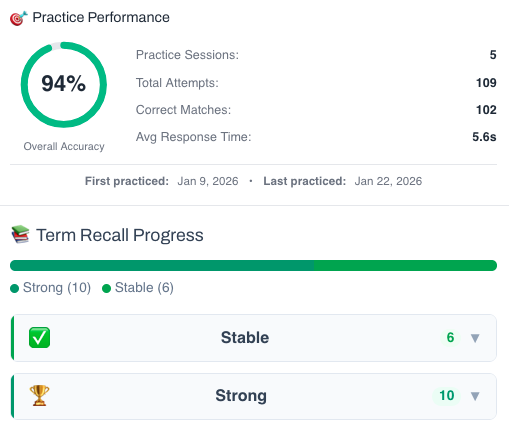
Practice sessions, accuracy, and response-time tracking
We use technologies like cookies to store and/or access device information. We do this to improve browsing experience and to show (non-) personalized ads. Consenting to these technologies will allow us to process data such as browsing behavior or unique IDs on this site. Not consenting or withdrawing consent, may adversely affect certain features and functions.
Functional
Always active
The technical storage or access is strictly necessary for the legitimate purpose of enabling the use of a specific service explicitly requested by the subscriber or user, or for the sole purpose of carrying out the transmission of a communication over an electronic communications network.
Preferences
The technical storage or access is necessary for the legitimate purpose of storing preferences that are not requested by the subscriber or user.
Statistics
The technical storage or access that is used exclusively for statistical purposes.The technical storage or access that is used exclusively for anonymous statistical purposes. Without a subpoena, voluntary compliance on the part of your Internet Service Provider, or additional records from a third party, information stored or retrieved for this purpose alone cannot usually be used to identify you.
Marketing
The technical storage or access is required to create user profiles to send advertising, or to track the user on a website or across several websites for similar marketing purposes.