All about Happen (1): Understanding Different Meanings and Patterns
Core PathWay
1 🌐 Introduction Section
The verb happen is one of the most important words in English, but it causes problems for many learners. Why? Because happen has three different meanings and uses three different patterns. Italian speakers often make mistakes because they translate directly from ‘è successo che’ or ‘mi è successo’. In English, we say ‘something happened‘ (an event), ‘something happened to me’ (effect), or ‘I happened to see him’ (chance). Each pattern is different. This lesson shows you how to use all three patterns correctly in different tenses.
💬 Dialogue 1: Discussing a Strange Event
Two friends meet on the street. Lucy looks upset about something.
2 🔍 Lexical Breakdown
Meaning 1: An event takes place
This means something new or different takes place at a time.
Examples in different tenses:
– Present: ‘Things happen every day.’ (routine)
– Past: ‘Something strange happened last night.’ (event)
– Future: ‘The party will happen tomorrow.’ (planned event)
– Present continuous: ‘What is happening now?’ (current event)
⚠️ Italian speaker error: DON’T say ‘It happened that he came’ (from ‘è successo che’). SAY ‘He came’ or ‘Something happened: he came.’
—
Meaning 2: Something affects a person or thing
This means something bad or good touches or changes a person or thing.
Examples in different tenses:
– Past: ‘Something happened to my car last night.’ (effect on car)
– Past: ‘What happened to Sarah?’ (effect on Sarah)
– Present perfect: ‘Something has happened to my phone.’ (recent effect)
– Future: ‘Nothing will happen to you.’ (promise of safety)
⚠️ Italian speaker error: DON’T say ‘My car happened’ or ‘Me happened an accident’. SAY ‘Something happened to my car’ or ‘An accident happened to me.’
—
Meaning 3: Do something by chance (not planned)
This means you do something when you don’t plan it. You meet someone or see something by luck.
Examples in different tenses:
– Past: ‘I happened to meet Jim last week.’ (chance meeting)
– Past: ‘We happened to be in the same shop.’ (chance)
– Present: ‘If you happen to see Tom, tell him hello.’ (if by chance)
– Present perfect: ‘I have happened to walk past twice.’ (by chance)
⚠️ Note: This pattern is informal and spoken. It shows surprise or luck.
⚠️ Italian speaker error: DON’T say ‘I happened Jim’ or ‘It happened to meet him’. SAY ‘I happened to meet him.’
💬 Dialogue 2: Chance Meeting and Morning Routine
Two colleagues meet by chance at a coffee shop and chat about daily routines.
3 📚 Word Family and Variants
Verb: happen / happens / happened / happening
Noun: happening (informal – means ‘an event’)
– Example: ‘The party was a strange happening.’ (informal/old style)
⚠️ Note: We don’t usually use ‘happening’ as a noun in modern English. We say ‘event’ instead.
Adjective form: There is NO adjective form of happen.
Adverb form: There is NO adverb form of happen.
—
Common Prefixes and Suffixes:
There are NO common prefixes or suffixes with ‘happen’. We don’t say ‘unhappen’ or ‘happener’.
—
Related words (NOT the same family):
– event (noun) = something that happens
– occur (verb) = more formal word for ‘happen’
– take place (verb phrase) = formal way to say ‘happen’ for planned things
4 🔗 Collocations and Combinations
Common collocations with happen:
1. these things happen
This means bad things are normal in life.
– ‘I lost my keys, but these things happen.’ (acceptance)
2. it happens that…
This means by chance or by luck.
– ‘It happens that I know a good doctor.’ (chance)
3. as it happens
This means ‘by the way’ or ‘actually’.
– ‘As it happens, I saw Mike yesterday.’ (by chance)
4. happen to know/have/be
This means you know/have/are something by chance – see page 2 for more detail.
– ‘Do you happen to know the time?’ (polite question)
– ‘I happen to have some money with me.’ (by luck)
5. accidents happen
This means bad things are normal and not your fault.
– ‘Don’t worry, accidents happen.’ (comfort)
6. happen all the time
This means something is very common or frequent.
– ‘Mistakes happen all the time here.’ (frequency)
7. never happen again
This is a promise that something bad will stop.
– ‘I promise it will never happen again.’ (promise)
5 🤔 Metaphors & Idioms
Idioms and expressions with happen:
1. ‘It/That could only happen to you!’
This means a strange or funny thing is typical for one person.
– ‘You lost your shoe? That could only happen to you!’ (humorous)
2. ‘Stranger things have happened’
This means something unusual is still possible.
– ‘Maybe I’ll win? Well, stranger things have happened.’ (hope)
3. ‘Whatever happens, happens’
This means you accept the future and don’t worry.
– ‘I did my best. Whatever happens, happens.’ (acceptance)
⚠️ Important note for learners: These idioms are common when native speakers talk, but be careful! Receptive skills (understanding) come before productive skills (speaking and writing). You should learn to understand these expressions when you hear them, but wait until you feel confident before you use them yourself. If you use them in the wrong situation, people might not understand you or might think you sound strange.
Use the VAS to build solid recognition and recall of the terms below.
✔ Every correct Match = +1 point
✔ Every correct Recall = +2 points
🎓 Reach 5 points with good accuracy and the term is automatically promoted to your Personal Dictionary.
Incorrect answers lower accuracy, meaning more correct Matches or Recalls may be needed to reach promotion.
Member-Exclusive Vocabulary Review & Acquisition System
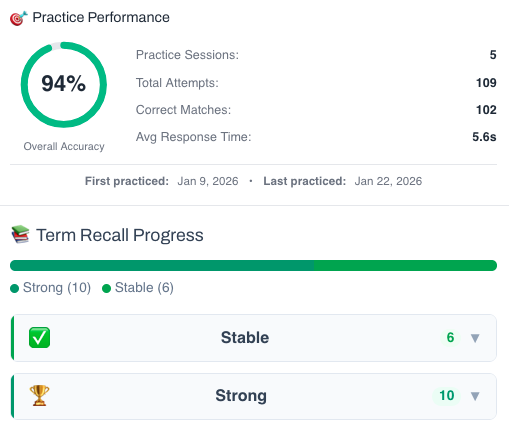
This isn’t a simple quiz — it’s a fully tracked learning system. You build knowledge through recognition, then recall, and your progress feeds directly into the Integrated Practice Bar (Writing tasks, AI Chat, and more).
- Practice sessions, accuracy, and response-time tracking
- Term strength levels (Learning → Stable → Strong)
- Personal progress history for each unit
This feature is available to YSP members.
Explore Membership BenefitsMember-Exclusive Practice Bar
Access a wide range of integrated practice for this unit — from Vocabulary and Grammar activities to AI-curated Writing tasks and Thematic Chat practice.
This feature is available to YSP members.
Explore Membership BenefitsMember-Exclusive Sentence Builder
Reconstruct scrambled sentences to practice word order and develop your grammar intuition.
This feature is available to YSP members.
Explore Membership Benefits