Present Simple for Instructions and Procedures
Core PathWay
1 Why Present Simple for Instructions?
When you open a manual, read a procedure, or follow a protocol, the language stays the same: Present Simple. But why?
Instructions describe how something works in general, not what happened yesterday or what will happen tomorrow. They express timeless truths about a process. ‘You submit the form’ means this is what always happens at this step — it’s the established way. Compare that to a story: ‘Yesterday I submitted the form’ tells you about one specific moment in the past. The difference matters.
Sequencers like first, then, next, after, before, once, as soon as, and finally form the organizational backbone of clear procedures. They guide your reader through the sequence of actions without confusion. Notice how ‘First, complete the form. Then, attach your credentials‘ creates a mental map, while ‘Complete the form and attach your credentials’ leaves the order ambiguous. Professional documentation demands precision.
Mastering procedural Present Simple means you can write technical instructions, employee workflows, and compliance guidelines that people actually understand and follow.
Key Terms
2 Grammar Overview: Present Simple in Procedures
Present Simple is the default tense for procedural language because it describes actions as general facts rather than time-specific events. When you write ‘The system checks your input,’ you’re not talking about right now or tomorrow — you’re describing what the system does every time, as part of its design.
The form is straightforward: use the base verb for all subjects except third person singular (he/she/it), which takes -s or -es. In instructions, you often use the imperative (base form without a subject) or ‘you’ as the subject. The focus is on impersonal clarity: what happens, not who does it or when.
Focus
- Form: Subject + base verb (third person singular adds -s/-es)
- Meaning: Describes timeless steps in a process, not specific past or future events
- Use: Instructions, manuals, workflows, protocols — any procedural context
- Sequencers provide logical structure: first, then, next, after, before, once, as soon as, finally
Rules
- Use base verb for imperative instructions: ‘Complete the form. Submit the documents.’
- Use ‘you’ + base verb for inclusive instructions: ‘You attach the files before you click Send.’
- Use third person singular + -s/-es for system/process descriptions: ‘The system verifies your credentials. HR reviews the application.’
- Sequencers clarify order: ‘Before you begin, gather all documents. First, complete section A. Once you finish, move to section B. After you submit, the system confirms receipt. As soon as approval comes through, you receive notification. Finally, attend orientation.’
Examples
- Before you submit the form, review all entries carefully. First, complete your personal details. Then, attach supporting documentation. Once you confirm all information is correct, click Submit. After HR approves your application, you receive your access credentials. Finally, attend the mandatory orientation session.
- The verification process works like this: First, the system checks your login details. Next, it compares your credentials against the database. As soon as it finds a match, it grants access. If compliance issues arise, the system flags the account for review.
- Before starting any maintenance procedure, consult the safety guidelines. First, power down all equipment. Then, follow the shutdown protocol step by step. Once the system is safe, you can begin work. After you complete repairs, run the diagnostic sequence. Finally, document all actions in the maintenance log.
Common mistake
3 Real-World Application: Employee Onboarding Workflow
Employee Onboarding Procedure: New Hire Documentation Workflow
Before you begin the onboarding process, gather all required documentation: a valid photo ID, proof of your qualifications, and your signed employment contract. Keep these files ready in digital format.
First, complete the personal information form in the HR portal. This form collects your contact details, emergency contacts, and bank information for payroll. Take your time — accuracy matters here. Once you finish that section, move to the emergency contacts page and provide at least two names with current phone numbers.
Next, attach your credentials: scan and upload your ID and qualification certificates. The system accepts PDF or JPEG files up to 5MB each. After you submit the complete form, HR reviews it within 48 hours. You receive an automated confirmation email immediately, but the review step takes one to two business days.
As soon as HR approves your documentation, you receive your access credentials via secure email: your employee ID number, temporary password, and building access card collection instructions. These credentials activate your accounts across all company systems.
Before your start date, complete the online compliance training modules. The system tracks your progress automatically. Once you finish all modules, you receive a verification certificate.
Finally, attend the mandatory orientation session on your first day. This session covers company protocols, workplace safety guidelines, and team introductions. After orientation, your manager confirms your workflow assignments and introduces you to your project team.
This procedure ensures smooth authorization and verification at every step. Follow the sequence carefully, and your onboarding experience will be efficient and professional.
Key Terms
4 Practice: Write Your Own Procedure
Now apply what you’ve learned. Write a clear workplace procedure using Present Simple and varied sequencers.
5 Key Takeaways: Procedural Present Simple
Present Simple is the procedural tense because instructions describe timeless processes, not time-specific events. When you write ‘You submit the form,’ you’re stating a general truth about the workflow — what always happens at this step.
Sequencers are your organizational toolkit. First, then, and next create simple chronological order. Before and after show prerequisite relationships. Once and as soon as emphasize the trigger point that allows the next action. Finally signals completion. Choose sequencers based on what you want to emphasize: use ‘as soon as’ when speed matters (‘As soon as approval comes through, you receive notification’), use ‘once’ when completion is the focus (‘Once you finish the training, you receive certification’).
Contrast this with narrative Present Simple, which describes habits or routines: ‘Every Monday, I submit my timesheet’ tells a story about your regular behaviour. Procedural Present Simple describes the abstract process: ‘You submit your timesheet via the HR portal.’ One is personal and time-referenced; the other is impersonal and timeless.
When writing procedures, prioritize clarity over style. Use short sentences. Keep one action per step. Deploy sequencers strategically to prevent ambiguity. Your goal is a procedure anyone can follow without needing to ask questions.
6 Recap
You’ve learned why Present Simple dominates procedural language: it describes processes as general truths rather than time-specific events. You can now deploy the full sequencer range — first, then, next, after, before, once, as soon as, finally — to create clear, logical instructions that guide readers step by step.
You understand the distinction between procedural Present Simple (‘You submit the form’ — timeless process description) and narrative Present Simple (‘I submit my timesheet every Monday’ — habitual action). This awareness helps you choose the right register for manuals, workflows, protocols, and guidelines.
Your writing task demonstrated that effective procedures combine accurate Present Simple forms with strategic sequencer deployment. The result is professional documentation that people can follow confidently, whether they’re completing employee onboarding, requesting authorization, or following compliance protocols.
Procedural language is about precision and clarity. Master these patterns, and you’ll write instructions that actually work.
Member-Exclusive Practice Bar
Access a wide range of integrated practice for this unit — from Vocabulary and Grammar activities to AI-curated Writing tasks and Thematic Chat practice.
This feature is available to YSP members.
Explore Membership BenefitsMember-Exclusive Vocabulary Review & Acquisition System
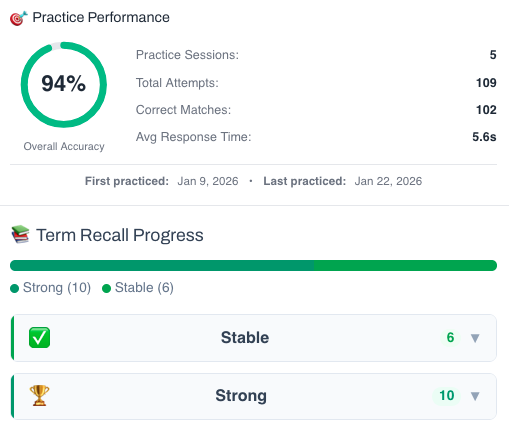
This isn’t a simple quiz — it’s a fully tracked learning system. You build knowledge through recognition, then recall, and your progress feeds directly into the Integrated Practice Bar (Writing tasks, AI Chat, and more).
- Practice sessions, accuracy, and response-time tracking
- Term strength levels (Learning → Stable → Strong)
- Personal progress history for each unit
This feature is available to YSP members.
Explore Membership Benefits🎮 Practice Games
Sentence Scrambler
Present Simple for Instructions, Processes, and Procedures – Sentence Scramble
Member-Exclusive Sentence Builder
Reconstruct scrambled sentences to practice word order and develop your grammar intuition.
This feature is available to YSP members.
Explore Membership Benefits