Verbs for Describing Trends
Core PathWay1 Basic Movements: Up and Down
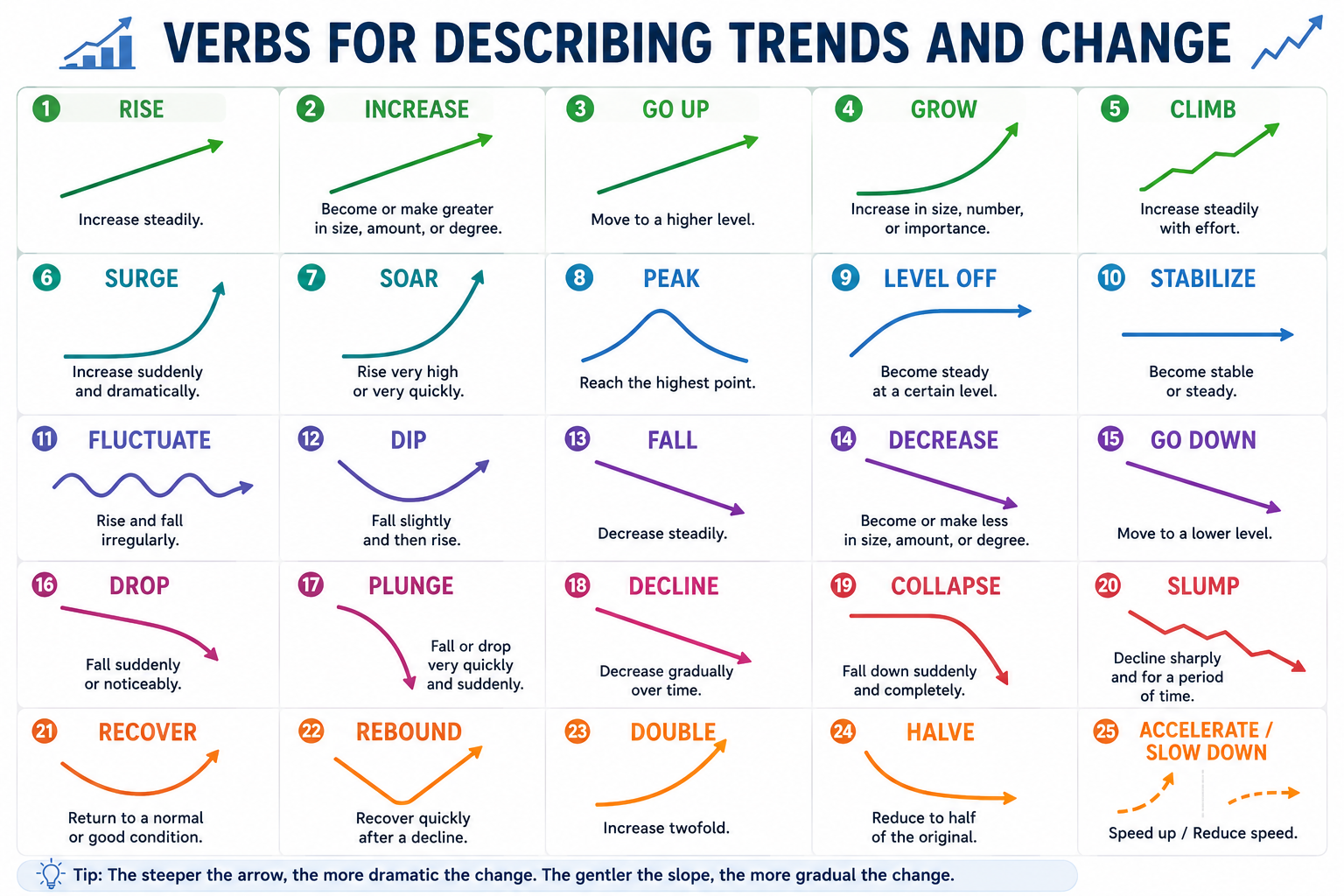
Let’s get you fluent in the language of trends. When something becomes bigger or higher, we have several ways to say it. The most common verb is rise. This means to go up in level, amount, or value. Prices rise, temperatures rise, numbers rise. Another simple way to say the same thing is go up. This means to become higher or greater in amount or level. We often use it in everyday conversation: “The cost of food went up last month.” A third option is increase. This means to become larger in number or amount. It sounds a bit more formal than “go up” but means the same thing. Now let’s look at the opposite direction. When something becomes smaller or lower, we can say it falls. This means to go down in level, amount, or value. We also use go down, which means to become lower or less in amount or level. And finally, we have decrease, which means to become smaller in number or amount. Notice how English gives us informal options (go up, go down) and more formal ones (increase, decrease) for the same ideas.
2 Gradual Changes Over Time
Some changes happen slowly and steadily. When something becomes bigger or greater over time, we often use the verb grow. This means to become bigger or greater over time. We say “The company grew last year” or “Sales are growing.” When something moves upward steadily and often gradually, we use climb. This gives us a picture of something moving up step by step, like climbing stairs. We might say “Profits climbed throughout the year.” For downward movements, we use decline. This means to become less or lower, usually gradually. It sounds more formal and is common in business writing: “Customer numbers declined in the second quarter.” Another verb for gradual decrease is slow down. This means to become less fast or to decrease more gradually. We use it when something was increasing quickly but now increases more slowly, or when a decrease becomes gentler.
3 Sudden and Dramatic Changes
Sometimes changes happen very quickly or by large amounts. When something falls suddenly or by a large amount, we use drop. This is more dramatic than “fall”: “Sales dropped 20% in one month.” Even more dramatic is plunge, which means to fall or drop suddenly and by a very large amount. We use this for really big, fast decreases: “Share prices plunged yesterday.” Another strong verb is collapse, which means to fall suddenly and completely to a very low level. This suggests something falling apart: “The market collapsed.” For sudden upward movements, we have surge. This means to increase suddenly and strongly. We often hear this in news reports: “Demand surged after the announcement.” When something rises very quickly to a high level, we say it soars. This verb creates an image of something flying upward: “Temperatures soared to 40 degrees.” Finally, slump means to fall suddenly and by a large amount, especially in business. It’s similar to “plunge” but we use it particularly for business and economic contexts.
4 Stability, Peaks, and Recovery
Not all trends involve constant movement. Sometimes things change direction or become steady. When something keeps changing between higher and lower levels, we say it fluctuates. This means the number or amount goes up and down repeatedly. When something stops changing and becomes steady or fixed, we use stabilize. This is what we want after a period of fluctuation: “Prices finally stabilized.” Every upward trend reaches a highest point. When something reaches the highest point or level, we say it peaks. After that peak, it usually goes down. Sometimes there’s a small, temporary downward movement. When something goes down slightly and usually temporarily, we use dip. This suggests a small drop that won’t last long. After a decrease, things can improve again. When something returns to a normal or higher level after a decrease, we say it recovers. This suggests getting better after a problem. A similar idea is rebound, which means to increase again quickly after falling. This verb suggests bouncing back with energy. Finally, we have level off, which means to stop rising or falling and stay at the same level. This describes the moment when a trend becomes flat.
5 Specific Amounts and Speed of Change
Sometimes we need to be very specific about how much something changed. When something becomes twice as large or twice as much, we use double. This is very precise: “Sales doubled in six months” means they became exactly two times bigger. The opposite is halve, which means to become half the size or amount. If you had 100 customers and now have 50, your customer base halved. Finally, let’s talk about the speed of change. When something increases more and more quickly, we say it accelerates. This verb suggests speed increasing, like a car accelerating. We might say “Growth is accelerating” to show that not only is something growing, but it’s growing faster and faster. These verbs give you the tools to describe any trend precisely, whether you’re talking about business results, weather patterns, or everyday changes in your life.
Member-Exclusive Practice Bar
Access a wide range of integrated practice for this unit — from Vocabulary and Grammar activities to AI-curated Writing tasks and Thematic Chat practice.
This feature is available to YSP members.
Explore Membership BenefitsMember-Exclusive Vocabulary Review & Acquisition System
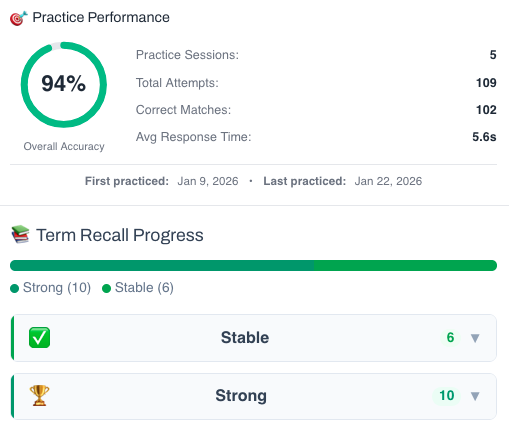
This isn’t a simple quiz — it’s a fully tracked learning system. You build knowledge through recognition, then recall, and your progress feeds directly into the Integrated Practice Bar (Writing tasks, AI Chat, and more).
- Practice sessions, accuracy, and response-time tracking
- Term strength levels (Learning → Stable → Strong)
- Personal progress history for each unit
This feature is available to YSP members.
Explore Membership Benefits🎮 Practice Games
Sentence Scrambler
Verbs for describing Trends [1] – Sentence Scramble
Member-Exclusive Sentence Builder
Reconstruct scrambled sentences to practice word order and develop your grammar intuition.
This feature is available to YSP members.
Explore Membership Benefits