Using 'Happen' Correctly: Avoiding Italian L1 Transfer Errors
Core PathWay
1 The Big Difference: 'Succedere' vs 'Happen'
Here’s something important: the Italian verbs ‘succedere’ and ‘accadere’ work very differently from the English verb ‘happen’. You cannot just translate word-for-word. If you do, you will create sentences that sound very strange to English speakers.
In Italian, you can say ‘È successo che ho perso il passaporto’ or ‘È successa una cosa strana’. The verb ‘succedere’ agrees with what happened (una cosa), and you often use ‘che’ to introduce what happened. In English, this doesn’t work. We don’t say ‘It happened that I lost my passport’ or ‘It happened a strange thing’. These sentences are wrong.
In English, ‘happen’ is much simpler. The thing that happens is the subject of the sentence. We say: ‘Something strange happened’ or ‘An accident happened’. We don’t use ‘it happened that…’ or ‘it happened + noun’. This is the key difference you need to remember.
Let’s look at the same story told two ways:
❌ WRONG USE (direct translation from Italian):
‘Yesterday it happened a very strange thing. I was driving to work when it happened that I saw my old teacher from school. It happened an accident on the road, so the traffic was terrible. When I arrived at the office, it happened that my boss wanted to see me immediately. He told me it happened a problem with the project.’
✅ CORRECT USE:
‘Yesterday something very strange happened. I was driving to work when I saw my old teacher from school. An accident happened on the road, so the traffic was terrible. When I arrived at the office, my boss wanted to see me immediately. He told me a problem had happened with the project.’
Notice the pattern: the thing that happens comes BEFORE the verb ‘happen’, not after it. There is no ‘it happened that…’ construction in English.
2 How to Use 'Happen': A Simple Guide
Let’s look at how to use ‘happen’ correctly in different tenses and with modal verbs. Remember: the event or thing is always the subject, and it comes before ‘happen’.
happen
- Present Simple: Strange things happen in this building. (Le cose strane succedono in questo edificio.) We use this for general truths or repeated events.
- Past Simple: The meeting happened yesterday morning. (La riunione è avvenuta ieri mattina.) We use this for completed events in the past.
- Present Perfect: Nothing interesting has happened this week. (Non è successo niente di interessante questa settimana.) We use this for events in a time period that continues to now.
- With 'may' or 'might': Something bad may happen if we don't act quickly. (Potrebbe succedere qualcosa di brutto se non agiamo velocemente.) We use this for possible future events.
- With 'can': Accidents can happen anywhere. (Gli incidenti possono succedere ovunque.) We use this for general possibility.
- With 'can't': That can't happen — it's impossible! (Quello non può succedere — è impossibile!) We use this to say something is not possible.
- With 'shouldn't': This problem shouldn't happen again. (Questo problema non dovrebbe succedere di nuovo.) We use this to say something is not expected or not right.
3 Practice Task: Write About an Event
Now practise using ‘happen’ correctly in your own writing.
4 Recap: Key Points to Remember
You’ve learned the important differences between Italian ‘succedere/accadere’ and English ‘happen’. Here are the key points:
1. Subject position: In English, the event is the subject and comes BEFORE ‘happen’. We say ‘Something strange happened’, not ‘It happened something strange’.
2. No ‘che’ construction: We don’t use ‘it happened that…’ in English. Instead of ‘It happened that I lost my keys’, just say ‘I lost my keys’ or ‘Something happened — I lost my keys’.
3. Works across tenses: You can use ‘happen’ in present simple (‘Things happen’), past simple (‘It happened yesterday’), present perfect (‘Nothing has happened’), and with modals (‘It might happen’, ‘It can’t happen’, ‘It shouldn’t happen’).
4. Common collocations: Learn these natural combinations: ‘something happened’, ‘what happened?’, ‘these things happen’, ‘it happens all the time’, ‘happen to someone’.
The most important thing: stop translating directly from Italian. Think in English patterns, and your use of ‘happen’ will sound natural and correct.
Member-Exclusive Practice Bar
Access a wide range of integrated practice for this unit — from Vocabulary and Grammar activities to AI-curated Writing tasks and Thematic Chat practice.
This feature is available to YSP members.
Explore Membership BenefitsMember-Exclusive Vocabulary Review & Acquisition System
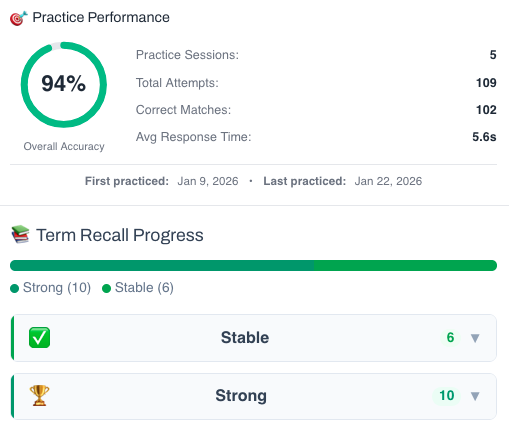
This isn’t a simple quiz — it’s a fully tracked learning system. You build knowledge through recognition, then recall, and your progress feeds directly into the Integrated Practice Bar (Writing tasks, AI Chat, and more).
- Practice sessions, accuracy, and response-time tracking
- Term strength levels (Learning → Stable → Strong)
- Personal progress history for each unit
This feature is available to YSP members.
Explore Membership Benefits🎮 Practice Games
Sentence Scrambler
Happen: Using ‘Happened’ correctly – Sentence Scramble
Member-Exclusive Sentence Builder
Reconstruct scrambled sentences to practice word order and develop your grammar intuition.
This feature is available to YSP members.
Explore Membership Benefits