CAE Essay Mastery: Your Complete Guide to Part 1 Success
Core PathWay
1 🔍 What's This Task Type?
The CAE Essay is the compulsory first task in the Cambridge C1 Advanced Writing paper, making it a non-negotiable part of the exam. Its primary purpose is to test your ability to synthesise information from two given points and put forward a well-structured, persuasive argument on a topic of general interest. You are not just listing ideas; you are building a case. You must write between 220–260 words, demonstrating a sophisticated command of language. The essay is assessed on four subscales: Content (how well you address the prompt), Communicative Achievement (how effectively you use the conventions of an essay), Organisation (how well you structure your ideas and use cohesive devices), and Language (the range and accuracy of your vocabulary and grammar). To achieve a high band, you must present a compelling and nuanced argument that goes beyond surface-level discussion, showing examiners you can handle complex ideas with precision and flair.
Key Terms
💬 The Importance of Planning
A coaching session after the student has attempted a timed practice essay.
2 🗺️ Planning Tips
The ‘Write to the Rubric’ strategy is your gold standard for planning. Step 1: Rubric Analysis – Read the task rubric carefully and underline the key content points and specific questions you must address. On a digital exam, jot these down on your note paper first. Step 2: Content Point Mapping – List ONLY the rubric requirements on your note paper. Refer exclusively to this list while writing to prevent irrelevant tangents. This focus is the foundation of high marks for Content. Step 3: Pre-Writing Planning – This is where you build your linguistic arsenal. Before writing, brainstorm a list of sophisticated vocabulary, linkers, and grammar structures you intend to use. Draw paragraph boxes on spare paper. In each box, write: the content point to address + the lexis to employ + the linkers to use + the target grammar structures (e.g., a mixed conditional, a cleft sentence). For a C1 essay, your plan should include how you will substantiate your claims with evidence or examples. This systematic approach ensures you address all rubric requirements while demonstrating the linguistic range examiners expect.
Key Terms
💬 Register and Formality
A student is reviewing their essay draft and is unsure about the tone of a particular sentence.
3 🏗️ Structure & Format
The structure of your essay is your roadmap to clarity and high marks for Organisation. A classic 4-paragraph structure is effective: Introduction – Hook the reader, introduce the topic in a general sense, and clearly state your main argument or thesis. Body Paragraph 1 – Address the first point from the prompt. Start with a clear topic sentence, then develop your argument, providing a specific example or evidence to substantiate your claim. Body Paragraph 2 – Address the second point (and your own idea, if required). Use a contrasting linker like ‘on the other hand’ or ‘nevertheless’ to show a shift. Conclusion – Summarise your key arguments and restate your thesis in a new way, offering a final, insightful thought. Each paragraph must be a coherent unit, with ideas flowing logically. Use a variety of cohesive devices – not just ‘firstly, secondly’ – but more sophisticated connectors like ‘consequently’, ‘furthermore’, and ‘in light of’ to create a seamless argument. The register must be consistently formal and academic.
Key Terms
💬 Structuring a Persuasive Argument
The student is struggling to connect their ideas logically in the body of the essay.
4 💬 Useful Language
To hit the C1 ‘Language’ criteria, you need more than just correct grammar; you need range and sophistication. Grammar Structures: Use mixed conditionals to discuss hypothetical past situations with present consequences (e.g., ‘Had the government invested earlier, we would now see a different economic landscape’). Use cleft sentences for emphasis (e.g., ‘What is truly essential here is…’). Employ advanced passive constructions to maintain a formal tone (e.g., ‘It could be argued that…’). Use participle clauses to make your writing more concise (e.g., ‘Having considered both perspectives, it is clear that…’). Lexical Resource: Use salient adjectives and precise nouns. Instead of ‘important’, use ‘crucial’, ‘paramount’, or ‘pivotal’. Instead of ‘problem’, use ‘challenge’, ‘dilemma’, or ‘obstacle’. Use collocations like ‘mitigate risks’, ‘leverage opportunities’, and ‘shed light on an issue’. These show examiners you can use less common lexis effectively and precisely.
Key Terms
5 ✅ Do's and Don'ts
Do’s: ✓ Do write a clear thesis statement in your introduction. ✓ Do ensure every paragraph has a clear central topic. ✓ Do use a range of sophisticated linking words to show the relationship between ideas. ✓ Do proofread your work for small errors in grammar and spelling. ✓ Do use formal, academic language consistently. Don’ts: ✗ Don’t copy phrases directly from the prompt; paraphrase and expand. ✗ Don’t include personal, informal anecdotes or overly emotional language. ✗ Don’t write overly long, convoluted sentences that obscure your meaning. ✗ Don’t forget to develop your own third point if the task requires it. ✗ Don’t write a conclusion that simply repeats your introduction word-for-word. A strategic pitfall is ignoring the ‘Write to the Rubric’ rule and including irrelevant but interesting ideas; this costs marks on Content. Stay focused, stay formal, and show off your full linguistic range.
Key Terms
6 ✍️ Writing Task
Writing Task
argumentative discourse markers and semi formal register
7 ⏱️ Timing Strategy
You have 1 hour 30 minutes for the entire Writing paper, which includes two tasks. A smart strategy is to allocate 45 minutes to the essay (Part 1) and 45 minutes to your chosen Part 2 task. Within your 45 minutes for the essay, break it down like this: 5 minutes for planning – This is non-negotiable. Use the ‘Write to the Rubric’ strategy to map out your content and language. 35 minutes for writing – Stick to your plan and write your four paragraphs, focusing on clarity and sophistication. 5 minutes for reviewing – This is your polishing time. Check for errors in grammar, spelling, and punctuation. More importantly, check that you have addressed all the bullet points in the task. Ask yourself: ‘Have I fully answered the question?’ This final review can be the difference between a Band 4 and a Band 5 for Communicative Achievement and Language.
Member-Exclusive Practice Bar
Access a wide range of integrated practice for this unit — from Vocabulary and Grammar activities to AI-curated Writing tasks and Thematic Chat practice.
This feature is available to YSP members.
Explore Membership BenefitsMember-Exclusive Vocabulary Review & Acquisition System
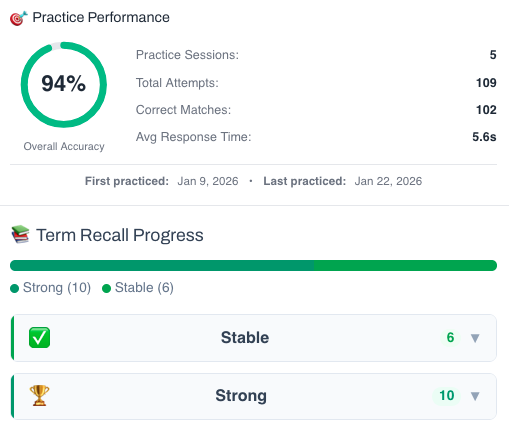
This isn’t a simple quiz — it’s a fully tracked learning system. You build knowledge through recognition, then recall, and your progress feeds directly into the Integrated Practice Bar (Writing tasks, AI Chat, and more).
- Practice sessions, accuracy, and response-time tracking
- Term strength levels (Learning → Stable → Strong)
- Personal progress history for each unit
This feature is available to YSP members.
Explore Membership Benefits🎮 Practice Games
Sentence Scrambler
CAE ESSAY – Sentence Scramble
Member-Exclusive Sentence Builder
Reconstruct scrambled sentences to practice word order and develop your grammar intuition.
This feature is available to YSP members.
Explore Membership Benefits