From Offer to Onboard: The Language of Joining a Company
Core PathWay
1 Section 1. The Offer Stage: Making It Official
Ready to talk confidently about job offers in English? These are the terms that will make the difference.
When a company decides to hire someone, the first step is to extend an offer. This means the company formally offers the candidate the job. The offer usually comes in writing. This written document is called a job offer letter. It states important details like the salary and the start date.
Salary can be described in a few ways. The base salary is the fixed amount an employee earns. It does not include bonuses or extra payments. Companies often set a salary band for each role. This is a range — for example, £30,000 to £38,000 — and the exact pay depends on the candidate’s experience or location. When you see DOE in a job advertisement, it means the salary is not fixed. DOE stands for ‘depends on experience’.
Sometimes the offer includes more than just pay. The benefits package is everything extra the company offers alongside the salary. This might include health insurance, extra holiday days, or a pension plan.
Not every candidate accepts the first offer. A candidate might negotiate the terms. This means they discuss the salary or other conditions and try to reach an agreement that works for both sides.
2 Section 2. Responding to an Offer: Yes, No, or Something Else?
Once a candidate receives a job offer letter, they have a decision to make. There are three main responses.
First, a candidate can accept the offer. This means they formally agree to take the job. Second, they can turn down the offer. This means they decline — they say no. Third, something more interesting can happen: the candidate might make a counter-offer. This is when the candidate responds with different terms. For example, they might ask for a higher salary or an earlier start date. A counter-offer can also come from the candidate’s current employer. If the employer hears that their employee is leaving, they might make a counter-offer to persuade them to stay.
The start date is the agreed first day of work. It is usually included in the job offer letter and confirmed when the candidate accepts.
Notice how these verbs work together: you extend an offer, you accept or turn down an offer, and you negotiate the terms. These are the natural verb-noun partnerships — or collocations — that HR professionals use every day.
3 Section 3. Before You Start: Checks and Contracts
After a candidate accepts an offer, the company needs to complete some important checks before the start date.
A background check is a verification process. The company checks the candidate’s identity, qualifications, and employment history. In some roles, they also check the candidate’s legal record. This is very common in finance, education, and healthcare.
There is also a right-to-work check. This confirms that the candidate is legally allowed to work in that country. This check is a legal requirement in most countries.
Once the checks are complete, the candidate receives a contract of employment. This is a legally binding document. It sets out all the terms and conditions of the job — the salary, working hours, holiday allowance, and more. Both the employer and the employee sign it.
Many contracts include a probation period. This is an initial period — often three to six months — when the company and the new employee assess each other. The new hire’s performance is reviewed during this time. If everything goes well, the employee is confirmed in the role permanently.
4 Section 4. Getting Ready: Pre-Boarding and Day One
There is an important gap between accepting an offer and actually starting work. This period is called pre-boarding. During pre-boarding, the company might send the new hire useful documents, set up their IT access, or share information about the team. The goal is to make the new hire feel welcome before they even arrive.
On or before the first day, the new employee often receives an employee handbook. This is a document that explains the company’s policies and procedures. It covers things like working hours, dress code, and how to report absence.
Day one often includes orientation. This is a session — sometimes just a few hours — that introduces the new hire to the company, their colleagues, and basic logistics like where to find things and how systems work.
Some companies also use a buddy system. They pair the new hire with an existing employee — called an onboarding buddy — who helps them settle in. This is a very practical way to help someone feel comfortable quickly.
All of these activities are part of a bigger process called onboarding or to onboard someone. Onboarding covers everything from the moment the offer is accepted to the point when the new hire is fully settled into their role.
5 Section 5. The First Months: Settling In and Moving Forward
The first weeks of a new job can feel overwhelming. Good companies plan carefully to help new hires settle in — that is, to become comfortable and familiar in their new role.
After the orientation session, many companies run a structured induction programme. This is more detailed than orientation. It helps the new hire understand the company’s culture, their specific responsibilities, and what is expected of them.
To help new hires focus, many organisations use a 30-60-90-day plan. This document sets clear goals for the first 30, 60, and 90 days of employment. It breaks the first three months into stages so the new hire always knows what they should be working towards.
Two useful expressions describe how a new hire performs. To hit the ground running means to start the job and become productive very quickly. To ramp up means to increase productivity gradually as the person becomes more familiar with the role. Both are positive — they just describe different speeds.
At the end of the probation period, the company makes a formal decision. If the new hire has performed well, the company will confirm them in post — in other words, they pass probation and their employment becomes permanent.
Finally, a line management handover may happen when a new manager joins. This is when a previous manager or colleague transfers important knowledge and context to the new person so they can lead their team effectively.
Member-Exclusive Practice Bar
Access a wide range of integrated practice for this unit — from Vocabulary and Grammar activities to AI-curated Writing tasks and Thematic Chat practice.
This feature is available to YSP members.
Explore Membership BenefitsMember-Exclusive Vocabulary Review & Acquisition System
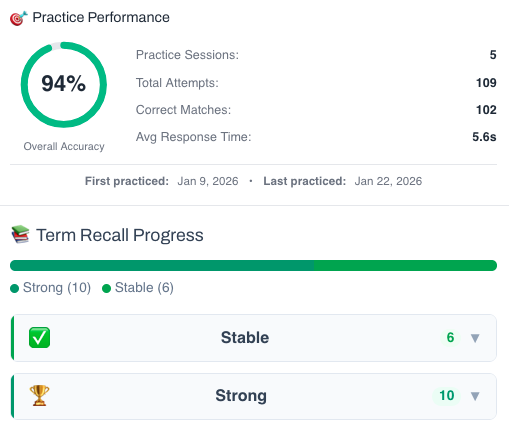
This isn’t a simple quiz — it’s a fully tracked learning system. You build knowledge through recognition, then recall, and your progress feeds directly into the Integrated Practice Bar (Writing tasks, AI Chat, and more).
- Practice sessions, accuracy, and response-time tracking
- Term strength levels (Learning → Stable → Strong)
- Personal progress history for each unit
This feature is available to YSP members.
Explore Membership Benefits