Finding the Right People: How Companies Attract and Source Candidates
Core PathWay
1 Section 1. It Starts with a Vacancy
Let’s continue building your vocabulary for the recruitment cycle.
Every hire begins with a decision: there is an open role, and someone needs to fill it. The first step is to post a vacancy. This means to publish the details of an open role so that people can apply. The published notice itself is called a job posting.
Before a company looks outside, it may consider an internal posting. This means advertising the vacancy only to current employees. In other words, the company asks: ‘Can someone already here do this job?’ To post internally gives existing staff the first chance to apply or move into a new role.
If no suitable internal candidate exists, the company will advertise externally. This means making the vacancy public — beyond the company — so that anyone can apply. A published notice that describes the role, its duties, and its requirements is called a job ad. The action of creating and sharing this notice is to advertise a role.
Think of the job posting as the starting signal. Everything else in the recruitment cycle follows from it.
2 Section 2. Where Do Companies Advertise?
Once a company decides to advertise, it needs to choose where. There are several common options.
A job board is a website where employers list vacancies and jobseekers search for them. Well-known examples include Indeed and LinkedIn Jobs. Job boards are popular because they reach a large number of people quickly.
Many companies also have a careers page. This is the section of the company’s own website that shows current vacancies and information about working there. Candidates who are already interested in a specific company often check the careers page directly.
For senior or specialist roles, a company might use a recruitment agency. This is an external company that is paid to find and put forward candidates for a client’s vacancies. The agency does much of the early work — searching, screening, and shortlisting — so the hiring company saves time.
For very senior positions, a company might use a headhunter. A headhunter does not wait for applications. Instead, to headhunt someone means to proactively approach a specific individual — often someone who is already employed — and invite them to consider a role. This is a more targeted and personal approach than posting on a job board.
Finally, social recruitment is the practice of using social media platforms to advertise roles and find or approach candidates. LinkedIn, for example, is widely used for this.
3 Section 3. Finding Candidates Before They Find You
Not all recruitment is about waiting for applications to arrive. Many companies take a more proactive approach.
Sourcing — or to source candidates — is the process of actively searching for and identifying potential candidates, rather than waiting for them to apply. A recruiter who is sourcing might search LinkedIn, use professional networks, or attend industry events.
One useful technique is a Boolean search. This is a search method that uses operators like AND, OR, and NOT to find candidates with specific combinations of skills online. For example, a recruiter might search: ‘project manager AND agile NOT contractor’. It sounds technical, but it simply helps narrow down results.
When sourcing, recruiters often think about two types of people. An active candidate is someone who is currently and openly looking for a new job — perhaps they have applied directly, or they have updated their profile to show they are available. A passive candidate is someone who is not currently job-hunting but who might consider a good opportunity if approached.
To contact a passive candidate, a recruiter will typically reach out to them. This means making first contact — usually a message or email — to gauge their interest in a role. It is also common to tap into an existing network or database, which means making use of an available resource to find suitable people.
Sometimes, a company will poach talent. To poach someone means to recruit them directly away from a competitor. It is effective, but it can also create tension between companies.
4 Section 4. Building a Supply of Future Candidates
Good recruiters do not just think about today’s vacancies. They also think ahead.
A talent pool is a database or group of people who have been identified as potentially suitable for future roles. These might be people who applied before but were not selected, or people a recruiter has met through networking. The company keeps their details and may contact them when a suitable role opens.
A talent pipeline goes one step further. It is an ongoing, forward-looking supply of potential candidates being nurtured for roles that may open in the future. Think of it as a pipeline of people who are being kept warm — receiving company news, attending events, building a relationship with the employer — so that when a role opens, there are already strong candidates ready.
Networking is central to both of these ideas. This means building and using professional relationships and contacts to find opportunities or candidates. A recruiter who networks well is always expanding their talent pool.
Another powerful source of candidates is the employee referral scheme (also called an employee referral programme). This is a programme that rewards current staff for recommending someone suitable for an open role. When an employee refers someone for a job — meaning they recommend a person they know — the company often pays a bonus if that person is hired. Referrals tend to produce high-quality candidates because employees usually recommend people they trust.
5 Section 5. Brand, Systems, and Managing Applications
Attracting good candidates is not only about where you advertise. It is also about how your company is perceived.
Employer branding is how a company presents and is perceived as a place to work. A strong employer brand makes people want to apply — even before a vacancy is posted. Closely connected to this is the employee value proposition, often shortened to EVP. The EVP is the overall package of pay, benefits, culture, and opportunity that makes a company attractive to work for. In other words, it is the answer to the question: ‘Why should I work here?’
Once applications start coming in, the company needs a way to manage them. An applicant tracking system — or ATS — is software that manages job postings, collects applications, and helps recruiters track candidates through the process. Large companies in particular rely on an ATS to stay organised.
The action of receiving and dealing with incoming applications is called to field applications. This phrase comes from the idea of catching things as they arrive — like fielding a ball. Finally, every advertised role should have an application deadline, also called a closing date. This is the final date by which applications must be submitted. After the closing date, the company stops accepting new applications and begins reviewing what it has received.
Together, these tools and concepts form the foundation of a well-run recruitment process.
Member-Exclusive Practice Bar
Access a wide range of integrated practice for this unit — from Vocabulary and Grammar activities to AI-curated Writing tasks and Thematic Chat practice.
This feature is available to YSP members.
Explore Membership BenefitsMember-Exclusive Vocabulary Review & Acquisition System
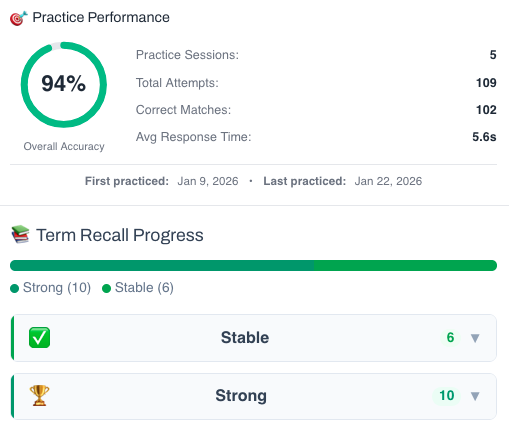
This isn’t a simple quiz — it’s a fully tracked learning system. You build knowledge through recognition, then recall, and your progress feeds directly into the Integrated Practice Bar (Writing tasks, AI Chat, and more).
- Practice sessions, accuracy, and response-time tracking
- Term strength levels (Learning → Stable → Strong)
- Personal progress history for each unit
This feature is available to YSP members.
Explore Membership Benefits