 ↑×
📐 Positional language (foreground, top left corner, in the distance…) is the same on every image lesson — see Where things are at the end.
A Terminal Takes Shape
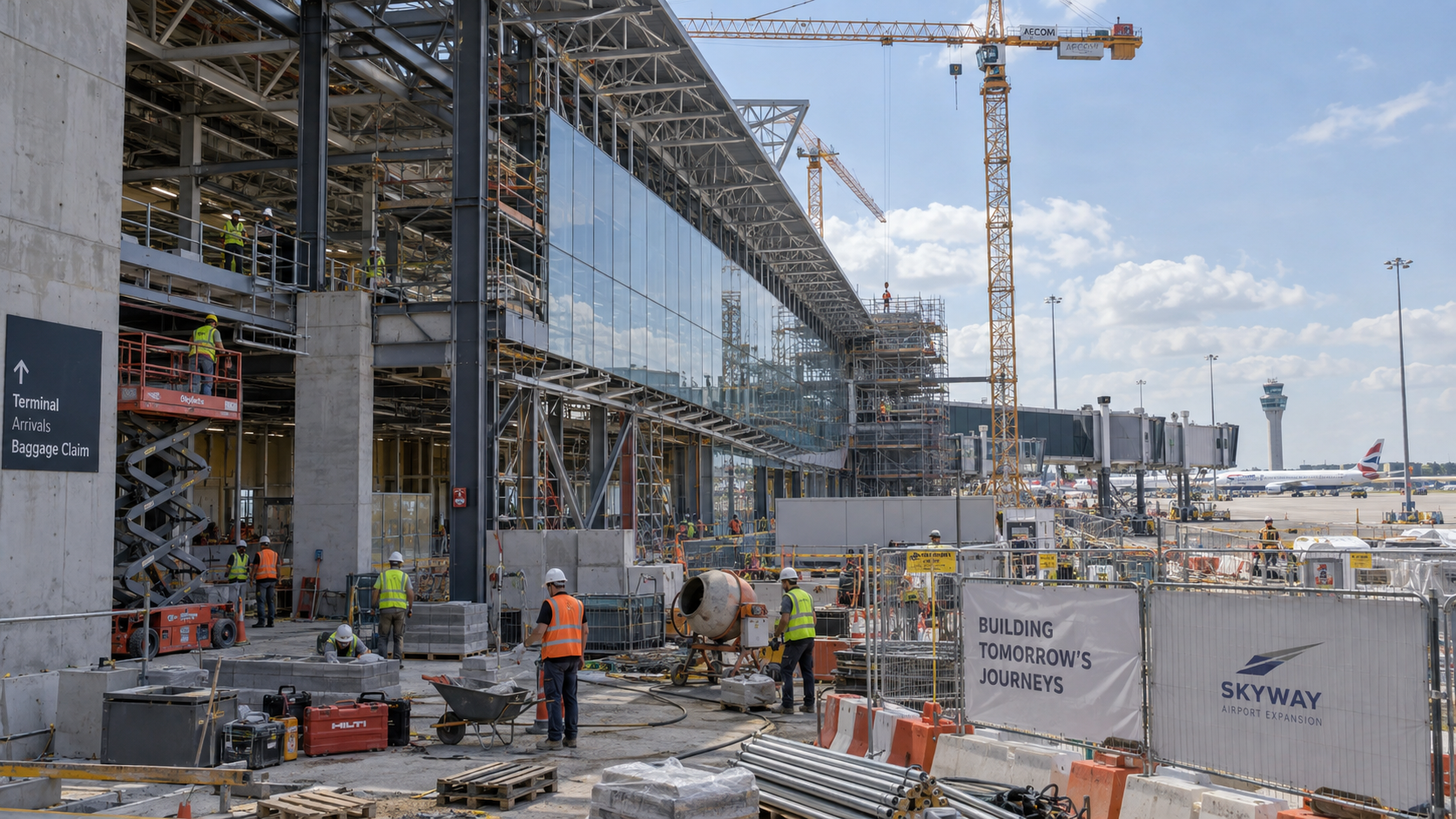
In this lesson, you will look at a photograph of an airport terminal that is under construction. Study the key words below, then listen to the descriptions. Each task builds on the one before, so the language you learn first will help you with the tasks that come later.
📚 Key Vocabulary
These words appear in the descriptions — learn them before you listen.
🎧 Listen and read
Before: Before you listen, look at the key words above and think about what you might hear.
While listening: As you listen, notice the names of the machines and materials you can hear.
After: After listening, check which key words from the list you heard in the descriptions.
💡 Press play, then scroll back up to the photo. If the photo is off-screen, a copy floats at the bottom — tap it to enlarge.
 ×
📖 1 · Short description — read along
📖 2 · Full description — read along
📖 3 · The story behind the picture — read along
🧰 Your word bank
All the target words for this picture.
📚 Word bank
All the target words for this picture. Tap a word to hear it.






Now it's your turn
Step 1 · Describing Colour and Material
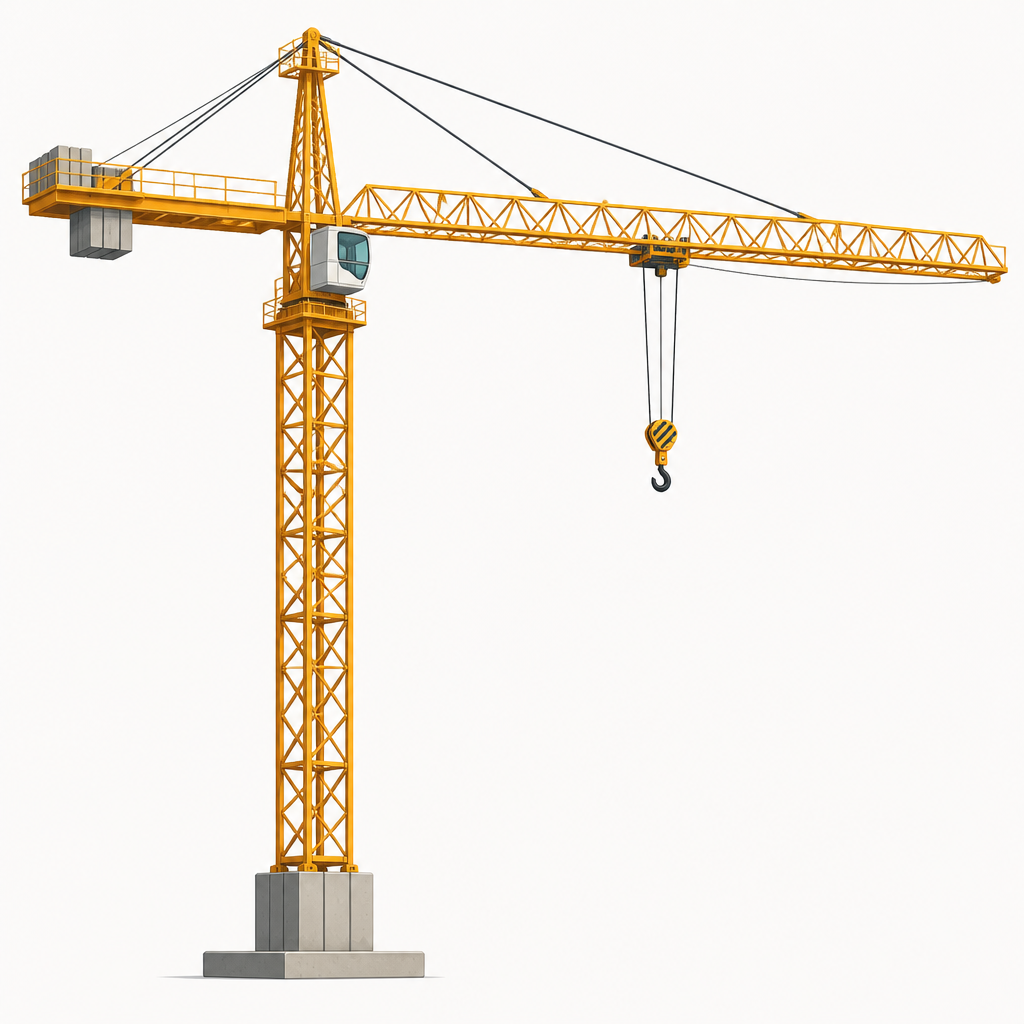
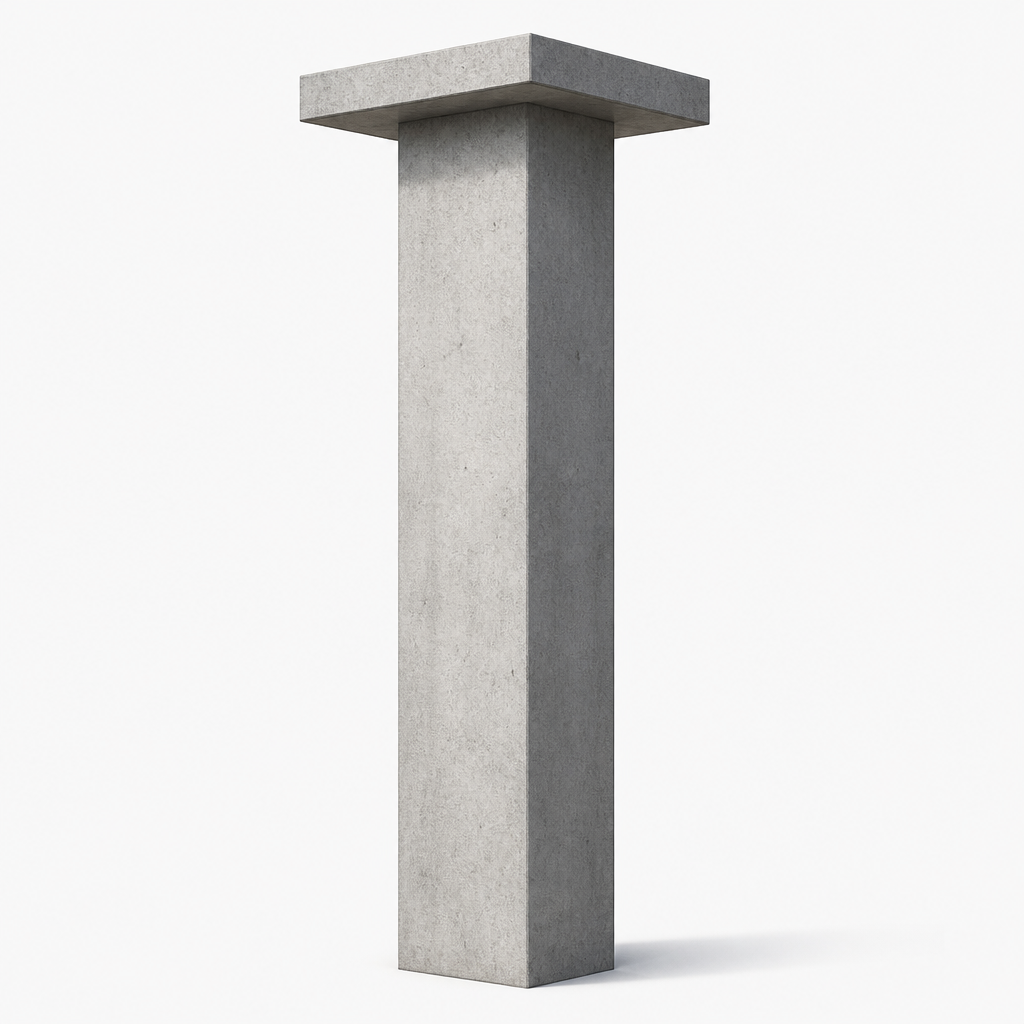
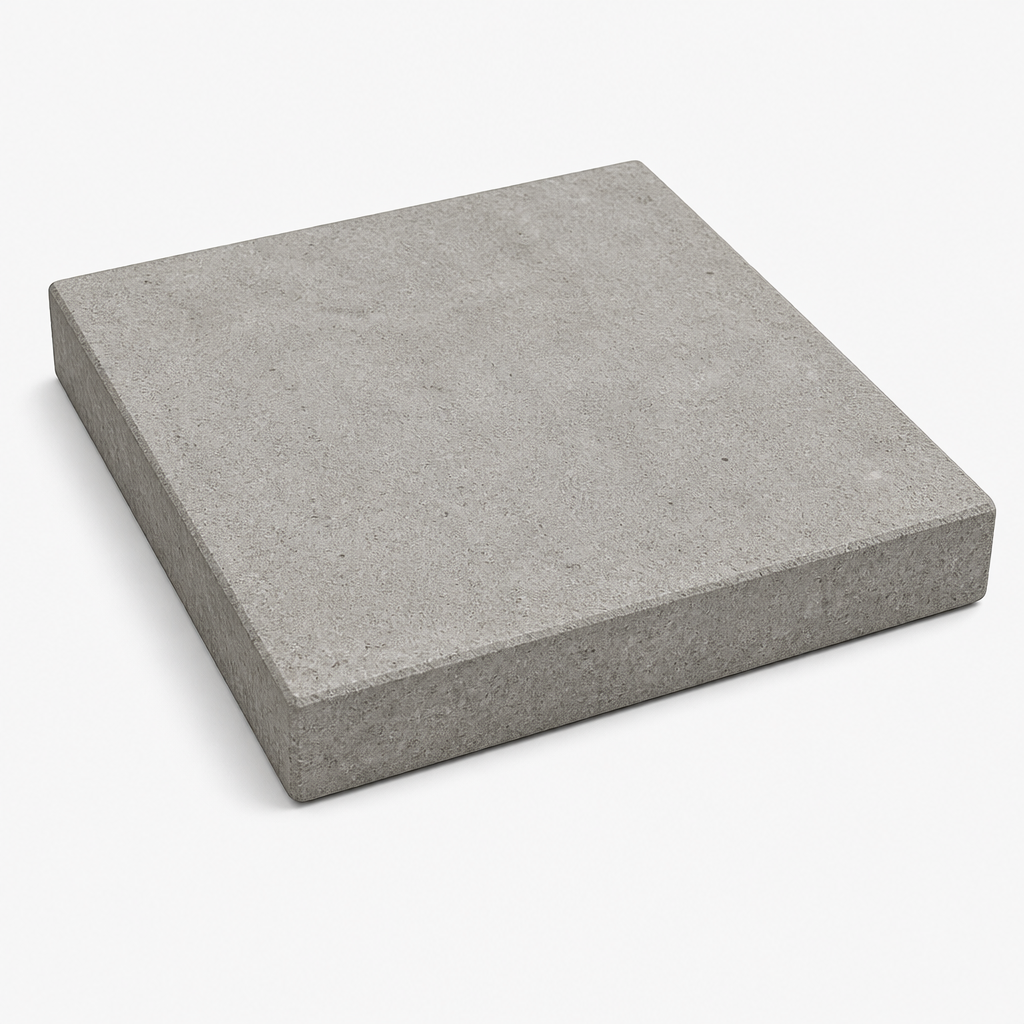
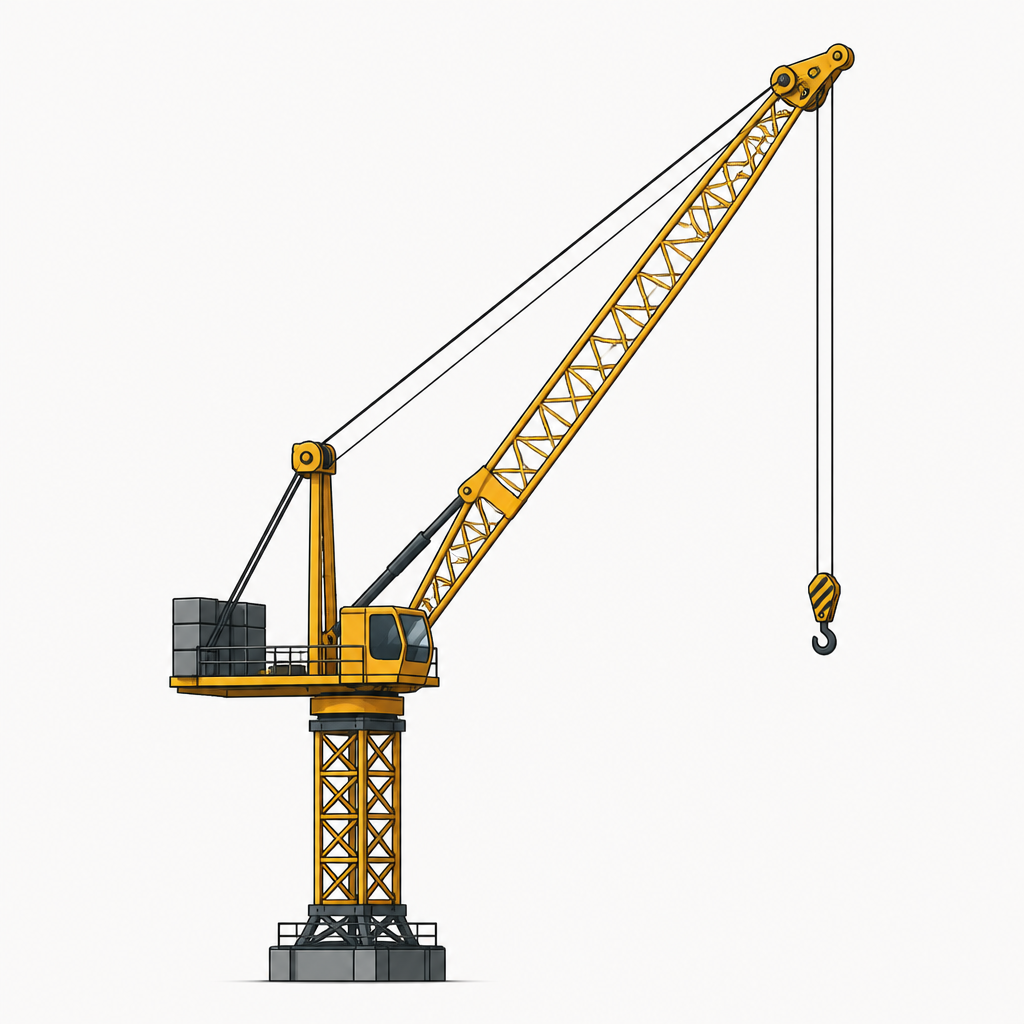
🔧 Grammar — present simple passive: is made ofTo do this task, you need to describe what something looks like and what it is made of. Use the present simple passive form ‘is made of’ or ‘are made of’. This form tells us about the material without saying who made it. The colour adjective comes before the noun. The material comes after ‘made of’. Look at the objects carefully. The tower cranes are orange-yellow and they are made of painted steel lattice. The scaffolding is silver-grey and it is made of galvanised steel tubes. The paving slabs are grey and they are made of concrete. Notice: do not say ‘are made from steel lattice painted’ — the adjective must come before the noun. Open the ‘Materials’ and ‘Palette’ toggles to find the correct colours and materials for each object. Then write one sentence for each of the four objects in the task.
- The tower cranes are orange-yellow and they are made of painted steel lattice.
- The scaffolding is silver-grey and it is made of galvanised steel tubes.
- The paving slabs are grey and they are made of concrete.
🧰 Open the 'Materials' and 'Palette' toggles to find the exact colours and materials for each object.
→ Now write one sentence for each of the four objects, using the sentence frame given.
🧱 Colours and materials
Ready-made phrases
| Object | Colour | Material | Texture |
|---|---|---|---|
| structural steel frame | dark grey / charcoal | structural steel | smooth, painted |
| curtain-wall glazing | grey-blue reflective | glass | smooth, reflective |
| tower cranes | orange-yellow | painted steel lattice | latticed, angular |
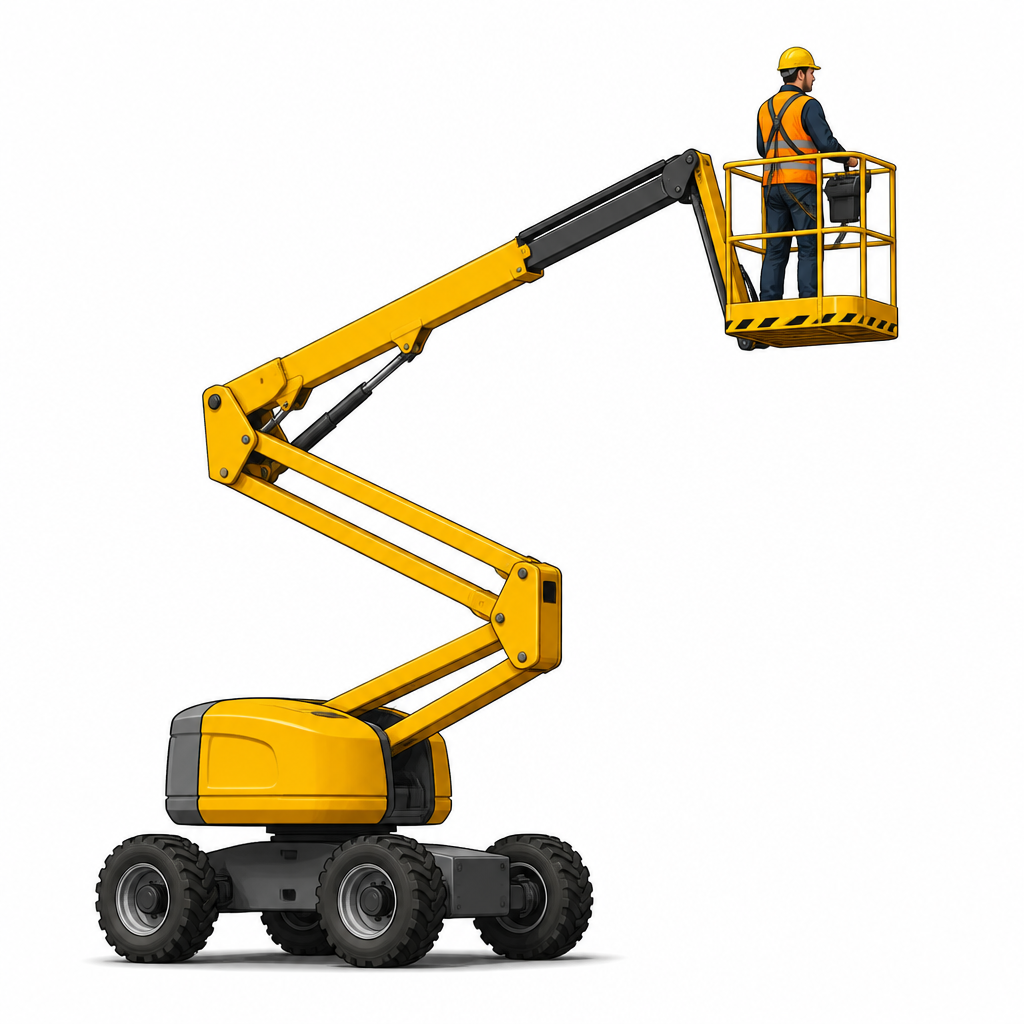
| scissor lift | red | painted steel | smooth metal platform, scissor mechanism |
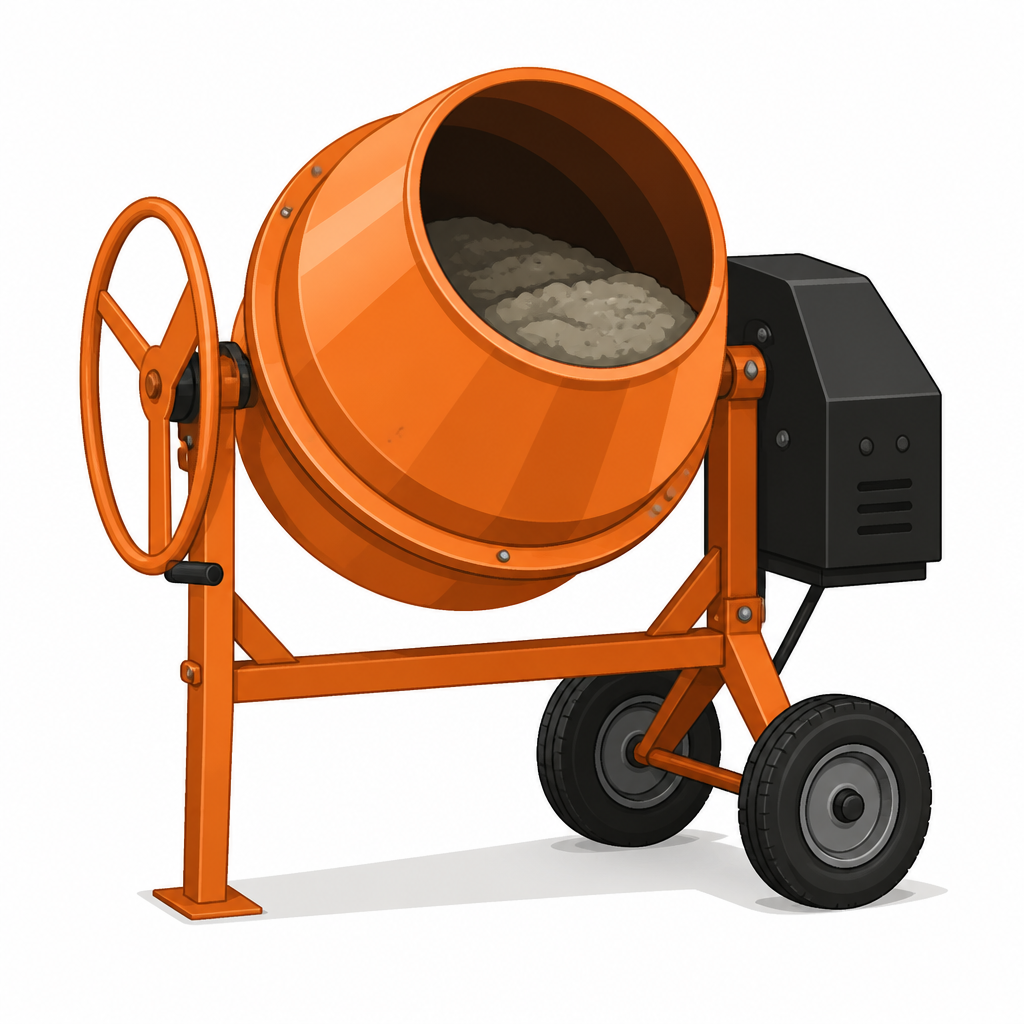
| cement mixer drum | orange | steel | cylindrical, ribbed drum |
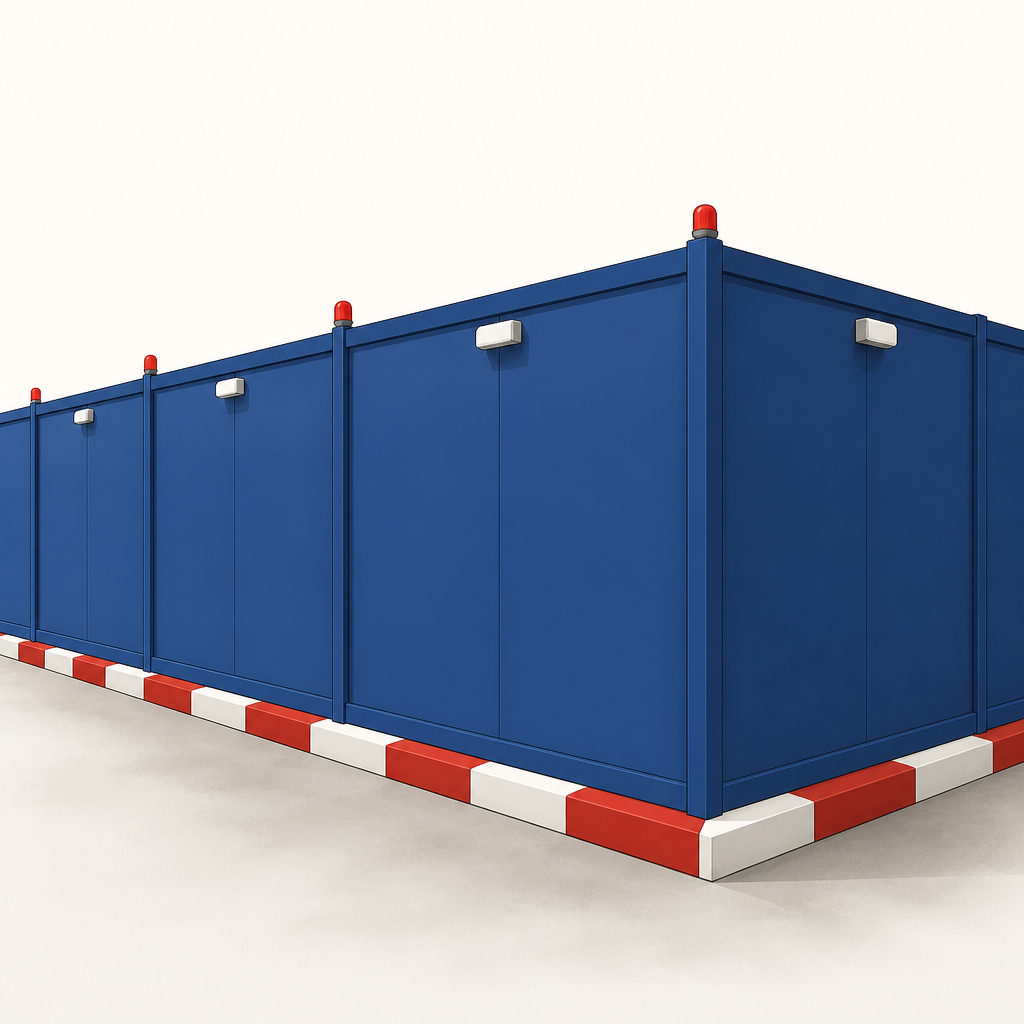
| construction hoarding banner | white with dark blue and grey text and logo | printed PVC or fabric | flat, printed surface |
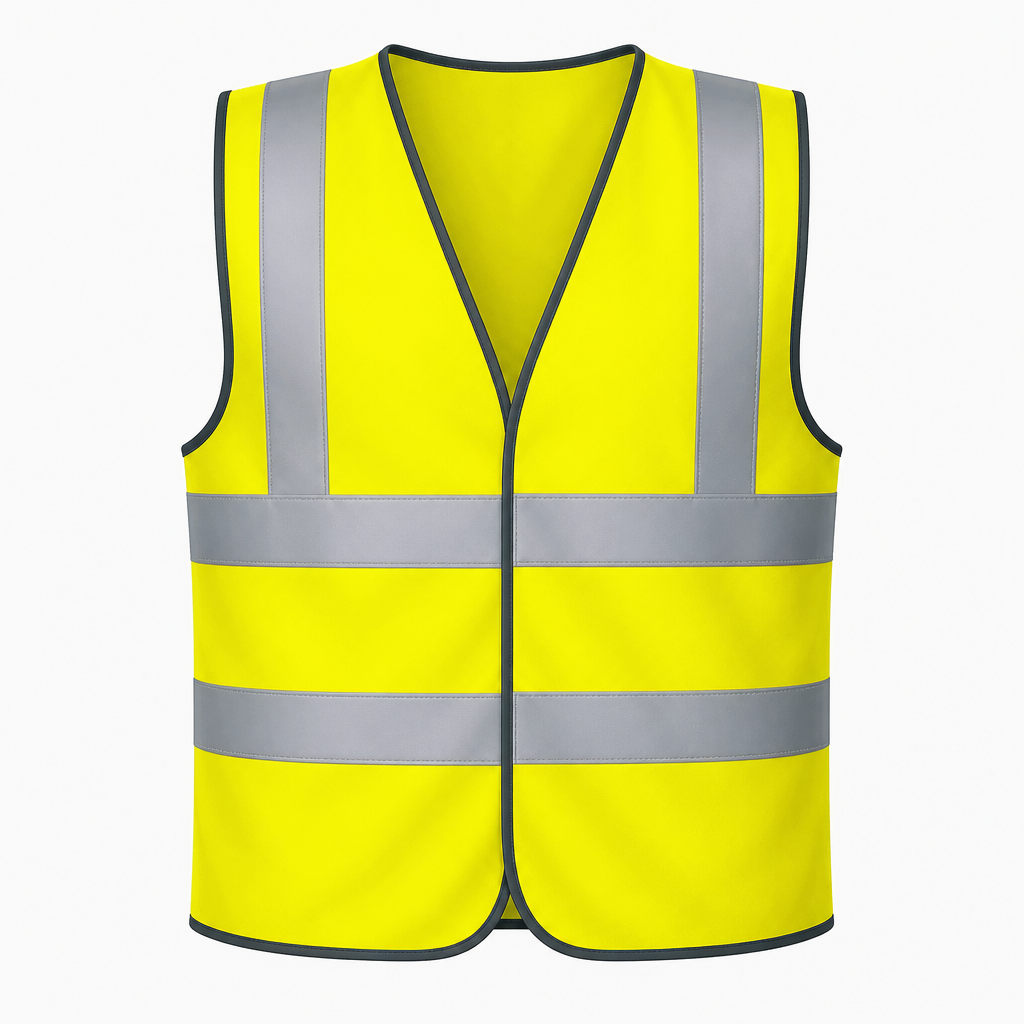
| high-visibility vests | orange and yellow-green | synthetic mesh with reflective strips | lightweight mesh |
| hard hats | white | hard plastic | smooth, domed |
| paving slabs | grey | concrete | flat, slightly rough surface |
| concrete columns | grey | cast concrete | slightly rough, cast surface |
| scaffolding tubes | silver-grey | galvanised steel | smooth tubular metal |
| directional sign | dark grey with white text | metal or composite panel | flat, matte |
| sky | blue with white cloud | — | — |
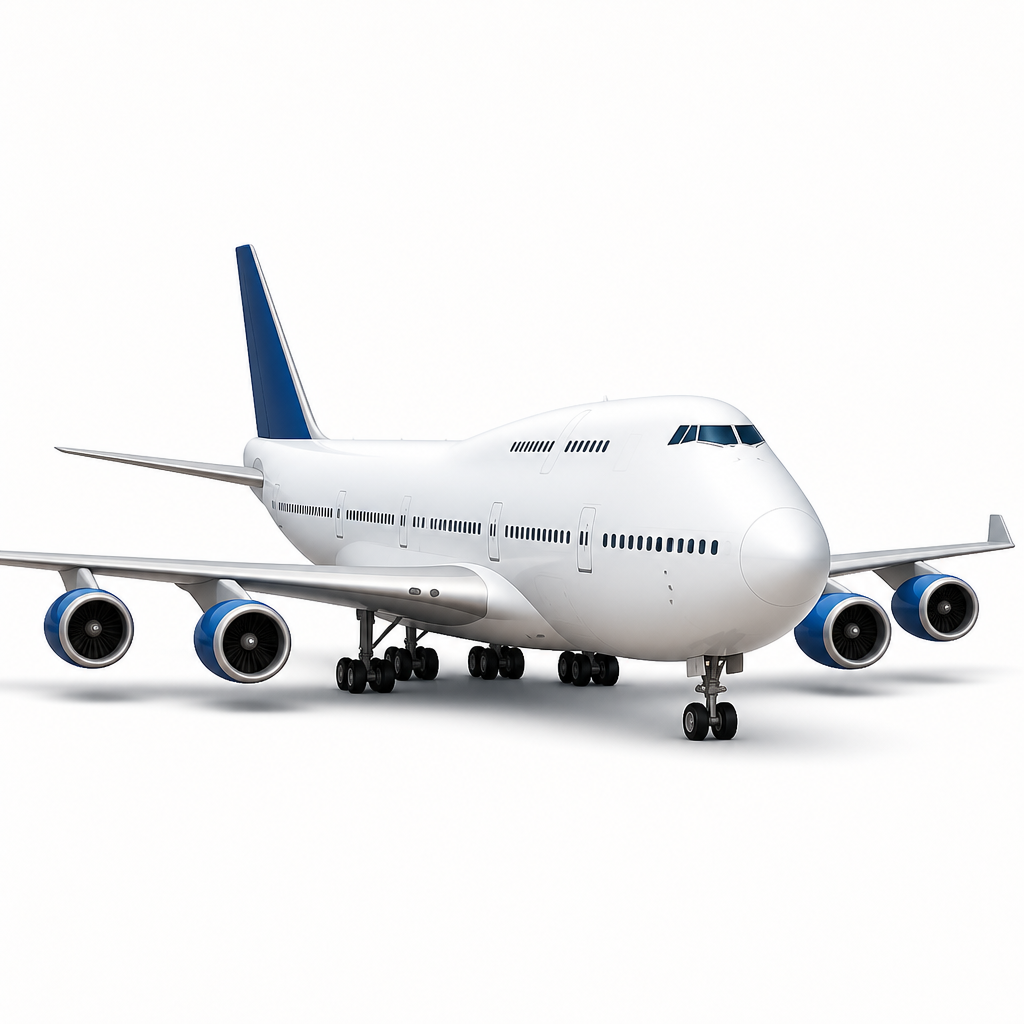
| aircraft livery | white fuselage, dark blue tail | — | — |
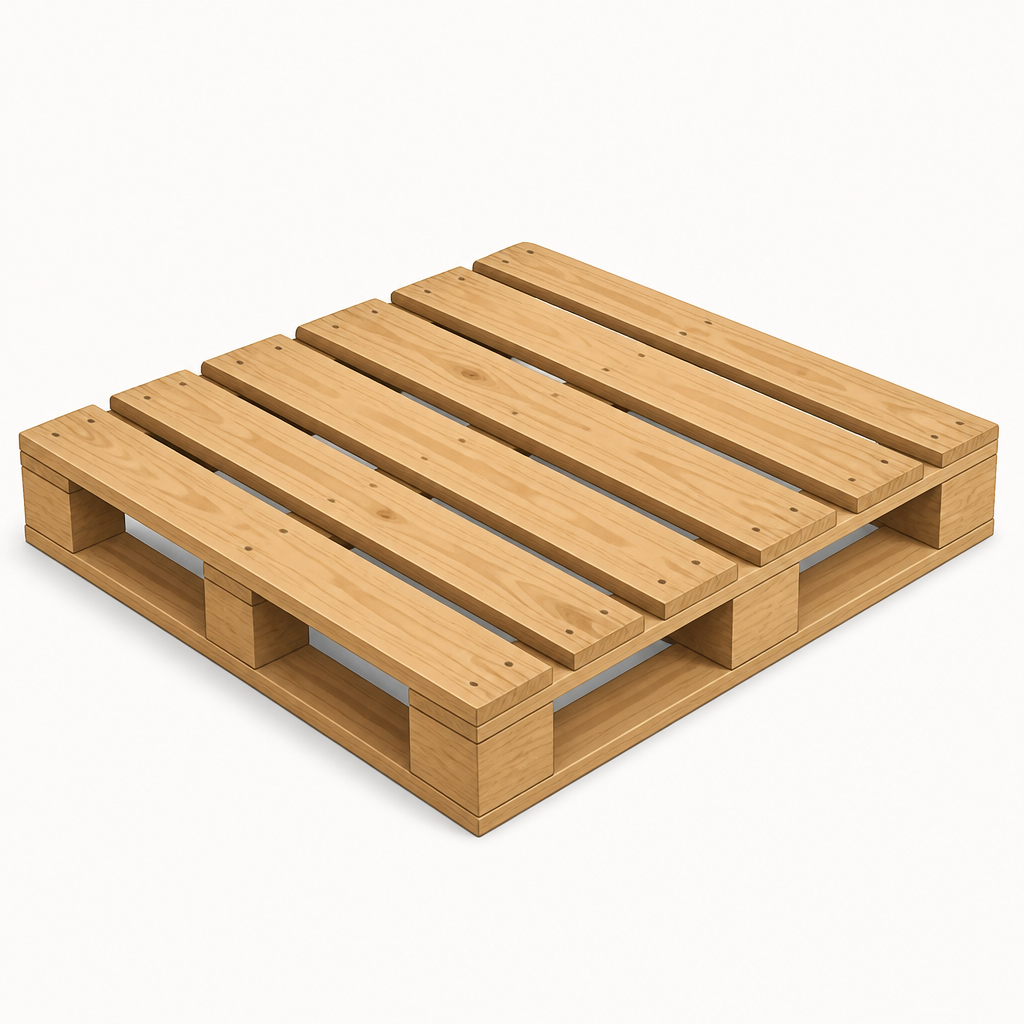
| wooden pallets | pale brown | timber | rough sawn wood, slatted |
🎨 Language palette
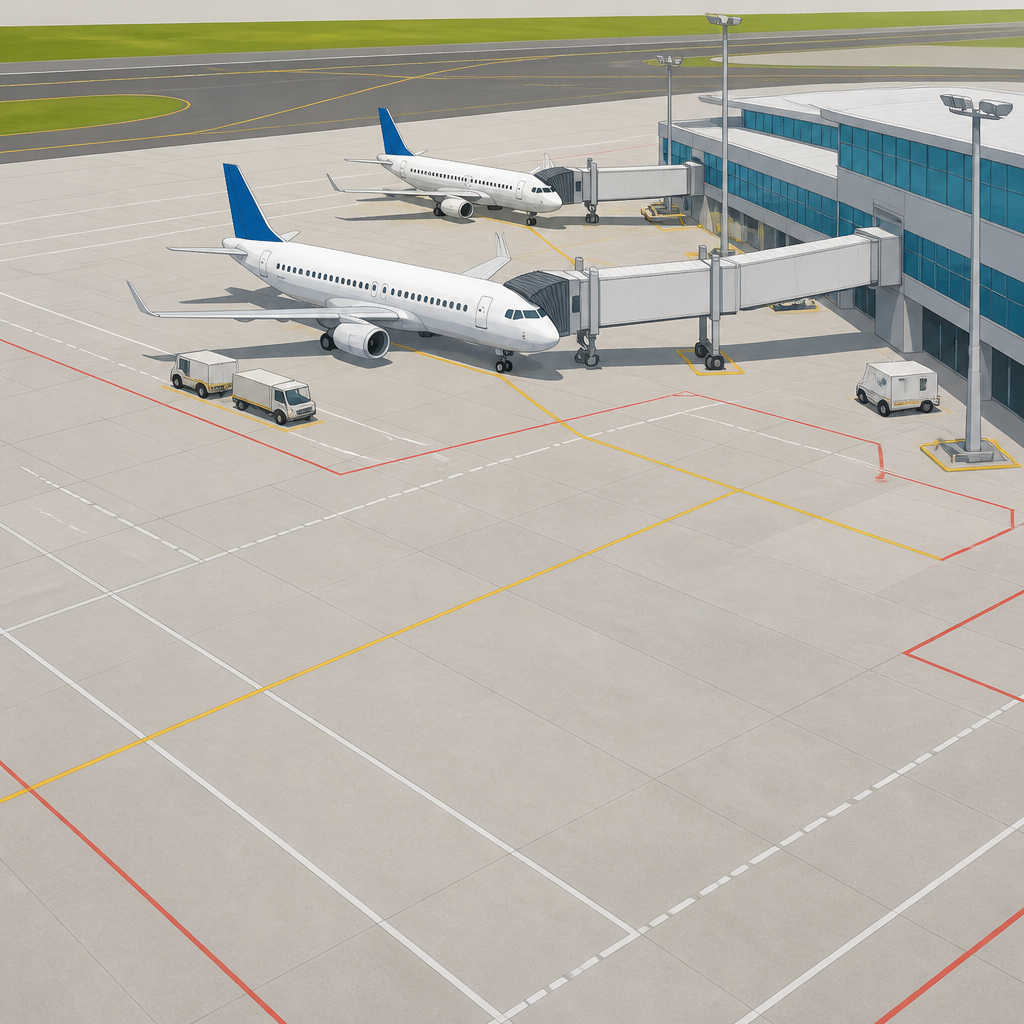
A large-scale airport terminal expansion is actively under construction, with the steel-and-glass building frame rising alongside operating airport infrastructure visible in the background.
The things you must name
Useful supporting words
In the background
Describing words — Colour
Describing words — Size and shape
Describing words — Texture and material
Describing words — Condition
Describing words — Overall feel
Saying where things are
More position phrases
What things are doing
Words that go together
Compound nouns
Frame: The [object] is [colour] and it is made of [material] / it looks [adjective].
Describe these four objects:
1. The tower cranes
2. The scissor lift
3. The scaffolding
4. The paving slabs
Write one sentence for each object.
- The tower cranes are ___ and they are made of ___.
- The scissor lift is ___ and it is made of ___.
- The scaffolding is ___ and it is made of ___.
- The paving slabs are ___ and they are made of ___.
Step 2 · Describing What Has Been Done and What Is Happening Now
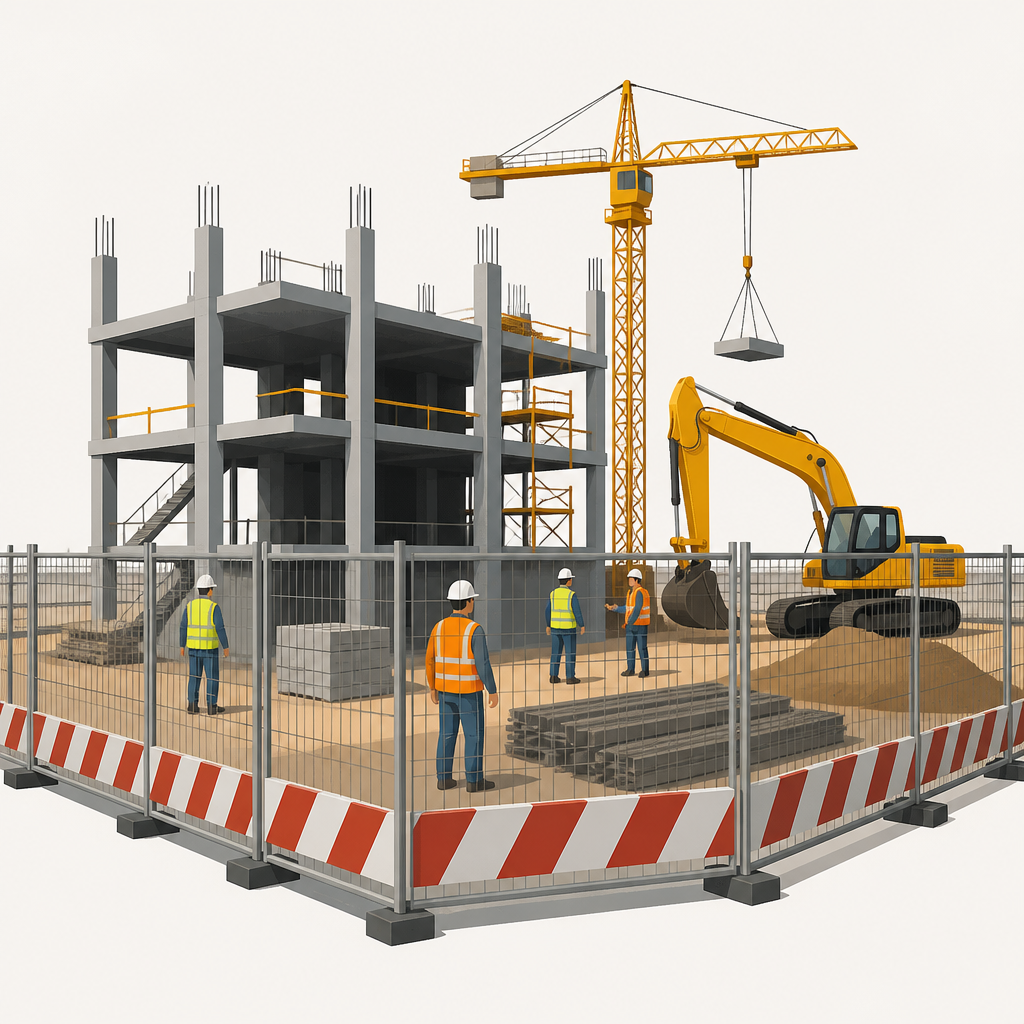
🔧 Grammar — present perfect passive and present continuous passiveTo do this task, you need two passive forms. Use the present perfect passive — ‘has been’ or ‘have been’ — to describe things that are already finished. Use the present continuous passive — ‘is being’ or ‘are being’ — to describe work that is happening right now. Look at the building. The large glass panels have already been installed across the upper storey — use ‘have been installed’. The silver-grey scaffolding has been erected around the incomplete sections — use ‘has been erected’. At the same time, some work is still continuing — the concrete columns are being built and materials are being moved. Be careful: do not mix up the two forms. ‘Has been installed’ means the work is finished. ‘Is being installed’ means the work is still going on. Open the ‘Materials’ toggle for useful vocabulary. Now write your paragraph using at least four passive forms.
- Large glass panels have been installed across the upper storey of the facade.
- Multi-level scaffolding has been erected around the sections that are still incomplete.
- Concrete columns are being built at regular intervals along the ground floor.
🧰 Open the 'Materials' toggle to find the names of building materials and useful construction verbs.
→ Now write your paragraph of 60–80 words describing what has already been done and what is still in progress.
🧱 Colours and materials
Ready-made phrases
| Object | Colour | Material | Texture |
|---|---|---|---|
| structural steel frame | dark grey / charcoal | structural steel | smooth, painted |
| curtain-wall glazing | grey-blue reflective | glass | smooth, reflective |
| tower cranes | orange-yellow | painted steel lattice | latticed, angular |
| scissor lift | red | painted steel | smooth metal platform, scissor mechanism |
| cement mixer drum | orange | steel | cylindrical, ribbed drum |
| construction hoarding banner | white with dark blue and grey text and logo | printed PVC or fabric | flat, printed surface |
| high-visibility vests | orange and yellow-green | synthetic mesh with reflective strips | lightweight mesh |
| hard hats | white | hard plastic | smooth, domed |
| paving slabs | grey | concrete | flat, slightly rough surface |
| concrete columns | grey | cast concrete | slightly rough, cast surface |
| scaffolding tubes | silver-grey | galvanised steel | smooth tubular metal |
| directional sign | dark grey with white text | metal or composite panel | flat, matte |
| sky | blue with white cloud | — | — |
| aircraft livery | white fuselage, dark blue tail | — | — |
| wooden pallets | pale brown | timber | rough sawn wood, slatted |
Step 3 · Predicting What the Terminal Will Be Like
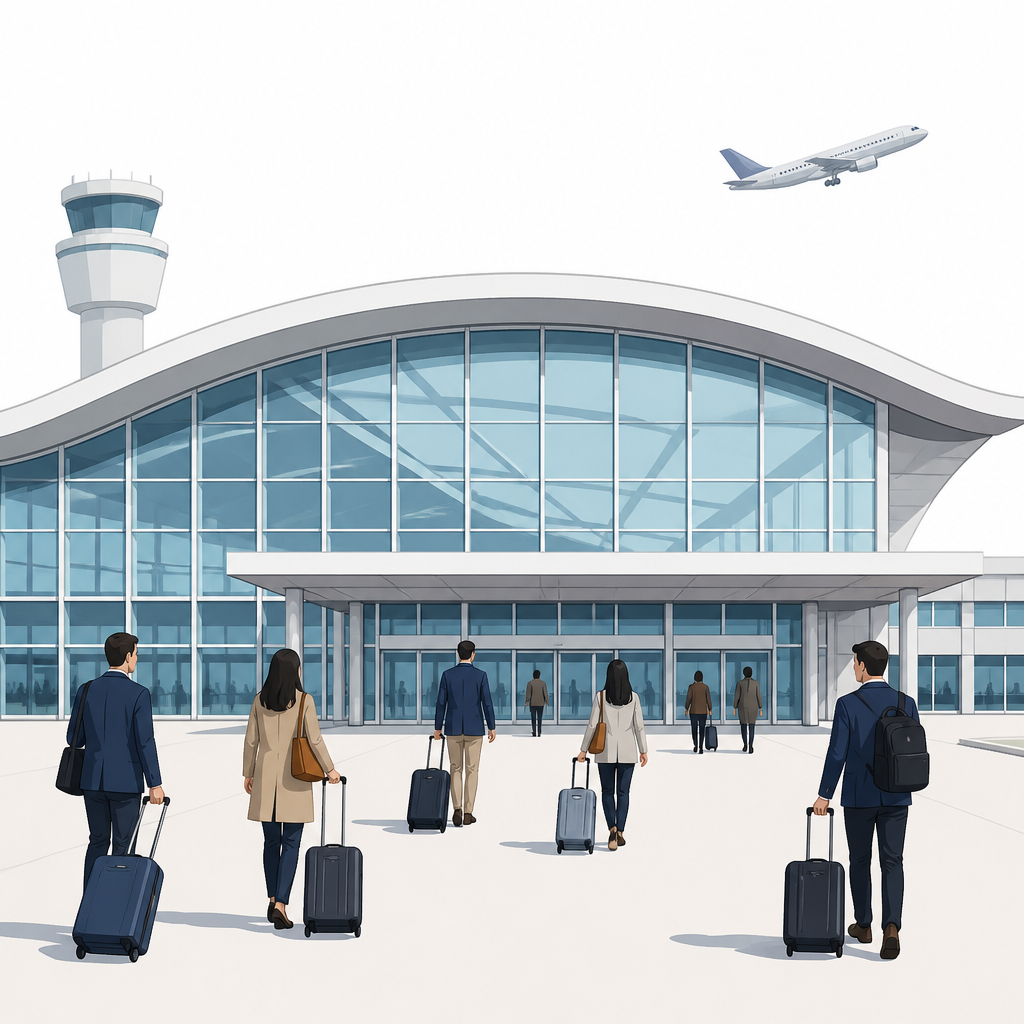
🔧 Grammar — future speculationTo do this task, you need to make predictions about the future. Use ‘will’ when you are certain about something. Use ‘might’ or ‘could’ when you are less certain — when something is possible but not definite. Look at what you can already see. The facade already has large reflective glass panels, so you can be certain: the terminal will have a modern glass facade. You can also see the operational airport apron behind the hoarding, so passengers will probably use jet bridges to board their aircraft. For less certain ideas, use ‘might’ or ‘could’: the terminal could have a large baggage reclaim area, or it might include a control tower. Do not use ‘will’ for ideas you are guessing — save it for things the image clearly supports. Open the ‘Look Closer’ and ‘People’ toggles for ideas. Now write your paragraph of 70–90 words.
- The terminal will have a modern glass facade because large reflective panels are already installed.
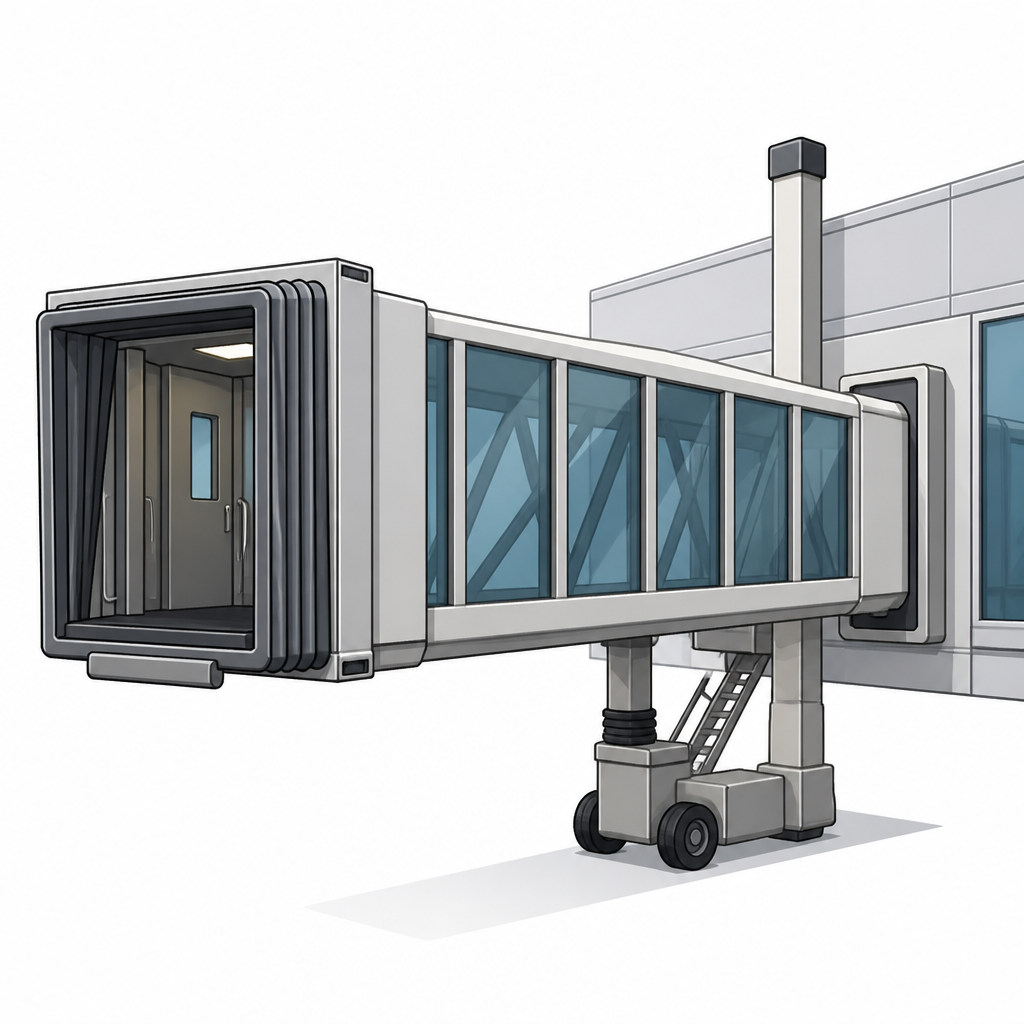
- Passengers will use jet bridges to board their aircraft, like those visible at the existing terminal.
- The building could become one of the largest terminals at the airport when the expansion is complete.
🧰 Open the 'Look Closer' and 'People' toggles for details about the building and the workers that can inspire your predictions.
→ Now write your paragraph, making at least two certain predictions with 'will' and at least two less certain predictions with 'might' or 'could'.
👁️ Look closer: how the picture is built
Where to look
- Start here: the partially glazed terminal facade and the workers in the centre foreground; the eye is drawn first to the large building mass in the left-centre
- The camera is: eye level, slight three-quarter angle looking along the terminal facade
- In front: construction materials, tools, cement mixer, workers, pallets, barriers, and hoarding banner at ground level
- In the middle: lower terminal structure with columns, scissor lift, scaffolding, and mid-ground workers
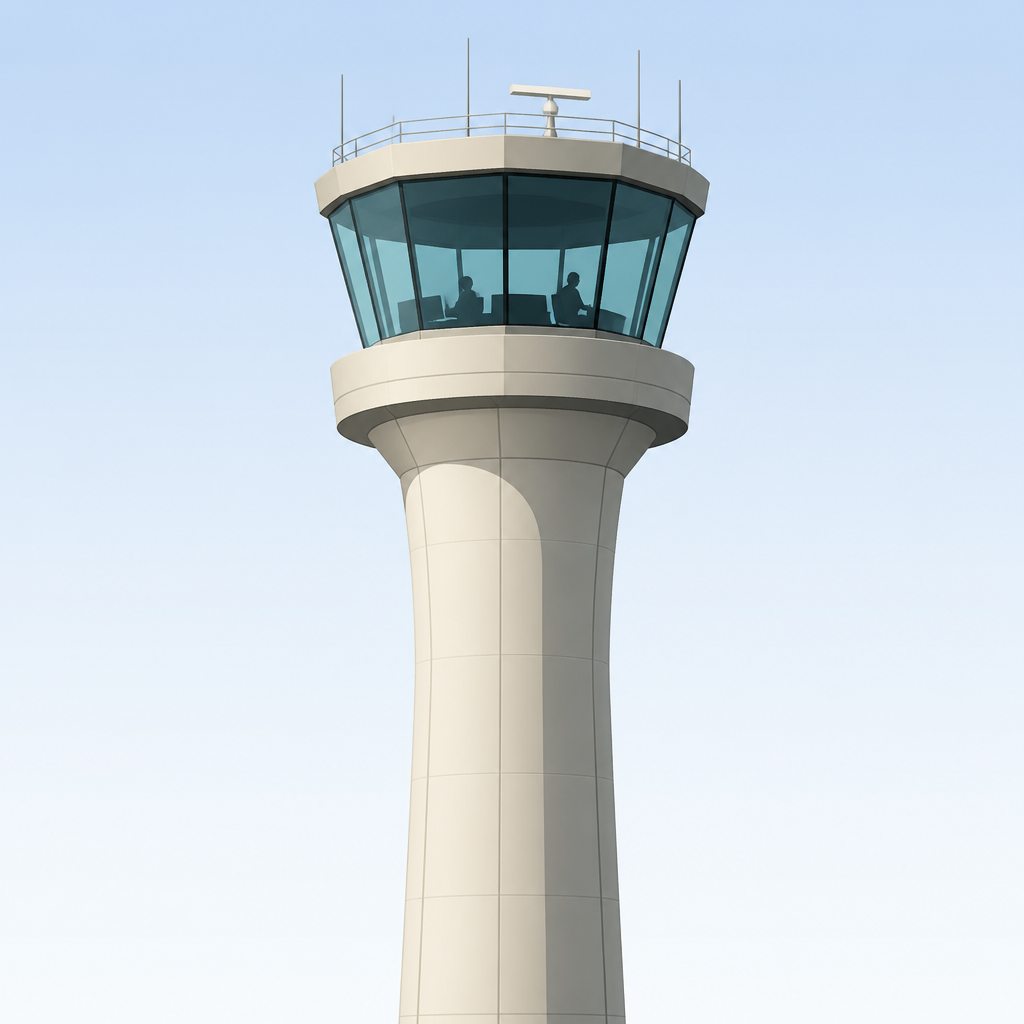
- At the back: upper terminal glazing, tower cranes, existing terminal, apron with aircraft and control tower, sky
- Lines and shapes: strong diagonal recession of the terminal facade from lower-left to upper-right, drawing the eye deep into the frame; vertical dominants from the tower crane masts and concrete columns; horizontal bands created by the storey levels and the glazing strip; diagonal of the roofline echoing the facade recession; triangular negative space between the crane jib and the terminal roof
- Framing: the terminal building crops the left edge and the hoarding crops the lower right; the open sky provides relief in the upper right quadrant; the building acts as a frame-within-frame for the background airport apron visible through the construction gap
- Balance: asymmetrical, weighted left and centre by the building mass, with the open apron and sky providing counterbalance on the right
Light and colour
Light: natural daylight · From: from above and slightly from the right, consistent with a high sun angle · Quality: hard to moderate; bright midday sun with some cloud softening · Contrast: medium · Warm/cool: mixed — cool grey building tones against warm orange equipment and vests, with neutral sky
Notice: reflections of sky and surroundings in the installed curtain-wall glass panels; bright orange of cranes and equipment providing high-visibility accent against grey structure; haze or slight atmospheric softening of the most distant background elements
🧍 Who is doing what
- A worker in an orange high-visibility vest and white hard hat stands in the centre foreground facing the cement mixer.
- A second worker in an orange vest and white hard hat stands to the right of the cement mixer.
- A worker in a yellow-green vest and white hard hat stands in the mid-left foreground facing the building.
- A worker in a yellow-green vest crouches in the left foreground near a toolbox and hand tools.
- A worker stands on the raised scissor lift platform at upper-storey level, facing the terminal facade.
- A worker in a high-visibility vest is visible inside the terminal structure at upper-floor level.
- Several additional workers in high-visibility vests and hard hats are active across the mid-ground.
- The visible workforce is distributed across ground-level and elevated positions throughout the construction site.
Look at each person more closely
💬 Discussion
• Would you like to work on a large construction site like this one? Why or why not?
• Airport expansion projects can be very expensive. Do you think it is important to build new terminals? Give a reason.
• The hoarding says 'Building Tomorrow's Journeys'. What do you think the finished terminal will offer to passengers that the old one does not?
Member-Exclusive Practice Bar
Access a wide range of integrated practice for this unit — from Vocabulary and Grammar activities to AI-curated Writing tasks and Thematic Chat practice.
This feature is available to YSP members.
Explore Membership BenefitsMember-Exclusive Vocabulary Review & Acquisition System
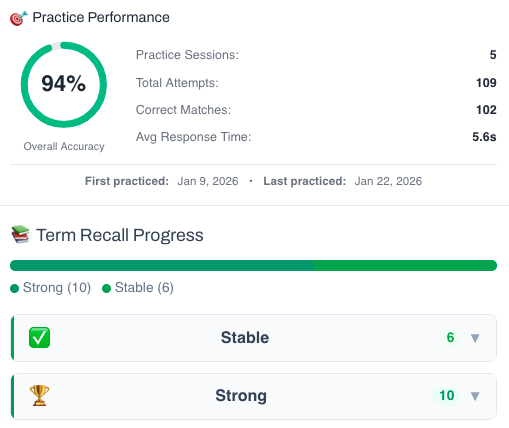
This isn’t a simple quiz — it’s a fully tracked learning system. You build knowledge through recognition, then recall, and your progress feeds directly into the Integrated Practice Bar (Writing tasks, AI Chat, and more).
- Practice sessions, accuracy, and response-time tracking
- Term strength levels (Learning → Stable → Strong)
- Personal progress history for each unit
This feature is available to YSP members.
Explore Membership Benefits📐 Where things are — positional language for images