It’s No Bigger — and It Isn’t Any Better
Core PathWay
1 Section 1. Same, Same, Same — A New Use for Comparatives
You already know how to use comparatives — words like bigger, faster, more expensive. Good. Now meet a very useful idea: sometimes we use these same words to say there is no difference at all.
Look at these examples:
• This phone is no bigger than the old one.
• The new office is no quieter than the old one.
• The train is no faster than the bus.
These sentences do NOT say one thing is better. They say: zero difference. Nothing changed. They are the same.
You may already know some similar phrases. These all mean the same thing:
• They are the same size.
• There is no difference.
• It’s just as expensive as before.
But the no bigger and isn’t any faster structures are very common in natural English. They often carry a feeling of disappointment — like you hoped for something better, but nothing changed.
• I waited a week for the new model. It’s no faster than my old one. 😕
• We moved to a new flat. The rent is no cheaper. 😕
This is the idea we study on this page.
Key Terms
2 Section 2. Using NO + Comparative
The first structure is simple and strong. We put no directly before a comparative adjective. This says: the difference is zero. Nothing is different.
This structure is used in normal sentences — not negative sentences. The word no already gives the negative meaning.
Focus
- Use NO directly before the comparative adjective
- The sentence is affirmative (positive) — do NOT add ‘not’ or ‘don’t’
- You can add ‘than’ to compare two specific things
Rules
- FORM: Subject + is/was + NO + comparative adjective
- FORM WITH THAN: Subject + is/was + NO + comparative adjective + THAN + noun
- MEANING: No difference. The two things are equal — often with a feeling of disappointment.
- DO NOT use ‘not’ with this structure. ‘It isn’t no bigger’ is wrong. Use ‘It is no bigger’ OR ‘It isn’t any bigger’.
- DO NOT add ‘any’ after ‘no’. ‘It is no any faster’ is wrong. Use ‘It is no faster’.
Examples
- This laptop is no faster than my old one. (= same speed, no improvement)
- The new manager is no stricter than the last one. (= same level of strictness)
- The business class seat is no more comfortable than economy. (= no difference in comfort)
Common mistake
3 Section 3. Using ISN’T / WASN’T ANY + Comparative
The second structure uses a negative verb — isn’t, wasn’t, aren’t — together with any before the comparative. The meaning is the same: zero difference. This version is very common in spoken English and often sounds a little more emphatic — like you really want to make the point.
Focus
- Use a negative verb (isn’t, wasn’t, aren’t) + ANY + comparative adjective
- ANY is needed here — do NOT drop it
- You can add ‘than’ to name the second thing
Rules
- FORM: Subject + isn’t/wasn’t/aren’t + ANY + comparative adjective
- FORM WITH THAN: Subject + isn’t + ANY + comparative adjective + THAN + noun
- MEANING: No difference at all — often with stronger emphasis than ‘no + comparative’
- DO NOT use ‘any + comparative’ in a simple positive sentence. ‘It is any faster’ is wrong. Use ‘any’ only with negative verbs or in questions.
- DO NOT write double comparatives: ‘It isn’t any more cheaper’ is wrong. Use ‘It isn’t any cheaper’.
- ‘It isn’t better’ and ‘It isn’t any better’ are different. ‘It isn’t any better’ is stronger — it strongly says: no improvement, none at all.
Examples
- This hotel isn’t any cheaper than the last one. (= same price, no saving)
- The new route wasn’t any faster than the old one. (= same travel time)
- Her second report isn’t any better than her first one. (= no improvement at all)
Common mistake
4 Section 4. Dialogue — Two Cars, One Winner? (Maybe Not)
Sam drives a BMW. Alex drives an Audi. Both cars cost about the same. Both are fast. Listen to their conversation.
💬 Dialogue 1: The Great Car Debate
Sam and Alex are colleagues. They are in the car park after work. Both are proud of their cars.
Sam: “Hey Alex, nice car! But come on — everyone knows a BMW is faster than an Audi. It’s just a fact.”
Alex: “Actually, Sam, your BMW is no faster than my Audi. We both have 2.0 litre engines. The numbers are the same. Look it up.”
Sam: “OK, OK. But what about petrol? My BMW is more fuel-efficient. I pay less at the pump every month.”
Alex: “That is not true, Sam. My Audi isn’t any less fuel-efficient than your BMW. I checked the numbers last week. They are almost identical.”
Sam: “Hmm. Fine. But sit inside my BMW and tell me it isn’t better. The seats, the dashboard — it feels more luxurious. You have to admit that.”
Alex: “Sam, the Audi interior is no less luxurious than your BMW. Have you actually sat in one? It is beautiful inside. Soft seats, great dashboard. Come and look.”
Sam: “Well… my BMW cost more money. So it must be better quality. That is just how it works, right?”
Alex: “A higher price does not always mean better quality, Sam. And honestly, your BMW isn’t any more reliable than my Audi. Both cars are excellent. Both last a long time.”
Sam: “OK. I hear you. I suppose… they really are quite similar, aren’t they? Maybe I was a little proud of my BMW.”
Alex: “Exactly! No better, no worse. Just different badges on the front. Both great cars. Now — do you want to grab a coffee?”
Key Terms
5 Section 5. Dialogue — This Year’s Holiday vs Last Year’s
Jordan and Sam are husband and wife. They just came home from their summer holiday. Last year they went to Greece. This year they went to Portugal. Were they the same? Jordan thinks this year was better. Sam is not so sure.
💬 Dialogue 2: Was Portugal Better Than Greece?
Jordan and Sam are at home, unpacking their suitcases after their holiday in Portugal.
Jordan: “I loved Portugal! It was so much better than Greece last year, don’t you think? I want to go back already.”
Sam: “Hmm, I am not so sure, Jordan. The weather in Portugal wasn’t any warmer than Greece. It was actually a little cooler some days. Do you remember?”
Jordan: “OK, maybe the weather was similar. But the food! The restaurants in Portugal were amazing. So much better than last year.”
Sam: “The food was good, yes. But it was no better than the food in Greece. Do you remember that little taverna on the beach? That was wonderful too.”
Jordan: “That taverna was great. But Portugal was cheaper! We spent less money this year. I am sure of it.”
Sam: “Actually, Jordan, Portugal wasn’t any cheaper than Greece. I looked at our receipts last night. We spent almost exactly the same amount. Sorry!”
Jordan: “Really? That surprises me. But the hotel in Portugal was more modern. Nicer rooms, a better pool. That was different, right?”
Sam: “The hotel was nice, yes. But it was no more comfortable than the one in Greece. Both hotels were very good. We slept well in both places.”
Jordan: “Hmm. You know what? Maybe you are right. I suppose… it wasn’t any different, was it? Both holidays were just lovely.”
Sam: “Exactly. No better, no worse. Just a different place with different food and different sunshine. Both were wonderful. So — where do we go next year?”
Key Terms
6 ✍️ Writing Task
Write about your experience comparing the two cars. Use no + comparative and isn't / wasn't any + comparative at least twice each (for example: 'It is no bigger' or 'It isn't any quieter'). Try to use the words fuel-efficient, identical, and zero difference naturally in your writing.
6 Section 7. Recap — What You Learned Today
Today you studied a very useful English pattern. You learned two ways to say zero difference between two things.
Pattern 1 — NO + comparative:
Use no directly before the comparative. The sentence is positive.
• This car is no faster than that car.
• The new model is no more expensive.
Pattern 2 — ISN’T / WASN’T ANY + comparative:
Use a negative verb + any before the comparative.
• This car isn’t any faster than that car.
• The new model wasn’t any more expensive.
Both patterns mean the same thing: no difference. But the isn’t any version often sounds stronger.
Remember: never mix the two patterns. Do not say ‘It isn’t no faster’ or ‘It is no any faster’. Choose one and use it correctly.
These structures are common in everyday English — in conversations about cars, hotels, prices, food, holidays, and much more. Now you know them. Use them!
Member-Exclusive Practice Bar
Access a wide range of integrated practice for this unit — from Vocabulary and Grammar activities to AI-curated Writing tasks and Thematic Chat practice.
This feature is available to YSP members.
Explore Membership BenefitsMember-Exclusive Vocabulary Review & Acquisition System
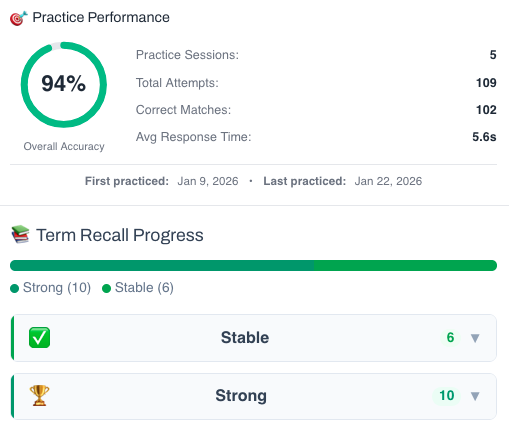
This isn’t a simple quiz — it’s a fully tracked learning system. You build knowledge through recognition, then recall, and your progress feeds directly into the Integrated Practice Bar (Writing tasks, AI Chat, and more).
- Practice sessions, accuracy, and response-time tracking
- Term strength levels (Learning → Stable → Strong)
- Personal progress history for each unit
This feature is available to YSP members.
Explore Membership Benefits