 ↑×
📐 Positional language (foreground, top left corner, in the distance…) is the same on every image lesson — see Where things are at the end.
What Can You See?
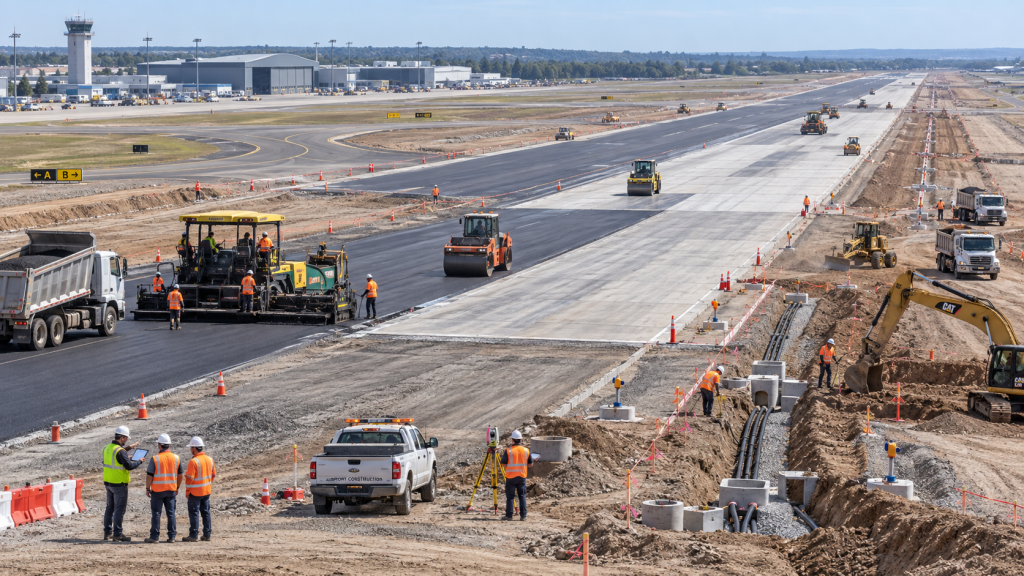
Look at the photograph. It shows workers and machines at an airport construction site. Listen to the descriptions, learn the key words, then do the tasks — each task helps you with the next one.
📚 Key Vocabulary
Learn these words before you listen.
🎧 Listen and read
Before: Look at the key words above and try to say each one out loud.
While listening: Listen and notice which machines and people the speaker talks about.
After: Close the vocabulary list and write down three things you remember from the description.
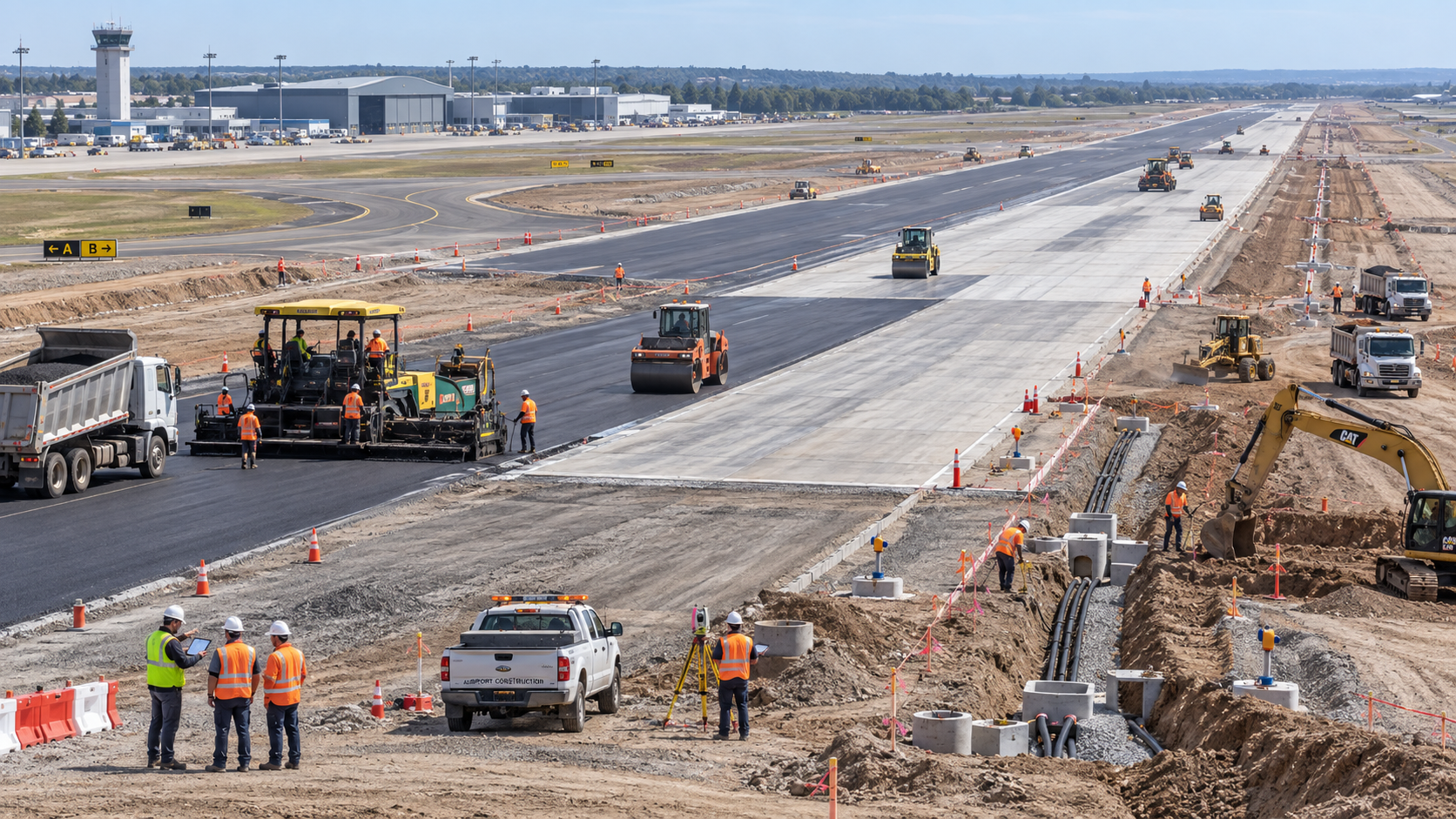
💡 Press play, then scroll back up to the photo. If the photo is off-screen, a copy floats at the bottom — tap it to enlarge.
 ×
📖 1 · Short description — read along
📖 2 · Full description — read along
📖 3 · The story behind the picture — read along
🧰 Your word bank
All the target words for this picture.
📚 Word bank
All the target words for this picture. Tap a word to hear it.

✍️ First look
Look at the photograph now. Write what you can see in your own words — do not use any help. You will look at this again at the end and see how much your writing has improved.
Step 1 · Naming Machines and Equipment
📚 Vocabulary
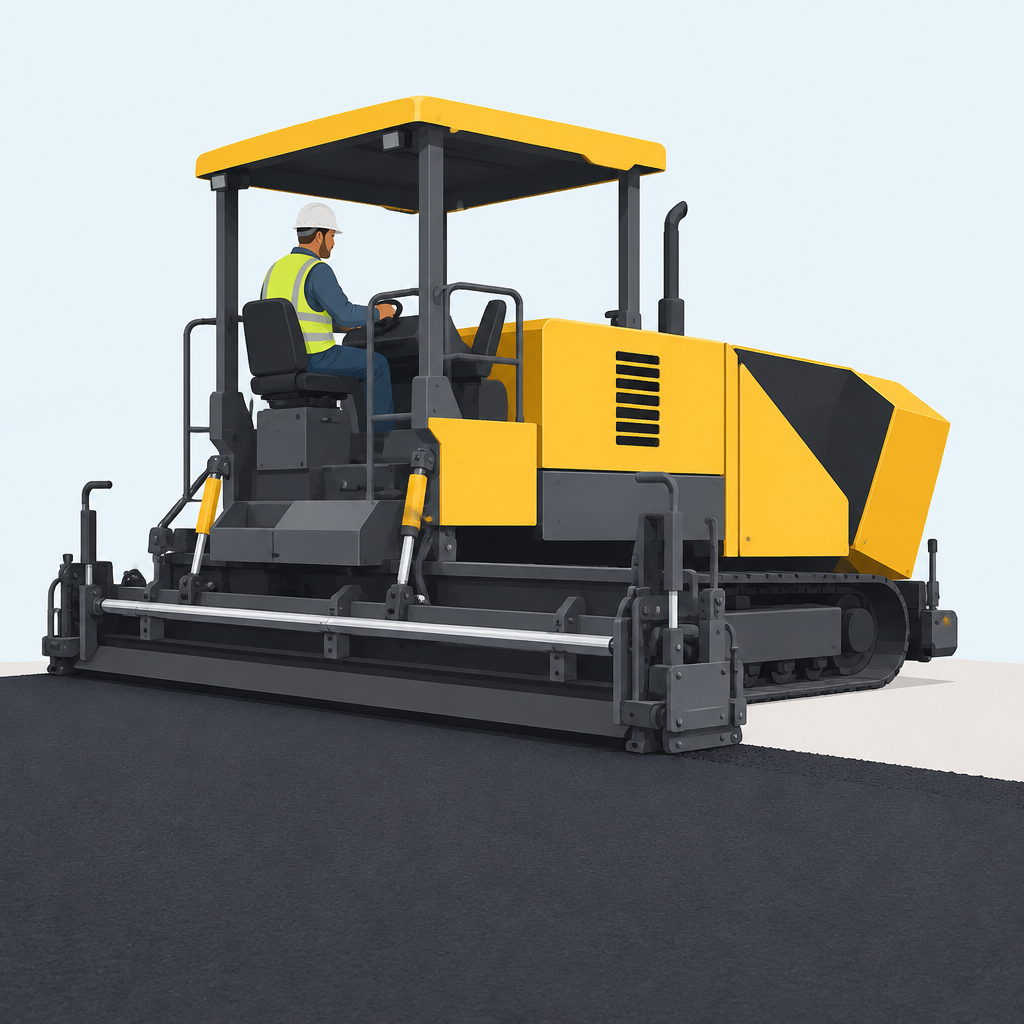
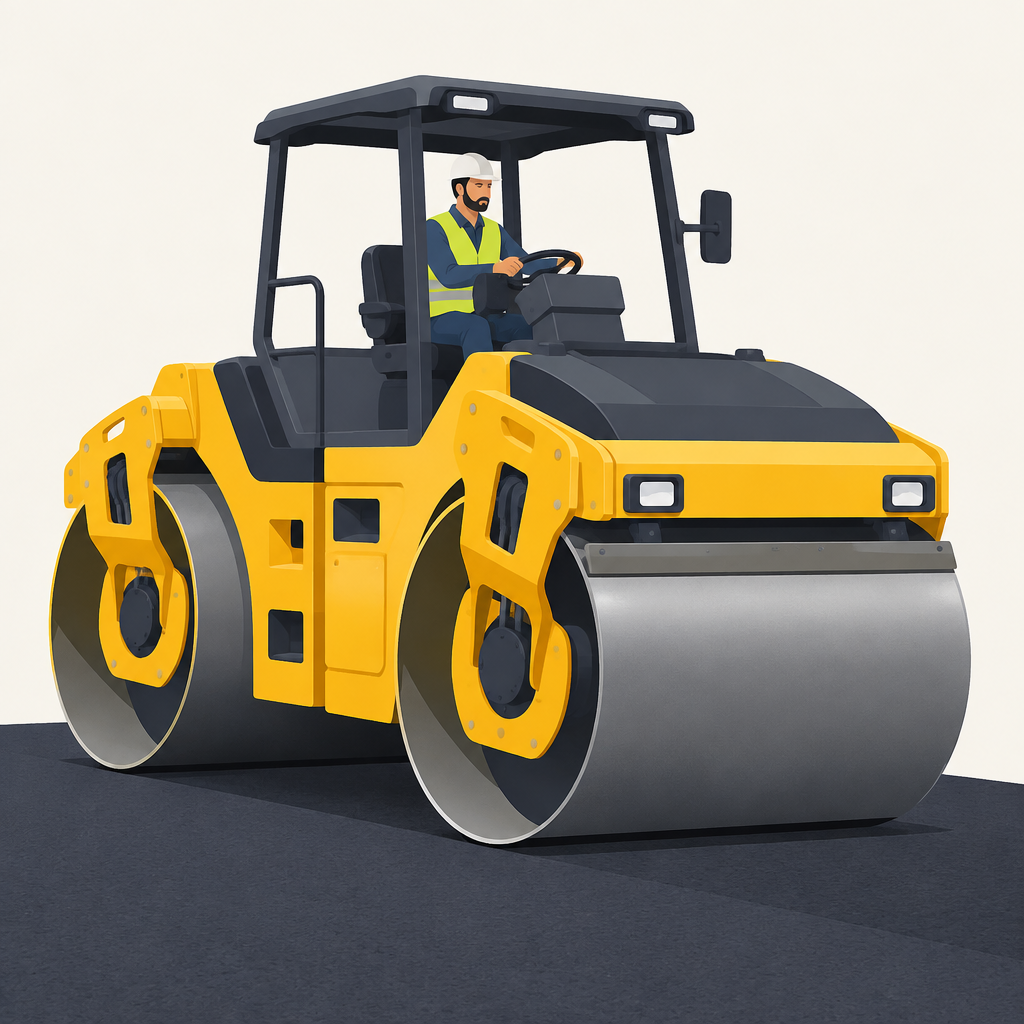
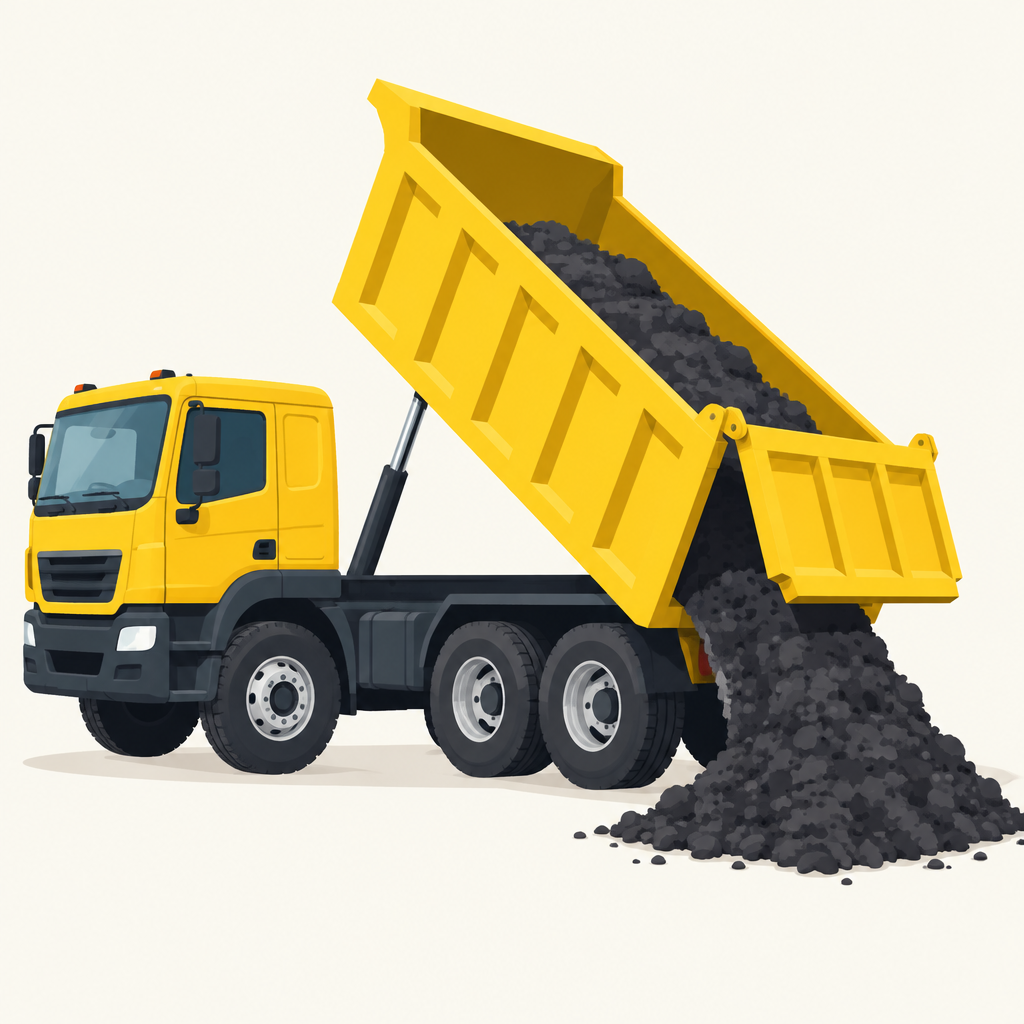
To do this task, you need the name of each thing and one describing word. Put the describing word before the name. This is the pattern: a [describing word] [name]. The describing word can be a colour, a size, or another quality. Look at the picture for clues. For example, the paving machine is yellow and black, and it is large. The rollers are orange and heavy. The truck is white and large. Open the ‘Objects’ list for more names and describing words. Then write your eight items.
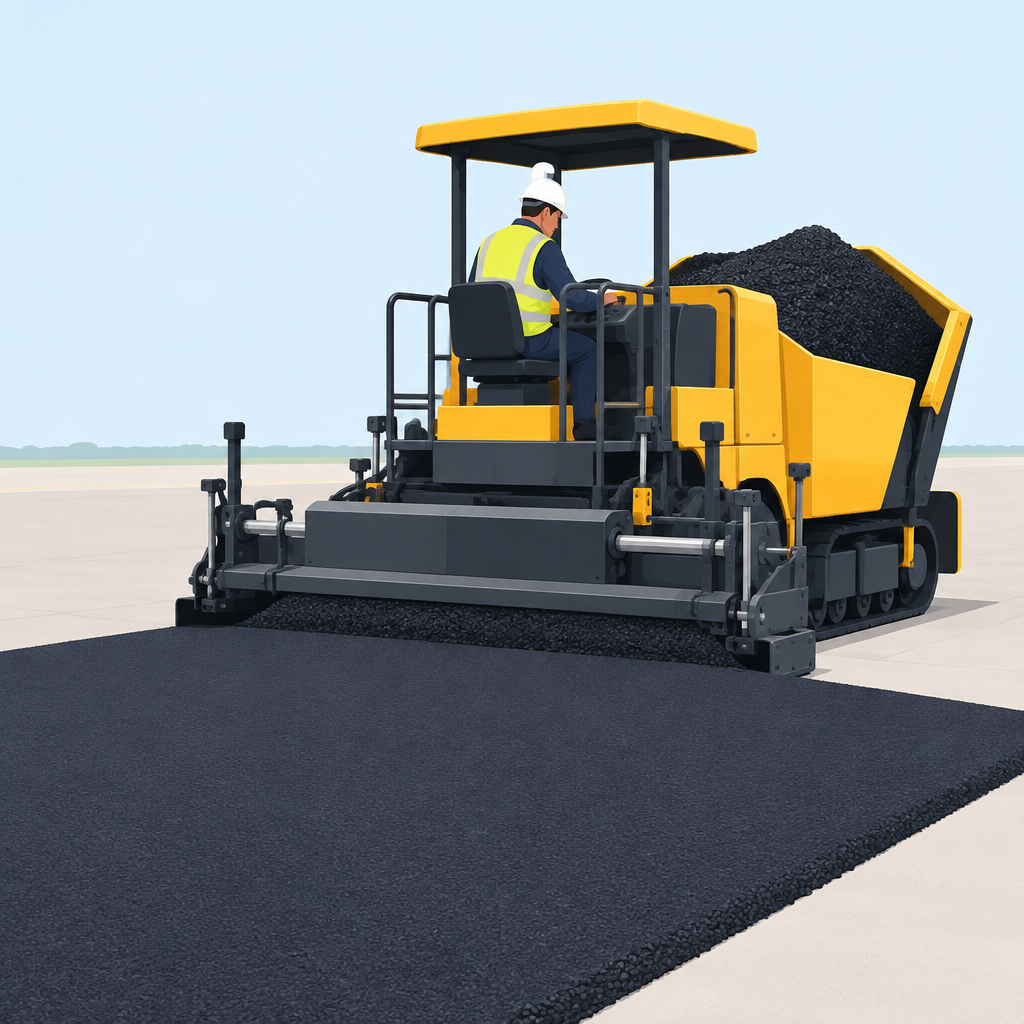
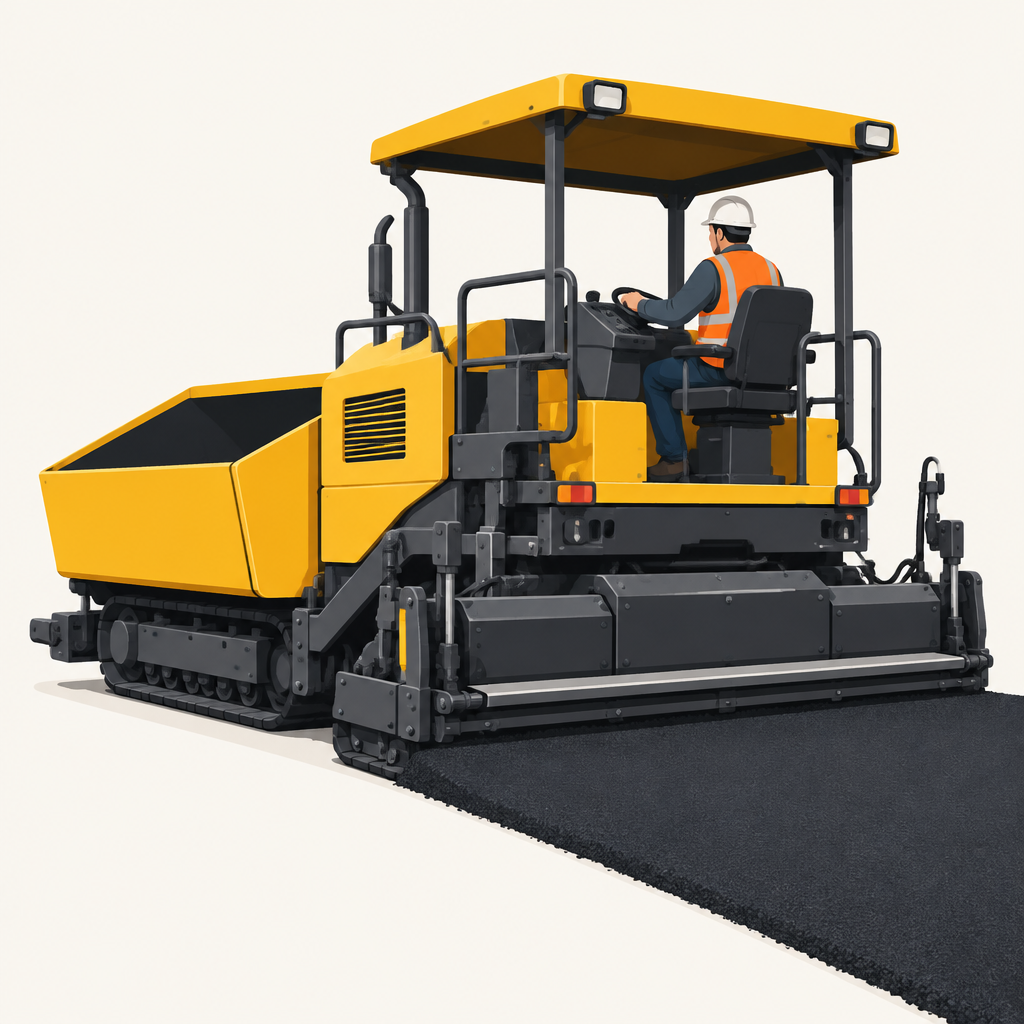
- a large yellow-and-black asphalt paver
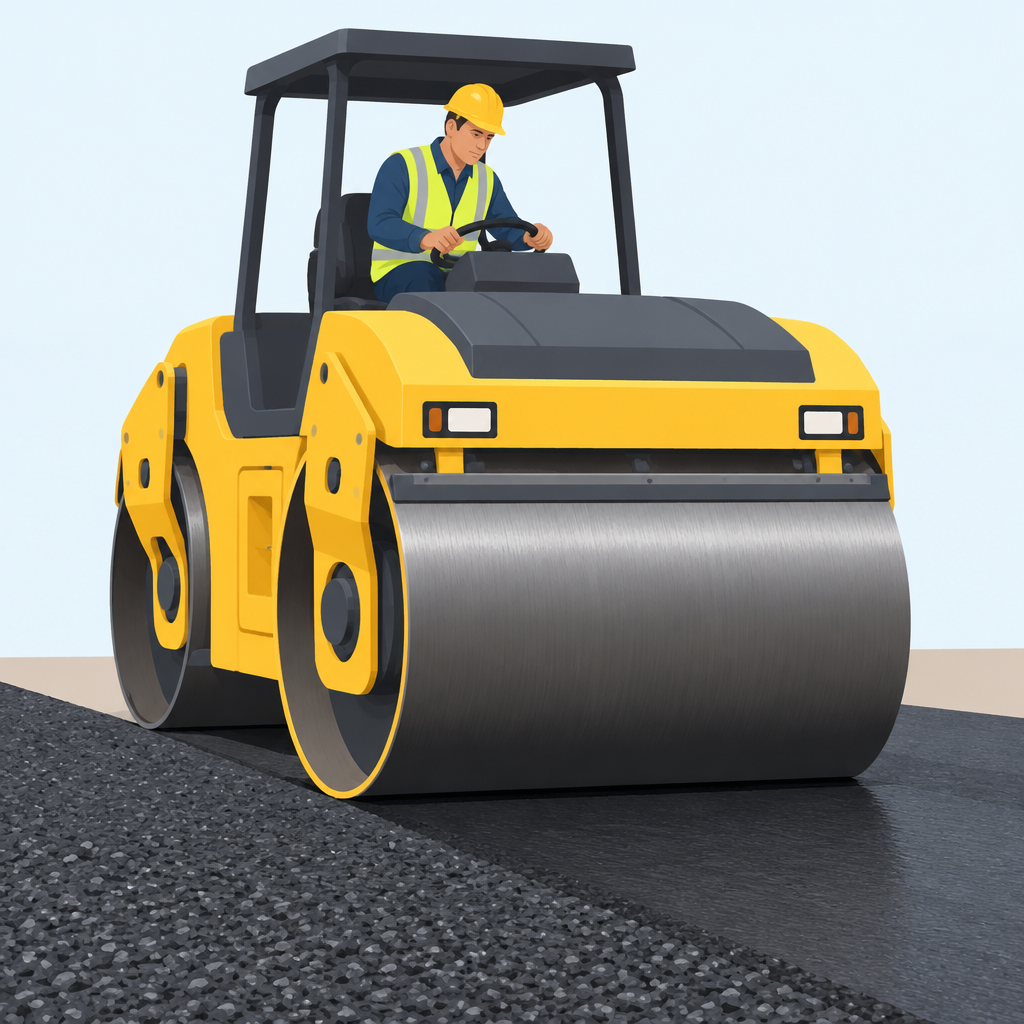
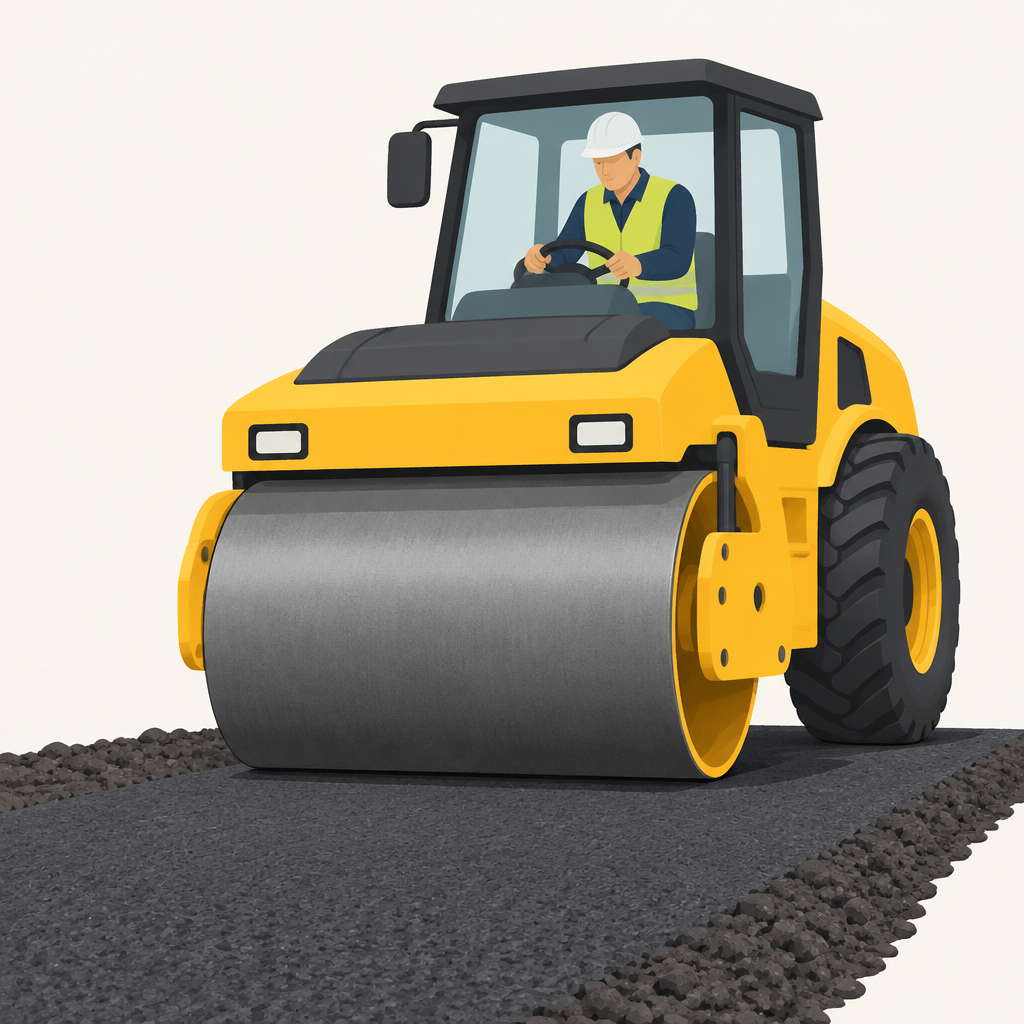
- a heavy orange tandem roller
- a white dump truck
🧰 Open the 'Objects' toggle to see a full list of machines and equipment names.
→ Now look at the picture and write your list of eight things.
🔎 What you can see
| Object | Where | Describing words |
|---|---|---|
| runway | centre of image, extending from foreground to background | newly paved, wide, dark grey-black |
| asphalt paver | left-centre foreground, on the runway surface | yellow and black, large, tracked |
| dump truck ×2 | one immediately left of paver in foreground; one visible further back | white, large, open bed |
| tandem roller ×2 | one in left-centre middle ground; one further back on runway | orange, heavy, drum roller |
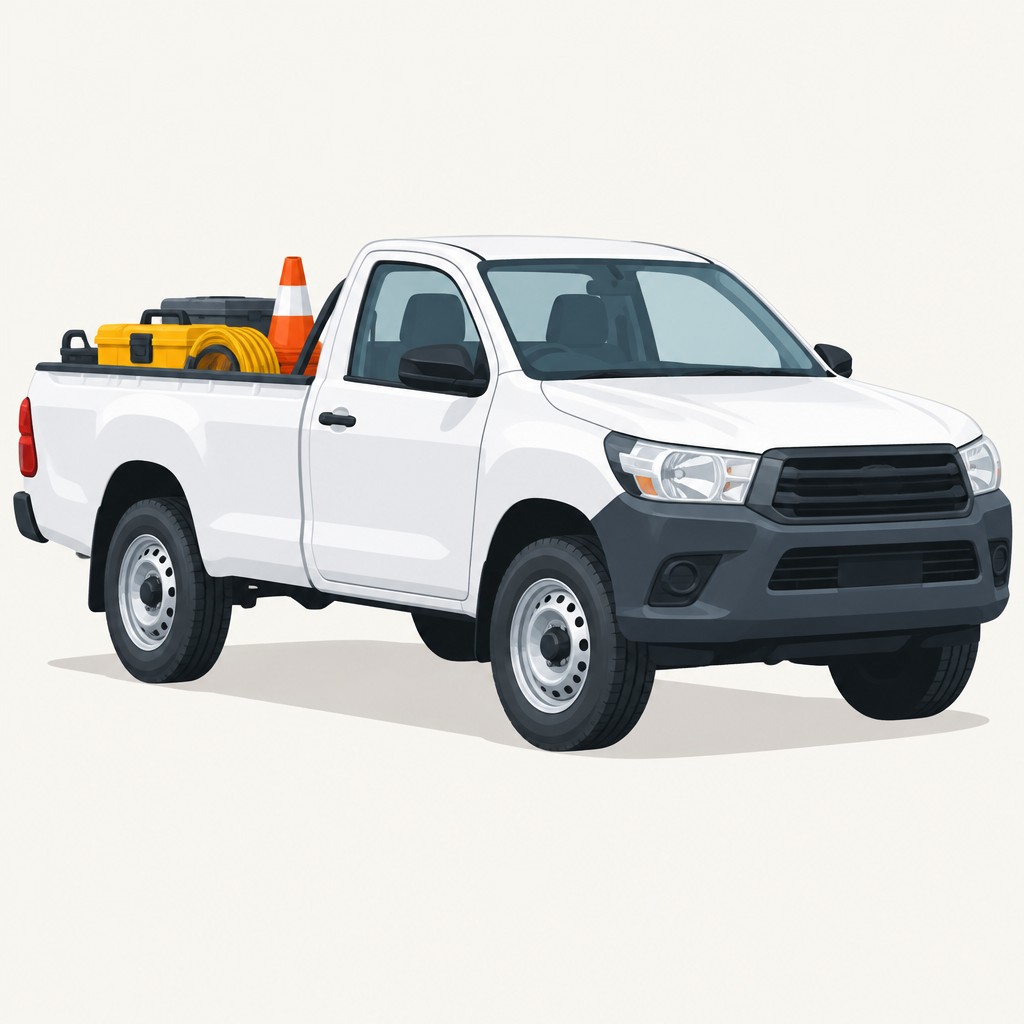
| pickup truck | foreground centre, behind group of workers | white, full-size, amber light bar on roof |
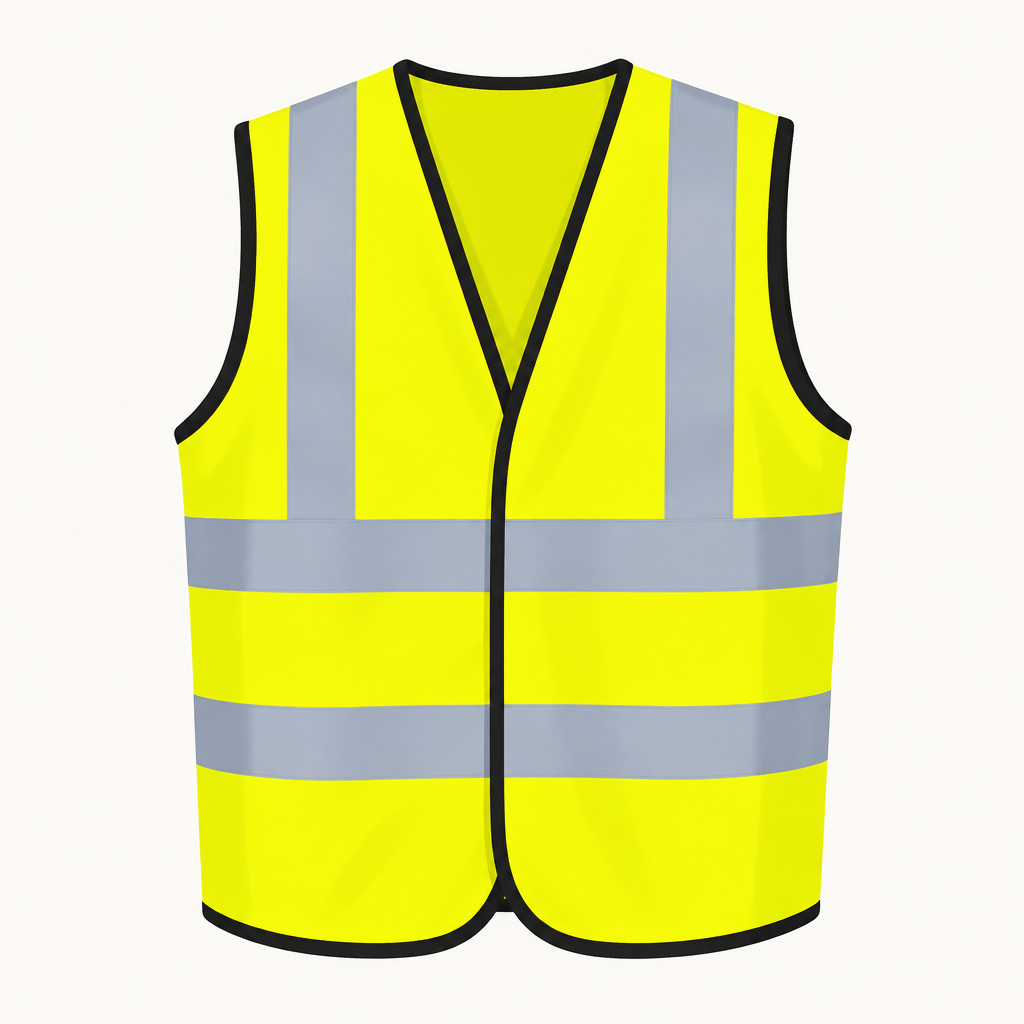
| worker ×8 | distributed across foreground and middle ground on both sides of runway | orange high-visibility vest, white hard hat |
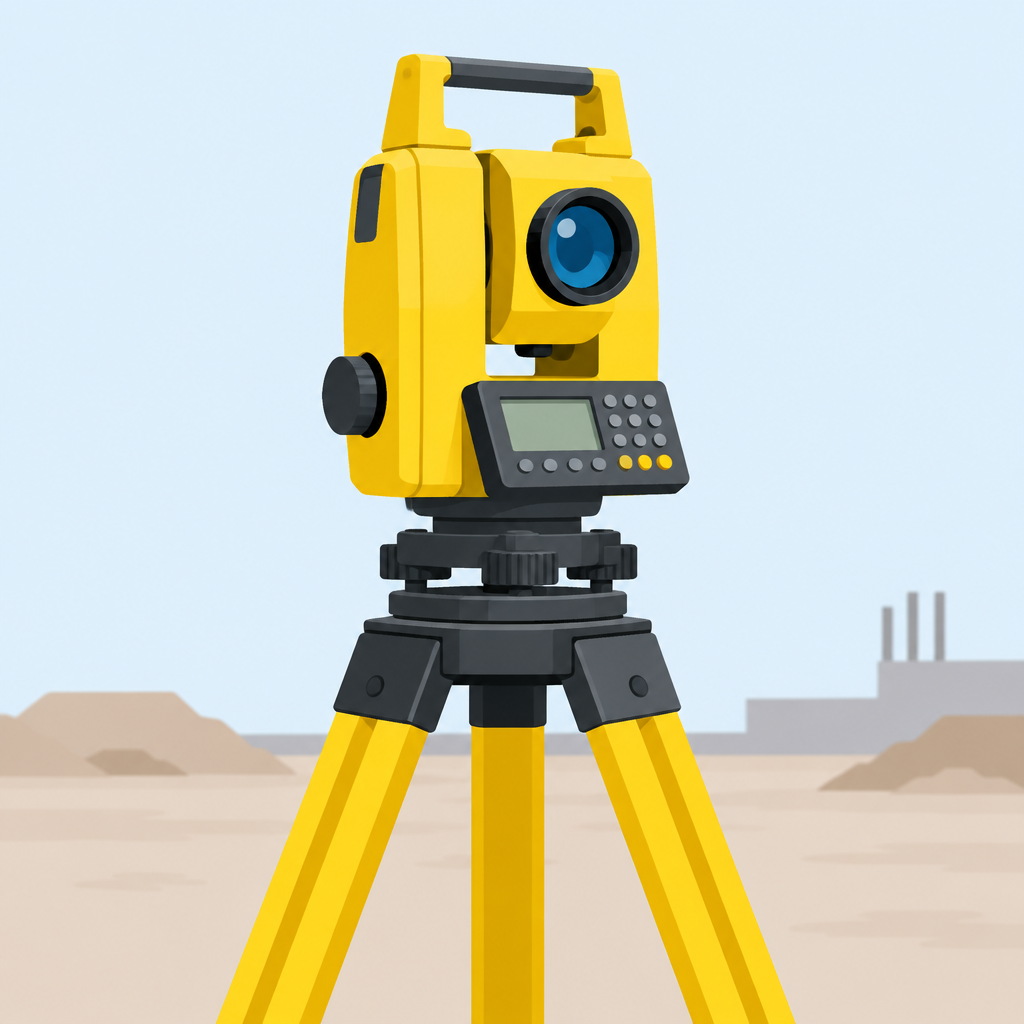
| surveying instrument | foreground centre, mounted on tripod near pickup truck | yellow, optical, tripod-mounted |
| tripod | foreground centre, supporting surveying instrument | yellow, three-legged, adjustable |
| traffic cone ×30 | scattered along both sides of runway and across construction zones | orange, plastic, standard size |
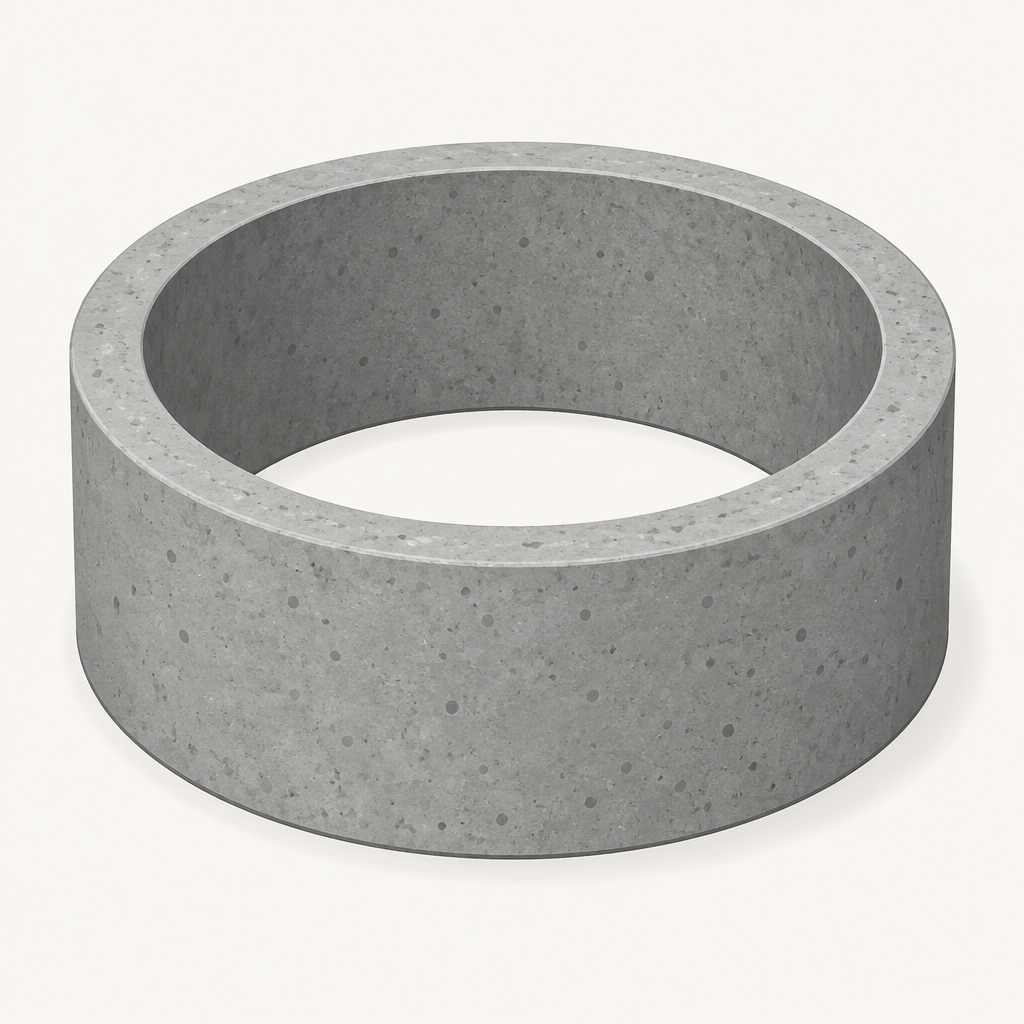
| concrete drainage ring ×8 | right foreground and right middle ground, arranged in groups on disturbed earth | grey, precast concrete, cylindrical |
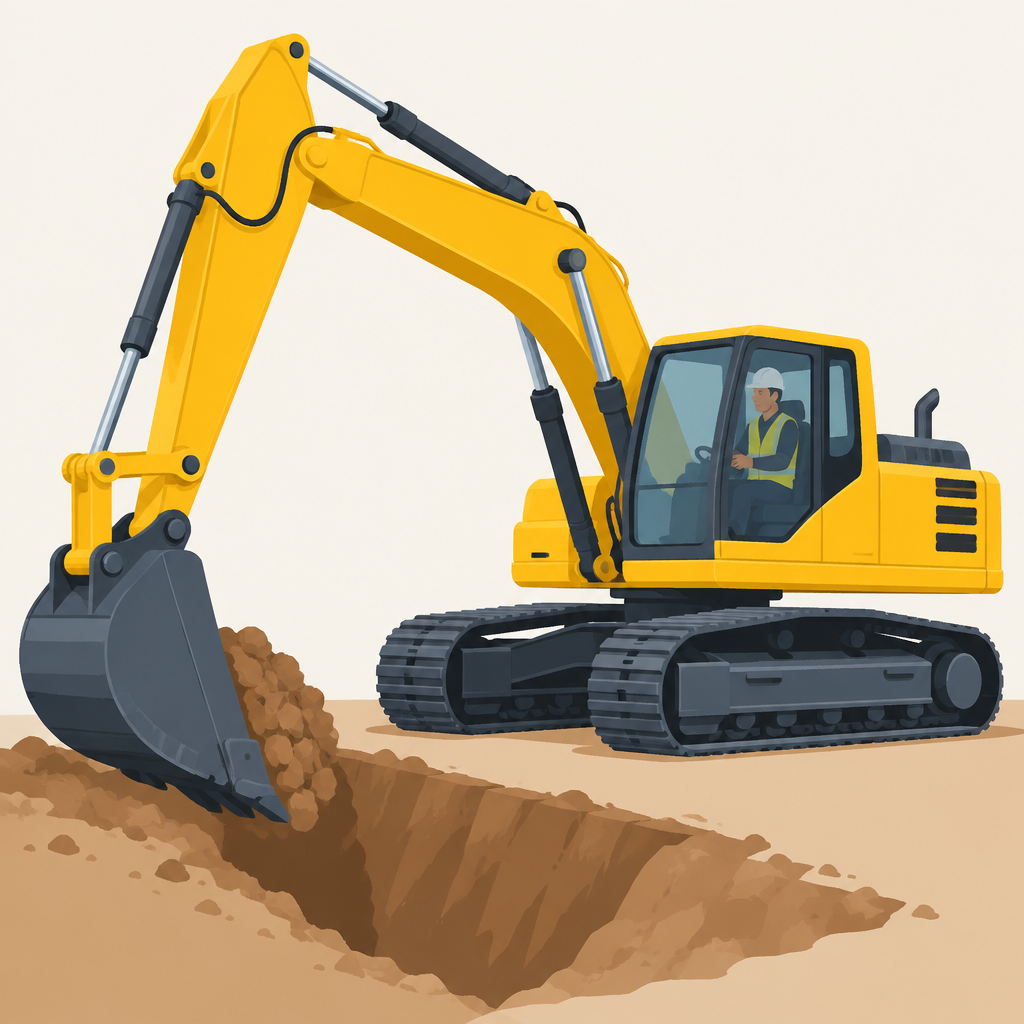
| excavator ×2 | right side, middle ground and far right | yellow, CAT brand, tracked |
| motor grader | far right middle ground | yellow, large, blade visible |
Showing the 12 most important of 22 objects.
Step 2 · Describing Colours and Materials
📚 Vocabulary
To do this task, you need colour words and material words. A colour word says what colour something is. A material word says what it is made of. Use this pattern: The [thing] is [colour] and it is made of [material]. Look at the picture carefully. The tandem roller is orange and it is made of steel. The traffic cones are orange and they are made of plastic. The drainage rings are grey and they are made of concrete. Open the ‘Materials’ and ‘Palette’ lists for more colour and material words. Then choose four things and write your sentences.
- The tandem roller is orange and it is made of steel.
- The traffic cones are orange and they are made of plastic.
- The drainage rings are grey and they are made of concrete.
🧰 Open the 'Materials' and 'Palette' toggles to find colour and material words.
→ Now choose four things from the list and write your four sentences.
🧱 Colours and materials
Ready-made phrases
🎨 Language palette
A large-scale airport runway is under active construction, with multiple types of heavy machinery and crews working simultaneously on paving, compaction, and underground infrastructure installation.
The things you must name
Useful supporting words
Describing words — Colour
Describing words — Size and shape
Describing words — Texture and material
Saying where things are
What things are doing
Words that go together
Things to choose from:
• the tandem roller
• the traffic cones
• the drainage rings
• the workers' vests
• the hard hats
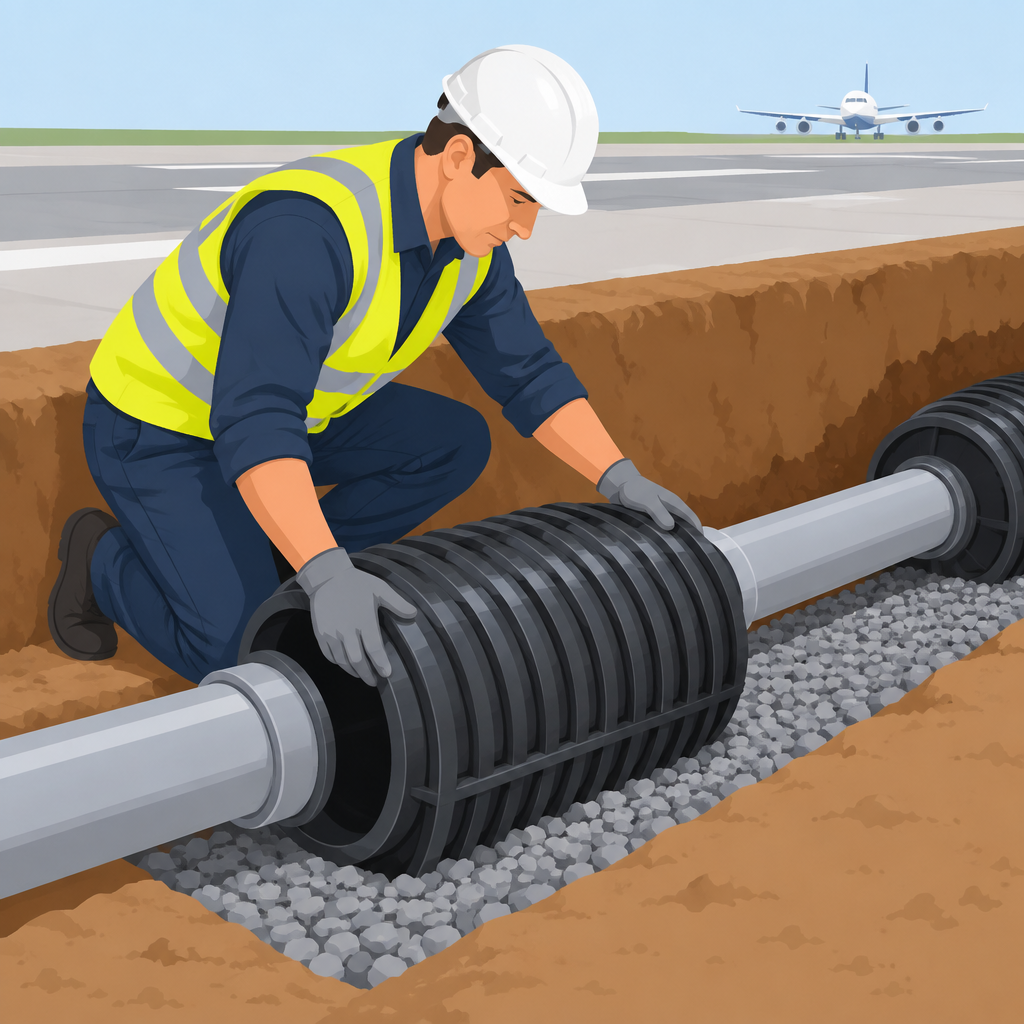
• the conduit pipes
- The tandem roller is ___ and it is made of ___.
- The traffic cones are ___ and they are made of ___.
- The drainage rings are ___ and they are made of ___.
- The workers' vests are ___ and they are made of ___.
- The hard hats are ___ and they are made of ___.
- The conduit pipes are ___ and they are made of ___.
Step 3 · Saying Where Things Are
🔧 Grammar — there is / there are
To do this task, you need ‘There is’ and ‘There are’ plus a place phrase. Use ‘There is’ for one thing. Use ‘There are’ for more than one thing. Then add a place phrase to say where. Look at the picture. The control tower is at the back on the left. The pickup truck is in the front of the picture. The surveying instrument is beside the pickup truck. Open the ‘Where things are’ and ‘Objects’ toggles for more place phrases and names. Then write your five sentences, each with a different place phrase.
- There is an airport control tower in the upper left background.
- There is a white pickup truck in the foreground.
- There are orange traffic cones along both sides of the runway.
🧰 Open the 'Where things are' toggle to find useful place phrases like 'in front of', 'behind', and 'to the right of'.
→ Now look at the picture and write your five sentences about where things are.
📍 Where things are
- The runway strip runs through the centre of the image from bottom to top.
- The asphalt paver sits on the left edge of the freshly paved surface in the left-centre foreground.
- A white dump truck is positioned in front of the asphalt paver, feeding material into it.
- The first tandem roller moves behind the paving train, compacting the newly laid asphalt.
- A second tandem roller operates further along the runway toward the background.
- The white pickup truck is parked in the foreground centre, just beyond the group of workers.
- Three or four workers stand in front of the pickup truck in the immediate foreground.
- The surveying instrument on its tripod stands beside the pickup truck in the foreground.
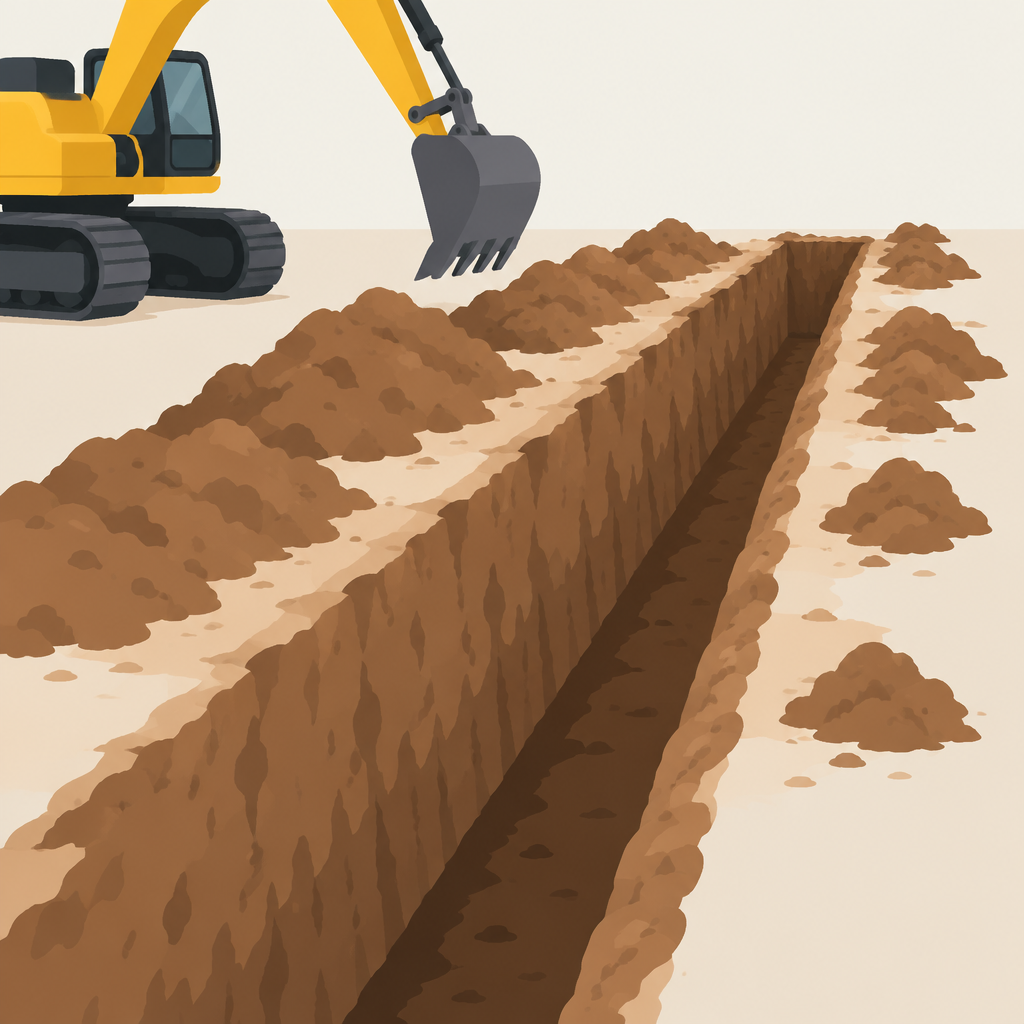
- An open trench runs to the right of the paved runway surface, parallel to it.
- Concrete drainage rings are arranged alongside the trench in the right foreground and middle ground.
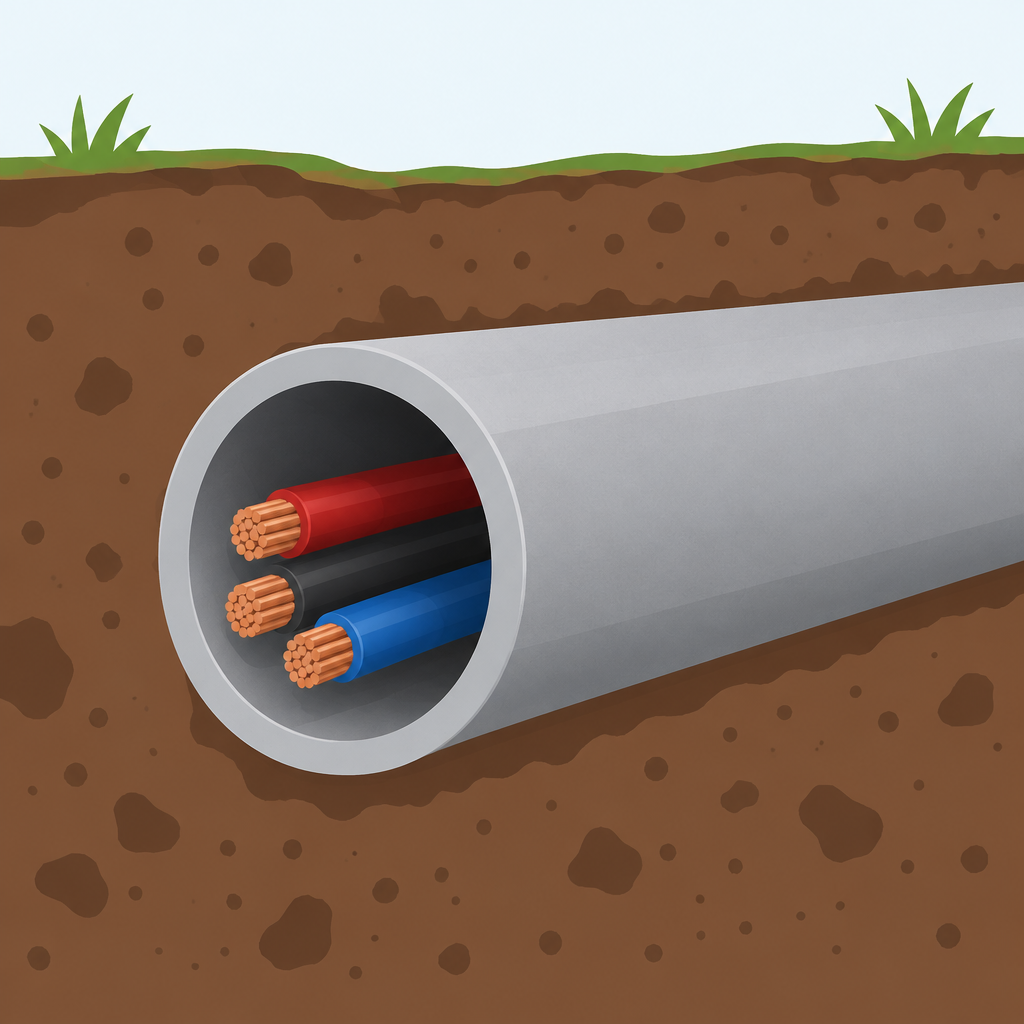
- Bundled black conduit is laid within the trench area in the right foreground.
- A CAT excavator is positioned at the edge of the trench on the far right of the frame.
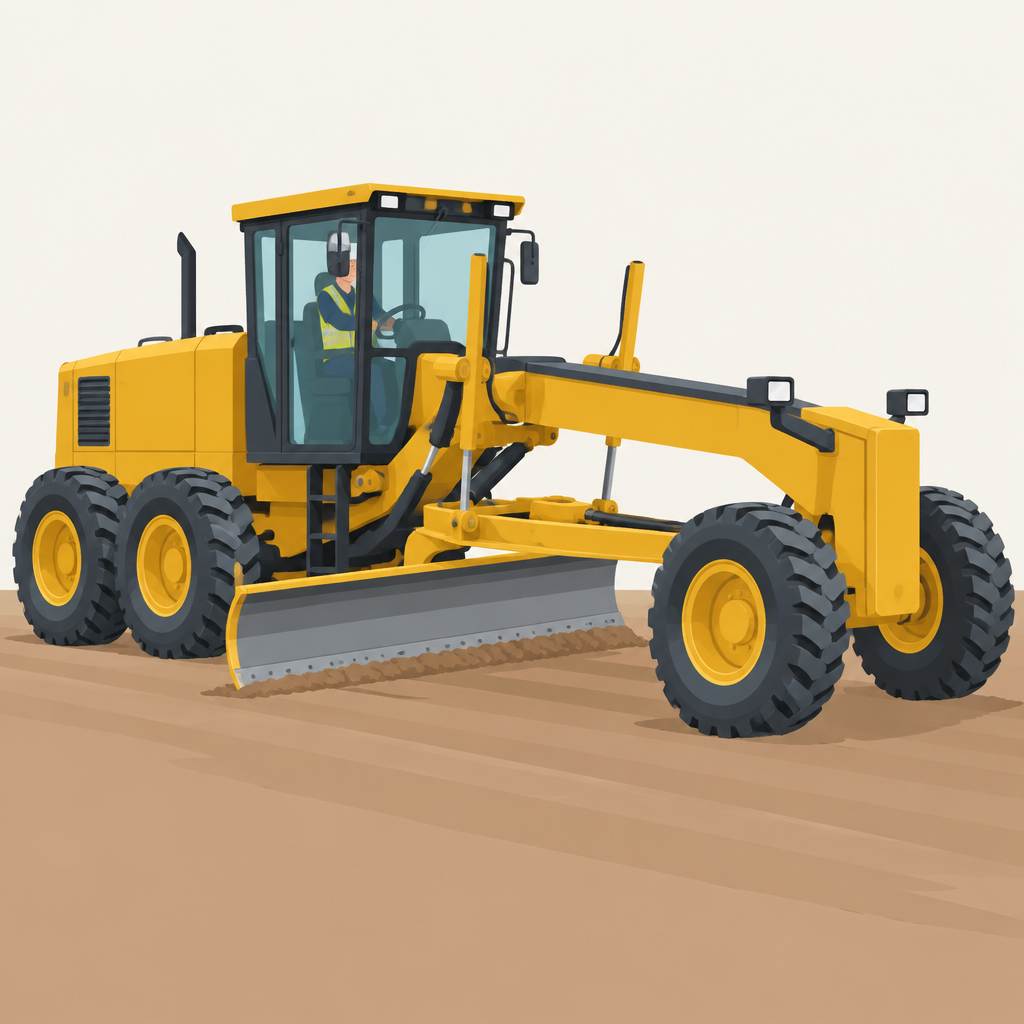
- A motor grader operates beyond the excavator, further back on the right side.
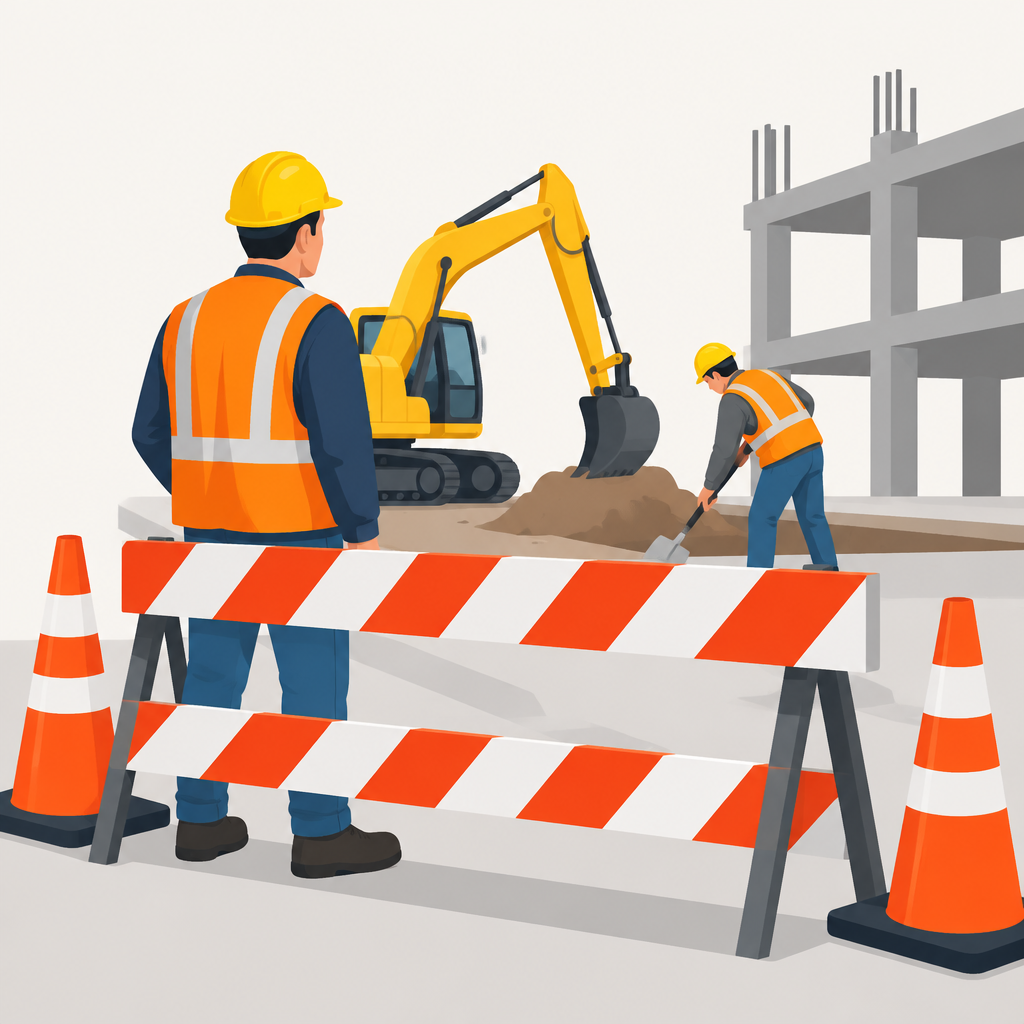
- Orange and white safety barriers are placed along the left foreground edge of the construction zone.
- The airport control tower stands in the upper left background, clearly above the terminal buildings.
- Large aircraft hangars are visible behind and to the right of the control tower in the background.
- An existing taxiway lies between the active construction zone and the terminal buildings in the background.
- Disturbed, excavated earth extends on both sides of the paved runway strip throughout the middle ground.
🔎 What you can see
| Object | Where | Describing words |
|---|---|---|
| runway | centre of image, extending from foreground to background | newly paved, wide, dark grey-black |
| asphalt paver | left-centre foreground, on the runway surface | yellow and black, large, tracked |
| dump truck ×2 | one immediately left of paver in foreground; one visible further back | white, large, open bed |
| tandem roller ×2 | one in left-centre middle ground; one further back on runway | orange, heavy, drum roller |
| pickup truck | foreground centre, behind group of workers | white, full-size, amber light bar on roof |
| worker ×8 | distributed across foreground and middle ground on both sides of runway | orange high-visibility vest, white hard hat |
| surveying instrument | foreground centre, mounted on tripod near pickup truck | yellow, optical, tripod-mounted |
| tripod | foreground centre, supporting surveying instrument | yellow, three-legged, adjustable |
| traffic cone ×30 | scattered along both sides of runway and across construction zones | orange, plastic, standard size |
| concrete drainage ring ×8 | right foreground and right middle ground, arranged in groups on disturbed earth | grey, precast concrete, cylindrical |
| excavator ×2 | right side, middle ground and far right | yellow, CAT brand, tracked |
| motor grader | far right middle ground | yellow, large, blade visible |
Showing the 12 most important of 22 objects.
Step 4 · Describing Actions Right Now
🔧 Grammar — present continuous
To do this task, you need the present continuous tense. Use this to say what is happening right now. The pattern is: [person or machine] + is/are + [verb]-ing. Use ‘is’ for one person or machine. Use ‘are’ for more than one. Look at the picture. The asphalt paver is laying fresh asphalt. The tandem roller is pressing the surface flat. A worker is standing at the surveying instrument. Open the ‘People’ toggle for more action words. Then write your five sentences.
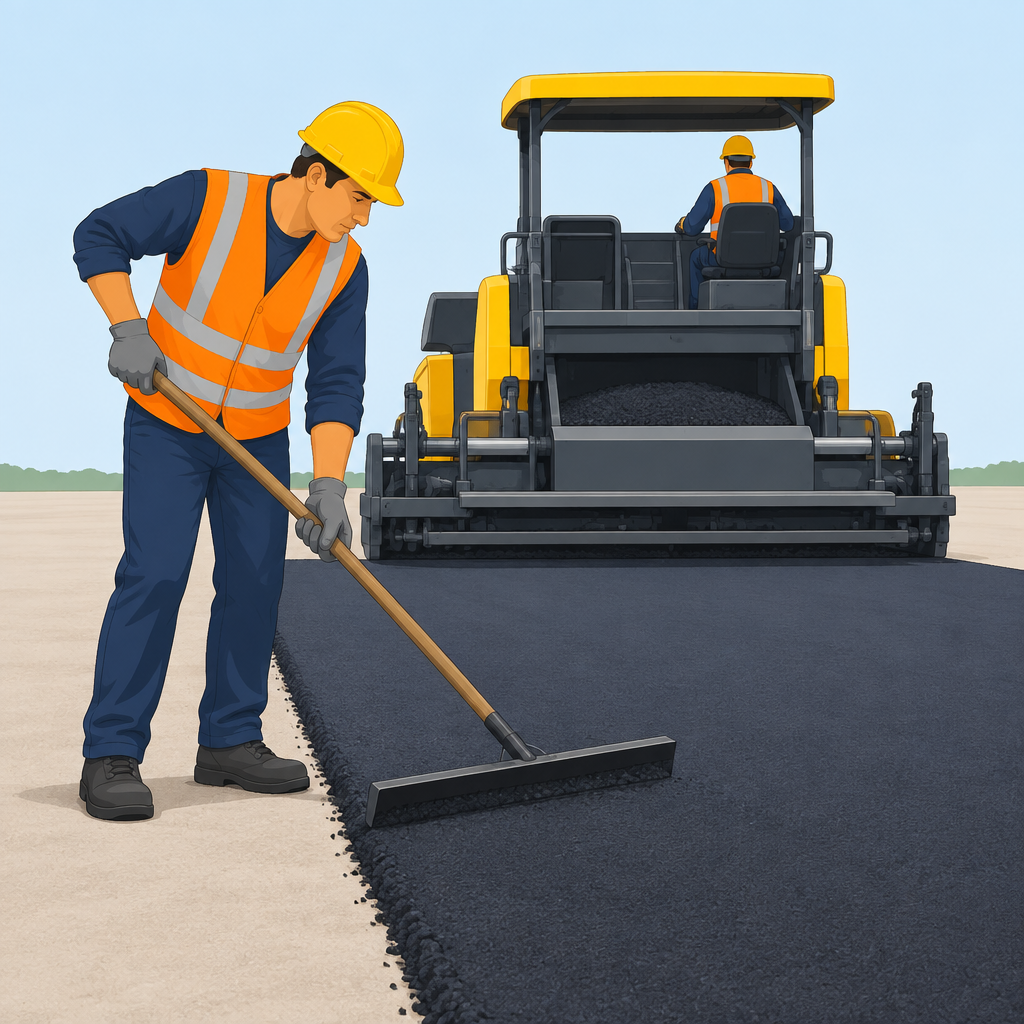
- The asphalt paver is laying fresh asphalt on the runway.
- The tandem roller is compacting the surface.
- A worker is standing at the surveying instrument near the pickup truck.
🧰 Open the 'People' toggle to find action verbs like 'laying', 'digging', and 'standing'.
→ Now look at the picture and write five sentences about what people and machines are doing.
🧍 Who is doing what
- A worker in an orange vest and white hard hat stands in the foreground left, holding and looking at a tablet computer.
- A second worker in matching hi-vis vest and hard hat stands facing the pickup truck in the foreground group.
- A worker in an orange vest stands at the tripod-mounted surveying instrument in the foreground centre.
- At least one worker in an orange vest is visible standing on or immediately beside the operating asphalt paver.
- A worker in an orange vest stands in the right middle ground near the concrete drainage rings and open trench.
- A worker in an orange vest is visible standing near the heavy equipment on the far right side of the image.
🏁 Put It All Together
In the tasks above, you practised naming machines, describing colours and materials, saying where things are, and describing actions. Now use all of this in one longer description. Your final writing should show everything you have learned.
- ☐ Name the machines and equipment precisely, with a describing word for each.
- ☐ Include a colour and a material for at least two things.
- ☐ Use 'There is' or 'There are' with a place phrase for at least two things.
- ☐ Use the present continuous to describe at least two actions happening right now.
💬 Discussion
• Have you ever seen a runway or a big construction site? What machines did you see?
• Workers in the picture wear a hard hat and a high-visibility vest. Do you wear special clothes at work or school? Why?
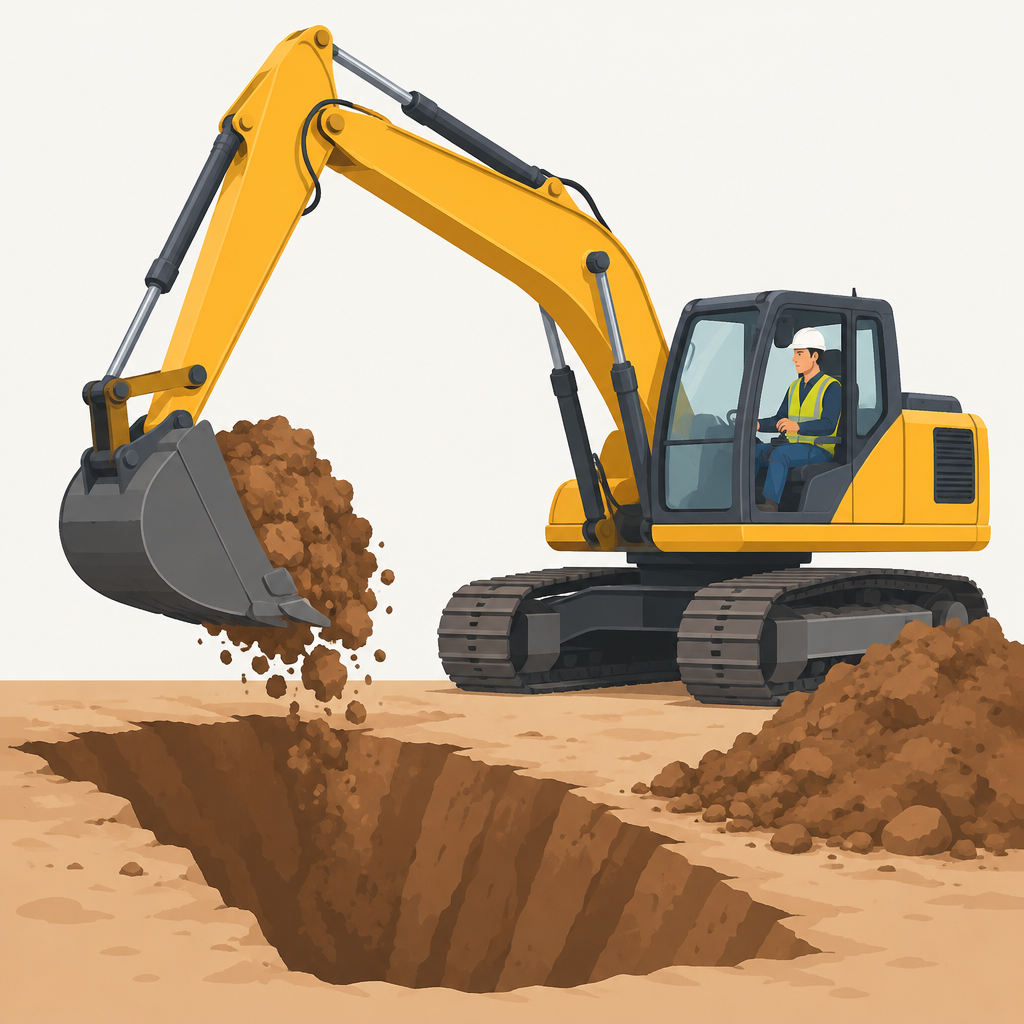
• The excavator is digging a trench near the runway. What do you think is the most important machine on a construction site?
Member-Exclusive Practice Bar
Access a wide range of integrated practice for this unit — from Vocabulary and Grammar activities to AI-curated Writing tasks and Thematic Chat practice.
This feature is available to YSP members.
Explore Membership BenefitsMember-Exclusive Vocabulary Review & Acquisition System

This isn’t a simple quiz — it’s a fully tracked learning system. You build knowledge through recognition, then recall, and your progress feeds directly into the Integrated Practice Bar (Writing tasks, AI Chat, and more).
- Practice sessions, accuracy, and response-time tracking
- Term strength levels (Learning → Stable → Strong)
- Personal progress history for each unit
This feature is available to YSP members.
Explore Membership Benefits📐 Where things are — positional language for images