 ↑×
📐 Positional language (foreground, top left corner, in the distance…) is the same on every image lesson — see Where things are at the end.
What Can You See?
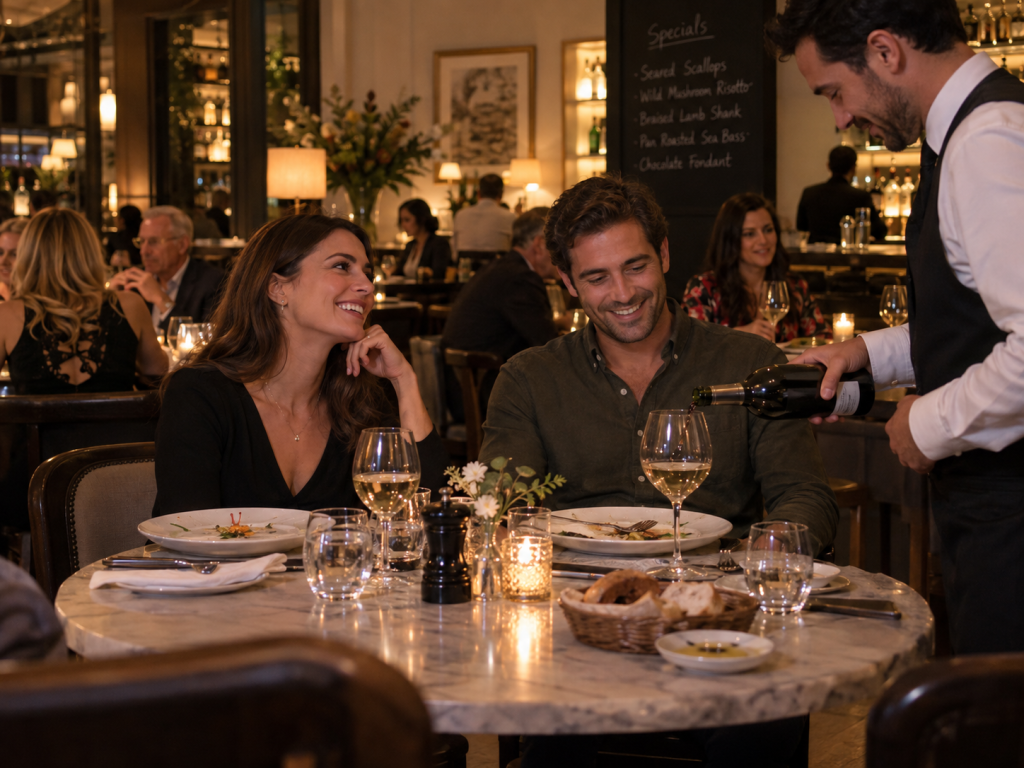
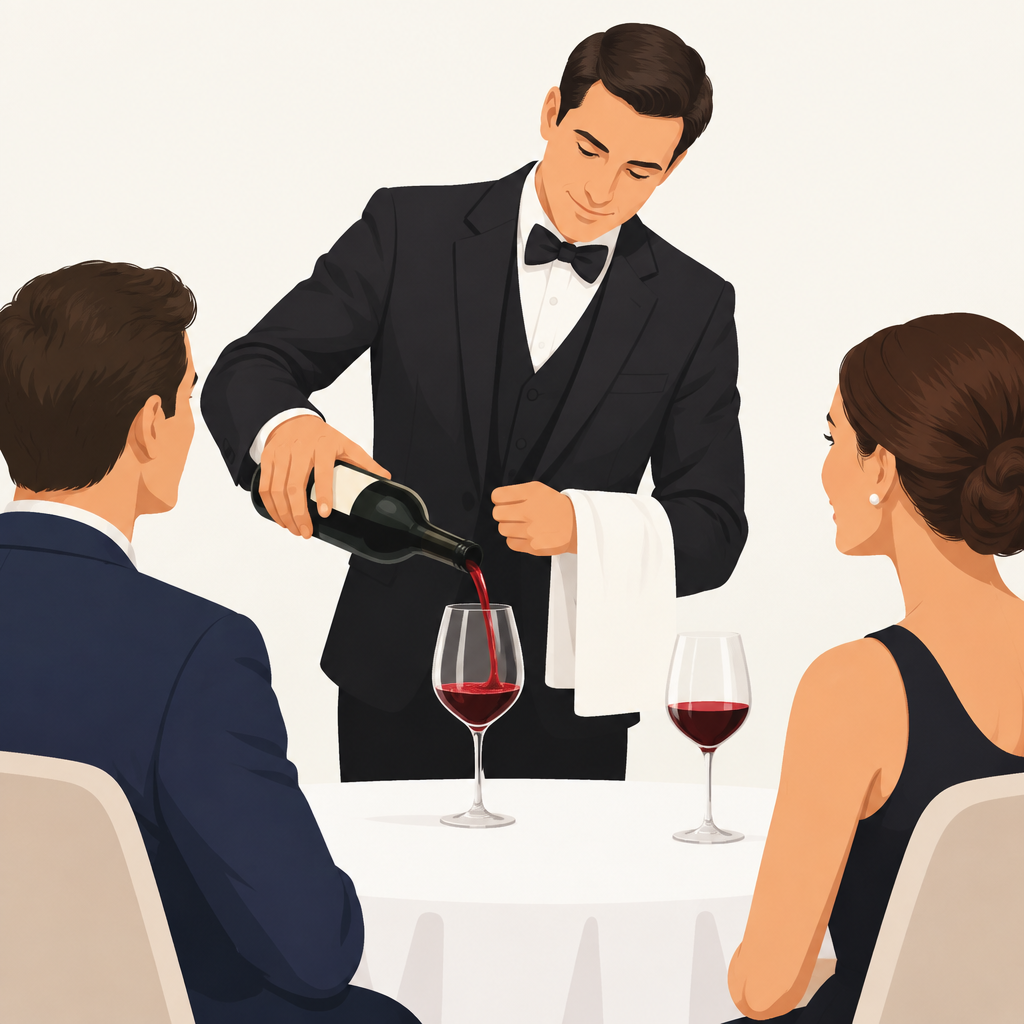
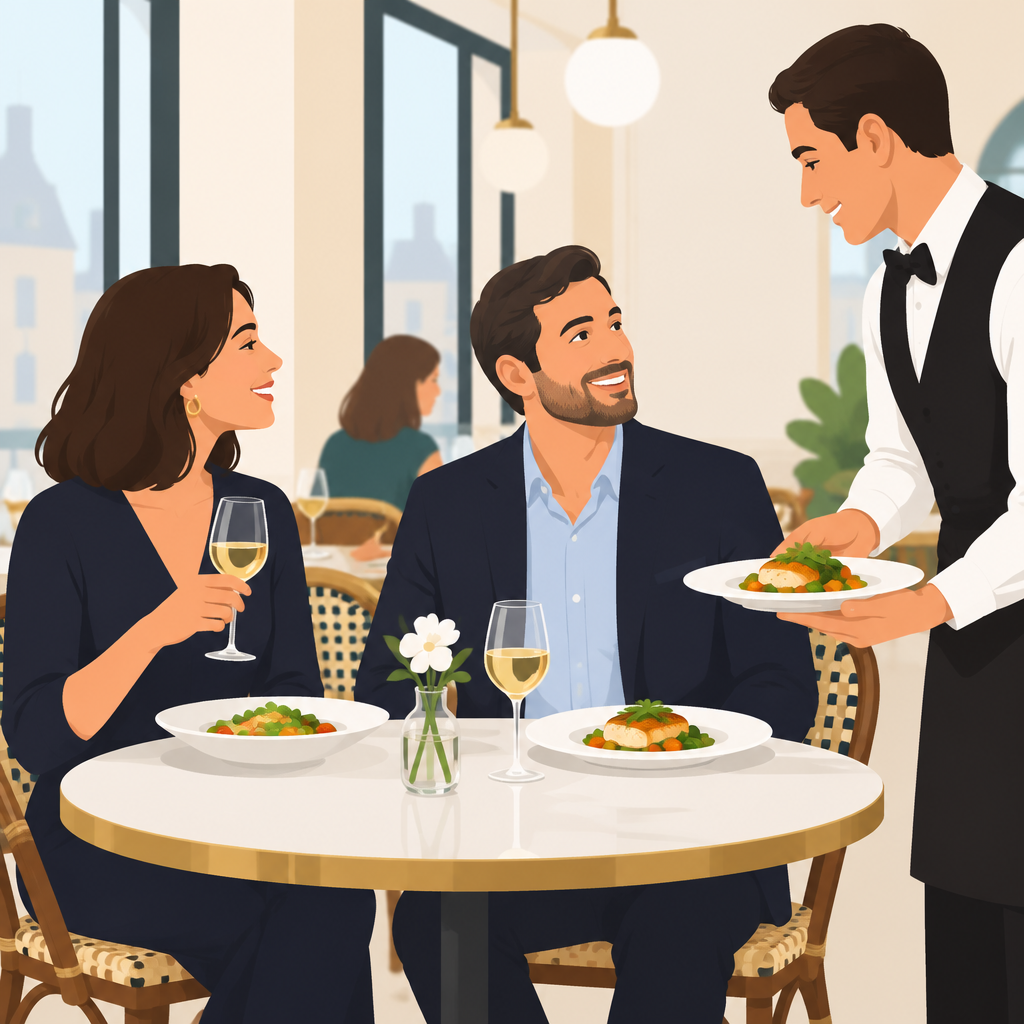
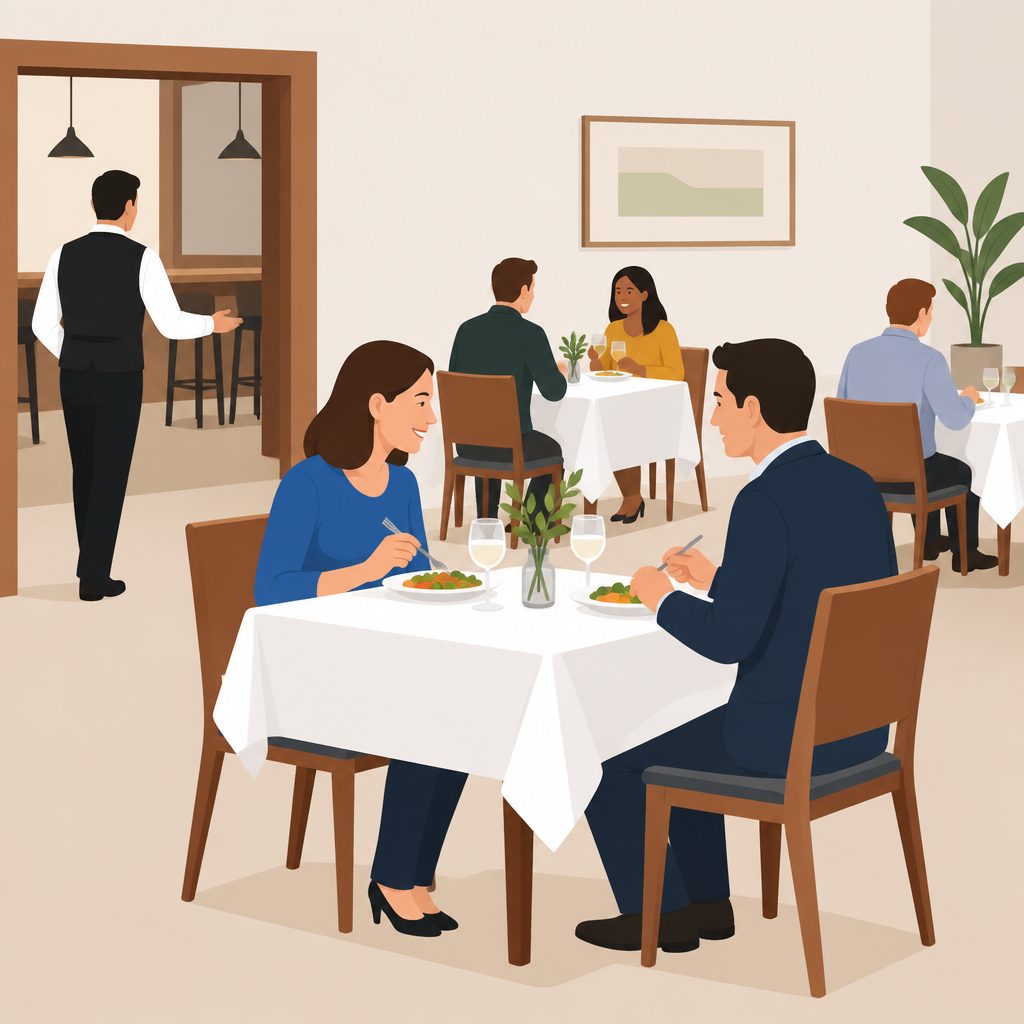
Look carefully at the photograph. It shows two people at a restaurant table, with a waiter serving them. Study the key words below, listen to the descriptions, and then work through the tasks — each one teaches you something you will use in the next.
📚 Key Vocabulary
These words will help you describe the photograph clearly and in detail.
🎧 Listen and read
Before: Before you listen, look at the key words above and try to guess what you will hear.
While listening: As you listen, notice the objects on the table and the actions of the three people.
After: After you listen, check: did you hear any of the key words used in a sentence?
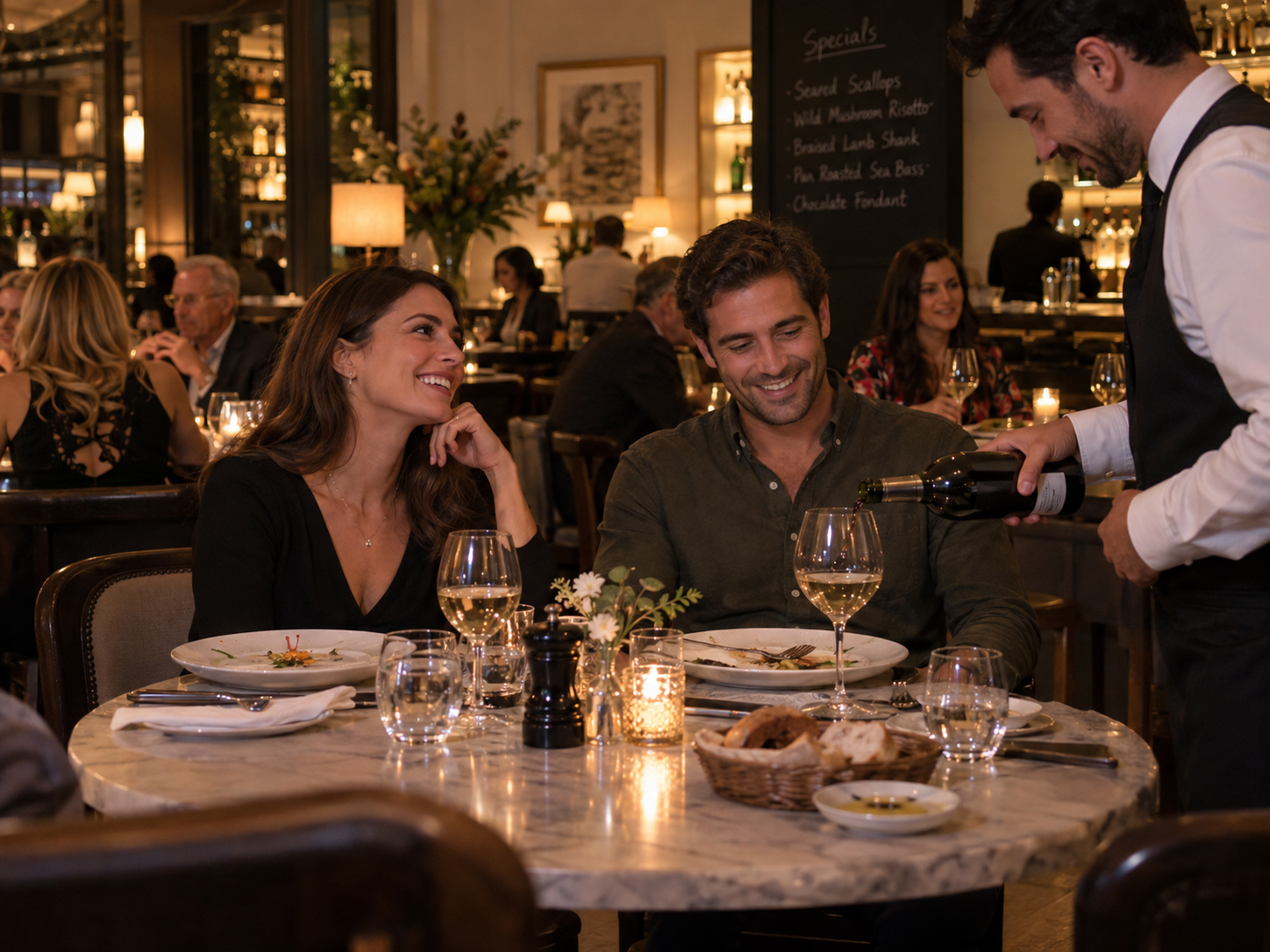
💡 Press play, then scroll back up to the photo. If the photo is off-screen, a copy floats at the bottom — tap it to enlarge.
 ×
📖 1 · Short description — read along
📖 2 · Full description — read along
📖 3 · The story behind the picture — read along
🧰 Your word bank
All the target words for this picture.
📚 Word bank
All the target words for this picture. Tap a word to hear it.
✍️ First look
Before you study anything, write what you can see in the photograph right now. Use your own words — there are no right or wrong answers at this stage. You will come back to this at the end and see how much your description has improved.
Step 1 · Naming Objects on a Restaurant Table
📚 VocabularyTo do this task, you need the names of the objects on the table and one detail about each one. A detail can be a colour, a material, or a size. Put the detail before the noun: ‘a wicker bread basket’, ‘a tall pepper grinder’. This is called an adjective + noun phrase. Look at the table in the photograph. It has many objects. Some are for eating, some are for drinking, and some are for decoration. When you write your list, name the object first, then add one detail. Open the ‘Objects’ toolkit below for a full list of names and useful collocations. Then write your eight phrases.
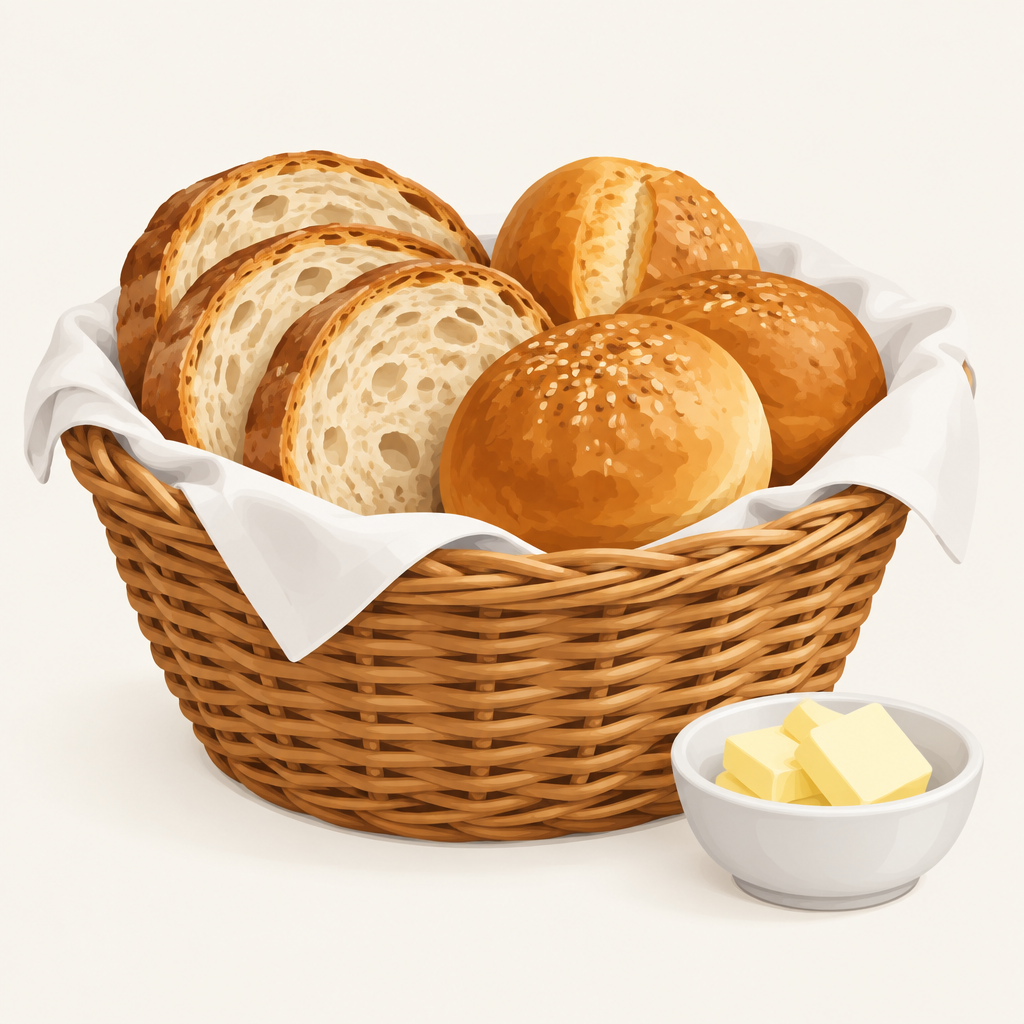
- a wicker bread basket in the centre of the table
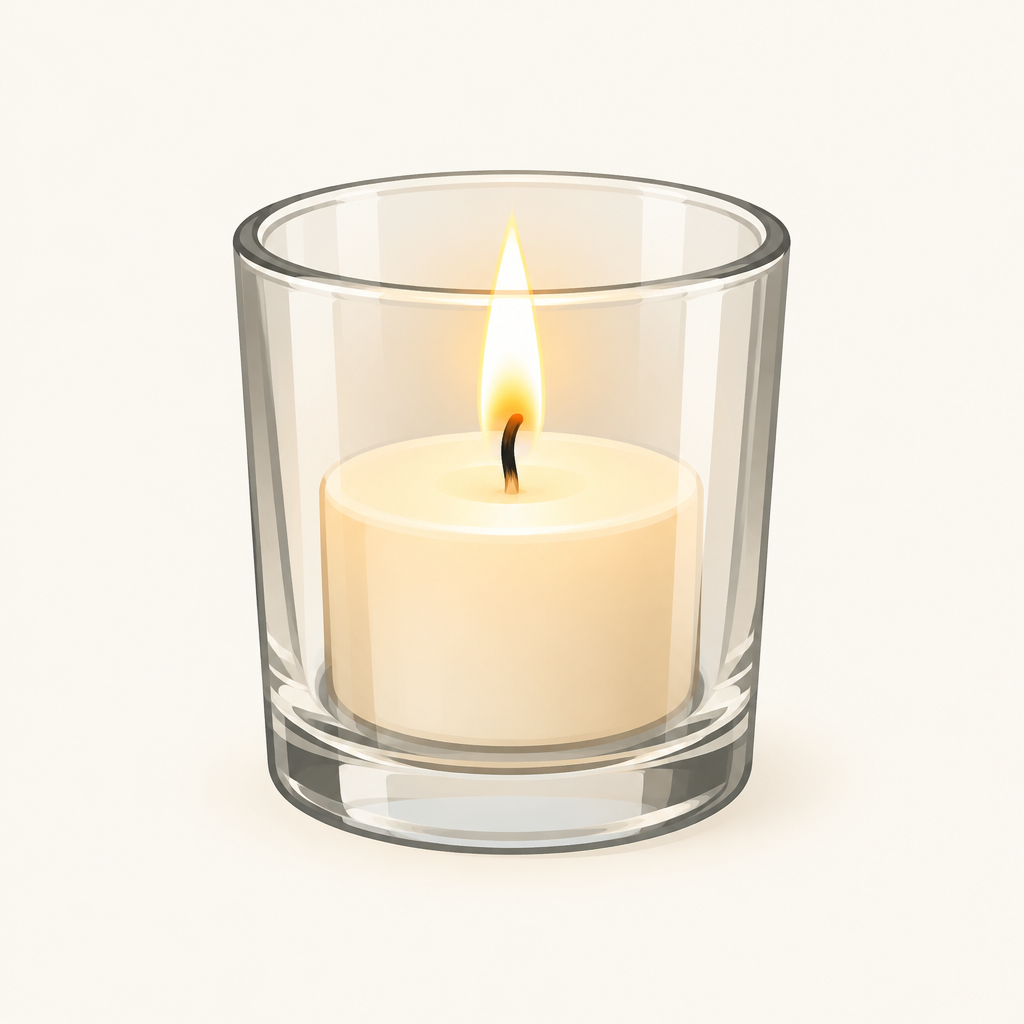
- a lit votive candle in a small amber glass holder
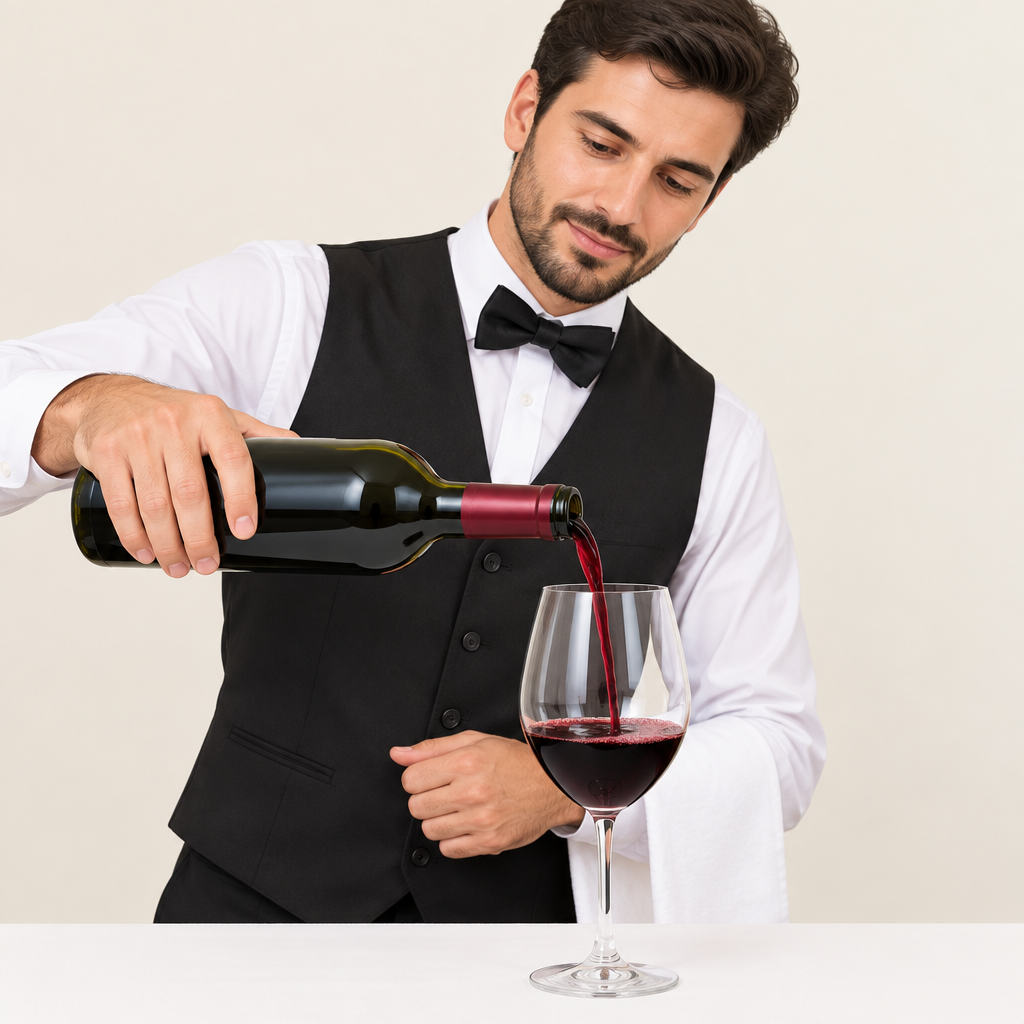
- a large-bowled stemmed wine glass being filled with white wine
🧰 Open the 'Objects' toolkit below for the full list of table items and their collocations.
→ Now write your list of at least eight objects — name each one and add one detail.
🔎 What you can see
| Object | Where | Describing words |
|---|---|---|
| marble table | centre foreground, occupying lower half of frame | round, white and grey veined, polished |
| wine glass ×5 | distributed across the table surface; one large-bowled glass centre-right is being filled; others at various positions around the table | large-bowled, long-stemmed, clear |
| wine bottle | upper right, held by the standing figure, tilted toward the glass | dark glass, label partially visible, tilted at pouring angle |
| dinner plate ×2 | one in front of the seated woman on the left side of the table; one in front of the seated man on the right side | white, round, with small portions of partially eaten food and garnish |
| bread basket | lower centre of the table | wicker, containing sliced bread rolls |
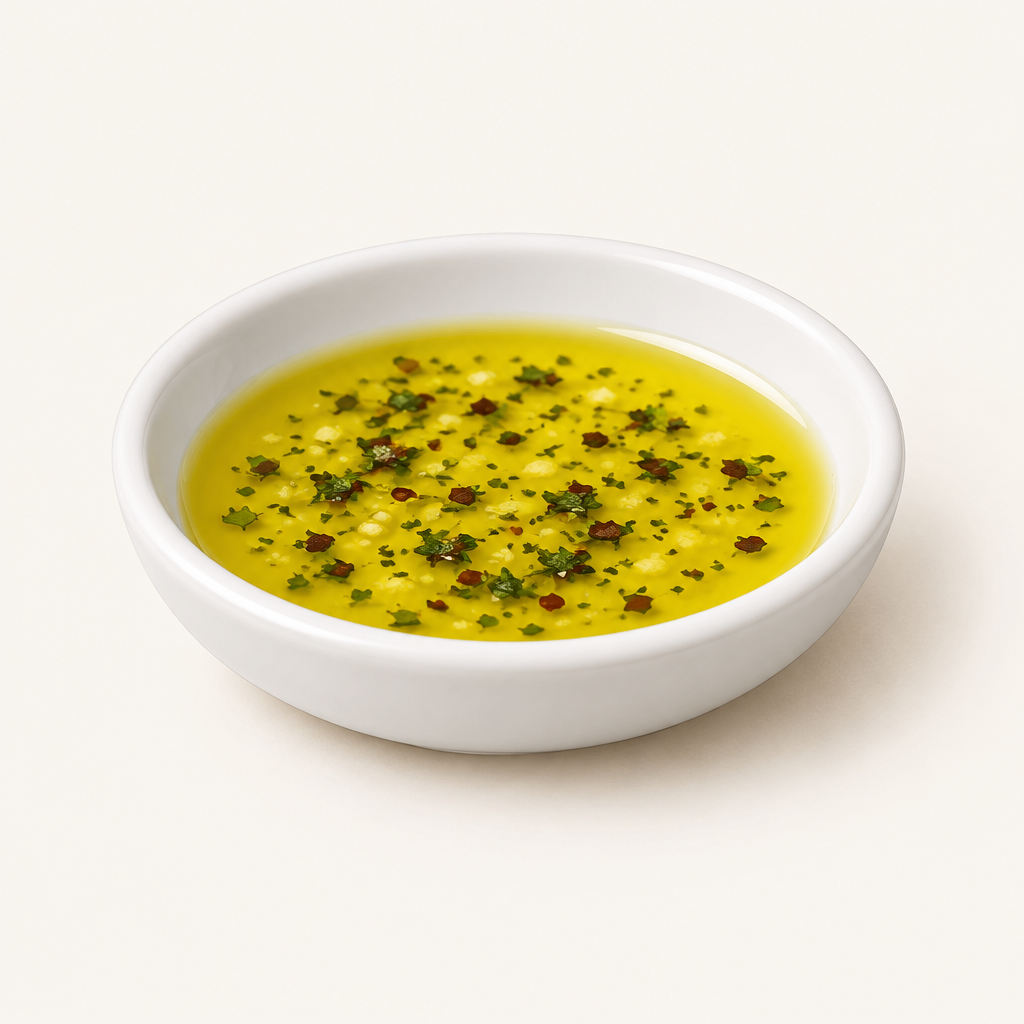
| dipping dish | lower centre of the table, beside the bread basket | small, white, containing pale liquid, likely olive oil |
| votive candle | centre of the table, inside a small amber glass holder | lit, small, amber glass holder |
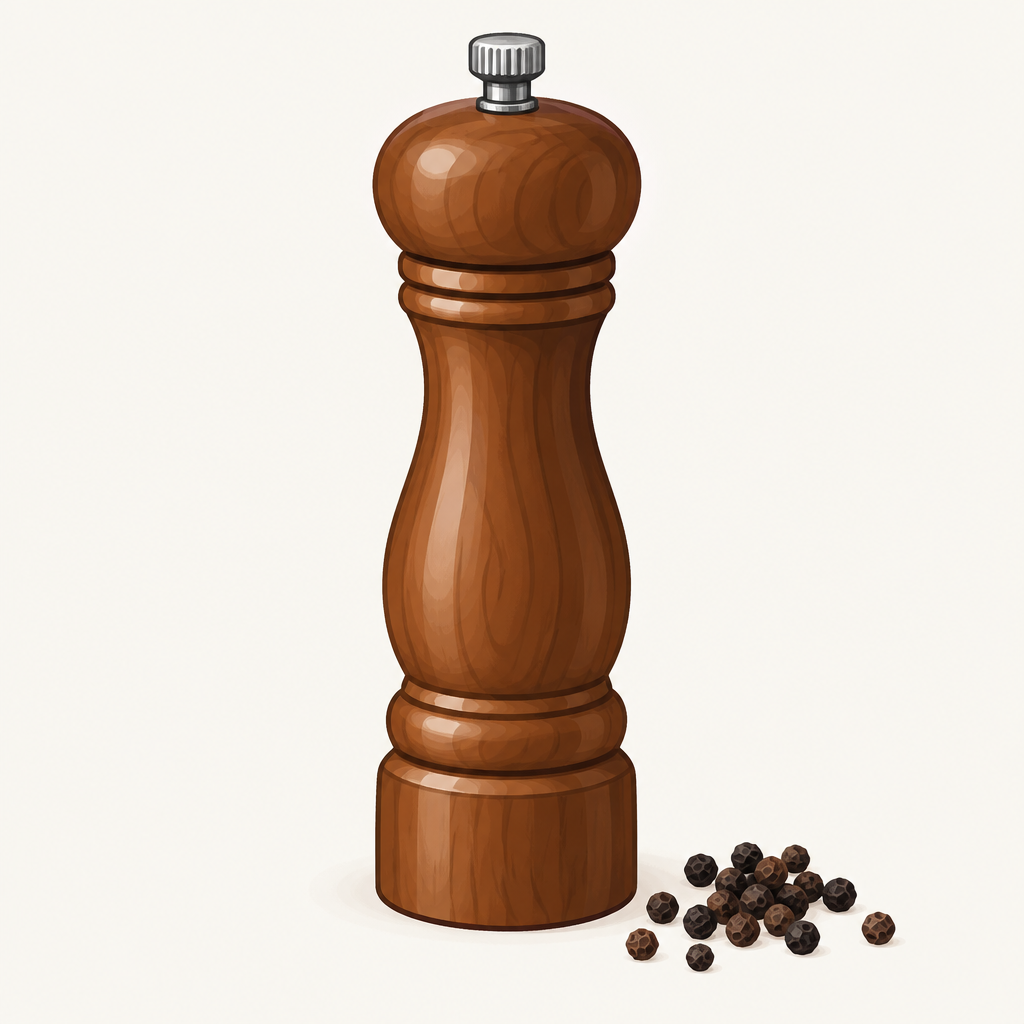
| pepper grinder | centre of the table, near the candle | tall, dark, cylindrical |
| floral arrangement | centre of the table, beside the candle | small, low, white flowers with green foliage |
| napkin ×2 | on each dinner plate, folded | white, cloth, folded |
| cutlery set ×2 | flanking each dinner plate on the table | silver-toned, knife and fork visible |
| water glass ×2 | on the table, lower left area and lower right area | short, clear, tumbler-style |
| chalkboard specials board | upper background, mounted on the wall behind and to the right of the seated figures | large, black, handwritten text in white chalk |
| restaurant chair ×3 | surrounding the main table; two occupied by the seated figures, one partially visible at lower left | upholstered, dark brown leather or faux leather, high-backed |
| tabletop lamp ×4 | background, on shelving units and side surfaces throughout the restaurant | small, cream or white shade, warm light |
| bottle shelf ×2 | upper background left and upper background right, behind the bar or display area | dark wood, backlit, holding multiple bottles |
| framed artwork | upper background centre, on the wall between the two shelving units | rectangular, gold or natural wood frame, pale-toned print or drawing |
| floral arrangement | background left, on a surface near the wall | large, mixed flowers and foliage, tall |
| background dining table ×4 | middle ground and background, occupied by other diners | smaller, with candles and glassware |
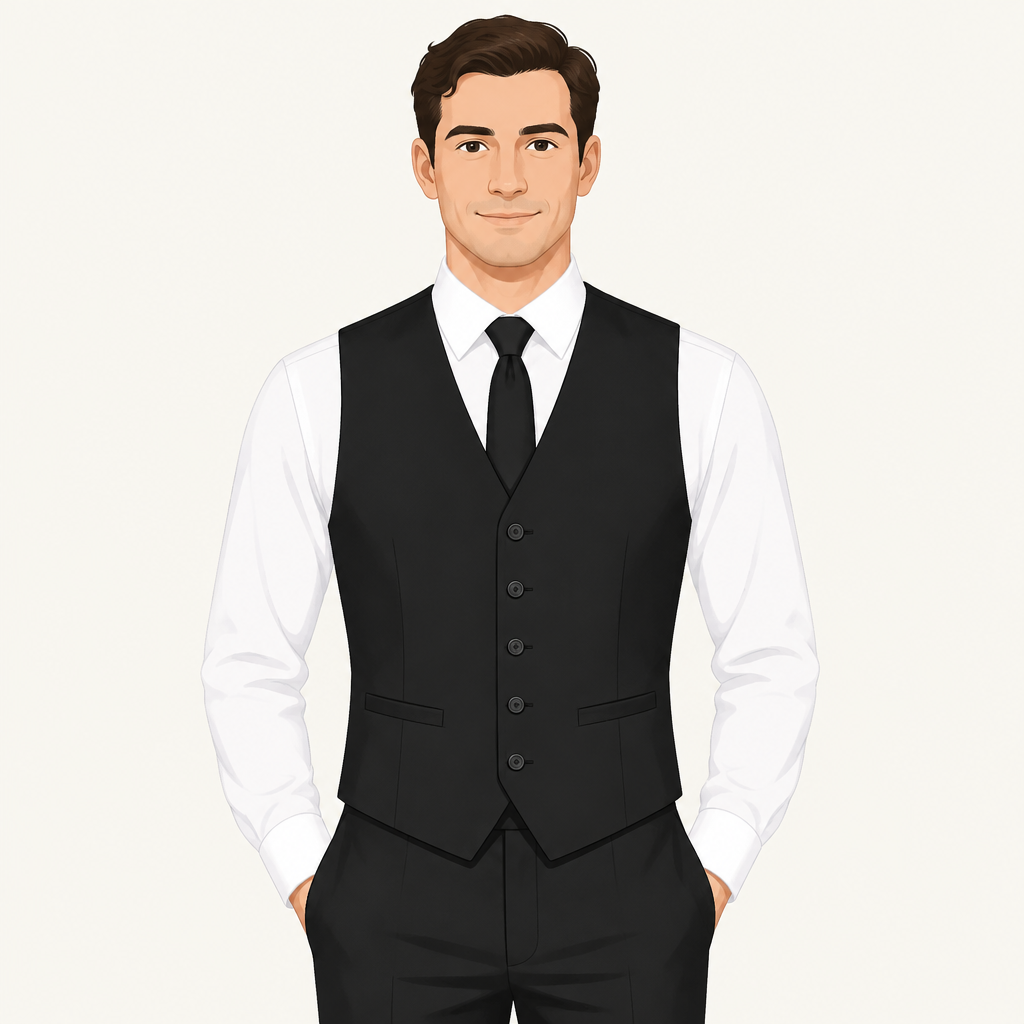
| waistcoat | worn by the standing figure on the right | dark grey or black, fitted, over white shirt |
Step 2 · Describing Colours, Materials, and Shapes
📚 VocabularyTo do this task, you need adjectives. Adjectives describe what something looks like. There are three useful types here: colour (white, dark, clear), material (marble, wicker, cloth), and shape or size (round, tall, long-stemmed). You can use one adjective or two together. When you use two, join them with ‘and’. Look at the objects in the photograph. The table has a smooth, polished surface. The napkins are white and folded. The chairs are dark and upholstered. Open the ‘Materials’ and ‘Palette’ toolkits below for more adjectives. Then choose five objects and write one sentence for each.
- The table is round and marble.
- The bread basket is wicker and natural tan in colour.
- The napkin is white and folded.
🧰 Open the 'Materials' and 'Palette' toolkits below for a full list of adjectives you can use.
→ Now choose five objects and write one sentence for each, using the patterns above.
🧱 Colours and materials
Ready-made phrases
| Object | Colour | Material | Texture |
|---|---|---|---|
| marble table | white with grey veining | marble | smooth, polished |
| dinner plate | white | ceramic | smooth |
| wine glass | clear | glass | smooth |
| wine bottle | dark green-black | glass | smooth |
| restaurant chair | dark brown | leather or faux leather upholstery on a dark wood frame | smooth upholstery |
| napkin | white | cloth | soft, folded |
| pepper grinder | dark black | wood or composite | smooth |
| bread basket | natural tan | wicker | woven, textured |
| votive candle holder | amber | glass | smooth |
| waistcoat | dark grey or black | fabric | smooth |
| chalkboard | black with white chalk text | board | matte |
🎨 Language palette
A warmly lit, busy restaurant interior in which two adults at a set marble table are having wine poured into a glass by a standing figure in server attire.
The things you must name
Useful supporting words
In the background
Describing words — Colour
Describing words — Size and shape
Describing words — Texture and material
Describing words — Condition
Describing words — Overall feel
Saying where things are
More position phrases
What things are doing
Words that go together
Compound nouns
- The ___ is ___.
- The ___ is ___ and ___.
- The ___ is ___ and ___.
- The ___ is ___.
- The ___ is ___.
Step 3 · Describing Actions Right Now
🔧 Grammar — present continuousTo do this task, you need the present continuous tense. We use this tense for actions that are happening at this moment. The form is: subject + is/are + verb-ing. Look at the three people in the photograph. Each one is doing something right now. The waiter is holding the bottle with both hands and is pouring white wine. The man is looking down at his glass and is smiling. The woman is resting her chin on her right hand and is facing the waiter. Notice that ‘is’ changes to ‘are’ for plural subjects. Open the ‘People’ toolkit below for more action verbs.
- The waiter is pouring white wine into the glass in front of the seated man.
- The woman is resting her chin on her right hand and is smiling at the waiter.
- The man is looking down at his wine glass and is smiling.
🧰 Open the 'People' toolkit below for a list of action verbs visible in the photograph.
→ Now write three or four sentences — one for each person — describing what they are doing right now.
🧍 Who is doing what
- The seated woman rests her chin on her right hand and faces the standing figure with her mouth open in a wide smile.
- The seated man looks downward toward his wine glass as it is being filled, with his mouth curved upward.
- The standing figure holds a wine bottle with both hands and pours white wine into the glass in front of the seated man.
Step 4 · Describing How Things Are Arranged
🔧 Grammar — present simple passive and present continuous passiveTo do this task, you need the passive voice. We use the passive when we want to focus on the object, not the person doing the action. The present simple passive is: is/are + past participle. For example: ‘The napkin is folded.’ The present continuous passive is: is/are + being + past participle. For example: ‘Wine is being poured.’ Look at the table. The napkins are folded on the dinner plates. The bread basket is placed in the centre. The table is made of marble. These sentences all focus on the thing, not the person. Open the ‘Materials’ and ‘Where’ toolkits below for useful words.
- The bread basket is placed in the centre of the table, beside the votive candle.
- The table is made of smooth, polished marble.
- Wine is being poured into the large-bowled stemmed glass in front of the seated man.
🧰 Open the 'Materials' and 'Where' toolkits below for place phrases and material words to use in your sentences.
→ Now write four or five passive sentences describing how the table and restaurant are set up.
🧱 Colours and materials
Ready-made phrases
| Object | Colour | Material | Texture |
|---|---|---|---|
| marble table | white with grey veining | marble | smooth, polished |
| dinner plate | white | ceramic | smooth |
| wine glass | clear | glass | smooth |
| wine bottle | dark green-black | glass | smooth |
| restaurant chair | dark brown | leather or faux leather upholstery on a dark wood frame | smooth upholstery |
| napkin | white | cloth | soft, folded |
| pepper grinder | dark black | wood or composite | smooth |
| bread basket | natural tan | wicker | woven, textured |
| votive candle holder | amber | glass | smooth |
| waistcoat | dark grey or black | fabric | smooth |
| chalkboard | black with white chalk text | board | matte |
📍 Where things are
- The seated woman is positioned to the left of the seated man at the round table.
- The standing figure leans in to the right of the seated man, pouring wine.
- The wine bottle is held above the wine glass, tilted at a pouring angle.
- The bread basket sits in the centre of the table between the two place settings.
- The lit votive candle sits beside the small floral arrangement at the centre of the table.
- The tall pepper grinder stands next to the votive candle near the centre of the table.
- A dinner plate with a folded napkin sits in front of each seated figure.
- The chalkboard specials board is mounted on the wall directly behind the seated figures.
- Backlit bottle shelving is visible on either side of the framed artwork in the background.
- A large floral arrangement stands in the background to the left of the main table.
- Several other diners are seated at tables behind the main table and its occupants.
- Short water glasses are placed at the edges of the table near each place setting.
- The small dipping dish is placed beside the bread basket in the lower centre of the table.
- Cutlery is laid on either side of each dinner plate.
- Small tabletop lamps are distributed throughout the background of the restaurant.
- The ___ is placed ___.
- The ___ is made of ___.
- The ___ is folded ___.
- Wine is being poured ___.
- The ___ is decorated with ___.
🏁 Put It All Together
You have now practised naming objects, describing colours and materials, using the present continuous for actions, and using the passive for arrangements. Your final description should bring all of this together in one clear, detailed paragraph of 120–160 words.
- ☐ Name at least six objects on the table using precise nouns (diner, waiter, bread basket, votive candle, pepper grinder, stemmed wine glass)
- ☐ Use at least three adjectives for colour, material, or shape (marble, upholstered, folded, wicker)
- ☐ Use the present continuous for at least two actions that are happening right now (is pouring, is smiling)
- ☐ Use at least one passive sentence to describe how something is arranged or made (is placed, is made of, is being poured)
💬 Discussion
• Do you enjoy eating in candlelit restaurants? What kind of atmosphere do you prefer when you go out for a meal?
• When a waiter pours wine or brings food to the table, do you think tableside service makes a meal feel more special? Why or why not?
• If you could choose anything from a chalkboard specials menu, what kind of dish would you order — and why?
Member-Exclusive Practice Bar
Access a wide range of integrated practice for this unit — from Vocabulary and Grammar activities to AI-curated Writing tasks and Thematic Chat practice.
This feature is available to YSP members.
Explore Membership BenefitsMember-Exclusive Vocabulary Review & Acquisition System
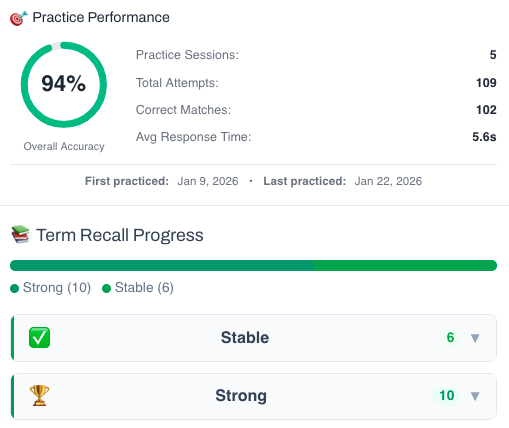
This isn’t a simple quiz — it’s a fully tracked learning system. You build knowledge through recognition, then recall, and your progress feeds directly into the Integrated Practice Bar (Writing tasks, AI Chat, and more).
- Practice sessions, accuracy, and response-time tracking
- Term strength levels (Learning → Stable → Strong)
- Personal progress history for each unit
This feature is available to YSP members.
Explore Membership Benefits📐 Where things are — positional language for images