🎧 Listen to Marco's Story
Comprehension Check: Starting Over in Berlin
Answer the questions based on what you heard in the audio.
According to the audio, what type of business did Marco work for in Milan?
What was included in Marco's benefits package for his new job?
According to the audio, what physical problem did Marco experience during meetings?
Why did Marco find his German colleagues' communication style rude at first?
What did people do at lunchtime in the Berlin office that Marco found strange?
According to the audio, where did Marco live when he was in Milan?
Why did Marco need to budget carefully in his first year in Berlin?
How long did it take Marco to start feeling more confident speaking English?
What did Marco learn about his colleagues' direct communication style?
According to the audio, by what percentage did Marco's manager increase his base salary?
What did Marco do to help adapt to the Berlin lifestyle?
According to the audio, when did Marco used to call his mother?
What did Marco's mother worry about?
What is the main lesson Marco learned from his experience?
Based on the audio, what advantage did Marco discover about German work culture?
Which of these two summaries best captures the main points of the audio?
📰 Starting Over in Berlin (B1)
Test Your Understanding & Learn Vocabulary
Answer each question to reveal its vocabulary explanation:
In the sentence ‘A German technology company offered him a management position with a competitive salary’, what does ‘competitive salary’ mean?
What does ‘base salary’ mean?
In the sentence ‘He had to budget carefully to make ends meet in the first year’, what does ‘make ends meet’ mean?
What does ‘get used to’ mean?
In the sentence ‘Marco used to work for a small family business in Milan’, ‘used to’ indicates that Marco…
What does ‘household expenses’ mean?
In the sentence ‘The German workplace culture was very different too’, what does ‘work culture’ refer to?
‘Direct communication’ could be replaced with which phrase?
What does ‘budget carefully’ mean?
In the sentence ‘His performance review was excellent, and his manager increased his base salary by ten percent’, what is a ‘performance review’?
What does ‘adaptation’ mean?
In the sentence ‘The cost of living was another challenge’, what does ‘cost of living’ refer to?
What does ‘benefits package’ mean?
‘Management position’ could be replaced with which phrase?
In the sentence ‘He was used to a more indirect approach where people would hint at problems rather than stating them clearly’, what does ‘indirect approach’ mean?
Member-Exclusive Vocabulary Review & Acquisition System
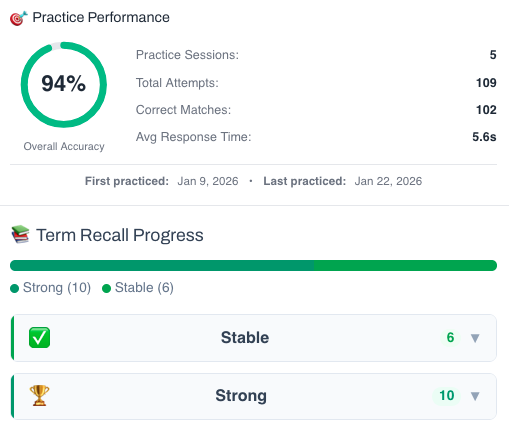
This isn’t a simple quiz — it’s a fully tracked learning system. You build knowledge through recognition, then recall, and your progress feeds directly into the Integrated Practice Bar (Writing tasks, AI Chat, and more).
- Practice sessions, accuracy, and response-time tracking
- Term strength levels (Learning → Stable → Strong)
- Personal progress history for each unit
This feature is available to YSP members.
Explore Membership BenefitsMember-Exclusive Cloze Test
Fill in the gaps to complete authentic passages and reinforce your vocabulary in context.
This feature is available to YSP members.
Explore Membership BenefitsMember-Exclusive Cloze Test
Fill in the gaps to complete authentic passages and reinforce your vocabulary in context.
This feature is available to YSP members.
Explore Membership BenefitsMember-Exclusive Sentence Builder
Reconstruct scrambled sentences to practice word order and develop your grammar intuition.
This feature is available to YSP members.
Explore Membership Benefits