Get 101: Mastering English’s Most Versatile Verb
Core PathWay
1 Section 1. GET: The Swiss Army Knife of English Verbs
If you’ve been learning English for a while, you’ve probably noticed that native speakers use get constantly in conversation. There’s a good reason: GET is incredibly flexible and can replace many more formal verbs in everyday speech. While your textbook might teach you to say ‘I received your email,’ most English speakers would naturally say ‘I got your email.’ This isn’t lazy English – it’s just how the language works in real, informal communication.
By the end of this lesson, you’ll understand when and how to use GET naturally, making your English sound more fluent and less textbook-like. You’ll be able to handle everyday conversations, informal business chats, and casual emails with confidence. This matters because in most workplace situations – team meetings, quick conversations with colleagues, instant messages – informal English is the norm, not the exception.
Let’s start with the basics. GET commonly replaces these formal verbs:
Receive → GET: ‘Did you get my message?’ (instead of ‘Did you receive my message?’)
Buy → GET: ‘I need to get some coffee’ (instead of ‘I need to buy some coffee’)
Obtain → GET: ‘Where can I get that information?’ (instead of ‘Where can I obtain that information?’)
Fetch → GET: ‘Can you get the files from the printer?’ (instead of ‘Can you fetch the files?’)
Understand → GET: ‘I don’t get what you mean’ (instead of ‘I don’t understand what you mean’)
Earn → GET: ‘She gets a good salary’ (instead of ‘She earns a good salary’)
Become → GET: ‘He got really angry’ (instead of ‘He became really angry’)
Arrive → GET: ‘What time did you get to the office?’ (instead of ‘What time did you arrive at the office?’)
Notice a pattern? In each case, GET sounds more natural and conversational. The formal verb isn’t wrong – you’d still use ‘receive’ in a formal letter or ‘obtain’ in an official document – but in daily communication, GET is your go-to choice. Think of it this way: if you’re speaking face-to-face with a colleague or writing a quick email to your team, GET is almost always the better choice.
Key Terms
2 Section 2. GET + Adjective: Talking About Changes
Now let’s explore one of the most useful patterns in English: GET + adjective. This combination describes a state change – when something or someone moves from one condition to another. The key word here is ‘change.’ If something stays the same, you don’t use GET. If it’s changing, GET is perfect.
Look at this example: ‘It’s getting dark.’ What’s happening? The sky is changing from light to dark. The change is happening right now, which is why we use the present continuous (am/is/are + getting). This pattern works with dozens of adjectives to describe all kinds of changes:
‘I’m getting tired‘ – You weren’t tired before, but now you’re becoming tired. The change is happening as you speak.
‘The weather is getting better‘ – Yesterday was bad, today is improving. The change is in progress.
‘My English is getting worse!’ – (Don’t worry, it’s probably not!) This describes a negative change over time.
‘We’re getting ready for the meeting’ – You’re in the process of preparing. The change from ‘not ready’ to ‘ready’ is happening now.
‘He’s getting angry‘ – You can see his mood changing. He wasn’t angry five minutes ago, but now the anger is building.
Here’s the formula: subject + am/is/are + getting + adjective
This works for physical changes (‘It’s getting cold’), emotional changes (‘I’m getting frustrated’), and situational changes (‘Traffic is getting heavy’). The present continuous emphasizes that the change is happening right now or over a current period of time.
Compare these:
‘It’s dark’ (describing the current state – no change)
‘It’s getting dark’ (describing the change happening now)
The first just describes what you see. The second describes the process of change. In conversation, native speakers use this pattern constantly because life is full of changes, and GET + adjective is the most natural way to talk about them. You’ll hear it everywhere: ‘I’m getting hungry,’ ‘This is getting complicated,’ ‘She’s getting better at presentations.’ Once you start noticing it, you’ll realize it’s one of the most common patterns in spoken English.
Key Terms
3 Section 3. Essential GET Phrasal Verbs for Business
Phrasal verbs are where GET really shows its power. A phrasal verb combines GET with a preposition or adverb to create a completely new meaning. For business professionals, these ten GET phrasal verbs are absolutely fundamental. You’ll use them in meetings, emails, phone calls, and everyday workplace conversations.
Get back (to someone/something) – to return to a person, place, or task; or to reply to someone later
‘I’ll get back to you tomorrow with those figures.’
‘When did you get back from the conference?’
Get on with (something) – to continue doing something, especially work
‘Let’s get on with the presentation.’
‘I need to get on with this report.’
Get through (something) – to complete something difficult; or to successfully contact someone by phone
‘We need to get through all these emails today.’
‘I can’t get through to the client – the line is busy.’
Get over (something) – to recover from something difficult or unpleasant
‘It took me a week to get over that cold.’
‘The team needs time to get over the disappointment.’
Get along with (someone) – to have a good relationship with someone
‘Do you get along with your new manager?’
‘She gets along with everyone in the office.’
Get around to (something) – to finally do something you’ve been planning to do
‘I haven’t got around to reading that report yet.’
‘When will you get around to fixing the printer?’
Get across (something) – to successfully communicate an idea or message
‘I’m not sure I got my point across in the meeting.’
‘How can we get this message across to the team?’
Get down to (something) – to start doing something seriously
‘Let’s get down to business.’
‘We need to get down to the details.’
Get out of (something) – to avoid doing something you don’t want to do
‘He always tries to get out of difficult tasks.’
‘I can’t get out of the meeting tomorrow.’
Get by – to manage to live or do something with difficulty, but successfully
‘My English isn’t perfect, but I can get by in meetings.’
‘We’ll get by without that software for now.’
These phrasal verbs are the ones you’ll hear and use most often in professional settings. Native speakers use them automatically, and once you start using them too, your English will sound significantly more natural and confident.
Key Terms
4 Section 4. Recap: Putting GET to Work
You’ve now covered the essential uses of GET that will transform your everyday English. Let’s quickly review what you can do now.
First, you understand that GET replaces formal verbs in conversation. Instead of saying ‘I received your email,’ you can naturally say ‘I got your email.’ Instead of ‘Where can I obtain that information?’ you ask ‘Where can I get that information?’ This single change makes your English sound immediately more natural and less textbook-like.
Second, you can describe changes using GET + adjective in the present continuous. When the weather changes, you say ‘It’s getting cold.’ When you’re becoming tired, you say ‘I’m getting tired.’ When your skills improve, you say ‘I’m getting better.’ This pattern helps you talk about any change happening right now.
Third, you’ve learned ten essential phrasal verbs that business professionals use constantly. You can tell a colleague ‘I’ll get back to you tomorrow,’ suggest ‘Let’s get down to business,’ or explain ‘I need to get through these emails.’ These phrases appear in meetings, phone calls, and messages every single day.
Next time you speak or write in English:
Remember: GET isn’t lazy English – it’s natural English. The more comfortable you become with these patterns, the more confident and fluent you’ll sound in everyday professional communication. You’ve got this!
Use the VAS to build solid recognition and recall of the terms below.
✔ Every correct Match = +1 point
✔ Every correct Recall = +2 points
🎓 Reach 5 points with good accuracy and the term is automatically promoted to your Personal Dictionary.
Incorrect answers lower accuracy, meaning more correct Matches or Recalls may be needed to reach promotion.
Member-Exclusive Vocabulary Review & Acquisition System
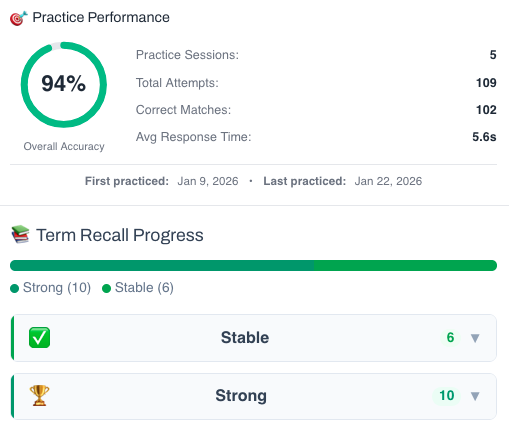
This isn’t a simple quiz — it’s a fully tracked learning system. You build knowledge through recognition, then recall, and your progress feeds directly into the Integrated Practice Bar (Writing tasks, AI Chat, and more).
- Practice sessions, accuracy, and response-time tracking
- Term strength levels (Learning → Stable → Strong)
- Personal progress history for each unit
This feature is available to YSP members.
Explore Membership BenefitsMember-Exclusive Practice Bar
Access a wide range of integrated practice for this unit — from Vocabulary and Grammar activities to AI-curated Writing tasks and Thematic Chat practice.
This feature is available to YSP members.
Explore Membership Benefits📝 Complete the Text
Managing work and communication challenges
B1Complete the text by typing the missing words. There are 2 extra words in the word bank that you won't use.
📚 Word Bank
Maria writes about the challenges she faces in her new job and how she manages to cope with difficult situations.
Last month, I had to (3) a difficult training program. It took me three attempts to pass the final test, but I finally succeeded! My biggest problem is trying to (4) my ideas during team meetings. Sometimes I struggle to explain my thoughts clearly, especially when we’re discussing technical topics.
My supervisor said she would (5) me next week about a new project. I’m looking forward to it because I really want to (6) this routine work and do something more creative. Despite the challenges, I (7) most of my teammates, which makes everything easier.
Member-Exclusive Cloze Test
Fill in the gaps to complete authentic passages and reinforce your vocabulary in context.
This feature is available to YSP members.
Explore Membership BenefitsMember-Exclusive Cloze Test
Fill in the gaps to complete authentic passages and reinforce your vocabulary in context.
This feature is available to YSP members.
Explore Membership BenefitsSentence Scrambler
Get 101 – Sentence Scramble
Member-Exclusive Sentence Builder
Reconstruct scrambled sentences to practice word order and develop your grammar intuition.
This feature is available to YSP members.
Explore Membership Benefits