Module code: 910

📚 The Novelist

Module image

The Novelist: Present Tenses

🎧 Emma's Novel – Chapter 4

📖 The Novel That Wouldn’t Come – Part Four: Hollywood Calls (B1)

Today, Emma is sitting in a hotel room in Hollywood. She is waiting for a meeting with a major film studio at 4pm. She writing an email to a friend about everything that has happened since she arrived in America.Let’s listen to her email

I have been in Los Angeles for five days now. I have been staying at this hotel near Beverly Hills. The weather has been amazing. It is sunny every single day. I usually wake up early because of the time difference. I am still getting used to it.

I have met so many interesting people since I got here. On Monday, I met the producer who contacted me about the film rights. She has been working in Hollywood for twenty years. She has produced some really successful movies. We had lunch together and she told me about her ideas for my novel. I have been thinking about our conversation ever since.

Yesterday, I visited the studio where they will film the movie. It is huge. I have never seen anything like it before. They have different sets for different scenes. I have been imagining how my characters will look on screen. The director has already chosen some actors. He usually works with the same team. He has made five films in the past three years.

I have been reading the script that the screenwriter sent me. She has adapted my novel really well. She has kept all the important scenes. She has changed some dialogue to make it work better for film. I have sent her my comments. She will revise the script next week. We will have another meeting before I go back to England.

The studio executives have been very welcoming. They have taken me to several restaurants. Americans are usually very friendly. Last night, we went to a place in Santa Monica. I have been eating too much since I arrived. The portions here are enormous. I will need to go to the gym when I get home.

I have also been doing some interviews with journalists. One magazine has already published an article about me. A newspaper will print another interview tomorrow. The publicity team has arranged three more interviews for next week. They usually do this when a book becomes a film. It helps to build interest.

I have been feeling quite nervous about the meeting this afternoon. The studio will make the final decision about the budget. They will decide how much money to invest in the film. The producer has told me not to worry. She has been very confident from the beginning. She believes the film will be successful.

I have been practicing what I will say in the meeting. I usually feel more comfortable when I prepare. I have written down some key points. I have been rehearsing them in front of the mirror. I know it sounds silly, but it helps me feel ready.

Since I won the Riverside Prize, my life has changed completely. I have been traveling constantly. I have given talks at universities. I have attended book festivals. Publishers in other countries have bought the translation rights. My novel has been translated into twelve languages. I have been receiving emails from readers all over the world.

But I have also been working on my second novel. I usually write in the mornings. I have been writing for two hours every day, even here in Los Angeles. I have completed six chapters so far. I have been finding it easier this time. I am not doubting myself as much as I did with the first book.

My agent has been handling all the business side of things. She has negotiated the film contract. She has been dealing with the foreign publishers. She has been amazing. I usually let her make the decisions about money and contracts. She has much more experience than me.

I have been thinking a lot about how far I have come. Two years ago, I was struggling to finish my manuscript. Now I am sitting in Hollywood discussing a film adaptation. It still feels unreal sometimes. I have been reminding myself to enjoy every moment.

The meeting is in two hours. I am getting ready now. I will call you afterwards and tell you everything that happens. I have been looking forward to this moment for weeks. I am excited but also a bit scared. I think that is normal. Wish me luck.

Grammar Investigation

Answer each question to reveal the grammar explanation:

On Monday, I met the producer who contacted me about the film rights.

In the sentence ‘On Monday, I met the producer who contacted me about the film rights’, why do we use Past Simple?

Since I won the Riverside Prize, my life has changed completely.

Why does the story say ‘my life has changed completely’ and not ‘my life changed completely’?

I have been staying at this hotel near Beverly Hills.

In ‘I have been staying at this hotel near Beverly Hills’, what does the Present Perfect Continuous show?

Today, Emma is sitting in a hotel room in Hollywood.

In the sentence ‘Today, Emma is sitting in a hotel room in Hollywood’, the Present Continuous is used to show…

I usually wake up early because of the time difference.

What does ‘usually’ show in ‘I usually wake up early because of the time difference’?

The studio will make the final decision about the budget.

In ‘The studio will make the final decision about the budget’, what does ‘will’ express?

📚 Grammar Reference

PAST SIMPLE

Structure: regular verbs: base + -ed; irregular verbs: special past form

Pattern: subject + past form of verb

What it expresses: completed actions at specific times in the past

When to use: when the time is stated or understood; for finished actions with no connection to present

Examples in story: 12

PRESENT PERFECT SIMPLE

Structure: have/has + past participle

Pattern: subject + have/has + past participle

What it expresses: completed actions with present relevance; life experiences up to now; recent actions with current results

When to use: when time is not specified or not important; for experiences in life; for actions that have present results

Examples in story: 22

PRESENT PERFECT CONTINUOUS

Structure: have/has + been + verb-ing

Pattern: subject + have/has + been + present participle

What it expresses: ongoing activities from past continuing to present; repeated actions over a period; activities with visible present results

When to use: to emphasize duration or repetition; for temporary situations; when the activity itself is important, not just the result

Examples in story: 18

PRESENT CONTINUOUS

Structure: am/is/are + verb-ing

Pattern: subject + am/is/are + present participle

What it expresses: actions happening at the moment of speaking; temporary situations; changing situations; future arrangements

When to use: for actions in progress now; for temporary states; with ‘always’ for annoying habits

Examples in story: 12

USUALLY

Structure: adverb of frequency + present simple verb

Pattern: subject + usually + base verb / subject + verb + usually

What it expresses: habitual actions; typical behavior; general truths about behavior patterns

When to use: to describe regular habits and routines; to describe typical characteristics

Examples in story: 8

WILL

Structure: will + base form of verb

Pattern: subject + will + base verb

What it expresses: future plans and arrangements; predictions; promises; spontaneous decisions; offers

When to use: for future actions decided at moment of speaking; for predictions; for scheduled future events; for promises

Examples in story: 17

🧩 1. VAS
Vocabulary Acquisition System
🎯 Main event Vocabulary Acquisition System Build recognition and recall using Matching & Recall practice modes

Use the VAS to build solid recognition and recall of the terms below.

✔ Every correct Match = +1 point
✔ Every correct Recall = +2 points

🎓 Reach 5 points with good accuracy and the term is automatically promoted to your Personal Dictionary.

Incorrect answers lower accuracy, meaning more correct Matches or Recalls may be needed to reach promotion.

🔒

Member-Exclusive Vocabulary Review & Acquisition System
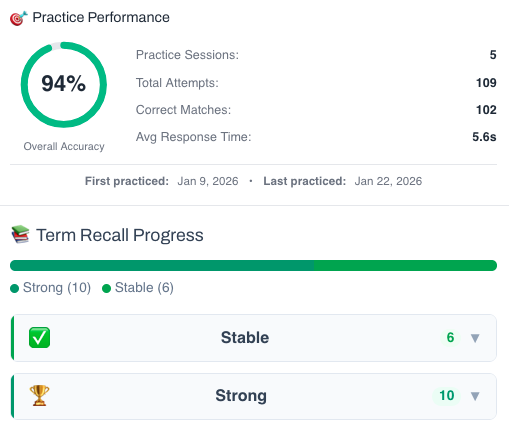
Vocabulary practice stats and progress dashboard preview

This isn’t a simple quiz — it’s a fully tracked learning system. You build knowledge through recognition, then recall, and your progress feeds directly into the Integrated Practice Bar (Writing tasks, AI Chat, and more).

  • Practice sessions, accuracy, and response-time tracking
  • Term strength levels (Learning → Stable → Strong)
  • Personal progress history for each unit

This feature is available to YSP members.

Explore Membership Benefits