
The Novelist: Conditional Forms
🎧 Emma's Agent
📖 The Novel That Wouldn’t Come – Part Five: The Missing Money (B1)
Grammar Investigation
Answer each question to reveal the grammar explanation:
If we start the investigation today, we will need access to all your contracts.
In the sentence ‘If we start the investigation today, we will need access to all your contracts’, why do we use the First Conditional structure?
If I had received those payments, I would have enough money to live on.
Why does Emma say ‘If I had received those payments, I would have enough money’ instead of ‘If I receive those payments, I will have enough money’?
If I had checked the accounts earlier, I would have noticed the problem sooner.
What does the Third Conditional express in ‘If I had checked the accounts earlier, I would have noticed the problem sooner’?
📚 Grammar Reference
FIRST CONDITIONAL
Structure: if + present simple, will + base verb
Pattern: If + subject + present simple verb, subject + will + base verb
What it expresses: Real, possible situations in the future and their likely or certain results
When to use: When discussing plans, predictions, warnings, promises, or offers where the condition is realistic and achievable
Why this form: The present simple in the if-clause represents a real possibility; ‘will’ in the result clause shows the future consequence is likely or certain if the condition happens
Examples in story: 18
SECOND CONDITIONAL
Structure: if + past simple, would + base verb
Pattern: If + subject + past simple verb, subject + would + base verb
What it expresses: Hypothetical, imaginary, or unlikely situations in the present or future, and their imagined results
When to use: When discussing unreal situations, giving advice, imagining different circumstances, or talking about unlikely possibilities
Why this form: The past simple in the if-clause signals unreality or low probability (not actual past time); ‘would’ in the result clause shows the imagined consequence
Examples in story: 12
THIRD CONDITIONAL
Structure: if + past perfect, would have + past participle
Pattern: If + subject + had + past participle, subject + would have + past participle
What it expresses: Imaginary past situations that did not happen, and their imagined (but unrealized) results; often expresses regret, criticism, or relief about past events
When to use: When discussing how things could have been different in the past, expressing regrets, imagining alternative past outcomes, or explaining what would have happened in different circumstances
Why this form: The past perfect in the if-clause shows the imagined past action that didn’t happen; ‘would have + past participle’ shows the unrealized past result
Examples in story: 15
Use the VAS to build solid recognition and recall of the terms below.
✔ Every correct Match = +1 point
✔ Every correct Recall = +2 points
🎓 Reach 5 points with good accuracy and the term is automatically promoted to your Personal Dictionary.
Incorrect answers lower accuracy, meaning more correct Matches or Recalls may be needed to reach promotion.
Member-Exclusive Vocabulary Review & Acquisition System
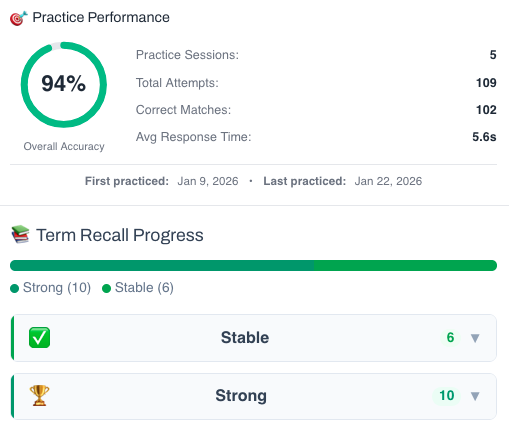
This isn’t a simple quiz — it’s a fully tracked learning system. You build knowledge through recognition, then recall, and your progress feeds directly into the Integrated Practice Bar (Writing tasks, AI Chat, and more).
- Practice sessions, accuracy, and response-time tracking
- Term strength levels (Learning → Stable → Strong)
- Personal progress history for each unit
This feature is available to YSP members.
Explore Membership BenefitsMember-Exclusive Practice Bar
Access a wide range of integrated practice for this unit — from Vocabulary and Grammar activities to AI-curated Writing tasks and Thematic Chat practice.
This feature is available to YSP members.
Explore Membership Benefits