Module code: 1252

📚 The Novelist

Module image

The Novelist: Conditional Forms

🎧 Emma's Agent


📖 The Novel That Wouldn’t Come – Part Five: The Missing Money (B1)

Emma sits in a small office in London. She is meeting with a private investigator and a forensic accountant. Three weeks ago, she discovered that her agent has stolen all the money from her book sales and the film rights. Now she needs to recover everything she has lost.

Emma sits in a small office in London. She is meeting with a private investigator and a forensic accountant. Three weeks ago, she discovered that her agent has stolen all the money from her book sales and the film rights. Now she needs to recover everything she has lost.

If we start the investigation today, we will need access to all your contracts, the investigator says. His name is David Chen. He has worked on financial fraud cases for fifteen years. If you give us the documents, we will begin tracing the money immediately.

Emma opens her bag and takes out a folder. If I had checked the accounts earlier, I would have noticed the problem sooner, she says. Her voice shakes a little. If I had been more careful, this would never have happened.

The forensic accountant is called Sarah Mitchell. She looks at the first contract carefully. If your agent transferred the money to offshore accounts, it will be difficult to trace, she explains. But if we find the transaction records, we will have strong evidence for the police.

Emma remembers the Hollywood meeting from three weeks ago. The studio had been ready to pay two million pounds for the film rights. If the deal had gone through normally, the money would have arrived in her account by now. Instead, her agent had diverted everything to her own accounts.

If we contact the film studio, will they help us, Emma asks. David nods. If they cooperate, we will get copies of all the payment records, he says. If the studio confirms the payments, we will know exactly how much money is missing.

Sarah spreads more documents across the table. If your agent has been stealing for months, there will be a pattern in the accounts, she says. If we analyze all the transactions, we will see where the money went.

Emma feels sick. If I had listened to my publisher, I would have changed agents last year, she says. They had warned me. If I had trusted my instincts, I would have investigated sooner.

David asks about the other payments. If the foreign publishers paid translation fees, where did that money go, he wants to know. Emma shakes her head. If I had received those payments, I would have enough money to live on, she says. But I have received nothing for six months.

Sarah makes notes on her laptop. If we get court orders for the bank records, we will see all the transfers, she explains. If the judge agrees, we will have the documents within two weeks.

What happens if we find the money, Emma asks. If we locate the funds, we will freeze the accounts immediately, David says. If your agent tries to move the money, the banks will stop her.

But Emma is worried about time. If my agent disappears, we will lose everything, she says. David reassures her. If she leaves the country, we will contact Interpol, he explains. If she has stolen this amount of money, they will track her down.

Sarah asks about the film contract. If the studio had paid directly to you, this would not have happened, she says. Emma agrees. If I had insisted on direct payments, my agent would not have had access to the money, she replies.

They discuss the next steps. If we file a police report today, the investigation will start immediately, David says. If we wait, your agent will have more time to hide the money.

Emma makes her decision. If we act now, we will have a better chance of success, she says. If we delay, I will lose everything I have worked for.

Sarah explains the costs. If we work on this case full-time, it will be expensive, she warns. But if we recover the money, you will get most of it back.

Emma thinks about her second novel. If this problem had not happened, I would be finishing my book now, she says sadly. If I had known my agent was dishonest, I would never have signed with her.

David stands up. If we start today, we will have preliminary results within a week, he promises. If the evidence is strong, we will go to the police immediately.

They shake hands. If you need anything, call me at any time, David says. If we work together, we will solve this problem.

Emma leaves the office feeling slightly better. If these professionals can help me, I will get my money back, she thinks. If I had given up, I would have lost everything. But if I fight, I will win.

Grammar Investigation

Answer each question to reveal the grammar explanation:

If we start the investigation today, we will need access to all your contracts.

In the sentence ‘If we start the investigation today, we will need access to all your contracts’, why do we use the First Conditional structure?

If I had received those payments, I would have enough money to live on.

Why does Emma say ‘If I had received those payments, I would have enough money’ instead of ‘If I receive those payments, I will have enough money’?

If I had checked the accounts earlier, I would have noticed the problem sooner.

What does the Third Conditional express in ‘If I had checked the accounts earlier, I would have noticed the problem sooner’?

📚 Grammar Reference

FIRST CONDITIONAL

Structure: if + present simple, will + base verb

Pattern: If + subject + present simple verb, subject + will + base verb

What it expresses: Real, possible situations in the future and their likely or certain results

When to use: When discussing plans, predictions, warnings, promises, or offers where the condition is realistic and achievable

Why this form: The present simple in the if-clause represents a real possibility; ‘will’ in the result clause shows the future consequence is likely or certain if the condition happens

Examples in story: 18

SECOND CONDITIONAL

Structure: if + past simple, would + base verb

Pattern: If + subject + past simple verb, subject + would + base verb

What it expresses: Hypothetical, imaginary, or unlikely situations in the present or future, and their imagined results

When to use: When discussing unreal situations, giving advice, imagining different circumstances, or talking about unlikely possibilities

Why this form: The past simple in the if-clause signals unreality or low probability (not actual past time); ‘would’ in the result clause shows the imagined consequence

Examples in story: 12

THIRD CONDITIONAL

Structure: if + past perfect, would have + past participle

Pattern: If + subject + had + past participle, subject + would have + past participle

What it expresses: Imaginary past situations that did not happen, and their imagined (but unrealized) results; often expresses regret, criticism, or relief about past events

When to use: When discussing how things could have been different in the past, expressing regrets, imagining alternative past outcomes, or explaining what would have happened in different circumstances

Why this form: The past perfect in the if-clause shows the imagined past action that didn’t happen; ‘would have + past participle’ shows the unrealized past result

Examples in story: 15

Practice Section: Complete the 2 sections below
🧩 1. VAS
Vocabulary Acquisition System
🎯 Main event Vocabulary Acquisition System Build recognition and recall using Matching & Recall practice modes

Use the VAS to build solid recognition and recall of the terms below.

✔ Every correct Match = +1 point
✔ Every correct Recall = +2 points

🎓 Reach 5 points with good accuracy and the term is automatically promoted to your Personal Dictionary.

Incorrect answers lower accuracy, meaning more correct Matches or Recalls may be needed to reach promotion.

🔒

Member-Exclusive Vocabulary Review & Acquisition System
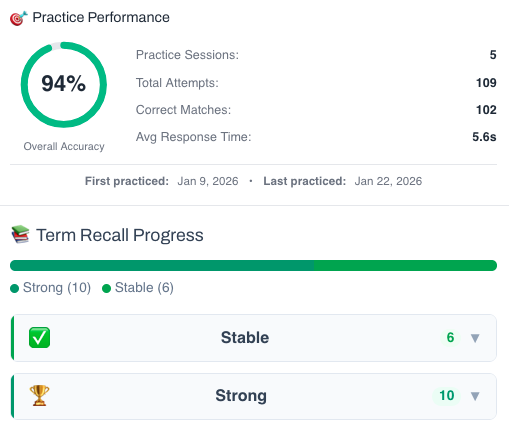
Vocabulary practice stats and progress dashboard preview

This isn’t a simple quiz — it’s a fully tracked learning system. You build knowledge through recognition, then recall, and your progress feeds directly into the Integrated Practice Bar (Writing tasks, AI Chat, and more).

  • Practice sessions, accuracy, and response-time tracking
  • Term strength levels (Learning → Stable → Strong)
  • Personal progress history for each unit

This feature is available to YSP members.

Explore Membership Benefits
🧩 2. Practice Bar
Grammar gap fill tasks plus Writing Tasks with performance feedback
🔒

Member-Exclusive Practice Bar

Access a wide range of integrated practice for this unit — from Vocabulary and Grammar activities to AI-curated Writing tasks and Thematic Chat practice.

This feature is available to YSP members.

Explore Membership Benefits
Page 5 of 5 Next (Coming Soon) →