Annoying Habits: Present Continuous with 'Always' (The 'Too Much' Use!)
Core PathWay
1 Neutral Fact or Annoying Habit?
Have you ever wanted to say ‘You do that too much — it’s annoying!’ in English? English speakers have a special way to do this. They use the present continuous tense with ‘always’ or ‘constantly’. It’s a pattern that shows irritation or amusement, not just a fact. Look at these two sentences:
“He eats a lot of pizza.” (neutral fact – present simple)
“He’s always eating pizza.” (complaint – present continuous)
The first sentence just tells us a fact. The second sentence tells us the speaker finds it annoying or too much. Here are more examples:
– She’s always looking in the mirror. (She checks her appearance too often.)
– He’s constantly losing his keys. (He never keeps track of them – irritating!)
– They’re forever borrowing money. (They ask for money too much.)
– You’re always interrupting me. (You don’t let me finish.)
– My brother is continually arriving late. (He makes everyone wait.)
– The neighbour’s dog is always barking. (It never stops.)
– She’s always taking my things without asking. (That’s rude.)
– He’s constantly checking his phone when we talk. (He’s not really listening.)
Notice: In each case, the speaker thinks the action happens too often. The present continuous with ‘always’ is a tool for criticism or gentle complaint.
2 The Grammar of Complaints
This pattern is simple but powerful. You use the verb be (am, is, are, was, were) + an adverb like ‘always’, ‘constantly’, ‘forever’, or ‘continually’ + a verb in -ing form. The adverb goes between be and the -ing verb.
Here’s the structure:
[Subject] + [be] + [always/constantly/forever/continually] + [verb-ing] + [rest]
It is different from the present simple. The present simple with ‘always’ means ‘every time’. For example: ‘He always eats breakfast’ = every day. But ‘He’s always eating breakfast’ means ‘He eats breakfast too often (and it’s a problem)’. The meaning is about your feeling, not the real frequency.
You can also use this pattern in the past to talk about past annoying habits. For example: ‘My sister was always taking my toys when we were kids.’ Use was/were + always + -ing.
Focus
- Form: be + always/constantly/forever/continually + verb-ing
- Meaning: expresses irritation, criticism, or amused emphasis about repeated behaviour that happens too much
- Contrast: present simple + always = neutral fact (e.g. 'He always loses his keys') vs present continuous + always = complaint (e.g. 'He's always losing his keys')
- Past extension: was/were + always + -ing for past complaints (e.g. 'She was always complaining')
Rules
- The adverb must sit between the verb 'be' and the -ing verb. Example: 'He is always losing his keys' (not 'He always is losing…' or 'He is losing always…').
- Do not use 'never' in this pattern. For negative habits, use present simple: 'He never does his homework' (not 'He's never doing his homework').
- You can use 'always', 'constantly', 'forever', or 'continually'. They all work the same way. 'Forever' is a bit stronger and more informal.
- This pattern is NOT for neutral routines. For everyday facts, use present simple (e.g. 'I always get up at seven').
Examples
- She's always complaining about the weather. (criticism)
- He's constantly borrowing my charger. (irritation)
- They were forever arguing when they lived together. (past complaint)
Common mistake
3 Friends Complaining About Friends
Alex and Sam are having coffee. After a few minutes, they start talking about their friend Jordan.
‘Is Jordan coming?’ Alex asks.
Sam rolls her eyes. ‘Probably not. He’s always arriving late. Last week he was late for everything.’
‘True,’ Alex says. ‘And when he’s here, he’s constantly checking his phone. It’s annoying.’
‘That’s not the worst,’ Sam says. ‘He’s forever borrowing money. Remember the concert tickets? He said he’d pay me back, but he never does.’
Alex laughs. ‘Yeah, and he’s always losing his things — his wallet, his keys… Last month he lost his passport twice.’
‘He needs a keeper,’ Sam says. ‘But I still like him. He’s funny.’
‘Me too,’ Alex says. ‘But I’m always buying him coffee, and he never buys me one!’
4 Write Your Own Complaint
Now it’s your turn. Think of a person you know — a friend, a family member, or a colleague — who has a habit that annoys you. Write about 50 words describing their behaviour. Use the present continuous with ‘always’, ‘constantly’, ‘forever’, or ‘continually’. Make sure you sound critical, not just factual.
5 Recap: The 'Too Much' Pattern
You have learned a very useful way to complain in English. Remember the key points:
– Use the present continuous (be + -ing) with always, constantly, forever, or continually to show that something happens too often and it bothers you.
– The adverb goes right after the verb ‘be’ – never before it and never after the -ing verb.
– This pattern is different from the present simple. ‘She always looks in the mirror’ = fact. ‘She’s always looking in the mirror’ = criticism.
– You can also use it in the past: ‘He was always borrowing my things.’
– Do not use this pattern with ‘never’ – for negative habits, use present simple (e.g., ‘He never listens’).
Now you can spot when someone is complaining in English, and you can use the same pattern yourself. Try it next time you want to say ‘too much’!
Member-Exclusive Practice Bar
Access a wide range of integrated practice for this unit — from Vocabulary and Grammar activities to AI-curated Writing tasks and Thematic Chat practice.
This feature is available to YSP members.
Explore Membership BenefitsMember-Exclusive Vocabulary Review & Acquisition System
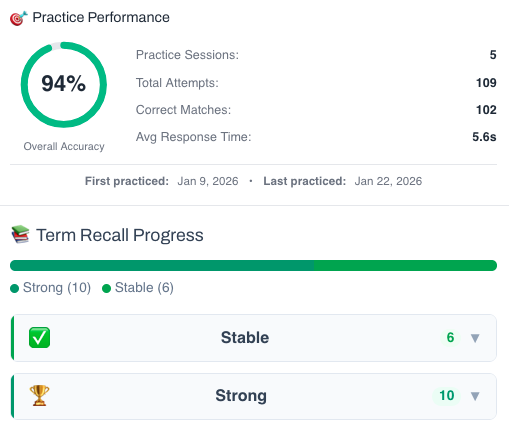
This isn’t a simple quiz — it’s a fully tracked learning system. You build knowledge through recognition, then recall, and your progress feeds directly into the Integrated Practice Bar (Writing tasks, AI Chat, and more).
- Practice sessions, accuracy, and response-time tracking
- Term strength levels (Learning → Stable → Strong)
- Personal progress history for each unit
This feature is available to YSP members.
Explore Membership Benefits🎮 Practice Games
Sentence Scrambler
Annoying Habits: Present Continuous (The TOO MUCH use!) – Sentence Scramble
Member-Exclusive Sentence Builder
Reconstruct scrambled sentences to practice word order and develop your grammar intuition.
This feature is available to YSP members.
Explore Membership Benefits