Will for Characteristic Behaviour and Habits
Core PathWay
1 What Does 'Will' Mean Here?
When you say ‘He’ll spend hours talking about his garden’, you are not talking about the future. You are describing something that is typical of him. This is called characteristic behaviour or habitual will.
Compare these two sentences: ‘She calls her mother every Sunday’ – a neutral routine. ‘She’ll call her mother three times a day just to check she’s all right’ – this shows her personality. The behaviour is predictable from her character.
Because of this, habitual will sounds strange with ordinary routines. For example, ‘I drink coffee every morning’ is natural. ‘I will drink coffee every morning’ sounds unusual unless you want to stress that it is a habit you always follow.
2 Grammar Rules: Characteristic Will vs Present Simple
Habitual will does not simply mean ‘often’. It means that whenever the situation happens, the person behaves in a certain way. The focus is on the person’s character, not the number of times.
Focus
- Will + base verb describes typical, predictable behaviour in the present
- Present simple describes neutral routines without focusing on character
- Stressed WILL ('She WILL leave the door open!') expresses annoyance
Rules
- Use will + base verb for behaviour that is characteristic of someone.
- Do not use will for simple timetabled routines (use present simple instead).
- Avoid will with stative verbs (know, like, understand) in this meaning.
- When you want to show irritation, stress the word 'will' strongly.
Examples
- Whenever there's a problem, he'll blame someone else. (characteristic reaction)
- Anna will often bring homemade cakes to the office. (generous personality)
- My brother WILL leave his dirty socks on the floor! (annoyance)
Common mistake
3 Meet Joe and Jane
My grandpa Joe is a very predictable man. He’ll wake up at five every morning and go straight to his garden. He’ll spend hours there, talking to his plants and humming old songs. If you visit him, he’ll offer you tea and biscuits before you can say hello. It’s just his way – typical Joe.
My young cousin Jane is completely different. She’ll wander into the kitchen, open the fridge, and sigh. Then she’ll say she’s bored and walk out again. She’ll never close the fridge door properly – it drives everyone mad! When I ask her to help, she’ll sometimes do it, but only if she feels like it. Jane’s behaviour shows her character: a bit lazy, but also playful.
Joe and Jane both have their own characteristic habits. That’s what makes them who they are.
4 Write About Someone You Know
Now it’s your turn. Think of two people you know well – a family member, a friend, or a colleague. Describe their typical behaviour using ‘will’ (characteristic), present simple (neutral routines), and adjectives such as ‘lazy’, ‘hard-working’, ‘generous’, ‘impatient’, or ‘cheerful’.
5 Quick Recap
Remember: ‘will’ is not only for the future. It can describe someone’s characteristic behaviour – what they typically do because of their personality. Compare it with present simple, which just tells us about routines. And don’t forget: stressed WILL (speaking louder) shows annoyance. Keep practising and you’ll notice this use everywhere!
Member-Exclusive Practice Bar
Access a wide range of integrated practice for this unit — from Vocabulary and Grammar activities to AI-curated Writing tasks and Thematic Chat practice.
This feature is available to YSP members.
Explore Membership BenefitsMember-Exclusive Vocabulary Review & Acquisition System
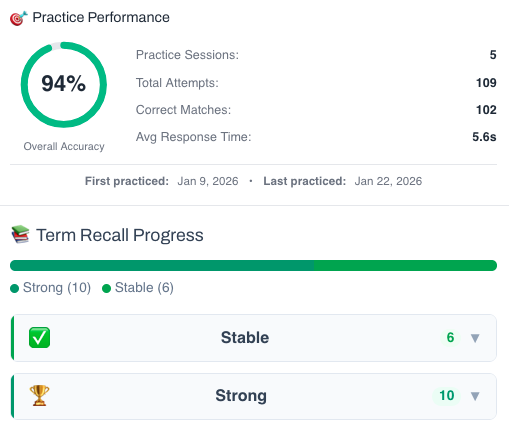
This isn’t a simple quiz — it’s a fully tracked learning system. You build knowledge through recognition, then recall, and your progress feeds directly into the Integrated Practice Bar (Writing tasks, AI Chat, and more).
- Practice sessions, accuracy, and response-time tracking
- Term strength levels (Learning → Stable → Strong)
- Personal progress history for each unit
This feature is available to YSP members.
Explore Membership Benefits🎮 Practice Games
Sentence Scrambler
Characteristic Habits: Will – Sentence Scramble
Member-Exclusive Sentence Builder
Reconstruct scrambled sentences to practice word order and develop your grammar intuition.
This feature is available to YSP members.
Explore Membership Benefits