Industrial Facilities & Premises: The Language of Industry
Core PathWay
1 Section 1. The World of Industry Starts Here
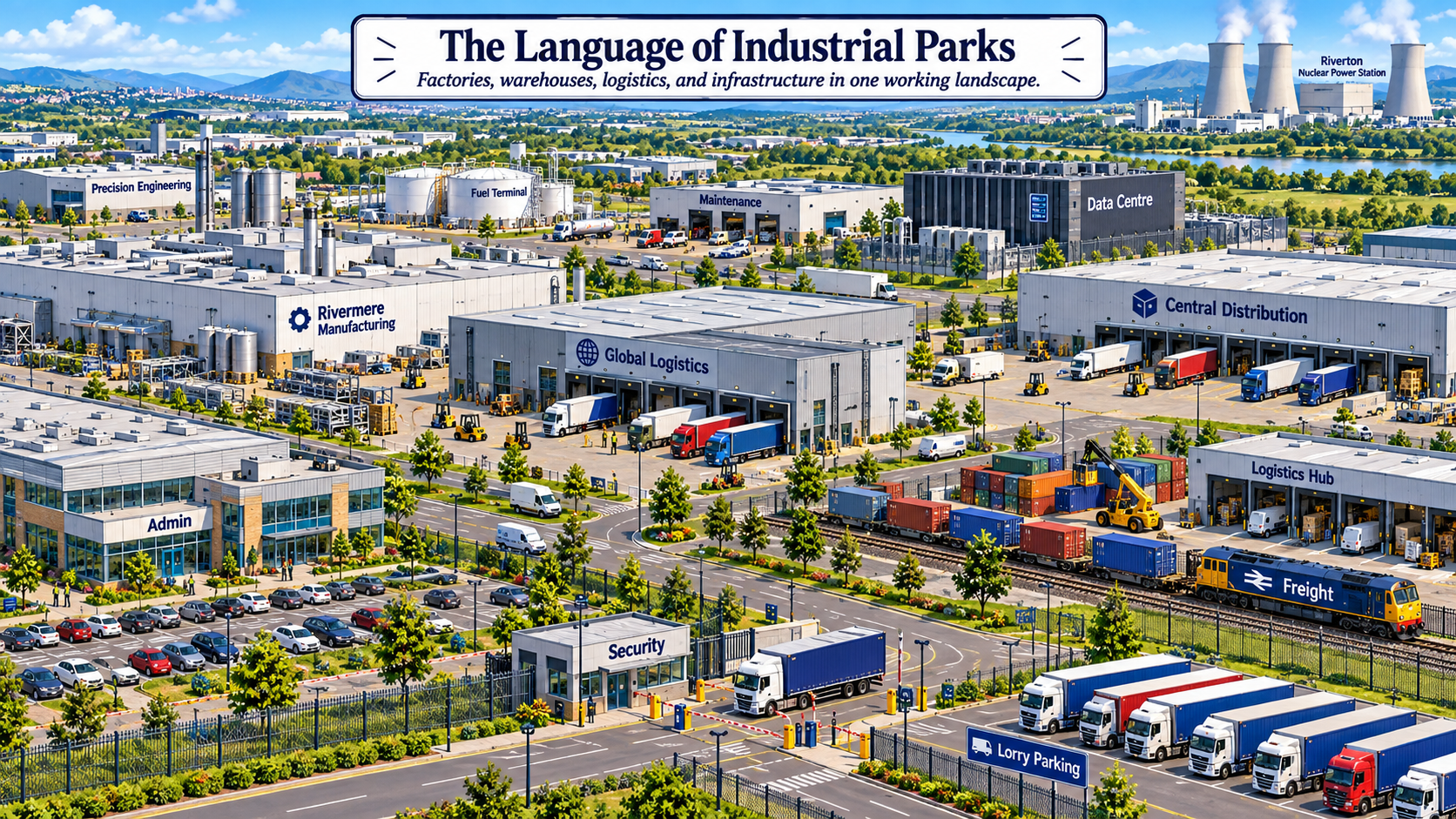
Ready to build your vocabulary for industrial facilities? Here’s where we start. Industry covers a huge range of sites and buildings. Some make things. Some process raw materials. Some generate energy. Some store and move goods. In English, each type of site has its own name — and knowing the right name matters in professional contexts. We begin with the big picture. An industrial estate is an area of land, usually outside a city, where many factories and industrial buildings are built together. This means companies share the same location, which makes transport and services easier. You might also hear it called an industrial park. Inside an industrial estate, you will find many different types of facility. The word ‘facility’ simply means a place designed for a specific purpose. So a factory is a facility. A warehouse is a facility. A power station is a facility. As we move through this pack, you will see how each term describes not just a building, but a function — what the site does and why it exists.
2 Section 2. Making Things — Manufacturing and Assembly
Some industrial sites exist to make products. These are manufacturing sites. A manufacturing plant is a large facility where goods are produced, usually using machines and workers on a production line. The word ‘plant’ in this context means a large industrial facility — not a living plant. You will see ‘plant’ used in many compound nouns in this pack. An assembly plant is a specific type of manufacturing facility. Here, parts that are made elsewhere are brought together and put into their final form. Car factories are often called assembly plants because workers and robots assemble the vehicle from hundreds of separate components. Notice the difference: a manufacturing plant makes the parts or the product from raw materials, while an assembly plant puts already-made parts together. Both terms are common in business news and industry reports. You might read: ‘The company opened a new assembly plant in the region, creating 500 jobs.’ Or: ‘The manufacturing plant produces over 10,000 units per day.’ These are the kinds of sentences you will encounter when reading about industry.
3 Section 3. Processing Raw Materials — From Nature to Product
Many industrial sites take raw materials from nature and turn them into something useful. This is called processing. A processing plant is a general term for any facility that transforms a raw material into a finished or semi-finished product. It is a broad term used across many industries. Oil is one of the most important raw materials in the world. An oil refinery is a facility that takes crude oil from the ground and processes it into useful products like petrol, diesel, and jet fuel. Refining means removing unwanted substances and separating the oil into different parts. A petrochemical plant processes oil and gas to make chemical products — things like plastics, fertilisers, and synthetic rubber. A chemical plant is similar, but it may use a wider range of materials, not just oil and gas. It produces chemical substances used in many other industries. A cement plant — also called cement works — produces cement, which is the key ingredient in concrete used in construction. A steel mill — also called steelworks — is where steel is produced from iron. Steel is used in buildings, vehicles, and machines. A foundry is a facility that melts metal and pours it into moulds to make shaped parts. A smelter is a facility that extracts pure metal from ore — that is, from rock that contains metal. The smelter uses very high heat to separate the metal from the rock.
4 Section 4. Energy, Fuel, and Power Generation
Modern industry needs energy. Several types of facility exist specifically to generate power. A power station — also called a power plant — is a facility that generates electricity on a large scale. It sends electricity through cables to homes, businesses, and factories. Power stations can use different energy sources: coal, gas, water, wind, or nuclear fuel. A nuclear power plant is a power station that uses nuclear reactions to generate heat, which is then used to produce electricity. Nuclear plants produce large amounts of electricity with no direct carbon emissions, but they also produce radioactive waste, which requires careful management. An oil rig is a large structure used to drill for oil under the sea or in remote land areas. It is the platform where workers live and operate drilling equipment. A drilling rig is the machine or structure used to drill down into the earth or seabed to reach oil or gas. The terms overlap: an oil rig usually includes a drilling rig as part of its equipment. These sites are often in extreme environments and require highly trained workers.
5 Section 5. Traditional Industries — Mills, Breweries, and More
Some industrial terms have a long history. They describe facilities that have existed for centuries, even if the technology inside has changed completely. A paper mill is a facility that produces paper from wood pulp or recycled materials. A textile mill is a facility that produces fabric and cloth, often using large weaving or spinning machines. A sawmill is a facility where logs are cut into planks and boards for use in construction and furniture making. These three terms all use the word ‘mill.’ In older times, a mill was powered by water or wind. Today, mills use electricity, but the name has stayed. A brewery is a facility where beer is made. The process of making beer is called brewing. A distillery is a facility where spirits — such as whisky, gin, or vodka — are produced. The process is called distilling, which involves heating a liquid and collecting the vapour to create a stronger alcoholic drink. Both breweries and distilleries are found in the food and drink industry. In recent years, craft breweries and small distilleries have become popular as consumers look for locally produced drinks.
6 Section 6. Waste, Water, Logistics, and Data
Not all industrial facilities make products. Some manage waste, move goods, or process information. A water treatment plant is a facility that cleans water so it is safe to drink. It removes dirt, bacteria, and chemicals from the water supply. A wastewater treatment plant is different. It processes used water — from homes, businesses, and factories — before it is returned to rivers or the sea. An incinerator — also called a waste-to-energy plant — burns waste materials at very high temperatures. The heat produced is used to generate electricity. This reduces the amount of waste that goes to landfill. A distribution centre — also called a logistics hub — is a large facility where goods are stored and then sent out to shops, businesses, or customers. These facilities are central to modern supply chains. You will often see them near motorways or airports. A data centre is a facility that houses computer servers and data storage systems. It processes and stores digital information for businesses, governments, and online services. Data centres use enormous amounts of electricity and need constant cooling systems to prevent the computers from overheating.
7 Section 7. Now Hear It in Use
You have met all 25 terms. Now hear them working in a real conversation. Listen to how two professionals use this vocabulary naturally as they discuss a site visit and an important planning decision. Pay attention to how the terms are used in context — not just what they mean, but how they fit into a sentence.
💬 Dialogue 1: Site Visit: Choosing the Right Location
Priya, a site development manager, and Tom, a regional planning officer, are meeting to discuss a proposal for a new industrial estate. They need to agree on which types of facility will be permitted on the site.
Priya: “Thanks for coming out to the site, Tom. As you can see, we’re looking at a large plot — about forty hectares. The proposal is to develop it as an industrial estate, with a mix of light and heavy industry.”
Tom: “It’s a good location — close to the motorway and the rail freight terminal. What types of facility are you planning to include? That will affect the planning conditions significantly.”
Priya: “The anchor tenant wants to build a manufacturing plant on the eastern section. They produce automotive components, so they’ll need space for an assembly plant as well — the two operations will run side by side.”
Tom: “That makes sense. A manufacturing plant and an assembly plant together can generate a lot of vehicle movements, so we’ll need to look at road access carefully. What else are you planning for the rest of the site?”
Priya: “We’re also in talks with a food company that wants to build a processing plant on the northern section. They handle frozen goods, so they’ll need cold storage facilities attached to the site as well.”
Tom: “A processing plant for food is generally straightforward to approve, as long as the environmental controls are in place. Now, what about logistics? A site this size will need somewhere for goods to move in and out efficiently.”
Priya: “Yes, we’ve planned for that. We want to include a large distribution centre near the main entrance, and we’re also proposing a logistics hub that smaller operators on the estate can share. It would reduce the number of vehicles coming in and out at peak times.”
Tom: “I like that idea. A shared logistics hub is a good way to manage traffic across the whole estate. Has there been any discussion about digital infrastructure? A lot of industrial estates now include a data centre as part of the mix.”
Priya: “Actually, yes — we have had interest from a tech company that wants to build a data centre on the western edge of the site. It’s a different kind of operation from the heavy industry, but it fits well because of the power supply connections in that area.”
Tom: “Good. I should mention that the council will also want to see a plan for waste management. If you’re bringing in heavy industry, you’ll need to address that from the start. Have you considered a waste-to-energy plant, or perhaps a separate incinerator for industrial waste?”
Priya: “We’ve been looking at that. Our preference is for a waste-to-energy plant rather than a standalone incinerator, because it generates electricity that the estate can use directly. We’d also like to include a water treatment plant to handle any industrial discharge from the processing plant and the manufacturing operations.”
Tom: “That’s a well-thought-out plan, Priya. A waste-to-energy plant and a water treatment plant on site will strengthen the planning application considerably. I think we have a solid basis to move forward — I’ll prepare the initial conditions report and send it to you by the end of the week.”
Member-Exclusive Practice Bar
Access a wide range of integrated practice for this unit — from Vocabulary and Grammar activities to AI-curated Writing tasks and Thematic Chat practice.
This feature is available to YSP members.
Explore Membership BenefitsMember-Exclusive Vocabulary Review & Acquisition System
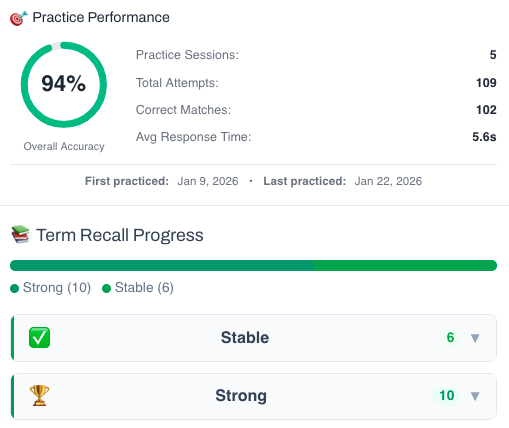
This isn’t a simple quiz — it’s a fully tracked learning system. You build knowledge through recognition, then recall, and your progress feeds directly into the Integrated Practice Bar (Writing tasks, AI Chat, and more).
- Practice sessions, accuracy, and response-time tracking
- Term strength levels (Learning → Stable → Strong)
- Personal progress history for each unit
This feature is available to YSP members.
Explore Membership Benefits