Daily Routines: Present Simple with I, You, We, They
Core PathWay
1 Why Do We Use Present Simple?
Every day you do the same things. You wake up. You eat lunch. You go to bed. These are your habits. These are your routines.
In English, we use Present Simple to talk about these things. We say: I wake up at 7. We say: You go to work. We say: We have breakfast. We say: They study English.
This is easy! With I, you, we, and they, we use the simple verb. No changes. No -s at the end. Just the verb. I go. You eat. We meet. They watch. Simple!
Today you learn to describe your day. You learn to talk about what you do every day. This is very useful. You can tell people about your life!
Key Terms
2 How to Make Present Simple Sentences
Look at this pattern. It is very important.
With I, you, we, and they, you use the simple verb. You do not add -s. You do not change the verb. This is the rule!
Focus
- With I, you, we, they → use the base verb (no -s ending)
- Time words like every day, usually, always show this is a routine
- The verb stays the same — I go, you go, we go, they go
Rules
- Subject + verb: I wake up, You eat, We meet, They watch
- Add time information: I wake up at 7, We go to work in the morning
- This is affirmative only (positive sentences, not negative or questions)
Examples
- I wake up at 7 every day.
- You eat breakfast in the morning.
- We go to work at 8.
- They study English at night.
Common mistake
Key Terms
3 Alex's Typical Day
My name is Alex. This is my typical day.
Every day, I wake up at 6:30 in the morning. I feel tired, but I get up. I have breakfast at 7:00. I eat bread and drink coffee. I like my breakfast time. It is quiet.
At 7:45, I go to work. I take the bus. The bus is usually full of people. I arrive at work at 8:30. I work in an office. I study reports and write emails. I talk to my colleagues. We have meetings.
At 12:30, I eat lunch with my friends from work. We usually go to a small café near the office. We talk and laugh. Lunch is my favourite part of the day!
At 1:30, I go back to work. I work until 5:30. Then I go home. I take the bus again. At home, I feel relaxed.
At 7:00, I have dinner. I cook simple food. After dinner, I usually watch TV for one hour. I like news programs and documentaries. At 10:30, I always go to bed. I read for 15 minutes, then I sleep.
This is my routine. Every day is the same. I like my routine. It makes me feel safe and organized.
Key Terms
4 Write About Your Day
Now you write about your typical day. Use Present Simple with I.
5 Remember This
Good work! Now you know how to talk about your routine.
Remember: with I, you, we, and they, use the simple verb. No -s at the end. I go. You eat. We study. They watch.
When do you use Present Simple? When you talk about routines. When you talk about habits. When you talk about things you do every day or usually or always.
Here are the important time words: every day, usually, always, sometimes, often. These words show that something is a routine.
Now you can describe your day in English! Try it. Tell a friend about your routine. Write about your typical day. Practice makes perfect!
Member-Exclusive Practice Bar
Access a wide range of integrated practice for this unit — from Vocabulary and Grammar activities to AI-curated Writing tasks and Thematic Chat practice.
This feature is available to YSP members.
Explore Membership BenefitsMember-Exclusive Vocabulary Review & Acquisition System
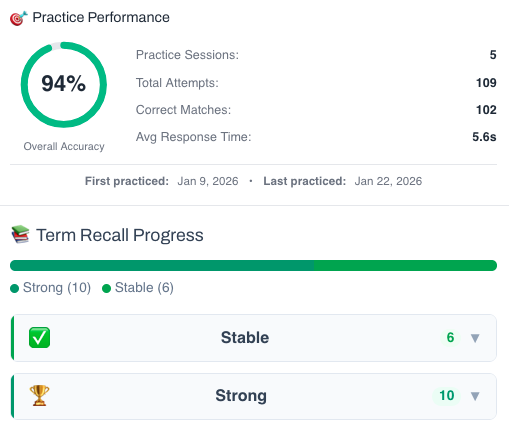
This isn’t a simple quiz — it’s a fully tracked learning system. You build knowledge through recognition, then recall, and your progress feeds directly into the Integrated Practice Bar (Writing tasks, AI Chat, and more).
- Practice sessions, accuracy, and response-time tracking
- Term strength levels (Learning → Stable → Strong)
- Personal progress history for each unit
This feature is available to YSP members.
Explore Membership Benefits🎮 Practice Games
Sentence Scrambler
Daily Routines: I, You, We, They – Sentence Scramble
Member-Exclusive Sentence Builder
Reconstruct scrambled sentences to practice word order and develop your grammar intuition.
This feature is available to YSP members.
Explore Membership Benefits