Asking Questions About Daily Life
Core PathWay
1 Why Do We Need Wh- Questions?
You can ask yes/no questions. ‘Do you work?’ ‘Yes, I do.’ But you get very little information. You need more! Wh- questions help you. They give you details. You can find out where people live. You can find out when they start work. You can find out what they eat for breakfast. You can find out who their colleagues are. You can find out why they study English. You can find out how they travel to work.
Imagine this. You meet a new person. You want to know about their life. You ask: ‘Do you work?’ They say: ‘Yes.’ That is all. Not very helpful! Now try this: ‘Where do you work?’ They say: ‘I work in a school.’ Much better! You get real information.
Wh- questions are very important. They help you get to know people. They help you find information. They help you talk about routines and habits. You use them every day.
Key Terms
2 How to Form Wh- Questions
Wh- questions have a special form. You need three parts: the wh- word, then do or does, then the subject. After that, you use the base verb. Look at this: Where do you live? The wh- word is ‘where’. Then ‘do’. Then ‘you’. Then ‘live’.
Each wh- word asks for different information. Where asks about place. When asks about time. What asks about things or activities. Who asks about people. Why asks about reasons. How asks about the way you do something. You need to choose the right wh- word for your question.
Focus
- Wh- word comes first in the question
- Use do with I, you, we, they
- Use does with he, she, it
- Subject comes after do/does
- Use base verb (not -s form) after subject
- Each wh- word asks for specific information
Rules
- Form: Wh- word + do/does + subject + base verb
- Where = asks about place
- When = asks about time
- What = asks about things or activities
- Who = asks about people
- Why = asks about reasons
- How = asks about method or manner
Examples
- Where do you live? (place)
- When does the shop open? (time)
- What do you eat for breakfast? (thing/activity)
- Who does she work with? (person)
- Why do they study English? (reason)
- How do you travel to work? (method)
Common mistake
Key Terms
3 Two Colleagues Talk
Sam and Alex are new colleagues. They work in the same office. It is morning. They drink coffee and talk.
Sam says: ‘Where do you live, Alex?’
Alex says: ‘I live in the city centre. It is very close to the office.’
Sam says: ‘When do you start work every day?’
Alex says: ‘I start at 9 o’clock. What time do you start?’
Sam says: ‘I start at 8:30. I like to come early. What do you eat for breakfast?’
Alex says: ‘I usually eat toast and fruit. Sometimes I have cereal. What about you?’
Sam says: ‘I have coffee and a sandwich. I don’t eat much in the morning. I prefer a big lunch. Who do you usually have lunch with?’
Alex says: ‘I have lunch with Maria and Tom. They are in my team. Do you know them?’
Sam says: ‘Yes, I do! They are very nice. Why do you study English, Alex?’
Alex says: ‘I study English because I want to work with international clients. Why do you study it?’
Sam says: ‘I study English because I want to travel. I love visiting new places. How do you travel to work?’
Alex says: ‘I travel by bus. It is easy and cheap. How about you?’
Sam says: ‘I walk. It takes 20 minutes. It is good exercise!’
Alex says: ‘That is great! When does the office close in the evening?’
Sam says: ‘It closes at 6 o’clock. But I usually finish at 5:30.’
Alex says: ‘Me too! Maybe we can have dinner together sometime in the afternoon or evening?’
Sam says: ‘That sounds good!’
Sam and Alex are happy. They are getting to know each other. They ask good questions. They find out interesting information.
Key Terms
4 Your Turn: Write Questions
Now you practice. Write 6 questions. You ask a new friend about their life. Use each wh- word one time: where, when, what, who, why, how.
5 Remember These Rules
You now know how to ask wh- questions. Remember the six wh- words. Where asks about place. When asks about time. What asks about things or activities. Who asks about people. Why asks about reasons. How asks about method or manner.
The word order is very important. Always use this order: wh- word, then do or does, then the subject, then the base verb. Do not forget do or does!
You use these questions in many situations. You use them when you meet new people. You use them when you ask for information. You use them when you want to know about routines and habits. They are very useful!
Now you can practice. Ask questions to your friends. Ask questions to new people. Use wh- questions every day. You will get better and better. Good luck!
Member-Exclusive Practice Bar
Access a wide range of integrated practice for this unit — from Vocabulary and Grammar activities to AI-curated Writing tasks and Thematic Chat practice.
This feature is available to YSP members.
Explore Membership BenefitsMember-Exclusive Vocabulary Review & Acquisition System
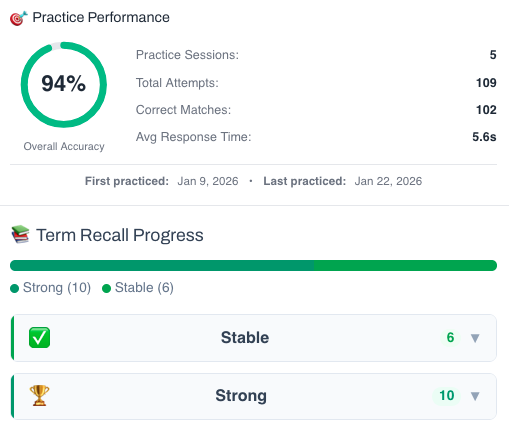
This isn’t a simple quiz — it’s a fully tracked learning system. You build knowledge through recognition, then recall, and your progress feeds directly into the Integrated Practice Bar (Writing tasks, AI Chat, and more).
- Practice sessions, accuracy, and response-time tracking
- Term strength levels (Learning → Stable → Strong)
- Personal progress history for each unit
This feature is available to YSP members.
Explore Membership Benefits🎮 Practice Games
Sentence Scrambler
Present Simple Wh- Questions for Information Gathering – Sentence Scramble
Member-Exclusive Sentence Builder
Reconstruct scrambled sentences to practice word order and develop your grammar intuition.
This feature is available to YSP members.
Explore Membership Benefits