Present Simple Negative: What We Don't Do
Core PathWay1 What We Don't Do
We talk about what we do every day. But sometimes it is very important to say what we don’t do.
Think about your work routine. You work on weekdays, but you don’t work at the weekend. Your colleague works in the office, but she doesn’t work from home. These negative sentences are very common in English.
When we make negative sentences in the present simple, we use don’t or doesn’t. This is called the auxiliary system. The auxiliary helps us make the negative. After don’t or doesn’t, we always use the base verb. This is very important! Many learners make a mistake here. They say ‘she doesn’t works’ but this is wrong. The correct form is ‘she doesn’t work’. The -s disappears.
In this lesson, you will learn how to make negative sentences correctly. You will practise talking about your schedule, your work habits, and what you prefer to do or not do. By the end, you will feel confident using don’t and doesn’t in real conversations about work and daily life.
Key Terms
2 How to Form Negative Sentences
The present simple negative is easy when you know the rule. You need two parts: the auxiliary (don’t or doesn’t) and the base verb.
Why do we need this? Because in English, we cannot just say ‘I not work’ or ‘she not like’. We must use don’t or doesn’t to make the negative. This is the auxiliary system. The auxiliary carries the negative meaning, so the main verb stays in its base form.
Focus
- Use don't with I, you, we, they
- Use doesn't with he, she, it
- After don't or doesn't, always use the base verb (no -s)
- The -s only appears in affirmative sentences with he/she/it
Rules
- I/you/we/they + don't + base verb
- He/she/it + doesn't + base verb
- Affirmative: She works. Negative: She doesn't work.
- The main verb never changes after don't or doesn't
Examples
- I don't work on Sundays. (NOT: I don't works)
- She doesn't have a meeting today. (NOT: She doesn't has)
- We don't prefer overtime. They don't finish at 5pm.
Common mistake
3 A Conversation About Work Schedules
Alex: Hi Sam! Do you work from home on Mondays?
Sam: Yes, I work from home on Mondays, but I don’t work from home on Tuesdays. I go to the office on Tuesdays. What about you?
Alex: I don’t work from home at all. I prefer the office. I like seeing my colleagues. Do you have meetings on Mondays?
Sam: Normally, yes. But this week I don’t have any meetings. It’s quiet! My schedule is very light.
Alex: Lucky you! I have three meetings today. One before my lunch break and two after. Do you ever work overtime?
Sam: Not really. I don’t work overtime very often. Maybe once a month if there’s a deadline. My manager works overtime every week, but she doesn’t like it.
Alex: I understand. Marco works in the Milan office, right? Does he work weekends?
Sam: No, he doesn’t work weekends. Nobody in our team works on Saturday or Sunday. We all prefer to rest at the weekend.
Alex: That’s good. My friend Jordan works shifts. She works some weekends, but she doesn’t work every weekend. Her routine changes every month.
Sam: That sounds difficult! I like my routine. I work Monday to Friday, nine to five. Simple!
Alex: Me too. Usually I don’t change my schedule. I like knowing what to expect each weekday.
Key Terms
4 Practice: What You Don't Do
Now practise what you have just learned. Write five sentences about what you don’t do in your daily routine.
5 Remember the Rule
You have now learned the present simple negative. Let’s recap the most important points.
We use don’t or doesn’t to make negative sentences. Don’t goes with I, you, we, and they. Doesn’t goes with he, she, and it. This is the auxiliary system.
The most important rule is this: after don’t or doesn’t, always use the base verb. Never add -s to the main verb. The -s only appears in affirmative sentences with he, she, or it. So we say ‘she works’ (affirmative) but ‘she doesn’t work’ (negative).
Here is a simple decision rule to help you: After doesn’t, always use the base verb — never add -s.
This auxiliary pattern is very important. You will use it again when you learn to make questions in the present simple. Questions also use do and does, and the same base verb rule applies. So mastering don’t and doesn’t now will help you in the next lesson!
6 Lesson Recap
In this lesson, you learned how to form negative sentences in the present simple using don’t and doesn’t.
You now know that don’t goes with I, you, we, and they, while doesn’t goes with he, she, and it. You understand the critical rule: after don’t or doesn’t, always use the base verb with no -s.
You practised using this structure to talk about work routines, schedules, and daily habits. You learned essential workplace vocabulary like routine, schedule, weekday, weekend, office, colleague, work from home, meeting, lunch break, overtime, shift, and deadline.
The key to success is remembering that the -s only appears in affirmative forms with he/she/it. In negative sentences, the auxiliary (doesn’t) carries the meaning, so the main verb stays in its base form. Keep practising this pattern and it will become automatic!
Member-Exclusive Practice Bar
Access a wide range of integrated practice for this unit — from Vocabulary and Grammar activities to AI-curated Writing tasks and Thematic Chat practice.
This feature is available to YSP members.
Explore Membership BenefitsMember-Exclusive Vocabulary Review & Acquisition System
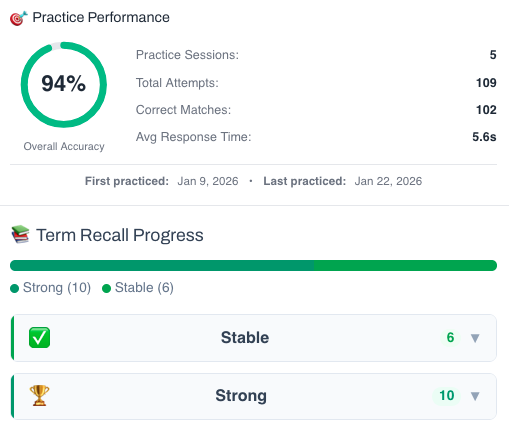
This isn’t a simple quiz — it’s a fully tracked learning system. You build knowledge through recognition, then recall, and your progress feeds directly into the Integrated Practice Bar (Writing tasks, AI Chat, and more).
- Practice sessions, accuracy, and response-time tracking
- Term strength levels (Learning → Stable → Strong)
- Personal progress history for each unit
This feature is available to YSP members.
Explore Membership Benefits