Present Simple vs Present Continuous: Permanent Responsibilities and Temporary Projects
Core PathWay1 Why Italian Speakers Mix Up These Two Tenses
If you speak Italian, you use the presente both for regular, everyday activities and for situations that are happening now. For example, “Lavoro in ufficio” and “In questo periodo lavoro da casa” both use the same tense in Italian.
English makes a different distinction. It uses the present simple for regular activities and permanent situations, but the present continuous for temporary situations and activities happening around now.
This difference is a common source of errors for Italian speakers. The key question to ask yourself is simple: Is this my usual situation, or is it temporary?
2 Present Simple: Permanent Responsibilities and Routines
We use the Present Simple to talk about permanent situations, regular routines, and facts that don’t change. In workplace contexts, this means your permanent duties, your regular responsibilities, and what you do as part of your normal job role. Think about what stays the same week after week, month after month. If something is part of your permanent position, use Present Simple. For example: ‘I manage the marketing department‘ means this is your permanent role. ‘We handle client enquiries every day’ describes a regular duty. Italian speakers often make a mistake here. In Italian, you can say ‘Sto gestendo il reparto marketing’ to mean your permanent role, but in English, this sounds temporary. If it’s your permanent job, you must say ‘I manage the marketing department’ without the continuous form. The Present Simple shows that this situation is stable and ongoing, not just happening right now.
Focus
- Use Present Simple for permanent job roles and responsibilities
- Use it for regular duties and routines that happen repeatedly
- Use it for facts about your job that don’t change
- Signal words: always, usually, every day, normally, generally, permanently
Rules
- Positive: Subject + base verb (I/you/we/they work; he/she/it works)
- Negative: Subject + don’t/doesn’t + base verb (I don’t work; she doesn’t work)
- Question: Do/Does + subject + base verb (Do you work? Does he work?)
- Add -s or -es to the verb for he/she/it (manages, coordinates, handles)
- Use this form when the situation is permanent or happens regularly
Examples
- I coordinate three different teams in the sales department.
- She handles all client complaints permanently.
- Our team develops new marketing campaigns every quarter.
- He doesn’t manage the IT department anymore.
- Do you work with international clients?
- The marketing manager always meets deadlines.
Common mistake
3 Present Continuous: Temporary Projects and Actions in Progress
We use the Present Continuous to talk about temporary situations and actions happening right now or around now. In workplace contexts, this means projects you’re working on currently, temporary assignments, and situations that will change. Think about what’s different this week, this month, or this quarter. If something is happening for a limited time, use Present Continuous. For example: ‘I’m working on a new campaign this month’ means this is temporary, not your permanent duty. ‘She’s handling the Paris project temporarily‘ shows this isn’t her normal role. Italian speakers often forget to use this form. In Italian, you might say ‘Lavoro a un progetto speciale’ without the continuous form, but in English, this sounds permanent. If it’s temporary or happening around now, you must say ‘I’m working on a special project’. The Present Continuous shows that this situation is in progress and will end—it’s not your permanent state.
Focus
- Use Present Continuous for temporary projects and assignments
- Use it for actions happening now or around now (this week, this month)
- Use it for situations that will change or end
- Signal words: now, currently, at the moment, this week/month, temporarily, right now
Rules
- Positive: Subject + am/is/are + verb-ing (I am working; she is working; they are working)
- Negative: Subject + am not/isn’t/aren’t + verb-ing (I’m not working; she isn’t working)
- Question: Am/Is/Are + subject + verb-ing (Are you working? Is she working?)
- Add -ing to the base verb (working, managing, developing, coordinating)
- Use this form when the situation is temporary or happening around now
Examples
- I’m coordinating a new marketing campaign this quarter.
- She’s currently managing the Berlin team while their manager is away.
- We’re developing a special project for our biggest client.
- He isn’t working on that campaign anymore.
- Are you handling the website redesign temporarily?
- The team is meeting a tight deadline right now.
Common mistake
4 Choosing the Right Tense: The Permanence Test
Here’s your decision-making framework: ask yourself one question—is this permanent or temporary? If it’s permanent (your normal job, your regular duties, what you do every day), use Present Simple. If it’s temporary (a current project, something happening this week or month, a situation that will change), use Present Continuous. Let’s look at paired examples with the same verb but different meanings. Notice how the tense changes the meaning completely:
Permanent (Present Simple): ‘I manage the sales team.’ This is my permanent responsibility.
Temporary (Present Continuous): ‘I’m managing the sales team this month.’ This is temporary—I’m doing it while someone is away.
Permanent: ‘She works with international clients.’ This is part of her normal role.
Temporary: ‘She’s working with a new client in Tokyo currently.’ This is a specific, temporary situation.
Permanent: ‘We develop marketing campaigns.’ This is what our department does regularly.
Temporary: ‘We’re developing a special campaign for the product launch.’ This is one specific, temporary project.
Permanent: ‘He handles customer complaints.’ This is his regular duty.
Temporary: ‘He’s handling the Milan office temporarily.’ This will end when the normal manager returns.
Signal words help you decide. Words like ‘always’, ‘usually’, ‘every day’, ‘normally’, and ‘permanently‘ point to Present Simple.
Words like ‘now’, ‘currently‘, ‘this week/month’, ‘at the moment’, and ‘temporarily‘ point to Present Continuous.
Now try these workplace scenarios. Which tense would you choose?
1. Your normal job is to coordinate the marketing team. →
2. This month, you’re working on a special campaign for a new product. →
3. Every week, your team meets clients to discuss their needs. →
4. Right now, you’re developing a presentation for tomorrow’s meeting. →
5. Your permanent responsibility is to handle the department budget. →
The Italian trap: In Italian, you might say ‘Coordino il team di marketing’ for both permanent and temporary situations. English requires you to choose: permanent = ‘I coordinate’, temporary = ‘I’m coordinating’. This precision helps listeners understand whether you’re describing your permanent role or a temporary situation. Master this distinction and your English will sound much more natural and accurate.
5 In Context: A Professional Self-Introduction
Hi, I’m Marco, and I work in the communications department at a technology company in Milan. I manage a small team of four people, and we develop internal and external communications strategies. That’s my permanent responsibility. We handle everything from press releases to social media content, and we coordinate with other departments to make sure our messages are clear and consistent.
This month is particularly busy because we’re working on a major product launch campaign. I’m currently coordinating all the activities across different teams, and we’re developing new materials for our clients and the media. We have a tight deadline—everything must be ready by the end of next week. My colleague Sara usually manages our social media accounts permanently, but right now she’re also helping with the campaign because we need extra support. Another colleague, Luca, handles our relationships with journalists every day, but this week he’s working temporarily with the design team to create visual content.
It’s challenging to balance our regular duties with this special project, but the team is doing great work. We always meet our deadlines, even when we’re managing multiple projects at the same time.
Member-Exclusive Practice Bar
Access a wide range of integrated practice for this unit — from Vocabulary and Grammar activities to AI-curated Writing tasks and Thematic Chat practice.
This feature is available to YSP members.
Explore Membership BenefitsMember-Exclusive Vocabulary Review & Acquisition System
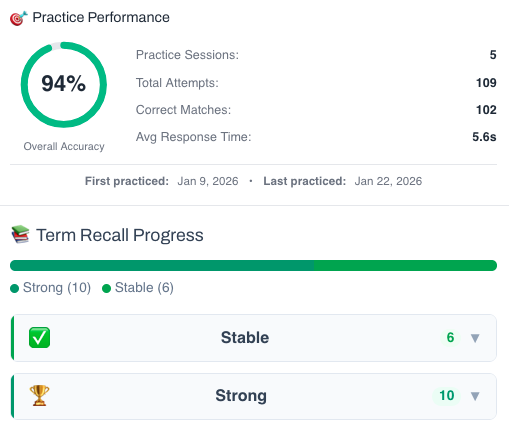
This isn’t a simple quiz — it’s a fully tracked learning system. You build knowledge through recognition, then recall, and your progress feeds directly into the Integrated Practice Bar (Writing tasks, AI Chat, and more).
- Practice sessions, accuracy, and response-time tracking
- Term strength levels (Learning → Stable → Strong)
- Personal progress history for each unit
This feature is available to YSP members.
Explore Membership Benefits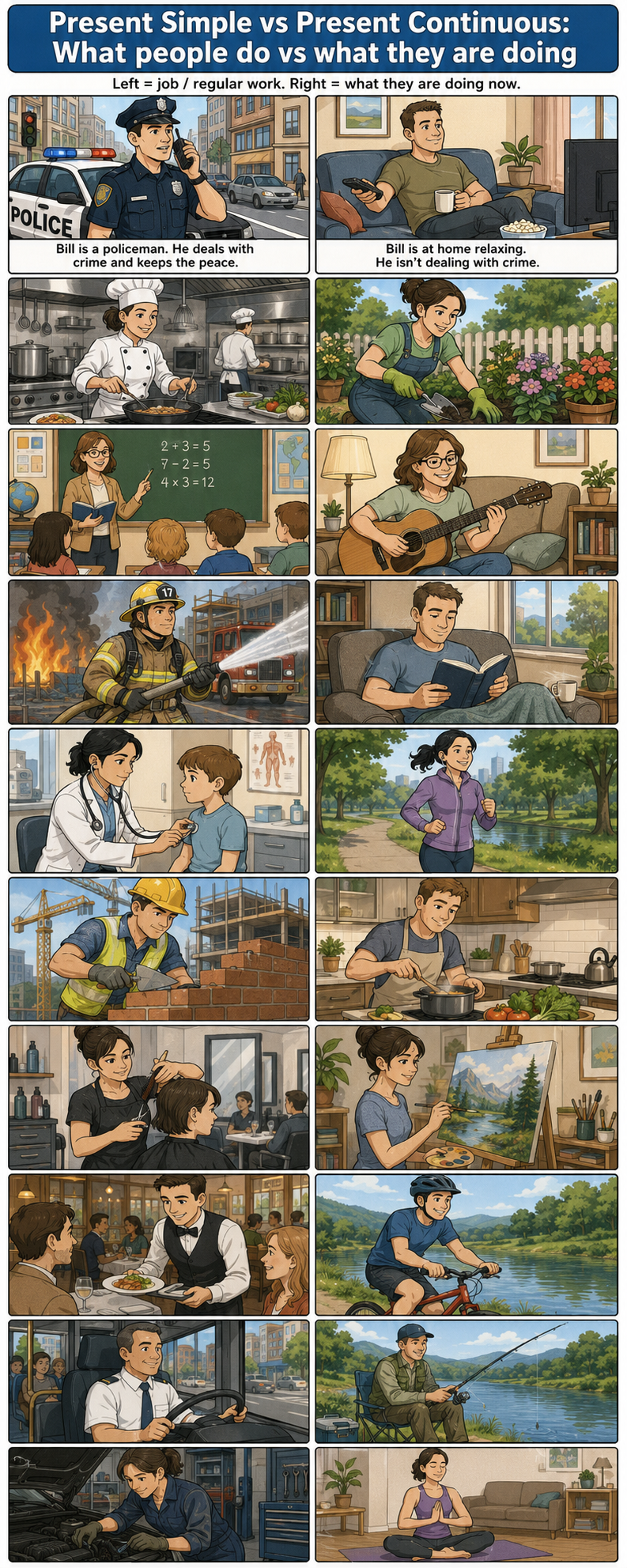
🎮 Practice Games
Sentence Scrambler
Present Simple vs Present Continuous: Habits vs Actions in Progress – Sentence Scramble
Member-Exclusive Sentence Builder
Reconstruct scrambled sentences to practice word order and develop your grammar intuition.
This feature is available to YSP members.
Explore Membership Benefits