Asking Questions About Daily Routines
Core PathWay1 Why Questions Matter in Professional Life
Questions are the key to good conversations at work. When you interview for a job, the interviewer asks questions to learn about you. They want to know about your routine, your habits, and how you work. They ask ‘Where do you live?’ and ‘What time do you start work?’ These questions help them understand if you are a good candidate for the job.
But there is something important to remember. In English, we make questions in a special way. The word order is different from statements. We don’t say ‘You work here?’ We say ‘Do you work here?’ This is different from many other languages.
In this lesson, you will learn how to make two types of questions. First, yes/no questions like ‘Do you travel for work?’ Second, wh-questions like ‘Where do you commute from?’ You will also learn how to give short answers. These skills are very useful for interviews and everyday conversations about schedules and routines.
Key Terms
2 Yes/No Questions: Finding Out Basic Information
Yes/no questions are questions with a simple yes or no answer. We use them to find out basic information about people’s routines and habits. For example, ‘Do you work on Saturdays?’ or ‘Does she live near the office?’
The word order is very important. Many learners make mistakes here because they use the word order from their first language. Let’s look at how to make these questions correctly.
Focus
- Use 'do' with I, you, we, they
- Use 'does' with he, she, it
- The main verb always stays in the base form (no -s)
Rules
- Form: Do/Does + subject + base verb
- Do not add -s to the main verb after 'does'
- Do not use statement word order in questions
Examples
- Do you work from home? (NOT: You work from home?)
- Does he start at 9 o'clock? (NOT: Does he starts at 9 o'clock?)
- Do they travel often for business? (NOT: They travel often?)
Common mistake
3 Wh-Questions and Short Answers
Wh-questions give us specific information. We use question words like where, when, what time, how often, and why. These questions help us learn details about someone’s schedule and daily routine.
The word order is: question word + do/does + subject + base verb. We also need to know how to give short answers to yes/no questions. This makes our conversation sound natural and polite.
Focus
- Question word comes first, then do/does
- Subject comes before the main verb
- Use the same word order for all wh-questions
Rules
- Form: Question word + do/does + subject + base verb
- Common question words: where, when, what time, how often, why
- Short answers: Yes, I do / No, I don't / Yes, she does / No, she doesn't
Examples
- Where do you live? (NOT: Where you live?)
- What time does she finish work? (NOT: What time finishes she?)
- How often do they commute by train? (NOT: How often they commute?)
Common mistake
4 The Interview
Sarah is interviewing Alex for a project manager position. She wants to learn about Alex’s daily routine and work habits.
Sarah: Good morning, Alex. Thank you for coming today. Let me ask you some questions about your current work situation. Do you work full-time at the moment?
Alex: Yes, I do. I work for a marketing company in the city centre.
Sarah: I see. Where do you live?
Alex: I live in Greenfield, about 15 kilometres from here.
Sarah: How do you commute to work?
Alex: I commute by train. It usually takes about 30 minutes.
Sarah: That’s good. What time do you usually start work?
Alex: I start at 8:30 in the morning.
Sarah: And what time do you finish?
Alex: I finish at 5 o’clock, but sometimes I stay later when we have important deadlines.
Sarah: Do you travel for work often?
Alex: Yes, I do. I travel to client meetings about twice a month.
Sarah: That’s interesting. Do you work well under pressure?
Alex: Yes, I do. I often have tight deadlines, and I manage my schedule carefully to meet them.
Sarah: Excellent. One more question. Does your current job involve team management?
Alex: No, it doesn’t. But I really want to develop that skill. That’s why this position interests me.
Sarah: Thank you, Alex. Those are all my questions for now.
Key Terms
5 Practice: Your Interview Questions
Now it’s your turn to practise making questions.
6 Recap: Making Questions in English
Well done! You now know how to make Present Simple questions about routines and habits.
Remember the key rules. For yes/no questions, use this pattern: Do/Does + subject + base verb. Use ‘do’ with I, you, we, they. Use ‘does’ with he, she, it. The main verb never changes – it always stays in the base form.
For wh-questions, use this pattern: Question word + do/does + subject + base verb. The question word comes first, then do or does, then the subject, then the base verb.
The most important thing is word order. Don’t use statement word order in questions. Don’t say ‘You work here?’ Say ‘Do you work here?’ Don’t say ‘Where you live?’ Say ‘Where do you live?’
Practise these questions in real situations. When you meet new people, ask them about their schedule and daily routine. When you have an interview, listen to the questions carefully. This will help you remember the correct patterns. Good luck!
Member-Exclusive Practice Bar
Access a wide range of integrated practice for this unit — from Vocabulary and Grammar activities to AI-curated Writing tasks and Thematic Chat practice.
This feature is available to YSP members.
Explore Membership BenefitsMember-Exclusive Vocabulary Review & Acquisition System
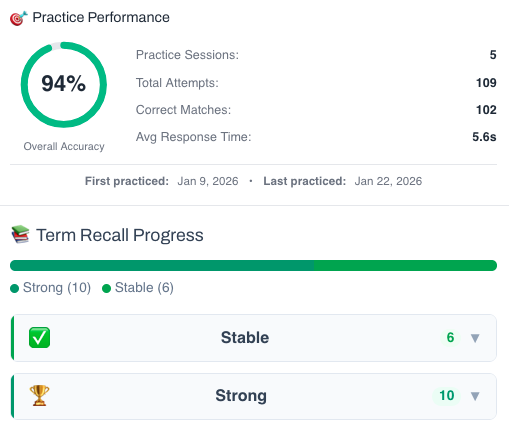
This isn’t a simple quiz — it’s a fully tracked learning system. You build knowledge through recognition, then recall, and your progress feeds directly into the Integrated Practice Bar (Writing tasks, AI Chat, and more).
- Practice sessions, accuracy, and response-time tracking
- Term strength levels (Learning → Stable → Strong)
- Personal progress history for each unit
This feature is available to YSP members.
Explore Membership Benefits