Describing Work Routines with Precision: Advanced Sequencers and Frequency Adverbs
Core PathWay
1 Beyond First, Then, Next: Sophisticated Routine Sequencing
When you describe your work routine, basic words like ‘first’, ‘then’, and ‘next’ work fine. But they sound simple — almost like a recipe or a list. Professional English speakers use more sophisticated sequencers that show exactly how actions connect in time.
Compare these two descriptions:
Basic version: ‘First I log in. Then I check emails. Next I review my schedule.’
Advanced version: ‘Before I start work, I log in. As soon as I connect, I check urgent messages. Once I finish emails, I review my schedule.’
Notice the difference? The advanced version shows the relationships between actions. Before, after, as soon as, once, until, and while create a natural workflow description that sounds more fluent and precise.
Many learners make one common mistake with these sequencers: they add future forms where they don’t belong. In English, when we describe regular habits, we use Present Simple in both parts of the sentence — even when we’re talking about what happens next. ‘As soon as I log in, I check emails’ (not ‘I will check’). This feels strange at first, but it’s the natural pattern for describing routines.
Key Terms
2 Frequency Adverbs: Position Matters
Frequency adverbs tell us how often something happens. Words like always, usually, often, sometimes, rarely, and never are essential for describing routines. But where you put them in the sentence changes everything.
In English, these adverbs have strict positioning rules. Get them right and you sound natural. Get them wrong and native speakers notice immediately.
Focus
- Frequency adverbs come BEFORE the main verb
- Frequency adverbs come AFTER the verb ‘be’
- Position affects meaning and naturalness
Rules
- BEFORE main verbs: I always check emails. She usually arrives early. They often have meetings.
- AFTER ‘be’: I am usually busy. He is always late. We are sometimes stressed.
- Frequency spectrum: always (100%) → usually → often → sometimes → rarely → never (0%)
Examples
- I always check my emails before the standup. (before main verb ‘check’)
- The team meeting is usually at 10am. (after ‘be’)
- She rarely misses a deadline, but she is often under pressure. (before ‘misses’, after ‘is’)
Common mistake
3 Advanced Sequencers with Present Simple
Advanced sequencers create sophisticated time relationships in your routine descriptions. But here’s the rule that surprises many learners: even though you’re describing a sequence (one thing happens, then another thing happens), you use Present Simple in BOTH parts of the sentence.
This is different from many languages, where you might use a future form after ‘when’ or ‘as soon as’. In English routine descriptions, Present Simple does all the work.
Focus
- Use Present Simple after time sequencers in routine descriptions
- Never use ‘will’ or future forms in the time clause
- Comma placement: comma after the time clause when it comes first
Rules
- BEFORE/AFTER pattern: Before I start my computer, I make coffee. / I make coffee before I start my computer.
- AS SOON AS/ONCE pattern: As soon as I log in, I check urgent messages. / Once I finish emails, I review tasks.
- UNTIL/WHILE pattern: I work on priority tasks until my standup starts. / While I wait for the meeting, I prepare updates.
- Comma rule: Use a comma when the time clause comes first. No comma when it comes second.
Examples
- Before I open my emails, I always review my schedule. (NOT ‘before I will open’)
- As soon as the client call finishes, I update the project timeline. (NOT ‘will finish’ or ‘will update’)
- I work on urgent tasks until the team meeting starts. (both verbs Present Simple)
Common mistake
4 A Project Manager’s Morning Routine
Meet Alex, a project manager at a software company in Manchester. Here’s how Alex describes a typical morning:
‘My work routine is quite structured. Before I start my computer, I always make coffee — I can’t function without it! As soon as I log in, I check for urgent messages from clients. If there’s anything critical, I deal with it immediately.
Once I finish my emails, I usually spend 20 minutes reviewing the project timeline. I look at which tasks are approaching their deadlines and decide on my priorities for the day. I rarely skip this step because it helps me stay organised.
I work on high-priority tasks until my 10am standup meeting starts. Our standups are short — just 15 minutes — but they’re essential for keeping the team aligned. While I wait for everyone to join the call, I often prepare my update about what I completed yesterday and what I’m working on today.
After the standup, I usually have a client call or a longer team meeting. I always review my notes from these meetings before I start working again. Then I complete whatever tasks are most urgent.
I take a break around 1pm — I never work through lunch anymore. After my break, I tackle the afternoon schedule. Before I finish for the day, I always update my task list and check my emails one last time. That way, I start fresh the next morning.’
Notice how Alex uses frequency adverbs (always, usually, often, rarely, never) to show how regular each action is, and advanced sequencers (before, as soon as, once, until, while, after) to show exactly when things happen in relation to each other. Every verb stays in Present Simple — no future forms, even though Alex is describing a sequence of events.
Key Terms
5 Practice: Describe Your Morning Work Routine
Now it’s your turn. Describe your morning work routine using the language you’ve just studied.
6 Wrap-Up: Sequencing Routines with Precision
You’ve learned how to describe professional routines with natural precision. Let’s recap the key patterns:
Frequency adverb positioning:
– Before the main verb: ‘I always check emails.’
– After ‘be’: ‘I am usually busy.’
– Never at the end of the sentence.
Advanced sequencers with Present Simple:
– Use before, after, as soon as, once, until, while to show time relationships
– Always use Present Simple in both parts of the sentence when describing routines
– Never use future forms after time sequencers in routine descriptions
– Comma rule: use a comma when the time clause comes first
The decision rule:
When describing what happens regularly, use Present Simple in both parts of the sentence, even when talking about sequence. ‘As soon as I log in, I check emails’ — not ‘I will check’. The Present Simple tells us it’s a habit, a regular pattern.
This feels different from talking about one-time future events (‘When I finish this project, I will take a holiday’), but for routines, Present Simple is the natural choice. Master this pattern and your workflow descriptions will sound fluent and professional.
Member-Exclusive Practice Bar
Access a wide range of integrated practice for this unit — from Vocabulary and Grammar activities to AI-curated Writing tasks and Thematic Chat practice.
This feature is available to YSP members.
Explore Membership BenefitsMember-Exclusive Vocabulary Review & Acquisition System
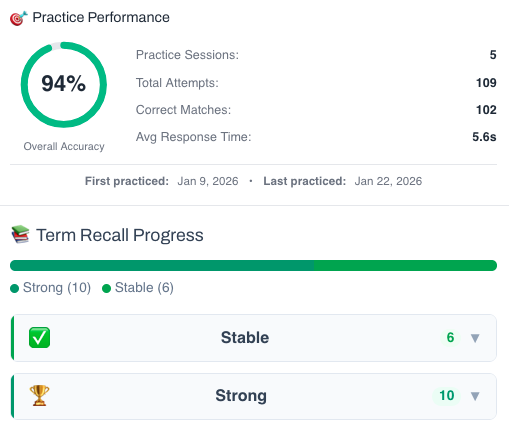
This isn’t a simple quiz — it’s a fully tracked learning system. You build knowledge through recognition, then recall, and your progress feeds directly into the Integrated Practice Bar (Writing tasks, AI Chat, and more).
- Practice sessions, accuracy, and response-time tracking
- Term strength levels (Learning → Stable → Strong)
- Personal progress history for each unit
This feature is available to YSP members.
Explore Membership Benefits