First Conditional in Business Contexts: Real Future Possibilities
Core PathWay
1 Talking About Real Future Possibilities
When you negotiate a contract or discuss a business strategy, you need to talk about future possibilities that feel real and likely. English has a special pattern for this: the first conditional.
Here’s what sounds strange to many learners: even though you’re talking about the future, you use Present Simple in the if-clause. ‘If we launch the product next month, we will increase revenue.’ Not ‘If we will launch…’ The word ‘if’ itself signals future time, so English doesn’t need ‘will’ twice. Think of ‘if’ as doing the future work in that clause.
This feels unnatural to some learners, who want to use future forms in both parts of the sentence. The key is recognising that Present Simple can express future meaning when it appears after ‘if’, ‘when’, ‘unless’, ‘as soon as’, and similar time/condition words. Once you understand this pattern, you can make predictions, set conditions, offer guarantees, and discuss contingencies with confidence in any business scenario.
Key Terms
2 The First Conditional Structure
The first conditional connects a possible future condition with its likely result. You use it constantly in business: when making predictions about market trends, setting conditions in negotiations, offering guarantees to clients, or planning for different outcomes.
The structure feels simple once you see the pattern clearly. The if-clause sets up the condition using Present Simple. The result clause shows what will happen, using ‘will’ + base verb. The two clauses can appear in either order, but punctuation changes depending on which comes first.
Focus
- If-clause uses Present Simple even though meaning is future
- Result clause uses will + base verb
- Comma needed when if-clause comes first
- No comma when result clause comes first
Rules
- FORM: If + subject + Present Simple, subject + will + base verb
- ALTERNATIVE ORDER: Subject + will + base verb + if + subject + Present Simple (no comma)
- TIME REFERENCE: Both clauses refer to future time, but only result clause uses ‘will’
- COMMA RULE: Use comma after if-clause when it starts the sentence; omit comma when if-clause follows
Examples
- If we meet the deadline, the client will approve the proposal.
- We will lose the contract if we don’t negotiate better terms.
- If the forecast shows growth, we will increase our investment.
Common mistake
3 Planning a Product Launch
Jordan and Alex sat in the conference room reviewing the projection figures for their new software launch. The deadline was tight, and several key decisions still needed to be made.
‘If we launch in Q2, we’ll target the education sector before the summer break,’ Jordan said, pointing to the market analysis. ‘But if we wait until September, we’ll miss that window completely.’
Alex nodded, studying the financial forecast. ‘I understand the timing issue. But if we don’t allocate enough budget to marketing, the launch won’t generate the revenue we need. What’s our contingency plan if the initial sales don’t meet our target?’
‘Good question,’ Jordan replied. ‘Here’s my thinking: if we secure the partnership with EdTech Solutions, they’ll guarantee distribution to 500 schools. That gives us a solid baseline. If that agreement comes through, we won’t need to worry about the September timing.’
‘And if it doesn’t?’ Alex asked.
‘Then we’ll need to revise our strategy completely. If we can’t get that commitment by next Friday, I propose we delay the launch and focus on building a stronger direct sales channel. We need to negotiate better terms with our existing clients first.’
Alex made notes on the proposal. ‘If we present this scenario to the board tomorrow, what outcome are you expecting?’
Jordan smiled. ‘Simple. If they approve the partnership route, we proceed with the Q2 launch. If they have concerns about the condition we’ve set, we’ll have the September backup plan ready. Either way, we move forward with clarity.’
Key Terms
4 Your Turn: Professional Scenarios
Now apply what you’ve learned. Write first conditional sentences about real situations in your professional context.
5 Understanding the Time Shift
You’ve now seen how first conditionals work in real business contexts. The key insight is understanding what ‘if’ does to time reference.
When you learned about Present Simple for scheduled future events (‘The meeting starts at 3pm’, ‘We launch next month’), you saw that Present Simple can express future meaning in specific contexts. The first conditional uses exactly the same principle: ‘if’ creates a context where Present Simple refers to future time.
Here’s your decision rule: Use the first conditional when you’re talking about a real future possibility and its likely result. The situation feels probable, not imaginary. ‘If we meet the deadline, we’ll win the contract’ — this is a real possibility you’re planning for. Compare this with the second conditional, which you’ll study later: ‘If we had unlimited budget, we would hire 50 people’ — this is imaginary, not a real plan.
The first conditional is your go-to structure for business planning, negotiations, predictions, and any situation where you’re discussing realistic future scenarios and their consequences.
6 Recap: First Conditional for Real Future Possibilities
The first conditional connects real future conditions with likely results using a specific pattern: If + Present Simple, will + base verb. Although both clauses refer to future time, only the result clause uses ‘will’ — the if-clause uses Present Simple because ‘if’ itself signals the future context. This structure appears constantly in business communication for making predictions, setting conditions, offering guarantees, and discussing contingencies. Remember the comma rule: use a comma when the if-clause starts the sentence, but omit it when the if-clause follows the result clause. Avoid the common error of using ‘will’ in the if-clause; Present Simple is correct despite the future meaning. Master this pattern and you’ll handle professional negotiations, planning meetings, and client discussions with natural confidence.
Member-Exclusive Practice Bar
Access a wide range of integrated practice for this unit — from Vocabulary and Grammar activities to AI-curated Writing tasks and Thematic Chat practice.
This feature is available to YSP members.
Explore Membership BenefitsMember-Exclusive Vocabulary Review & Acquisition System
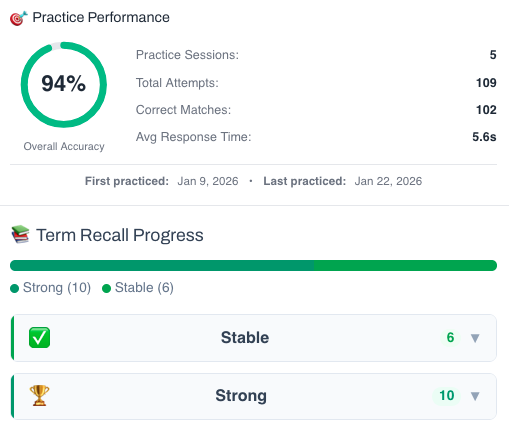
This isn’t a simple quiz — it’s a fully tracked learning system. You build knowledge through recognition, then recall, and your progress feeds directly into the Integrated Practice Bar (Writing tasks, AI Chat, and more).
- Practice sessions, accuracy, and response-time tracking
- Term strength levels (Learning → Stable → Strong)
- Personal progress history for each unit
This feature is available to YSP members.
Explore Membership Benefits🎮 Practice Games
Sentence Scrambler
Present Simple in First Conditional Sentences – Sentence Scramble
Member-Exclusive Sentence Builder
Reconstruct scrambled sentences to practice word order and develop your grammar intuition.
This feature is available to YSP members.
Explore Membership Benefits