Stative Verbs in Present Simple: Feelings, Thoughts, and Possession
Core PathWay
1 States vs Actions: Why Some Verbs Don't 'Happen'
Imagine you’re in a meeting. You can say ‘I’m thinking about your proposal‘ because thinking is an active mental process—it’s something you’re doing right now. But you can’t say ‘I’m knowing the answer’—why not?
The reason is simple but fundamental: some verbs describe states (conditions that exist), not actions (things you do). States either exist or they don’t—they can’t be ‘in progress.’ You either know something or you don’t. You either own something or you don’t. You either understand a position or you don’t.
This creates a challenge for many learners. In some languages, you can use continuous forms with mental state verbs quite naturally. For example, Italian speakers say ‘sto pensando’ (I’m thinking) for both active thought processes and mental states. English makes a sharper distinction: actions can be ongoing; states simply are.
The key question to ask yourself: ‘Is this verb describing something I’m doing, or something that exists in my mind, my feelings, or my possessions?’ If it’s a state, use Present Simple—always.
2 The Four Categories of Stative Verbs
Stative verbs fall into four main groups, and all of them work the same way: they take Present Simple, not Present Continuous, because they express permanent or long-term conditions rather than temporary actions.
In professional contexts, you use these verbs constantly—to express opinions, state preferences, describe what you need, and explain your understanding of data or client requirements. Getting the form right matters: saying ‘I am knowing’ or ‘She is wanting’ marks you immediately as a non-native speaker, even if your meaning is clear.
Focus
- Stative verbs describe states (mental, emotional, possessive, perceptual), not actions
- They use Present Simple in all contexts—never Present Continuous
- Common categories: know/understand/believe (mental); like/prefer/want/need (emotional); have/own/belong (possession); seem/appear (perception)
Rules
- Form: Subject + base verb (+ s/es for 3rd person singular). Example: 'I understand your position' / 'She needs approval'
- Negative: Subject + do/does + not + base verb. Example: 'We don't believe this approach works' / 'He doesn't own the patent'
- Question: Do/Does + subject + base verb? Example: 'Do you prefer the first option?' / 'Does the client want changes?'
Examples
- I understand your position on the budget, but I think we need more data before we decide.
- She needs final approval from the client before we can implement this strategy.
- We believe this approach works well for long-term projects, and the results seem promising so far.
Common mistake
Key Terms
3 Stative Verbs in Action: A Workplace Conversation
Jordan and Alex are reviewing a project proposal before presenting it to their client. The deadline is tight, and they need to make sure their strategy addresses all the requirements.
Jordan: So, what do you think about the second approach? I believe it’s stronger, but I want your opinion before we commit.
Alex: I understand your position, but I’m not sure we have enough data to support it. The client needs evidence, and right now, this seems too theoretical.
Jordan: That’s a fair concern. Do you prefer the first option, then?
Alex: I do, actually. It appears more practical, and it addresses their main priority—cost reduction. I know they won’t approve anything that doesn’t show clear savings.
Jordan: Good point. I agree with you. Let’s refocus on that objective and make sure we own the cost argument. If we can demonstrate savings, we’ll get their approval.
Alex: Exactly. I think we need to revise the budget section tonight. Do you have time?
Jordan: I do. Let’s do it.
Notice: Why do we say ‘I think we need more data’ and not ‘I am thinking we are needing more data’? Because both ‘think’ (in this context, meaning ‘believe’) and ‘need’ describe mental and emotional states, not actions happening right now. The states exist—they’re not in progress.
Notice: ‘Do you understand the client’s position?’ is correct. ‘Are you understanding the client’s position?’ sounds completely wrong because understanding is a state—you either understand or you don’t. It’s not something you can be ‘in the middle of doing.’
Notice: ‘I prefer the first option’ describes a permanent state of liking. Even if your preference might change tomorrow, right now it exists as a state, not an action. That’s why ‘I am preferring’ is impossible in standard English.
Key Terms
4 Practice: Express Your Professional Views
Now put stative verbs into practice. Write about your own professional opinions and preferences.
5 Wrap-Up: Your Decision Rule for Stative Verbs
You’ve now seen the four main categories of stative verbs and how they work in professional contexts. Here’s your simple decision rule: Ask yourself: is this verb describing a state of mind, a feeling, a possession, or a perception—or is it describing an action?
If it’s a state, use Present Simple. Always. States exist or they don’t—they can’t be ‘in progress.’
A quick reminder of the categories: Mental states (know, understand, believe, think when it means ‘believe’), Emotions (like, love, hate, prefer, want, need), Possession (have, own, belong), and Senses/Perception (seem, appear, sound, taste when describing qualities).
One important note: some verbs can be both stative and dynamic, depending on context. ‘Think’ is stative when it means ‘believe’ (I think this strategy works), but dynamic when it means ‘use your mind actively’ (I’m thinking about the problem right now). Similarly, ‘have’ is stative for possession (I have a meeting), but dynamic in expressions like ‘I’m having lunch’ or ‘We’re having problems.’
These exceptions are rare, and the context usually makes the meaning clear. For now, focus on the core principle: states = Present Simple. As you read and listen to authentic business communication—emails, presentations, meetings—notice how native speakers use these verbs. You’ll start to hear the difference naturally, and the correct form will begin to feel automatic.
6 Recap: Stative Verbs in Present Simple
Stative verbs describe conditions that exist, not actions that happen. They express mental states (know, understand, believe), emotions (like, prefer, want, need), possession (have, own, belong), and perception (seem, appear). Because they describe states rather than actions, they always take Present Simple—never Present Continuous.
In professional contexts, you use stative verbs constantly: to express opinions and positions, state preferences and requirements, describe what you need or understand, and explain your view of data, strategies, or client objectives. The form is straightforward: Present Simple in positive, negative, and question forms.
The most common error is using continuous forms: I am knowing, She is wanting, We are understanding. Remember: states exist or they don’t—they can’t be ‘in progress.’ When you’re unsure, ask yourself: ‘Is this a state of mind, feeling, or possession, or is it an action?’ States always take Present Simple.
Some verbs like ‘think’ and ‘have’ can be stative or dynamic depending on context, but these cases are rare and usually clear from meaning. Focus on the core principle, and notice how stative verbs work in authentic business communication. With practice, choosing the right form will become automatic.
Member-Exclusive Practice Bar
Access a wide range of integrated practice for this unit — from Vocabulary and Grammar activities to AI-curated Writing tasks and Thematic Chat practice.
This feature is available to YSP members.
Explore Membership BenefitsMember-Exclusive Vocabulary Review & Acquisition System
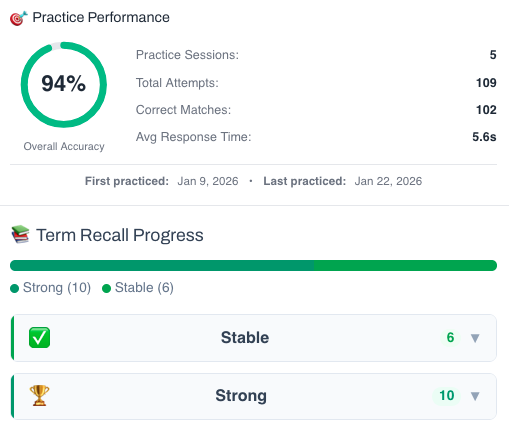
This isn’t a simple quiz — it’s a fully tracked learning system. You build knowledge through recognition, then recall, and your progress feeds directly into the Integrated Practice Bar (Writing tasks, AI Chat, and more).
- Practice sessions, accuracy, and response-time tracking
- Term strength levels (Learning → Stable → Strong)
- Personal progress history for each unit
This feature is available to YSP members.
Explore Membership Benefits🎮 Practice Games
Sentence Scrambler
Stative Verbs in Present Simple: Feelings, Thoughts, and Possession – Sentence Scramble
Member-Exclusive Sentence Builder
Reconstruct scrambled sentences to practice word order and develop your grammar intuition.
This feature is available to YSP members.
Explore Membership Benefits