Frequency Adverbs with Present Simple
Core PathWay
1 Why Do We Need Frequency Adverbs?
Look at this sentence: ‘I go to the gym.’ This is true. But when do you go? Every day? One time a week? This is important! We need words to say HOW OFTEN we do things. These words are frequency adverbs. They help us be clear about our routines and habits. A routine is when you do things in the same order. A habit is something you do regularly without thinking. For example: ‘I always drink coffee’ means 100% of the time. ‘I never drink tea’ means 0% of the time. We have a frequency scale. It goes from always (100%) to never (0%). In the middle we have usually, often, sometimes, rarely, and seldom. Where do we put these words? This is very important in English! The word goes BEFORE the action verb. The word goes AFTER the verb ‘be’. Look: ‘I always wake up early.’ The word ‘always’ comes before ‘wake up’. Look: ‘I am always tired.’ The word ‘always’ comes after ‘am’. This lesson shows you the rules. You can talk about your day with more detail!
Key Terms
2 The Rules: Where to Put Frequency Adverbs
Now we learn the rules. Frequency adverbs tell us HOW OFTEN. They go in special places in the sentence. This is not difficult! You need to know two simple rules. Rule 1: The frequency word goes BEFORE the main action verb. Rule 2: The frequency word goes AFTER the verb ‘be’. Look at the examples. See the pattern. Then you can use these words correctly!
Focus
- Position before main verb (I always eat breakfast)
- Position after be (I am always tired)
- Frequency scale from always to never
Rules
- Put the frequency adverb BEFORE the main verb: Subject + frequency adverb + verb
- Put the frequency adverb AFTER the verb 'be': Subject + am/is/are + frequency adverb
- The frequency scale goes: always (100%) → usually → often → sometimes → rarely/seldom → never (0%)
Examples
- I always wake up at 7am. (before main verb)
- She is usually relaxed on Sunday. (after be)
- We often have breakfast at home. (before main verb)
- He is sometimes late for work. (after be)
- They rarely exercise in winter. (before main verb)
- I am never tired in the morning. (after be)
Common mistake
Key Terms
3 Three Roommates, Three Routines
Marco, Sofia, and Luca live in the same flat. They are very different! Marco always wakes up at 6am. He is never late for anything. He usually goes running in the park before work. He often exercises three or four times a week. Marco is always on time for work. He never stays up late. He goes to bed at 10pm every night. Marco is usually tired in the evening because he works hard all day. But he is always relaxed on Saturday morning. Sofia has a different routine. She sometimes wakes up early, but not always. She often works from home, so she does not go to work every day. Sofia usually has breakfast at 9am. She sometimes exercises at the gym, maybe two times a week. She is often relaxed because she does not have a lot of stress. Sofia rarely watches TV in the evening. She is usually reading a book or talking to friends. She is never bored. Luca is the third roommate. Luca rarely cooks. He never cleans the kitchen! Marco and Sofia are not happy about this. Luca often stays up late because he plays computer games. He is always tired in the morning. He usually wakes up at 8.30am and he is sometimes late for work. His boss is not happy. Luca rarely exercises. He is often at home on the sofa. He always watches TV in the evening. Luca never goes running like Marco. Three people, three very different routines! Who are you like? Marco, Sofia, or Luca?
Key Terms
4 Write About Your Routine
Now you write about YOUR routine. Use frequency adverbs to be clear and precise!
5 Remember the Rules
Good work! Now you know how to use frequency adverbs. Remember the placement rule: frequency comes BEFORE action, but AFTER being. Look: ‘I always eat lunch’ (before the action ‘eat’). Look: ‘I am always hungry’ (after ‘am’). Here is the frequency scale in order: always (100%) → usually → often → sometimes → rarely → seldom → never (0%). Now you can be more precise! When you talk about your routine, add frequency adverbs. Your English sounds more natural. You can say exactly HOW OFTEN you do things. Practice this every day. Soon it is easy and automatic!
Member-Exclusive Practice Bar
Access a wide range of integrated practice for this unit — from Vocabulary and Grammar activities to AI-curated Writing tasks and Thematic Chat practice.
This feature is available to YSP members.
Explore Membership BenefitsMember-Exclusive Vocabulary Review & Acquisition System
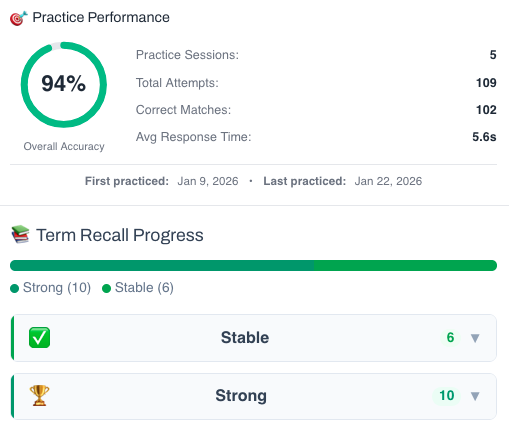
This isn’t a simple quiz — it’s a fully tracked learning system. You build knowledge through recognition, then recall, and your progress feeds directly into the Integrated Practice Bar (Writing tasks, AI Chat, and more).
- Practice sessions, accuracy, and response-time tracking
- Term strength levels (Learning → Stable → Strong)
- Personal progress history for each unit
This feature is available to YSP members.
Explore Membership Benefits🎮 Practice Games
Sentence Scrambler
Frequency adverbs with Present Simple: placement and usage – Sentence Scramble
Member-Exclusive Sentence Builder
Reconstruct scrambled sentences to practice word order and develop your grammar intuition.
This feature is available to YSP members.
Explore Membership Benefits