State Verbs: Think, Know, Like, Want
Core PathWay
1 What Are State Verbs?
Some verbs are different. They do not describe actions. They describe states. What is a state? A state is something that stays the same. It does not change quickly.
When you say ‘I know English,’ this is a state. It is not an action. When you say ‘I like coffee,’ this is also a state. It is a feeling. These verbs are called state verbs.
State verbs have three groups. First, thinking verbs. These are verbs about your mind. You use them for opinions and ideas. Examples: think, believe, understand, remember, know. Second, feeling verbs. These are verbs about your feelings and emotions. Examples: like, love, hate, prefer. Third, possession and need verbs. These are verbs about what you own or need. Examples: have, want, need.
State verbs do not use -ing forms. This is very important! Many learners say ‘I am knowing’ or ‘I am wanting.’ This is wrong. State verbs use Present Simple only. You say ‘I know’ and ‘I want.’ This page helps you use state verbs correctly.
Key Terms
2 How to Use State Verbs
State verbs use Present Simple. They describe states that last a long time. They do not describe actions happening now. This is why you never use -ing with state verbs.
When you talk about your opinion, you say ‘I think it is good.’ You do NOT say ‘I am thinking it is good.’ When you talk about what you know, you say ‘She knows my name.’ You do NOT say ‘She is knowing my name.’ When you talk about what you want, you say ‘We want help.’ You do NOT say ‘We are wanting help.’
Focus
- Never use -ing with state verbs
- Use Present Simple even when talking about now
- State verbs are organized by meaning: thinking, feeling, possession and need
Rules
- Thinking verbs (opinion and knowledge): I think it's good NOT I'm thinking it's good | She knows him NOT She's knowing him | I believe you NOT I'm believing you
- Feeling verbs (emotions and preferences): I like coffee NOT I'm liking coffee | He loves music NOT He's loving music | We hate rain NOT We're hating rain
- Possession and need verbs: I have a book NOT I'm having a book | They want help NOT They're wanting help | She needs time NOT She's needing time
Examples
- I think this food is good. (opinion about food)
- She knows his name. (knowledge about a person)
- We like our teacher. (feeling about a person)
- I want to learn English. (desire)
- They have questions. (possession)
- He needs help. (requirement)
Common mistake
Key Terms
3 First Day at English School
Today is my first day at English school. I am a little nervous. I think the class is interesting. There are ten students. The teacher is very friendly. Her name is Ms. Carter. She knows all our names already!
I sit next to a student called Alex. Alex is from another country. He loves English music. He tells me about his favorite songs. I like music too. We talk about our hobbies. I want to learn more English. Alex wants to improve his speaking.
Ms. Carter gives us a vocabulary list. I don’t understand one word. I ask Alex. He doesn’t know the answer either. We ask Ms. Carter. She explains the word. Now I understand!
Another student, Sam, says something strange. He says ‘I am knowing this word.’ Ms. Carter smiles. She says ‘Good, Sam! But we say I know this word, not I am knowing.’ Sam understands now. He says ‘I know this word’ again. Perfect!
At the end of class, Ms. Carter asks ‘Do you like the class?’ Everyone says yes. I believe I can improve my English here. I have a good feeling about this school. Some students have questions. Ms. Carter answers all of them. I think she is a great teacher.
I prefer small classes like this one. I need practice with speaking. Ms. Carter says we can practice every day. I am happy. I love learning new things. This is a good school for me.
Key Terms
4 Your Turn: Write About Learning English
Now you can practice. Write about your opinions and feelings about learning English.
5 Remember This Rule
State verbs use Present Simple. Never use -ing forms with state verbs. This is the most important rule on this page.
Here is a simple decision rule. Ask yourself: Is this verb about my mind, my feelings, or what I own? If yes, use Present Simple. Do not use -ing.
Common state verbs to remember:
Thinking: think, know, believe, understand, remember
Feeling: like, love, hate, prefer
Possession and need: have, want, need
When you want to use -ing, stop. Check if the verb is a state verb. If it is a state verb, use Present Simple instead. This helps you speak natural English.
Signal words do not help with state verbs. You identify state verbs by their meaning, not by time words. State verbs describe states that last a long time. They are not about actions happening now.
Practice noticing state verbs. When you read or listen, look for them. When you speak or write, check your verbs. Is it a state verb? Then use Present Simple. This becomes easy with practice!
Member-Exclusive Practice Bar
Access a wide range of integrated practice for this unit — from Vocabulary and Grammar activities to AI-curated Writing tasks and Thematic Chat practice.
This feature is available to YSP members.
Explore Membership BenefitsMember-Exclusive Vocabulary Review & Acquisition System
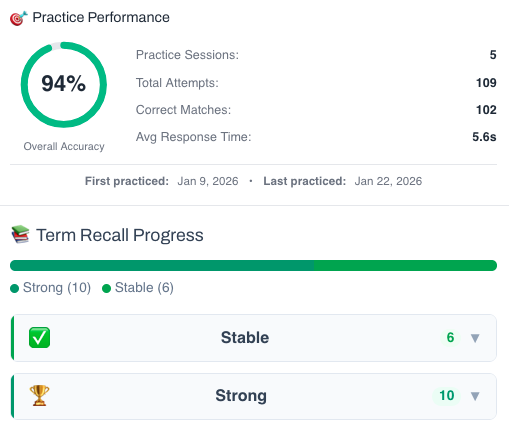
This isn’t a simple quiz — it’s a fully tracked learning system. You build knowledge through recognition, then recall, and your progress feeds directly into the Integrated Practice Bar (Writing tasks, AI Chat, and more).
- Practice sessions, accuracy, and response-time tracking
- Term strength levels (Learning → Stable → Strong)
- Personal progress history for each unit
This feature is available to YSP members.
Explore Membership Benefits🎮 Practice Games
Sentence Scrambler
State Verbs: Think, Know, Like, Want – Sentence Scramble
Member-Exclusive Sentence Builder
Reconstruct scrambled sentences to practice word order and develop your grammar intuition.
This feature is available to YSP members.
Explore Membership Benefits