The Bigger They Come, the Harder They Fall: Linked Change Comparatives
Core PathWay
1 Section 1. When One Thing Changes, Another Changes Too
Think about this: when the temperature goes up, do you drink more water? When music gets louder, do you find it harder to concentrate? These are linked changes — when one thing changes, another thing changes at the same time.
You probably know how to describe one change: It is hot. I am thirsty. But English has a special structure to show that two changes happen together. It uses the…the… with comparative adjectives. Here are some examples:
— The hotter it is, the thirstier I get.
(This means: when the temperature rises, I need to drink more water.)
— The higher you climb, the colder it gets.
(This means: when you go up higher, the temperature drops.)
— The harder you work, the more tired you feel.
(This means: when your effort increases, your tiredness increases too.)
— The quieter the room is, the easier it is to focus.
(This means: when the room becomes quieter, focusing becomes easier.)
— The more confident you are, the more relaxed you feel.
(This means: when confidence grows, relaxation grows with it.)
And here are two famous phrases that use exactly this structure:
— The bigger they come, the harder they fall.
(This means: when someone is very powerful, their failure is even more dramatic.)
— The older you get, the wiser you become.
(This means: when age increases, wisdom tends to increase too.)
Notice something important: in every example, two things are linked. When one goes up (or down), the other goes up (or down) too. The structure shows this connection clearly and elegantly.
Key Terms
2 Section 2. How the Structure Works
Now let’s look at the structure itself. It is very regular — once you see the pattern, you can use it for many situations. There is one key rule to remember: both parts of the structure need a subject and a verb. And notice the comma — it always comes after the first part.
This structure is also very close in meaning to sentences with when or if. This makes it easier to understand — and easier to check that you have used it correctly.
Focus
- The structure has two parts, joined by a comma: THE + comparative adjective + subject + verb, THE + comparative adjective + subject + verb.
- Both parts need a subject and a verb. Do not leave them out.
- The first THE is not a normal definite article — it is part of the structure. Do not replace it with ‘a’ or leave it out.
- Use a comparative adjective (e.g. hotter, more difficult, older) — not a superlative (e.g. hottest, most difficult, oldest).
- Do not add THAN inside the structure. Wrong: The hotter than it is… Correct: The hotter it is…
- Do not use question word order. Wrong: The hotter is it… Correct: The hotter it is…
- The structure expresses a general relationship — not a change happening right now. It means: whenever X increases, Y increases.
- This structure is very close in meaning to a sentence with WHEN (general truth) or IF (possible situation).
Rules
- FORM: THE + [comparative adjective] + [subject] + [verb], THE + [comparative adjective] + [subject] + [verb]
- COMMA RULE: Always place a comma after the first clause, before the second THE.
- VERB RULE: Both clauses need a complete subject and verb. Do not write The hotter, the thirstier — write The hotter it is, the thirstier I get.
- ADJECTIVE RULE: Use the comparative form of the adjective only. Do not use the base form (The hot it is) or the superlative (The hottest it is).
- WHEN/IF LINK: ‘The warmer the weather is, the happier I feel’ = ‘When the weather is warm, I feel happy’ (general truth) OR ‘If the weather gets warmer, I will feel happier’ (possible future situation).
Examples
- The higher you go, the colder it gets. → When you go higher, it gets colder. / If you go higher, it will get colder.
- The more relaxed you are, the better you perform. → When you are more relaxed, you perform better. / If you are more relaxed, you will perform better.
- The older people get, the more cautious they become. → When people get older, they become more cautious. / If people get older, they will become more cautious.
Common mistake
Key Terms
3 Section 3. Back from Everest: A Conversation
Sam has just returned from a climbing expedition to Mount Everest. Listen to how Sam uses the ‘the…the…’ structure to describe what the experience was really like.
💬 Dialogue 1: Life at the Top: An Interview with a Climber
A radio interview studio. The interviewer, Jordan, is speaking with Sam, who has just returned from a successful climb to the summit of Everest.
Jordan: “Sam, welcome back to the studio. It is wonderful to have you here. You have just returned from the summit of Everest — how does it feel to be home?”
Sam: “Thank you, Jordan. It feels incredible, honestly. It is good to be warm again and to sleep in a real bed. But part of me is still up there on the mountain.”
Jordan: “I can imagine. Now, I have to ask — what is it actually like up there? What surprised you most about the experience?”
Sam: “Honestly, the altitude surprised me most, even though I had trained for it. The higher you go, the more difficult it is to breathe. At base camp it feels manageable, but near the summit, every single step is a real effort. You count your breaths just to keep moving.”
Jordan: “That is remarkable. And what about the temperature? I imagine the cold is a serious factor up there.”
Sam: “Absolutely. The colder it gets, the more dangerous it becomes. And the more dangerous it is, the more alert you have to be. You cannot switch off for even a second. One small mistake in those conditions can be fatal.”
Jordan: “So your body and your mind are both under enormous pressure. Does the body adapt at all over time, or does it just get harder the longer you are up there?”
Sam: “It just gets harder, I am afraid. The longer you stay at high altitude, the weaker you feel. Your muscles do not recover properly overnight. And the more exhausted you are, the slower your reactions become — and that is exactly when accidents happen. Your body is fighting you the whole time.”
Jordan: “That sounds frightening, Sam. How on earth do you stay motivated when everything is working against you?”
Sam: “It is hard to explain, but the closer you get to the summit, the more determined you feel. The mountain gives you this strange energy near the top. And the harder it is, the more you want it. That feeling is what keeps you moving when everything else is telling you to stop.”
Jordan: “Sam, that is a truly inspiring story. Thank you so much for sharing it with us today. We wish you well on whatever comes next.”
Sam: “Thank you, Jordan. It has been a pleasure. And for anyone listening who has a big goal — just keep going. The harder the journey, the better the story at the end.”
4 Section 4. The…The… with Nouns
So far, you have used the ‘the…the…’ structure with adjectives. But you can also use it with nouns. This is very useful when you want to talk about quantities — how many people, how much energy, how much time. The key is choosing the right word: more, fewer, or less. The choice depends on the type of noun.
Focus
- When you use a noun in the ‘the…the…’ structure, you use THE MORE + noun or THE FEWER / THE LESS + noun.
- COUNTABLE nouns are things you can count: one person, two people, three cars. Use MORE or FEWER with countable nouns.
- UNCOUNTABLE nouns are things you cannot count as individual items: water, energy, time, traffic. Use MORE or LESS with uncountable nouns.
- FEWER = a smaller number of (countable). LESS = a smaller amount of (uncountable).
- The structure with nouns follows the same pattern: THE MORE/FEWER/LESS + noun + subject + verb, THE MORE/FEWER/LESS + noun + subject + verb — OR — THE MORE/FEWER/LESS + noun + subject + verb, THE + comparative adjective + subject + verb.
- You can mix: one clause with a noun and one clause with an adjective.
Rules
- COUNTABLE NOUN RULE: Use MORE (increase) or FEWER (decrease). Example: The more people there are, the more resources are needed. The fewer cars there are, the cleaner the air is.
- UNCOUNTABLE NOUN RULE: Use MORE (increase) or LESS (decrease). Example: The more time you have, the more relaxed you feel. The less sleep you get, the more tired you are.
- COMMON ERROR: Many speakers say ‘less people’ in conversation, but in written and formal English, FEWER is correct for countable nouns. Use FEWER for things you can count.
- MIXED STRUCTURE: You can combine a noun clause with an adjective clause. Example: The more traffic there is, the more stressed drivers become. (noun in first clause, adjective in second clause)
Examples
- The more people there are in a city, the more energy is needed. (countable noun: people / uncountable noun: energy)
- The fewer hours of sleep you get, the less focused you are the next day. (countable noun: hours / adjective: focused)
- The less free time people have, the more stressed they become. (uncountable noun: free time / adjective: stressed)
Common mistake
5 Section 5. Now You Try
You have studied the ‘the…the…’ structure with adjectives and nouns. Now use what you know to write your own sentences and a short paragraph.
6 Section 6. What You Have Learned
Well done — you have covered a lot of ground on this page. Let’s pull it all together.
The ‘the…the…’ structure shows that two changes are linked. When one thing increases or decreases, another thing changes at the same time. For example: The harder you train, the fitter you become. Both parts of the structure need a subject and a verb — and a comma separates the two parts.
This structure works with adjectives (the more confident, the more relaxed) and with nouns (the more people, the more energy is needed). When you use nouns, remember: fewer goes with things you can count (fewer cars, fewer hours), and less goes with things you cannot count (less time, less energy).
You also saw that this structure is closely related to conditional thinking. The older you get, the wiser you become means the same as when you get older, you become wiser — or if you get older, you will become wiser. So if you can build a ‘when/if’ sentence, you can build a ‘the…the…’ sentence too.
Finally, remember the famous phrase that started this page: The bigger they come, the harder they fall. Now you know exactly how it works — and you can create your own.
Member-Exclusive Practice Bar
Access a wide range of integrated practice for this unit — from Vocabulary and Grammar activities to AI-curated Writing tasks and Thematic Chat practice.
This feature is available to YSP members.
Explore Membership BenefitsMember-Exclusive Vocabulary Review & Acquisition System
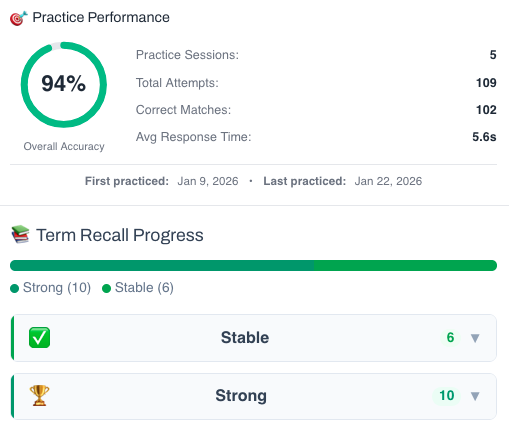
This isn’t a simple quiz — it’s a fully tracked learning system. You build knowledge through recognition, then recall, and your progress feeds directly into the Integrated Practice Bar (Writing tasks, AI Chat, and more).
- Practice sessions, accuracy, and response-time tracking
- Term strength levels (Learning → Stable → Strong)
- Personal progress history for each unit
This feature is available to YSP members.
Explore Membership Benefits