Adjective + Noun Compounds: When Adjectives Stop Describing and Start Belonging
Core PathWay
1 Section 1. When an Adjective Becomes Part of the Noun
Here is a question worth thinking about: is a greenhouse simply a house that is green? Of course not — and that is exactly the point.
In English, adjectives normally describe nouns. We say a cold morning, a difficult decision, a bright idea. The adjective tells us something about the noun, but the two words stay separate. Remove the adjective and the noun still stands on its own.
Adjective + noun compounds work differently. The adjective does not describe the noun — it joins it. Together, the two words name a single, specific thing. A greenhouse is a glass structure for growing plants, not a green-coloured house. A blackboard is a teaching surface, not a board that happens to be black. A smartphone is a category of device, not simply a phone that is smart.
This is the golden rule: once an adjective and a noun form a compound, the adjective is frozen. It is no longer doing the job of an adjective — it is part of the noun’s identity. You cannot say a very black board when you mean a blackboard. You cannot say a greener house when you mean a greenhouse. The adjective has left the building. It now belongs to the noun.
A second golden rule follows from the first: the meaning of a compound noun is often non-compositional. That means you cannot always guess the meaning by adding the two parts together. Blackboard does not mean ‘a board that is black’. Greenhouse does not mean ‘a house that is green’. The compound has developed its own fixed meaning — and that meaning must be learned as a unit.
2 Section 2. Grammar Guide — Adjective + Noun Compounds
Understanding the grammar behind these compounds helps you use them correctly and avoid some very common mistakes. The key insight is this: the moment an adjective + noun pair becomes a compound, it stops behaving like a normal adjective-noun phrase and starts behaving like a single noun. That shift has real grammatical consequences.
Focus
- Form: adjective + noun → single compound noun
- The adjective element is grammatically frozen inside the compound
- Compound nouns can be written as one word (closed), two words (open), or hyphenated — and usage varies
- Stress pattern: in compounds, primary stress usually falls on the FIRST element (the adjective)
- Meaning is often non-compositional — the compound has a fixed, specific meaning that differs from the sum of its parts
- The compound functions as a noun: it can be singular or plural, take articles, and act as subject or object
Rules
- FROZEN ADJECTIVE RULE: Once a compound is established, the adjective cannot be modified, compared, or intensified. Do not say 'a very black board' (meaning blackboard) or 'a greener house' (meaning greenhouse). The adjective is part of the noun, not a free-standing descriptor.
- STRESS RULE: Adjective + noun COMPOUNDS are stressed on the first element: BLACKboard, GREENhouse, SMARTphone. This is different from a regular adjective + noun PHRASE, where stress is more balanced or falls on the noun: a BLACK board (a board that is black), a GREEN house (a house that is green). Stress is one of the clearest signals that a compound has formed.
- SPELLING RULE: There is no single rule for whether a compound is written as one word, two words, or hyphenated. Closed forms (one word) are most common for established compounds: greenhouse, blackboard, shortcut. Some remain two words: fast food, full moon, hard drive. When in doubt, check a reliable dictionary — spelling can vary between British and American English.
- PLURALITY RULE: The compound noun is pluralised at the end, like any noun. The adjective element does not change. We say greenhouses, blackboards, smartphones — not greenshouses or blacksboard.
- ARTICLE RULE: Compound nouns take articles in the normal way. Use 'a/an' for first mention and 'the' when the reference is specific: 'She bought a smartphone' / 'The smartphone she bought was expensive.'
- MEANING RULE: Do not assume you can decode a compound's meaning from its parts. Greenhouse, blackboard, and shortcut all have meanings that go beyond their components. When you encounter a new compound, treat it as a vocabulary item to learn as a whole unit.
Examples
- "The greenhouse effect is one of the most discussed topics in environmental science." — 'greenhouse' is a fixed compound; 'effect' is the head noun being modified by the compound adjective.
- "She wiped the blackboard clean before the lesson started." — 'blackboard' functions as a single noun; it is the direct object of 'wiped'.
- "His smartphone died halfway through the presentation, so he had to rely on his printed notes." — 'smartphone' is a closed compound noun acting as subject; it takes a singular verb.
Common mistake
3 Section 3. 30 High-Frequency Adjective + Noun Compounds
Below is a curated list of 30 adjective + noun compounds that appear frequently in everyday life, professional settings, and the media. They are grouped by theme to help you notice patterns and build vocabulary in clusters. For each group, pay attention to how the meaning of the compound has moved away from a simple description.
ENVIRONMENT & SCIENCE
1. greenhouse — a glass structure for growing plants; also used in greenhouse gas, greenhouse effect
2. ozone layer — the layer of the atmosphere that protects Earth from UV radiation (open compound)
3. acid rain — rain that contains harmful chemicals from pollution
4. full moon — the phase when the moon appears as a complete circle (open compound)
5. dry run — a practice attempt before the real event (open compound)
EDUCATION & WORK
6. blackboard — a dark surface used for writing in classrooms
7. shortcut — a quicker route or method
8. briefcase — a flat case used for carrying documents
9. whiteboard — a smooth white surface used for writing with markers
10. highlight — the most interesting or important part of something; also a verb
TECHNOLOGY & MEDIA
11. smartphone — a mobile phone with advanced computing features
12. software — programs used to operate computers (originally ‘soft’ + ‘ware’)
13. hardware — the physical components of a computer system
14. broadband — high-speed internet connection
15. hotspot — a place with public wireless internet access; also a point of conflict or activity
HEALTH & BODY
16. heartburn — a burning feeling in the chest caused by acid
17. sunburn — skin damage caused by too much sun
18. earache — pain inside the ear
19. backache — pain in the back
20. highlight — see above; also used in lowlight for negative contrast
FOOD & DAILY LIFE
21. fast food — food prepared and served quickly (open compound)
22. junk food — food with low nutritional value (open compound)
23. shortcake — a type of sweet biscuit or cake
24. cold snap — a sudden short period of cold weather (open compound)
25. fresh air — clean, outdoor air (open compound; used idiomatically too)
TRAVEL & PLACES
26. freeway — a high-speed road with no traffic lights (American English)
27. expressway — a fast road designed for long-distance travel
28. overpass — a bridge that carries a road over another road
29. lowland — an area of land that is low and flat
30. highland — an area of land that is high and mountainous
A NOTE ON SPELLING VARIATION: You will notice that some compounds above are written as one word (greenhouse, blackboard), some as two words (fast food, full moon), and some could appear either way depending on the source. This is normal — English spelling of compounds is not fully standardised. The safest approach is to check a current dictionary and note how the compound is used in the texts you read.
4 Recap: What You Have Learned
Let’s bring it all together.
Adjective + noun compounds are one of the most productive patterns in English. The adjective stops describing and starts belonging — it fuses with the noun to create a new, fixed meaning. A greenhouse is not a green house. A blackboard is not a black board. A fast food restaurant is not simply a restaurant where food is fast. The compound names a specific thing, and that meaning must be learned as a whole unit.
The grammar rules are clear: the adjective inside a compound is frozen — you cannot modify, compare, or intensify it separately. Stress falls on the first element, which is one of the clearest signals that a compound has formed. Spelling varies (one word, two words, or hyphenated), so always check.
Finally, the 30 compounds in this page cover a wide range of topics — from broadband and hardware to acid rain and heartburn. Learning them in themed groups helps you notice the patterns and build your vocabulary more efficiently. The more compounds you recognise, the faster you will decode new ones when you meet them.
Member-Exclusive Practice Bar
Access a wide range of integrated practice for this unit — from Vocabulary and Grammar activities to AI-curated Writing tasks and Thematic Chat practice.
This feature is available to YSP members.
Explore Membership BenefitsMember-Exclusive Vocabulary Review & Acquisition System
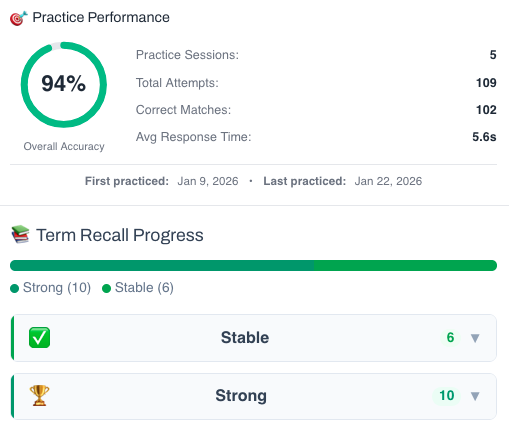
This isn’t a simple quiz — it’s a fully tracked learning system. You build knowledge through recognition, then recall, and your progress feeds directly into the Integrated Practice Bar (Writing tasks, AI Chat, and more).
- Practice sessions, accuracy, and response-time tracking
- Term strength levels (Learning → Stable → Strong)
- Personal progress history for each unit
This feature is available to YSP members.
Explore Membership Benefits🎮 Practice Games
Sentence Scrambler
Adjective & Noun Compounds – Sentence Scramble
Member-Exclusive Sentence Builder
Reconstruct scrambled sentences to practice word order and develop your grammar intuition.
This feature is available to YSP members.
Explore Membership Benefits