Number + Noun Compound Adjectives: Measure Your Language
Core PathWay
1 Section 1. The Formula That Does a Lot of Work
What if you could describe a meeting, a house, a fence, and a deadline all with the same simple formula? That’s exactly what number + noun compound adjectives do — and once you see the pattern, you’ll spot them everywhere.
The idea is simple. You take a number, add a noun, connect them with a hyphen, and place the whole thing before another noun. The result is a compact, precise description. ‘A meeting that lasts three hours’ becomes ‘a three-hour meeting.’ ‘A house with four bedrooms’ becomes ‘a four-bedroom house.’ Same meaning — but sharper, faster, and far more natural in both speech and writing.
These compounds are extremely common in everyday English. You’ll find them in conversations about travel, property, work, and planning: ‘a two-week holiday‘, ‘a six-foot fence‘, ‘a ten-minute walk‘. They’re not formal or technical — they’re simply the way fluent English speakers measure and describe the world around them.
The golden rules are easy to remember: use a hyphen between the number and the noun, keep the noun in the singular form (never plural), and always place the compound directly before the noun it describes. Break any of these rules and the sentence sounds wrong to a native speaker — even if the meaning is clear.
2 Section 2. Grammar Guide: How to Build and Read These Compounds
Number + noun compound adjectives follow a very clear pattern. Once you know the rules, you can create new ones yourself — and understand any you come across. This guide covers the full structure, the key rules, and the mistakes that learners most often make.
Focus
- STRUCTURE: number + noun (singular) + hyphen → placed before a head noun
- FUNCTION: the compound acts as a single adjective, describing the noun that follows it
- HYPHENATION: a hyphen is required when the compound comes before the noun (attributive position); it is dropped when the compound comes after a verb
- SINGULAR NOUN: the noun inside the compound is always singular, regardless of the number used
- POSITION: the compound must come directly before the noun it modifies — it cannot float freely in the sentence
- WRITTEN-OUT NUMBERS: numbers in these compounds are usually written as words (three, not 3) in formal writing, though numerals are common in informal and professional contexts
Rules
- RULE 1 — FORM: Build the compound as: [number] + [singular noun] + hyphen. Place it directly before the noun it describes. Example pattern: a [number]-[noun] [head noun].
- RULE 2 — SINGULAR NOUN: The noun inside the compound never takes a plural form, even when the number is greater than one. 'A three-hour meeting' — not 'a three-hours meeting'. This is the single most common error learners make.
- RULE 3 — HYPHEN IN ATTRIBUTIVE POSITION: When the compound comes before the noun, use a hyphen. 'It was a two-hour delay.' When the compound comes after a linking verb (predicative position), the hyphen is dropped and the noun can become plural: 'The delay was two hours long.'
- RULE 4 — PREDICATIVE POSITION (no hyphen): After a verb like 'be', 'seem', or 'feel', the compound is not used as a single adjective. Instead, write the number and noun separately: 'The fence is six feet tall' — not 'The fence is six-foot tall'.
- RULE 5 — NUMBERS AS WORDS OR NUMERALS: In formal or academic writing, spell out numbers: 'a three-week project'. In professional or informal contexts, numerals are widely accepted: 'a 3-week project'. Both are grammatically correct.
- RULE 6 — HEAD NOUN IS REQUIRED: The compound adjective must modify a noun. It cannot stand alone. 'A five-day' is incomplete — you need 'a five-day course', 'a five-day trip', etc.
Examples
- 'We sat through a three-hour meeting without a single break.' → three + hour (singular) + hyphen, placed before 'meeting'
- 'They've just moved into a four-bedroom house on the edge of town.' → four + bedroom (singular) + hyphen, placed before 'house'
- 'It was a ten-minute walk from the station, which was perfect.' → ten + minute (singular) + hyphen, placed before 'walk'
Common mistake
3 Section 3. Your Reference Bank: 30 Essential Number + Noun Compounds
Below are 30 of the most useful and frequent number + noun compound adjectives, organised by category. These cover the contexts you are most likely to meet in everyday life, professional settings, and B2-level exams. Each one follows the rules from Section 2: number + singular noun + hyphen, placed before a head noun.
TIME AND DURATION
These are among the most common compounds in spoken and written English. Use them when describing schedules, events, and plans.
• a two-hour delay
• a three-day conference
• a five-minute break
• a ten-minute walk
• a two-week holiday
• a six-month contract
• a four-year degree
• a thirty-year mortgage
PROPERTY AND SPACE
Essential for describing homes, buildings, and physical dimensions — very common in property listings and everyday conversation.
• a four-bedroom house
• a two-bathroom apartment
• a six-floor building
• a three-car garage
• a one-acre garden
• a six-foot fence
• a ten-metre pool
• a two-storey cottage
CAPACITY AND SIZE
Useful for describing containers, vehicles, and group sizes — frequent in planning, travel, and logistics.
• a four-member family
• a five-gallon jug
• a three-seater sofa
• a twelve-seat minibus
• a two-litre bottle
• a forty-tonne truck
• a fifty-page report
• a five-star hotel
MONEY, WEIGHT, AND MEASUREMENT
These appear regularly in business, news, and academic contexts.
• a million-dollar question
• a ten-pound bag
• a two-kilogram parcel
• a hundred-metre sprint
• a fifty-kilometre journey
• a three-point plan
A quick note on five-star: the noun here is ‘star’, which stays singular even though ‘five stars’ is the standard form when used alone. The compound adjective rule overrides the usual plural — it’s always ‘a five-star hotel’, never ‘a five-stars hotel’.
4 Recap: What You've Learned
Number + noun compound adjectives are one of English’s most practical tools. They let you describe duration, size, capacity, and measurement in a single, compact phrase — and they appear in almost every context, from casual conversation to professional writing and exams.
The core formula is simple: number + singular noun + hyphen, placed directly before the noun you are describing. The noun inside the compound is always singular — this is the rule that catches most learners out. Remember that the hyphen is used in attributive position (before the noun) but dropped in predicative position (after a verb).
With 30 high-frequency examples now in your reference bank, you have a solid foundation for both recognising these compounds when you read or listen, and producing them accurately when you write or speak. The next time you want to say ‘a meeting that lasts two hours’, reach for the compound — ‘a two-hour meeting‘ — and sound exactly like a fluent speaker.
Member-Exclusive Practice Bar
Access a wide range of integrated practice for this unit — from Vocabulary and Grammar activities to AI-curated Writing tasks and Thematic Chat practice.
This feature is available to YSP members.
Explore Membership BenefitsMember-Exclusive Vocabulary Review & Acquisition System
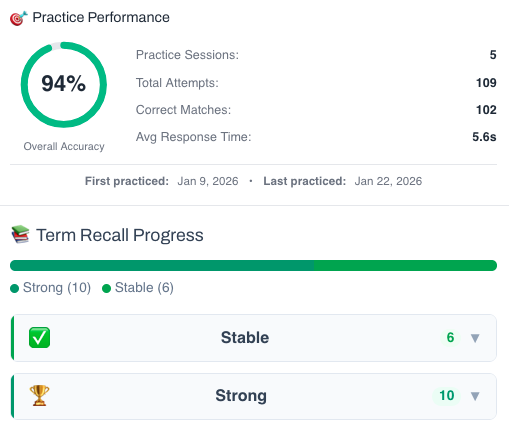
This isn’t a simple quiz — it’s a fully tracked learning system. You build knowledge through recognition, then recall, and your progress feeds directly into the Integrated Practice Bar (Writing tasks, AI Chat, and more).
- Practice sessions, accuracy, and response-time tracking
- Term strength levels (Learning → Stable → Strong)
- Personal progress history for each unit
This feature is available to YSP members.
Explore Membership Benefits🎮 Practice Games
Sentence Scrambler
Number + Noun Compounds – Sentence Scramble
Member-Exclusive Sentence Builder
Reconstruct scrambled sentences to practice word order and develop your grammar intuition.
This feature is available to YSP members.
Explore Membership Benefits